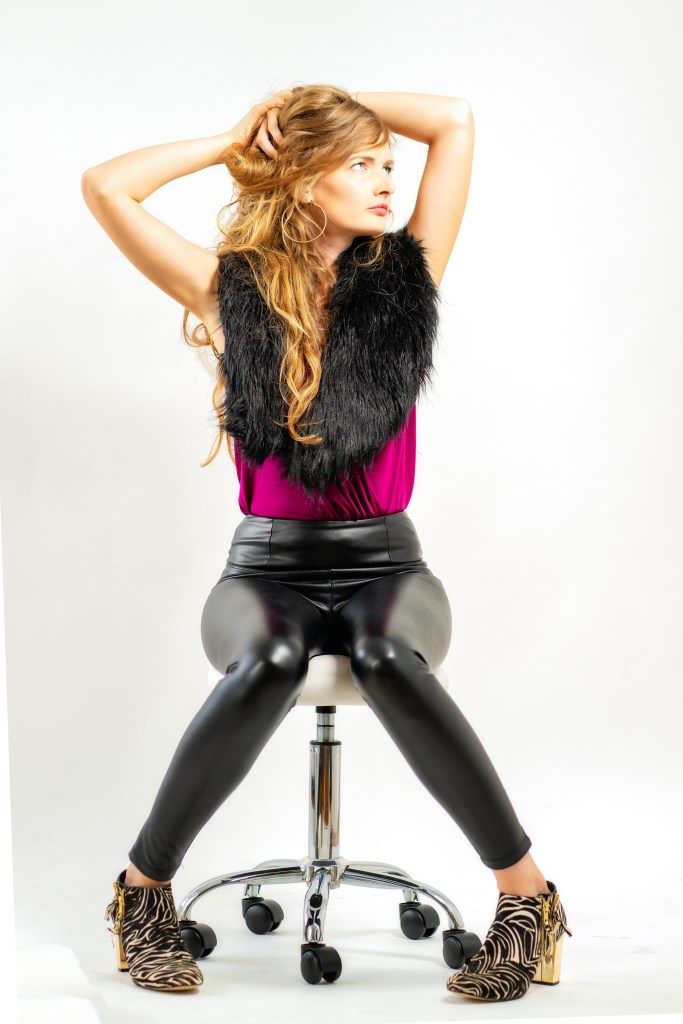
This portrait of Gabby, captured at The Headquarter in Denver, exemplifies the photographer’s exploration of high-key studio aesthetics within Chapter 4 of his Top 100 Journey. Where previous work in this chapter has leaned toward dramatic low-key lighting and theatrical darkness, this image pivots toward brightness and negative space, demonstrating the photographer’s versatility in handling opposing approaches to studio portraiture.
The technical foundation remains consistent with his established toolkit: the Sony A7ii paired with the 85mm f/1.8 lens, complemented by Godox V1s flash modified through a shoot-through umbrella. However, the application of this equipment yields an entirely different visual language. The near-white background floods the frame with luminosity, creating an environment where the subject exists in a floating, dimensionless space. This deliberate elimination of context shifts the viewer’s attention entirely onto the subject’s form, gesture, and the carefully constructed interplay of textures and colors.
The composition centers on a moment of suspended motion—arms raised to manipulate cascading blonde hair, the subject positioned on a chrome office chair that introduces an unexpected element of contemporary banality into what might otherwise read as pure fashion imagery. This juxtaposition between the mundane object and the styled subject creates a productive tension. The chair, with its visible wheels and utilitarian design, grounds the photograph in the reality of the studio space while the subject’s pose and styling lift the image toward aspirational fashion photography.
Color relationships anchor the visual hierarchy. The vibrant magenta top creates the primary focal point at the composition’s center, while the black faux-fur vest provides textural complexity and tonal contrast. Below, leather leggings in glossy black establish a continuous dark field that culminates in zebra-print platform booties—a detail that injects pattern and visual interest at the composition’s base. This vertical arrangement of color and texture demonstrates sophisticated styling that the photographer captures without interference, allowing the wardrobe choices to speak clearly against the minimal background.
The pose itself warrants examination. With arms raised and gaze directed away from the camera, the subject embodies a moment of casual glamour—not performing for the lens but existing within her own contemplative space. This approach to direction, whether collaborative or specifically guided, results in imagery that feels less like traditional portraiture and more akin to editorial fashion work. The photographer captures not just appearance but attitude, a quality that elevates studio work beyond documentation.
Within the broader context of Chapter 4, this photograph represents the photographer’s engagement with clean, commercial aesthetics. Where other images in this collection embrace complexity through dramatic lighting or environmental context, “Gabby” finds its power in reduction and clarity. The high-key approach requires precise exposure management—overexposure would flatten the image entirely, while underexposure would render the background gray rather than white. The successful execution here suggests a photographer increasingly confident in technical precision.
Post-processing in Luminar 4 maintains this clarity, with adjustments that preserve the luminous quality of the scene while ensuring adequate separation between subject and background. The result is an image that functions equally well as a portfolio piece, an editorial illustration, or a study in contemporary portrait methodology.
 Greg Urbano