Electric Sublime: Atmospheric Drama Over Tampa Bay

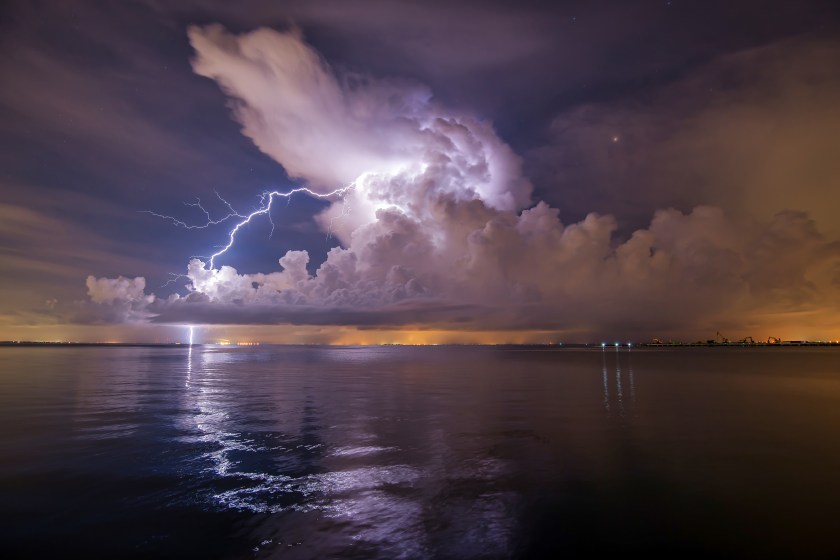
The image of a lightning strike over Tampa Bay, captured from Vinoy Park, showcases the photographer’s skill in storm photography. Using a Nikon D610, the thirty-second exposure reveals a dramatic interplay of colors and natural forces. This work highlights Florida’s weather patterns, merging urban and natural landscapes in a powerful visual narrative.

Long exposure photograph of lightning illuminating clouds over Tampa Bay, viewed from Vinoy Park in St. Petersburg, Florida.
Long exposure lightning strike over Tampa Bay from Vinoy Park.

Among the most technically demanding and visually arresting images in Chapter 2 of the photographer’s Top 100 Journey, this capture of a lightning strike over Tampa Bay represents a masterful convergence of patience, preparation, and meteorological fortune. Photographed from Vinoy Park in St. Petersburg, the image transforms a transient weather event into a sustained meditation on nature’s raw power and the atmospheric spectacle that defines Florida’s subtropical climate.

The composition presents a study in horizontal stratification—water, distant shoreline, and sky arranged in classical landscape proportions, yet animated by the extraordinary electrical discharge that commands the frame’s center. A single lightning bolt descends vertically through towering cumulonimbus clouds, creating a luminous column that connects the charged atmosphere to the bay’s surface. The strike illuminates the cloud structure from within, revealing billowing formations in shades of pearl, lavender, and steel blue against a gradient sky that transitions from deep indigo to warm amber.

Technical execution reflects the specialized demands of storm photography. Working with a Nikon D610 at the wide end of an 18-35mm lens, the photographer selected an 18mm focal length to encompass both the expansive cloud system and the reflective water below. The thirty-second exposure at f/5.6 and ISO 400 represents a calculated approach to lightning capture—a long enough duration to increase the probability of recording a strike within the frame, yet controlled enough to prevent overexposure of ambient light sources visible along the distant horizon. This extended shutter speed also smooths the bay’s surface into a mirror-like plane, its subtle texture suggesting gentle motion while maintaining enough definition to anchor the composition.

The color palette distinguishes this work within the chapter’s broader collection. Where the architectural study of Signature Place employed monochrome austerity, this image embraces the full chromatic range of atmospheric phenomena. The storm cell’s cool blues and purples contrast with the warm ochre glow infiltrating from the right edge of the frame—likely light pollution from Tampa’s urban corridor or residual sunset illumination scattered through distant clouds. This interplay of cool and warm tones creates visual tension that enhances the image’s dramatic impact without resorting to artificial enhancement.

Within Chapter 2’s exploration of Florida Landscapes & Cityscapes, this photograph occupies essential territory. Florida’s identity remains inextricably linked to its volatile weather patterns—the daily thunderstorm cycles of summer, the atmospheric electricity that makes the state the lightning capital of North America. By documenting this phenomenon, the photographer engages with environmental storytelling that moves beyond picturesque representation toward a more complete portrait of place.

The work also demonstrates sophisticated understanding of the sublime in contemporary landscape photography. The tradition of depicting nature’s awesome power—from nineteenth-century Romantic painters to mid-century photographers like Ansel Adams capturing Sierra storms—finds fresh expression here. The lightning strike serves as both subject and metaphor: a literal discharge of atmospheric energy and a symbolic representation of nature’s capacity to humble human observers.

Viewed alongside the chapter’s urban architectural studies, this image provides necessary balance. Together, these photographs suggest a photographer equally attentive to built and natural environments, capable of finding visual poetry in glass towers and electrical storms alike. Such range indicates a mature artistic vision—one that recognizes Florida’s complexity as both a site of intensive human development and a landscape still subject to forces beyond human control.

Vertical Ascension: Modernist Form in Downtown St. Petersburg

The black and white photograph of the Signature Place high-rise in St. Petersburg captures its architectural monumentality through a minimalist lens. Stripping color emphasizes form and texture, while a dynamic composition highlights urban development. The work reflects the photographer’s evolving vision, merging documentary and artistic interpretation within contemporary architectural photography.

Black and white low‑angle photograph of the Signature Place condominium tower in downtown St. Petersburg, Florida, showing strong geometric lines and modern architecture.
Black and white architectural study of the Signature Place high‑rise in downtown St. Petersburg.

In this striking image from Chapter 2 of the photographer’s Top 100 Journey, the Signature Place Condominium tower emerges as a study in architectural monumentality and photographic restraint. Shot in downtown St. Petersburg, Florida, the photograph transforms a contemporary residential structure into something both documentary and abstract—a meditation on verticality, light, and the geometric language of modern urban development.

The decision to render this scene in black and white proves essential to the image’s success. By stripping away color, the photographer directs attention to the fundamental elements of architectural photography: form, texture, and tonal gradation. The building’s repetitive window pattern creates a rhythmic grid that draws the eye upward, while the dramatic contrast between the illuminated facade and the darkening sky suggests a specific moment of transition—likely the golden hour, when natural light rakes across surfaces to reveal dimension and depth.

Technical execution demonstrates thoughtful consideration of both optics and exposure. Working at 35mm on an 18-35mm lens mounted to a full-frame Nikon D610, he selected a narrow aperture of f/18 to maximize depth of field and ensure crisp detail throughout the frame. The resulting sharpness allows the viewer to appreciate the building’s material qualities—the interplay of glass, concrete, and steel that defines contemporary high-rise construction. A shutter speed of 1/8 second at ISO 100 suggests the use of a tripod, essential for maintaining clarity at this exposure length while preserving clean shadow detail.

The composition employs a low vantage point that accentuates the tower’s dramatic thrust skyward. This perspective, common in architectural photography but executed here with particular effectiveness, creates a sense of imposing scale while maintaining architectural integrity. The building’s angular crown punctures the upper portion of the frame, while a lower podium structure grounds the composition and provides contextual anchoring in the urban landscape.

Within the broader framework of Chapter 2—Florida Landscapes & Cityscapes—this photograph represents an important counterpoint to the state’s more commonly photographed natural environments. Rather than beaches, wetlands, or subtropical flora, the photographer turns his lens toward Florida’s built environment, acknowledging the contemporary reality of rapid urban development along the Gulf Coast. St. Petersburg’s downtown skyline, transformed dramatically over recent decades, serves as a compelling subject for examining how modern architecture reshapes regional identity.

The image also speaks to the photographer’s evolving vision throughout the Top 100 Journey. Where other selections might emphasize natural wonder or environmental preservation, this work demonstrates equal comfort with urban subject matter. The modernist aesthetic—clean lines, geometric precision, monochromatic palette—suggests an appreciation for architectural form as a legitimate subject for serious photographic inquiry.

What elevates this photograph beyond mere documentation is its atmospheric quality. The graduated sky, rendered in smooth tones from deep black to luminous gray, provides a canvas against which the building performs. The partially visible vegetation at the frame’s base hints at the subtropical context without overwhelming the primary subject. This careful balance between architectural documentation and artistic interpretation positions the work within a tradition extending from early twentieth-century modernist photography through contemporary fine art practice—a lineage that recognizes buildings not merely as structures to be recorded, but as forms to be interpreted.

Tampa Skyline Long Exposure: A Study in Urban Stillness

This long exposure photograph of Tampa’s skyline captures the city at dusk, highlighting the interplay of light, architecture, and time. With a 241-second exposure, the image transforms the water into a reflective surface, merging urban forms and enhancing their beauty. The composition emphasizes symmetry and color, inviting deeper appreciation of urban landscapes.

Long exposure dusk photograph of the Tampa, Florida skyline with illuminated buildings and reflections on the Hillsborough River.
Long exposure dusk view of the Tampa skyline with river reflections.

Within the framework of Chapter 2—Florida Landscapes & Cityscapes—this long exposure photograph of Tampa’s downtown core represents a sophisticated meditation on the intersection of natural light, architectural form, and temporal manipulation. Shot at dusk from across the Hillsborough River, the image captures the city skyline in a state of suspended transition, where the photographer’s technical mastery serves to transform a familiar urban vista into something altogether more contemplative.

The technical specifications reveal deliberate choices that speak to the photographer’s evolving understanding of long exposure craft. An exposure time of 241 seconds—over four minutes—has rendered the water’s surface into a mirror-like plane of silk, creating an almost supernatural calm that contrasts sharply with the structural solidity of the buildings above. This extended duration collapses time, erasing the ephemeral movements of waves and current to reveal something closer to the river’s essential character. The choice of an 18mm focal length at f/8.0 provides expansive depth of field while maintaining critical sharpness across the entire frame, from the foreground water to the distant architectural pinnacles.

The composition demonstrates a rigorous formalism. The horizontal bands of bridge infrastructure bisect the frame at roughly the golden ratio, their purple-lit supports creating rhythmic vertical elements that guide the eye through the middle ground. The skyline itself presents as a study in geometric variation: cylindrical towers, angular glass facades, and the distinctive peaked crown of the tallest structure each catch and reflect the fading daylight in subtly different ways. The photographer has positioned himself to capture not merely the buildings themselves, but their perfect inversions in the still water below, creating a symmetry that doubles the visual information while emphasizing the transformative effect of his chosen technique.

Color plays a crucial role in the image’s success. The graduated sky transitions from warm peachy tones at the horizon to deepening blue overhead, providing a naturalistic backdrop that throws the artificial illumination into relief. The purple accent lighting on the bridge structure introduces an unexpected chromatic note, while the warm reflections—amber, gold, and rose—animate the lower half of the frame with points of concentrated light. This interplay between cool atmospheric tones and warm architectural lighting creates visual tension that keeps the eye engaged despite the overall compositional stillness.

The small electronic device visible in the immediate foreground—likely the camera’s intervalometer—serves as an unintentional but effective scale reference, grounding the viewer’s perspective and subtly acknowledging the technical apparatus required to achieve such results. It’s a moment of transparency that connects the finished image back to its means of production.

Within the broader arc of the Top 100 Journey project, this Tampa skyline represents the photographer’s deepening engagement with Florida’s urban environments as subjects worthy of the same sustained attention he brings to natural landscapes. The long exposure technique, applied here to a cityscape, reveals patterns and qualities invisible to ordinary perception—the fundamental architecture of light, the liquidity of solid water, the strange beauty of modern cities seen through the lens of time. It’s work that asks viewers to reconsider what they think they know about familiar places, finding in them unexpected dimensions of visual poetry.

Cocoa Beach Pier Sunrise: Architecture in Dialogue with the Atlantic

The photograph of Cocoa Beach Pier captures a sunrise through meticulous long exposure, transforming the landmark into a study of light and architecture. The image emphasizes structural details, blending engineering with nature. It highlights Florida’s coastal identity, embodying resilience and the interplay between human construction and natural forces against the backdrop of a serene seascape.

Long exposure sunrise photograph of the Cocoa Beach Pier in Florida, showing wooden pilings, warm light on the horizon, and reflections on wet sand.
Sunrise over the Atlantic Ocean at the Cocoa Beach Pier, captured in a long exposure.

Within Chapter 2 of the Top 100 Journey—Florida Landscapes & Cityscapes—this sunrise study of the Cocoa Beach Pier represents the photographer’s engagement with one of Florida’s most iconic coastal structures. Captured with deliberate technical restraint, the image transforms a familiar landmark into a meditation on light, time, and the intersection of human construction with natural forces.

The photograph was executed during the liminal hour of sunrise, that brief window when the sun emerges from the Atlantic horizon, casting warm, directional light across the scene. The photographer positioned himself beneath the pier’s substantial wooden framework, creating a composition that emphasizes the structure’s engineering and architectural presence. The pilings—weathered cylinders marked by barnacles and tidal wear—march in rhythmic repetition from foreground to background, their reflections doubling in the wet sand left by receding waves. This repetition creates visual cadence, leading the viewer’s eye through the layered space beneath the pier toward the glowing horizon.

The technical execution reveals calculated decision-making. Shooting at f/16 with a ten-second exposure on ISO 100, the photographer achieves several objectives simultaneously: the narrow aperture ensures sharpness throughout the deep composition, from the foreground sand texture to the distant pier house; the extended exposure time smooths the ocean into a misty, ethereal plane, contrasting with the solid geometry of wood and metal; and the low ISO preserves maximum image quality in the challenging dynamic range between shadowed understructure and brilliant sunrise. The 20mm focal length on a full-frame Nikon D610 provides sufficient width to capture the pier’s span while maintaining rectilinear integrity in the vertical pilings.

What distinguishes this work is its treatment of architectural form within the natural environment. Rather than photographing the pier as a tourist attraction—a vantage point from which to view the ocean—the photographer inverts the relationship, making the structure itself the primary subject while the seascape becomes supporting element. The underside perspective reveals construction details typically ignored: diagonal cross-bracing, the density of support columns, the engineering solutions required to anchor a recreational structure in shifting sand and relentless surf. The barnacle-encrusted pilings become textural studies, documenting the biological claim that marine life makes on human infrastructure.

The color palette reinforces the temporal specificity of the moment. Golden light bathes the right side of the frame, warming the wooden planks and casting long shadows that define the pier’s three-dimensional form. The left side remains in relative shadow, creating tonal gradation that adds depth and volume. The sky transitions from warm cream near the sun to deeper blue overhead, while the smoothed water reflects this gradient, creating visual harmony between sky and sea.

Within the broader context of Florida Landscapes & Cityscapes, this image represents the photographer’s recognition that Florida’s coastal identity includes not only pristine natural beauty but also the structures through which residents and visitors experience that environment. The Cocoa Beach Pier, a mid-century landmark rebuilt multiple times after hurricane damage, embodies Florida’s complicated relationship with its shoreline—simultaneously celebrating and challenging the power of the Atlantic.

The photograph ultimately documents persistence: of structures rebuilt after storms, of daily tides that reshape the beach, of light that returns each morning to illuminate the coast.

Under Naples Pier at Sunset: Architecture Meets the Ethereal

Greg Urbano’s long exposure photograph beneath Naples Pier captures the interplay of human architecture and nature, highlighting time and impermanence. Shot with meticulous technique, the image transforms a familiar locale into a contemplative space where smooth Gulf waters contrast with weathered pilings, emphasizing Florida’s geography and the enduring power of the natural world.

Long exposure photograph taken beneath the Naples Pier in Florida, showing weathered support columns receding into the distance with smooth, blurred water and soft sunset light.
Long exposure view beneath the Naples Pier in Florida, captured with softened water and warm evening light.

In Greg Urbano’s exploration of Florida’s coastal landscapes, this long exposure beneath Naples Pier represents a masterful convergence of structural geometry and natural fluidity. The photograph transforms a familiar tourist destination into something altogether more contemplative—a meditation on time, permanence, and the quiet persistence of natural forces.

The technical execution reveals deliberate artistic choices that elevate the image beyond documentary. Shot at a 30-second exposure with an aperture of ƒ/10, Urbano allows the Gulf waters to smooth into an almost supernatural plane of silk, while the pier’s wooden pilings remain sharply rendered, their weathered surfaces recording years of salt spray and tidal rhythms. The ISO 100 setting preserves exceptional clarity in both the concrete deck overhead and the barnacle-encrusted bases of each column, where marine life has claimed the structure as its own.

What distinguishes this photograph within the Florida Landscapes & Cityscapes chapter is its unique vantage point. Rather than capturing the pier from the beach or along its walkway—the conventional approaches—Urbano positions himself in the liminal space beneath, where human architecture and marine environment intersect. This perspective creates a vanishing point that draws the eye through the repetitive columns, suggesting infinity while simultaneously framing the horizon in measured increments. The composition speaks to Florida’s essential character: a place where human development exists in constant negotiation with water, weather, and an environment that ultimately cannot be controlled.

The color palette captures that transitional moment when day surrenders to evening. Soft blues dominate the frame, punctuated by warmer tones filtering through the gaps between pilings where the setting sun still reaches. The long exposure has rendered a handful of beachgoers as ghostly presences, barely perceptible in the distance—a reminder that even in this serene moment, human activity continues, though made insignificant by the photograph’s emphasis on timelessness over immediacy.

The textural contrasts throughout the frame reward sustained viewing. The smooth, almost liquid sand in the foreground shows subtle patterns from receding water, while the pier pilings display years of weathering—concrete cracking and staining, wooden supports silvered by sun and salt. Most striking are the organic clusters clinging to each column where water regularly submerges them, dark masses of mussels and barnacles that testify to the structure’s dual existence above and below the tideline.

This image exemplifies why Urbano selected Naples Pier for inclusion in his exploration of Florida’s diverse landscapes. The state’s geography is defined by its relationship with water—the Atlantic, the Gulf, the Everglades, countless rivers and springs. Here, that relationship is made architectural, structured, yet the photograph ultimately reveals nature’s quiet supremacy. The pier may impose order with its regular spacing and engineered strength, but the barnacles reclaim it, the water smooths away footprints, and time—made visible through long exposure—reveals the impermanence of even our most solid constructions.

Within the broader context of the Top 100 Journey, this photograph demonstrates Urbano’s ability to find fresh perspectives on familiar subjects, transforming a popular sunset location into a study of geometry, time, and the persistent dialogue between built and natural environments that defines Florida’s coastal identity.

Fubbles: The Ephemeral Made Eternal

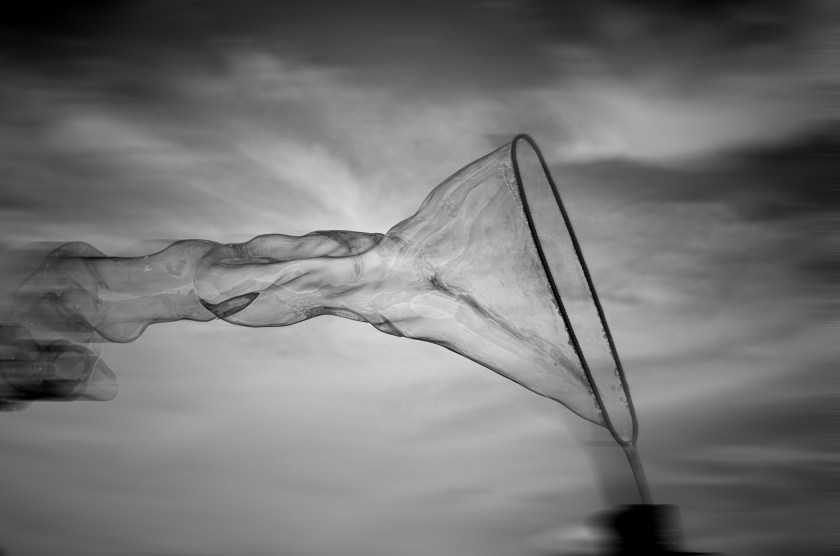
The photograph “Fubbles,” taken in 2014 by Greg Urbano at Fort de Soto Park, captures a soap bubble mid-flight, showcasing early artistic vision. Enhanced by motion blur, it elevates the bubble into fine art, revealing themes of transformation and impermanence. Urbano’s technical choices demonstrate a sophisticated understanding of photography and artistry.

Large elongated soap bubble stretching through the air against a cloudy sky, photographed with a Nikon D5100 and 35mm lens at high shutter speed.
This photograph captures a long, tube‑shaped soap bubble drifting through the air against a cloudy sky at Fort De Soto Park in Florida. The bubble’s reflective surface and fluid form create an abstract, fine‑art appearance, with motion blur added during post‑processing to enhance the sense of movement. The image was taken on July 27, 2014 using a Nikon D5100 with a 35mm lens at ƒ/6.3, 1/1250s, ISO 100. It is part of the Top 100 Journey project and represents early experimental work exploring motion, shape, and atmospheric minimalism.

In the opening chapter of Greg Urbano’s photographic journey, “Fubbles” stands as a remarkable testament to the artist’s early instinct for transforming the mundane into the sublime. Created in 2014 during an afternoon at Fort de Soto Park, this image captures far more than a simple bubble in flight—it reveals an emerging photographer’s understanding of light, form, and the delicate boundary between documentation and fine art.

The composition presents a soap bubble mid-flight, its translucent membrane caught in a state of graceful distortion. What immediately strikes the viewer is the dreamlike quality of the motion blur, which Urbano candidly notes was enhanced in post-processing. This creative decision speaks to an important aspect of his early development: the willingness to move beyond strict documentary realism toward a more interpretive visual language. The blur transforms the bubble from a fleeting childhood toy into something altogether more ethereal—a meditation on impermanence itself.

Shot with a Nikon D5100 at 35mm, the technical execution demonstrates a sophisticated understanding of exposure for such translucent subjects. The aperture of f/6.3 provides sufficient depth while maintaining the isolation of the bubble against the softly rendered background. Most significantly, the shutter speed of 1/1250s at ISO 100 captures crystalline detail in the bubble’s surface, preserving the swirling patterns and subtle gradations that give the sphere its otherworldly quality. These technical choices reveal an artist already thinking beyond the moment of capture to the final image.

The monochromatic palette proves essential to the photograph’s success. By stripping away color, Urbano directs our attention to form, texture, and tonal relationships. The bubble’s translucent skin becomes a study in graduated grays, while the blurred background creates a tonal symphony that could easily hang beside the work of mid-century modernist photographers. This treatment elevates a whimsical subject matter into the realm of fine art abstraction.

Within the context of “Chapter 1 — Beginnings,” this photograph occupies a fascinating position. It demonstrates that even in his earliest work, Urbano possessed the vision to see artistic potential in unexpected places. The playful title “Fubbles” maintains a connection to the image’s origins—fun with bubbles—while the execution reveals serious artistic ambitions. This duality between playfulness and sophistication would become a hallmark of his developing style.

The photograph also speaks to broader themes of transformation and transience. A soap bubble exists for mere seconds before bursting, yet through photography, Urbano arrests that moment, preserving what cannot be preserved. The enhanced motion blur serves not as deception but as emphasis, amplifying the sense of temporal fluidity that defines the bubble’s brief existence. In this way, the image becomes metaphorical—a meditation on photography itself as the art of stopping time.

For viewers encountering Urbano’s work through his Top 100 Journey project, “Fubbles” offers essential insight into his artistic foundations. Here is a photographer unafraid to experiment, willing to blend capture with creation, and possessed of an eye that finds beauty in the transient and overlooked. The bubble, forever frozen in its graceful dissolution, invites us to reconsider our own relationship with impermanence and the extraordinary potential hidden within ordinary moments.

The Patient Observer: Greg Urbano’s “Showy Egret” and the Art of Coastal Intimacy

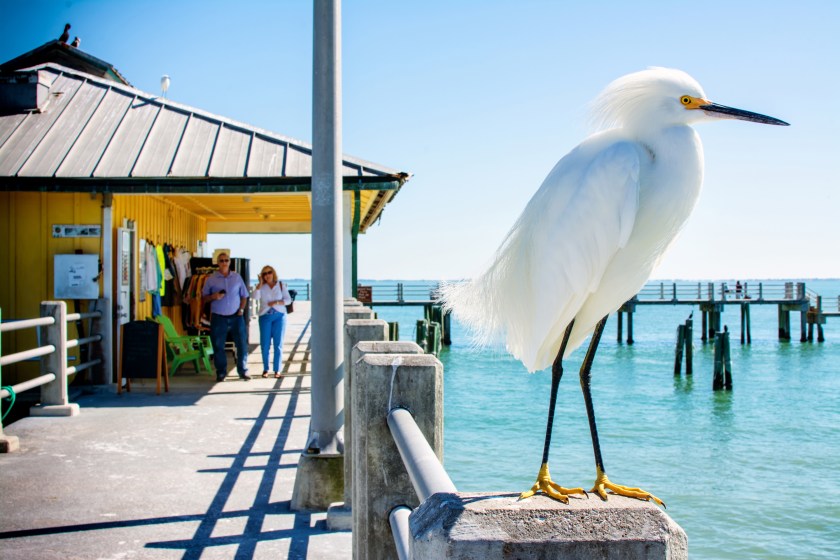
In Greg Urbano’s 2014 photo “Showy Egret” at Fort de Soto, the Snowy Egret’s elegance contrasts with human presence, highlighting a balance between wildlife and recreation. Urbano’s precise composition and technical skill enhance environmental storytelling, showcasing his early understanding that nature photography can embrace humor and human contexts without losing integrity.

Snowy Egret standing on a concrete pier post with a yellow building, clothing racks, and tourists in the background, photographed with a Nikon D7100 and 35mm lens.
A 2014 photograph of a Snowy Egret perched on the Bay Pier at Fort De Soto Park in Florida.

In the opening chapter of Greg Urbano’s photographic journey, “Showy Egret” stands as a masterclass in compositional awareness and environmental storytelling. Captured in 2014 at Fort De Soto’s Bay Pier in Florida, this image reveals an artist already attuned to the delicate balance between wildlife photography and human context—a sensibility that would define his evolving practice.

The photograph’s immediate strength lies in its spatial intelligence. Urbano positions the Snowy Egret in the right third of the frame, allowing the bird’s pristine plumage to command attention while the weathered pier extends into the turquoise waters beyond. This compositional choice creates a natural visual flow from foreground subject to background environment, inviting viewers to experience both the bird’s individual presence and its coastal habitat simultaneously.

Technical precision underscores the image’s effectiveness. Shot with a Nikon D7100 at f/11.0, Urbano achieves crisp depth of field that renders the egret’s delicate feathers in remarkable detail—each plume distinct against the clear Florida sky. The choice of 1/200 second shutter speed at ISO 100 captures the bird in perfect stillness, transforming a fleeting moment into something approaching portraiture. The 35mm focal length, often considered a “normal” perspective, here proves ideal for environmental wildlife work, offering intimacy without the compression or distance of telephoto lenses.

What elevates this photograph beyond straightforward nature documentation is Urbano’s willingness to embrace the human element. Two tourists emerge from a yellow-trimmed pier building in the middle distance, their presence neither accidental nor intrusive. Rather than seeking the pristine wilderness imagery common in traditional wildlife photography, Urbano acknowledges the reality of modern conservation spaces—these are shared environments where human recreation and natural habitats coexist. The egret’s confident stance on the pier post, unfazed by nearby activity, speaks to this acclimatization, suggesting a more complex narrative about wildlife adapting to anthropogenic landscapes.

The photograph’s playful title—”Showy Egret” as wordplay on “Snowy Egret”—hints at Urbano’s understanding that wildlife photography need not adopt a purely reverential tone. The egret does indeed appear showy, posed almost theatrically on its concrete perch, its breeding plumage fully displayed, yellow feet gripping the weathered surface. This anthropomorphic reading, encouraged by the title, creates accessibility without diminishing the bird’s natural beauty.

Light plays a crucial supporting role. The high, clear Florida sun creates distinct shadows across the pier’s concrete surface while illuminating the egret’s white plumage to near-luminescence. The bird’s yellow lores and feet provide punctuation points of color that echo the building’s trim, creating subtle visual rhymes within the frame.

As a foundational piece in Urbano’s “Beginnings” chapter, “Showy Egret” demonstrates technical competence married to narrative intuition. The photographer shows early understanding that compelling wildlife imagery can exist within human-modified spaces, that environmental context enriches rather than dilutes subject focus, and that humor and play have legitimate places in nature photography. These insights would prove essential as his practice developed, but here, at Fort De Soto in 2014, they exist in nascent, confident form—a young artist finding his voice through patient observation and compositional thoughtfulness.