Suspended Between Earth and Sky: A Study in Geometric Embrace

The photograph of Jennie Parks in a sandstone crevice at the Colorado-Wyoming border conveys a powerful interplay between human form and rugged landscape. The composition showcases Parks as both an integral part of the environment and a symbol of human vulnerability, enriched by graffiti that connects ancient rock with contemporary existence.

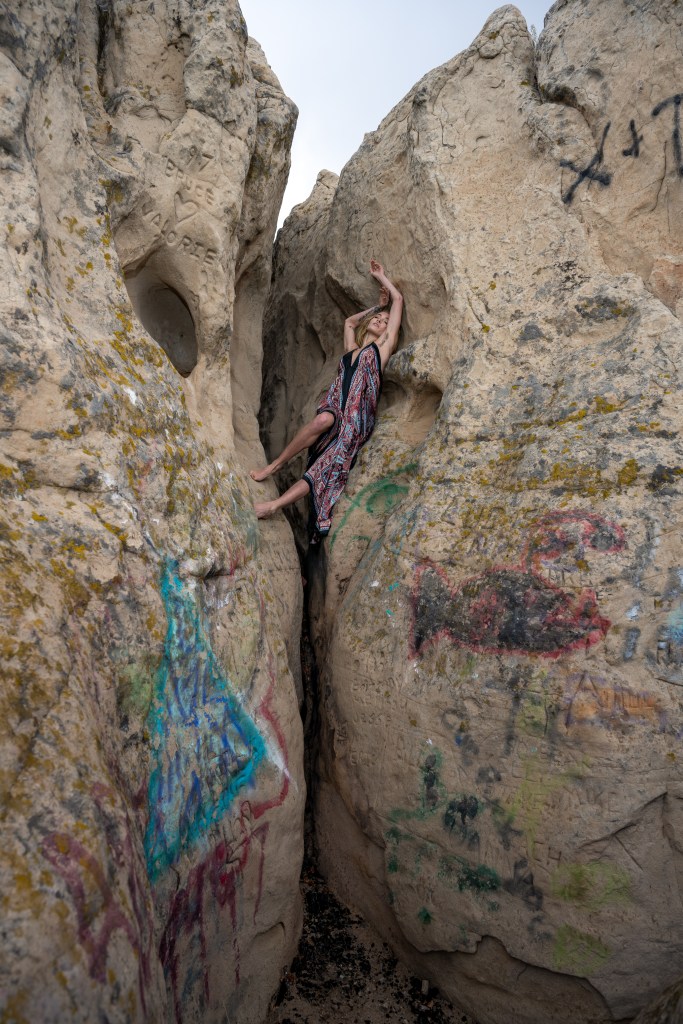
Model Jennie Parks posed barefoot within a narrow sandstone rock crevice, surrounded by weathered stone walls with graffiti and lichen.
Jennie Parks positioned inside a sandstone crevice at the Natural Fort rock formation on the Colorado–Wyoming border.

In this striking composition from Chapter 6 of the photographer’s Top 100 Journey, the human figure becomes a graceful counterpoint to the harsh geometry of desert stone. Shot at the natural fort rock formation straddling the Colorado-Wyoming border, the image captures model Jennie Parks wedged within a narrow crevasse, her body forming a living bridge between two massive limestone walls that tower overhead.

The photographer demonstrates a sophisticated understanding of environmental portraiture here, positioning his subject not merely within the landscape but as an integral element of its architecture. Parks’s extended pose—one arm reaching upward, legs braced against opposing walls—transforms the human form into a line of tension that mirrors the vertical thrust of the surrounding stone. The patterned fabric of her dress introduces rhythmic visual complexity against the textured, graffiti-marked surfaces of the rock, creating a dialogue between organic movement and geological permanence.

Technically, the composition exploits the natural framing device of the rock formation with considerable skill. The converging walls create strong diagonal lines that draw the eye upward toward the narrow strip of overcast sky, while the low vantage point emphasizes the vertiginous scale of the formation. The photographer has worked with available light to maintain detail in both the shadowed crevasse and the brighter upper reaches, a challenging exposure balance that preserves the dimensional quality of the weathered stone surfaces.

What distinguishes this work within the context of “The Road Ahead: Recent Work & Ongoing Exploration” is its synthesis of earlier themes with new formal rigor. The image continues the photographer’s established interest in the relationship between human vulnerability and natural grandeur, yet demonstrates an evolving sophistication in how that relationship is articulated. Rather than placing the figure as a small element overwhelmed by landscape—a common approach in environmental portraiture—he positions Parks as an active participant in the space’s geometry, neither dominated by nor dominating the scene.

The inclusion of graffiti on the rock faces introduces an unexpected documentary element. These colorful marks of human passage—blue and turquoise abstractions, faded pink tags—situate the timeless geological formation within contemporary reality. Rather than diminishing the image’s aesthetic power, this urban palimpsest enriches the reading: the rock has witnessed countless human gestures, from ancient weathering to modern spray paint to this moment of choreographed grace.

As representative of ongoing exploration, the photograph reveals an artist continuing to refine his visual vocabulary while remaining open to chance encounters and improvisation. The natural fort formation itself suggests the kind of site-responsive work that characterizes mature landscape photography—locations discovered rather than constructed, where the photographer’s role becomes one of recognition and revelation rather than wholesale invention.

In the broader trajectory of the Top 100 Journey, this image marks a moment of confident synthesis. The technical command is assured, the conceptual framework clear, yet there remains an element of spontaneity in how Parks inhabits the narrow space. It is work that looks both backward to established concerns and forward to possibilities yet unrealized—precisely the balance one expects from a chapter titled “The Road Ahead.”
Powerade Sports Drink

The photographer’s still life study of three Powerade bottles transcends typical commercial product photography through technical mastery and thoughtful lighting. Using a classic triangular arrangement against a dark background, he elevates mundane objects into gallery-worthy art, emphasizing color and light. This work reflects his evolving confidence and duality in art and commerce.

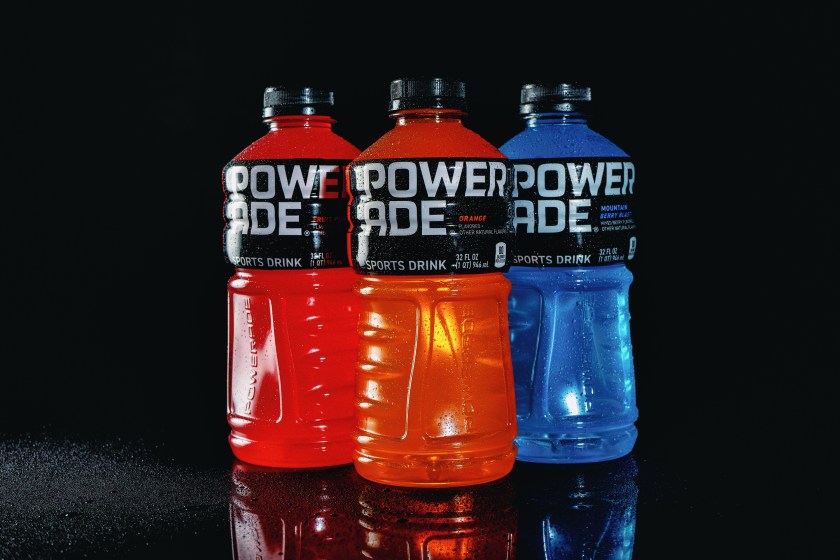
Studio still life of three Powerade sports drink bottles in red, orange, and blue on a reflective black surface.
A studio still life of three Powerade sports drink bottles arranged on a reflective surface against a dark background.

The photographer’s exploration of commercial product photography takes an unexpectedly sophisticated turn in this meticulously composed study of three Powerade bottles. Working within the constraints of a domestic setting—his living room transformed into an improvised studio—he demonstrates how technical mastery and thoughtful lighting can elevate mundane consumer objects into subjects worthy of gallery consideration.

The composition employs a classical triangular arrangement, with the three bottles positioned against a stark black background that eliminates all contextual distraction. This deliberate void forces the viewer’s attention entirely onto the subjects themselves: the vivid red and orange bottles flanking a brilliant blue variant. The color palette recalls the saturated hues of contemporary advertising photography, yet the treatment here transcends mere product documentation. Each bottle catches and refracts light differently, creating internal luminosity that transforms the beverages into glowing, jewel-like objects.

His technical approach reveals significant evolution in his still life practice. Utilizing a Sony A7ii with a kit lens, softbox, and flash, he crafts lighting that achieves both commercial polish and artistic dimensionality. The softbox provides diffused illumination that wraps around the bottles’ curved surfaces, while strategic flash placement creates the distinctive highlights and reflections visible across each container. The condensation beading on the plastic surfaces adds textural authenticity, suggesting these are not pristine studio props but objects intercepted in their natural state—cold, recently removed from refrigeration, existing in that liminal moment between commercial packaging and consumption.

The post-processing workflow—Adobe Camera Raw within Photoshop 2018, enhanced with Nik/DXO Viveza—amplifies the inherent drama of the scene. The blacks deepen to an almost velvety darkness, while the colors intensify without crossing into oversaturation. This balance proves crucial: the image maintains photographic credibility while achieving the heightened reality that characterizes effective still life work.

Within the broader context of Chapter 5’s exploration from classic to experimental tabletop photography, this image occupies an interesting middle ground. It adheres to established commercial photography conventions—the product-forward composition, the dramatic lighting, the emphasis on color and form—yet subverts them through its gallery presentation context. Removed from their intended commercial environment and reframed as objects of aesthetic contemplation, these sports drinks become something more: symbols of contemporary consumer culture, studies in color theory and light behavior, or perhaps meditations on how photography itself mediates our relationship with everyday objects.

The work also demonstrates his growing confidence in minimal staging. Rather than elaborate props or complex narratives, he allows the bottles themselves to carry the visual weight of the image. The slight rotation of each container, the variation in liquid levels, the casual yet deliberate spacing—these subtle decisions reveal an artist increasingly comfortable trusting in restraint.

This photograph ultimately succeeds because it occupies dual territories: it could function effectively as commercial product photography while simultaneously inviting the slower, more contemplative viewing that gallery work demands. This duality, this ability to straddle commercial and fine art sensibilities, marks a significant development in his still life practice and suggests promising directions for future experimentation.

Elkins Apple Spiced Liqueur: Vernacular Object as Subject

The photograph of Elkins Apple Spiced Liqueur exemplifies a blend of commercial product photography and fine art still life, using classical composition techniques. The arrangement of the bottle with apples and cinnamon sticks highlights flavor context while demonstrating technical skill in lighting and focus. The image showcases an accessible beauty in everyday items, merging artistic intent with commercial appeal.

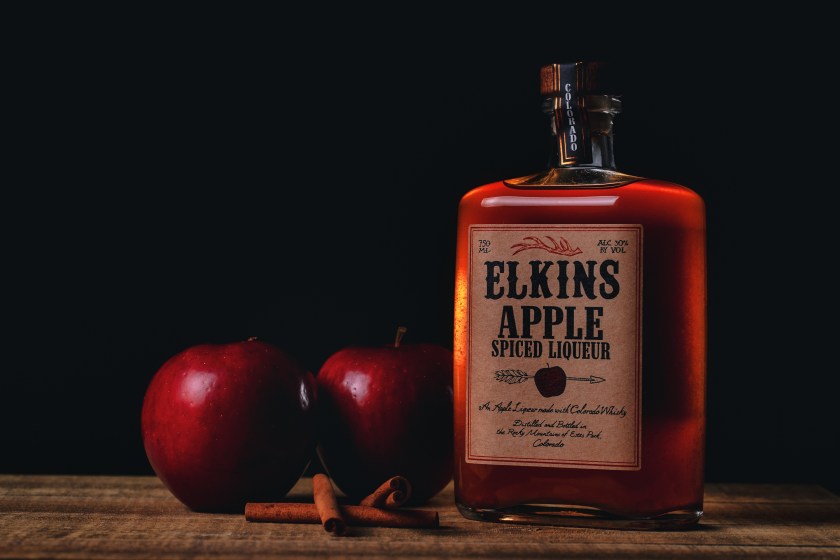
Bottle of Elkins Apple Spiced Liqueur on a wooden surface with red apples and cinnamon sticks against a dark background.
Elkins Apple Spiced Liqueur is photographed with apples and cinnamon sticks in a studio still life.

This photograph demonstrates the photographer’s engagement with commercial product photography conventions while maintaining artistic intentionality characteristic of fine art still life practice. The composition centers on a bottle of Elkins Apple Spiced Liqueur from Estes Park, Colorado, flanked by red apples and cinnamon sticks—elements that function both as contextual reinforcement of the product’s flavor profile and as formal echoes of color and shape within the frame.

The arrangement follows classical still life principles: objects positioned on a weathered wooden surface against a dark, graduated background that moves from deep black to subtle illumination. This chiaroscuro approach recalls Dutch Golden Age painting traditions, where selective lighting carves form from darkness and imbues everyday objects with weight and presence. The bottle’s amber-red liquid becomes luminous against the void, while the apples emerge from shadow with enough detail to register their texture and mass without competing for primary focus.

Technically, the image reveals deliberate choices in equipment and lighting strategy. Shot with a Sony A7ii and 85mm f/1.8 lens, the photographer employs a focal length typically reserved for portraiture, which compresses space slightly and allows selective focus while maintaining natural perspective. The use of a Godox softbox combined with a secondary flash creates dimensional lighting—the main light source appears positioned to camera right, creating highlights on the bottle’s curved surface and label while the fill light softens shadows without eliminating them entirely. This two-light setup produces the polished yet natural quality that distinguishes professional product photography from amateur attempts.

The label itself becomes a compositional element worth examining. Its vintage-inspired design, complete with wheat motif and hand-drawn typography, speaks to contemporary craft distillery aesthetics that reference historical authenticity. The photographer allows this graphic element full legibility, understanding that typography and branding function as visual information within the frame. The cork cap with its branded sleeve adds vertical interest and completes the bottle’s narrative as an artisanal product.

Within Chapter 5’s spectrum from classic to experimental still life, this work occupies the classical end—a straightforward, beautifully executed product study that prioritizes clarity, atmosphere, and material fidelity over conceptual disruption. Yet the photographer’s decision to include this image in his top 100 suggests recognition that mastery of foundational approaches remains essential even as one pushes toward experimental territories. The work demonstrates technical competence: precise focus, appropriate depth of field, balanced exposure across a challenging tonal range, and color palette that feels both rich and naturalistic.

The supporting elements—grocery store apples and cinnamon sticks—ground the image in accessible reality rather than aspirational luxury. This democratic approach to sourcing props reflects contemporary still life practice that finds beauty in the everyday rather than the exotic. The wooden surface, likely the photographer’s own workspace, bears authentic wear that reads as character rather than distress.

Post-processing in Luminar 4 appears restrained, enhancing rather than transforming the captured scene. The final image possesses the polish of commercial work while retaining the considered composition and atmospheric quality that elevates it to fine art documentation of material culture and regional craft production.

Color Drip: Materiality and Motion in Contemporary Still Life

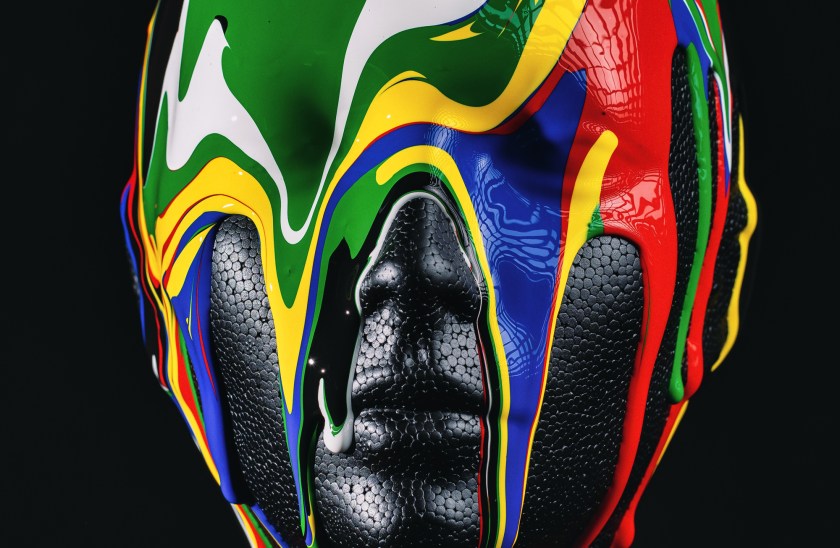
This photograph showcases multicolored paint dripping over a black mannequin head, representing the photographer’s exploration of paint as both subject and medium. By removing human elements, the focus shifts to paint’s properties and gestures, merging classic still life with contemporary material investigations. The composition embodies a dynamic interplay of control and chaos.

Close-up of a black mannequin head covered in glossy, multicolored paint dripping downward against a dark background.
Multicolored paint drips over a black mannequin head in a controlled studio setup.

Within the broader context of tabletop photography’s evolution from classical arrangement to experimental intervention, this photograph represents a decisive moment in the photographer’s exploration of paint as both subject and sculptural medium. The image captures viscous streams of color—green, yellow, red, and blue—descending across a black textured surface in fluid, organic patterns that suggest simultaneous control and surrender.

The composition reveals its conceptual origins while transcending them. Inspired by a live model photograph encountered on social media, the photographer sought to recreate similar effects using a styrofoam mannequin head painted black. This substitution proves significant: by removing the human element, the work shifts focus entirely to the material properties of paint itself—its weight, viscosity, and the temporal nature of its movement. The textured black surface, likely meant to simulate skin or hair, instead becomes an abstract topography across which color flows according to gravitational and physical laws.

Technically, the photograph demonstrates sophisticated handling of surface and light. The glossy quality of the wet paint creates highlights that map the three-dimensional contours beneath, while the matte black texture provides counterpoint and depth. The color palette—primary hues plus white—reads as deliberately elemental, avoiding the complexity of mixed tones in favor of pure chromatic statement. Each rivulet maintains its individual identity even as the colors converge and overlap, creating secondary interactions at their edges without complete integration.

The formal composition operates through diagonal movement and asymmetrical balance. The paint flows establish dynamic vectors across the frame, leading the eye downward and around the curved forms. The black areas function as negative space that gives structure to the chromatic chaos, while the textured surface adds a reptilian or industrial quality that complicates the otherwise organic flow patterns. This tension between the fluid and the fixed, the organic and the manufactured, activates the image beyond mere documentation of an experimental process.

As one of the first edits from this experimental series, the photograph captures the photographer working through ideas in real time. There exists a certain rawness here—an directness in the setup and execution that speaks to initial discovery rather than refined methodology. The black background isolates the subject completely, a studio technique that emphasizes formal relationships over contextual meaning. This approach aligns with classic tabletop photography’s concern with controlled environments, even as the unpredictable paint drips push toward the experimental end of the chapter’s spectrum.

Within Chapter 5’s framework, this piece marks a transition from static arrangement toward time-based phenomena. The dripping paint implies duration—the moment before and after this frozen instant. Unlike traditional still life’s carefully positioned objects, here the photographer choreographs a performance, then selects the decisive moment from its unfolding. The work thus bridges historical still life concerns with contemporary interests in process, materiality, and the indexical trace.

What emerges is less a portrait substitute than an investigation into how materials behave under specific conditions. The styrofoam head becomes armature, the paint becomes protagonist, and the photograph itself becomes evidence of an ephemeral sculptural event. It represents the photographer thinking through his medium, testing possibilities, and documenting the results with the clarity and precision his technical skill affords.

Marie Selby Roots, 2012

In Greg Urbano’s 2012 black and white photograph of banyan tree roots at the Marie Selby Botanical Gardens, the ordinary is elevated to extraordinary. Using a Nikon D5100, he emphasizes natural architecture and texture, inviting viewers to appreciate the monumental presence of the roots and their intricate details, symbolizing persistence and growth.

Black‑and‑white close‑up photograph of large banyan tree roots spreading across the ground at Marie Selby Botanical Gardens, taken with a Nikon D5100.
A 2012 black‑and‑white photograph of banyan tree roots at Marie Selby Botanical Gardens in Sarasota, Florida.

In the Marie Selby Botanical Gardens of Sarasota, Florida, Greg Urbano discovered a subject that speaks to photography’s essential pursuit: finding extraordinary vision in the ordinary world. His 2012 image of a banyan tree’s root system transforms what many visitors might walk past into a study of natural architecture, texture, and the quiet monumentality of growth.

Shot on a Nikon D5100 at 18mm, the photograph embraces the wide-angle perspective to emphasize the sculptural sprawl of roots as they emerge from and return to the earth. The technical choices here are deliberate—an aperture of ƒ/4.5 provides sufficient depth of field to keep the intricate root structures sharp from foreground to middle ground, while the 1/80s shutter speed at ISO 100 captures clean detail in what appears to be soft, overcast light. The conversion to black and white strips away the distraction of color, allowing the image to become purely about form, line, and the interplay of light across weathered surfaces.

What makes this photograph compelling is its invitation to reconsider scale and presence. Banyan trees are known for their dramatic aerial root systems, which drop from branches to establish new anchor points in the soil. These roots, over time, become massive supporting structures that can make a single tree look like an entire forest. Urbano positions his lens low and close, giving these roots the monumentality they deserve. They undulate across the frame like organic highways, their surfaces marked by the patient work of decades—moss-covered in places, smooth and silvered in others, each groove and crack a record of growth and adaptation.

The composition draws the eye through natural pathways. The roots create flowing curves that lead deeper into the frame, while pockets of accumulated leaves and debris provide textural contrast and visual rest stops. There’s an almost sculptural quality to the way light models the cylindrical forms, revealing their three-dimensionality through subtle gradations of gray. The photograph operates on multiple levels: as documentation of a specific botanical specimen, as an abstract study of natural form, and as a meditation on time, persistence, and the hidden infrastructure that supports visible life.

Within the context of the Top 100 Journey project, this image represents the photographer’s developing eye for architectural elements in nature. The banyan’s root system is, after all, a kind of natural architecture—functional, structural, and beautiful in its purposeful design. The black and white treatment connects this work to photography’s documentary traditions while simultaneously elevating the subject into the realm of fine art.

There’s something humbling about standing before such a root system, and Urbano’s photograph captures that sense of being in the presence of something both ancient and ongoing. These roots speak to persistence, to the slow but inexorable way living things claim their space in the world. The photographer’s choice to work at ground level, to get close and look carefully, reveals a fundamental photographic truth: the world rewards sustained attention. What appears as mere roots at first glance becomes, through the lens, a landscape unto itself—complex, textured, and worthy of extended contemplation.

See this image on:

500px

Flickr