Elkins Apple Spiced Liqueur: Vernacular Object as Subject

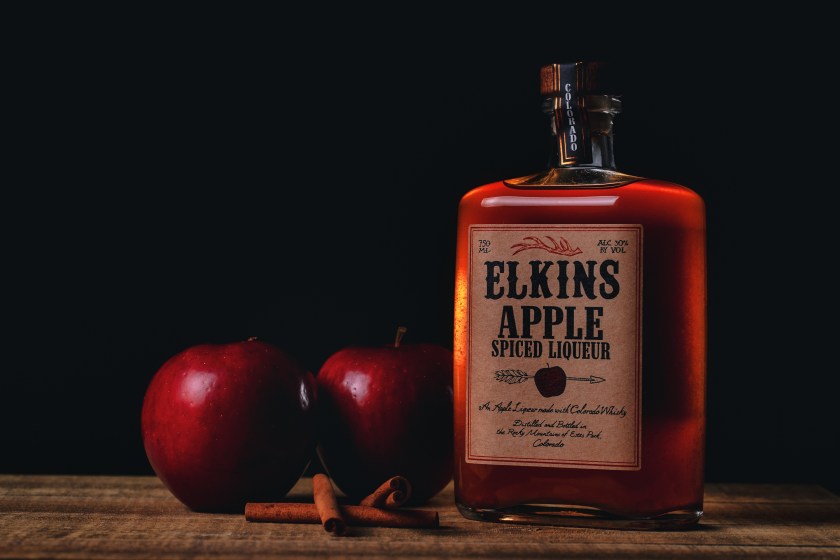
The photograph of Elkins Apple Spiced Liqueur exemplifies a blend of commercial product photography and fine art still life, using classical composition techniques. The arrangement of the bottle with apples and cinnamon sticks highlights flavor context while demonstrating technical skill in lighting and focus. The image showcases an accessible beauty in everyday items, merging artistic intent with commercial appeal.

Bottle of Elkins Apple Spiced Liqueur on a wooden surface with red apples and cinnamon sticks against a dark background.
Elkins Apple Spiced Liqueur is photographed with apples and cinnamon sticks in a studio still life.

This photograph demonstrates the photographer’s engagement with commercial product photography conventions while maintaining artistic intentionality characteristic of fine art still life practice. The composition centers on a bottle of Elkins Apple Spiced Liqueur from Estes Park, Colorado, flanked by red apples and cinnamon sticks—elements that function both as contextual reinforcement of the product’s flavor profile and as formal echoes of color and shape within the frame.

The arrangement follows classical still life principles: objects positioned on a weathered wooden surface against a dark, graduated background that moves from deep black to subtle illumination. This chiaroscuro approach recalls Dutch Golden Age painting traditions, where selective lighting carves form from darkness and imbues everyday objects with weight and presence. The bottle’s amber-red liquid becomes luminous against the void, while the apples emerge from shadow with enough detail to register their texture and mass without competing for primary focus.

Technically, the image reveals deliberate choices in equipment and lighting strategy. Shot with a Sony A7ii and 85mm f/1.8 lens, the photographer employs a focal length typically reserved for portraiture, which compresses space slightly and allows selective focus while maintaining natural perspective. The use of a Godox softbox combined with a secondary flash creates dimensional lighting—the main light source appears positioned to camera right, creating highlights on the bottle’s curved surface and label while the fill light softens shadows without eliminating them entirely. This two-light setup produces the polished yet natural quality that distinguishes professional product photography from amateur attempts.

The label itself becomes a compositional element worth examining. Its vintage-inspired design, complete with wheat motif and hand-drawn typography, speaks to contemporary craft distillery aesthetics that reference historical authenticity. The photographer allows this graphic element full legibility, understanding that typography and branding function as visual information within the frame. The cork cap with its branded sleeve adds vertical interest and completes the bottle’s narrative as an artisanal product.

Within Chapter 5’s spectrum from classic to experimental still life, this work occupies the classical end—a straightforward, beautifully executed product study that prioritizes clarity, atmosphere, and material fidelity over conceptual disruption. Yet the photographer’s decision to include this image in his top 100 suggests recognition that mastery of foundational approaches remains essential even as one pushes toward experimental territories. The work demonstrates technical competence: precise focus, appropriate depth of field, balanced exposure across a challenging tonal range, and color palette that feels both rich and naturalistic.

The supporting elements—grocery store apples and cinnamon sticks—ground the image in accessible reality rather than aspirational luxury. This democratic approach to sourcing props reflects contemporary still life practice that finds beauty in the everyday rather than the exotic. The wooden surface, likely the photographer’s own workspace, bears authentic wear that reads as character rather than distress.

Post-processing in Luminar 4 appears restrained, enhancing rather than transforming the captured scene. The final image possesses the polish of commercial work while retaining the considered composition and atmospheric quality that elevates it to fine art documentation of material culture and regional craft production.
Color Drip: Materiality and Motion in Contemporary Still Life

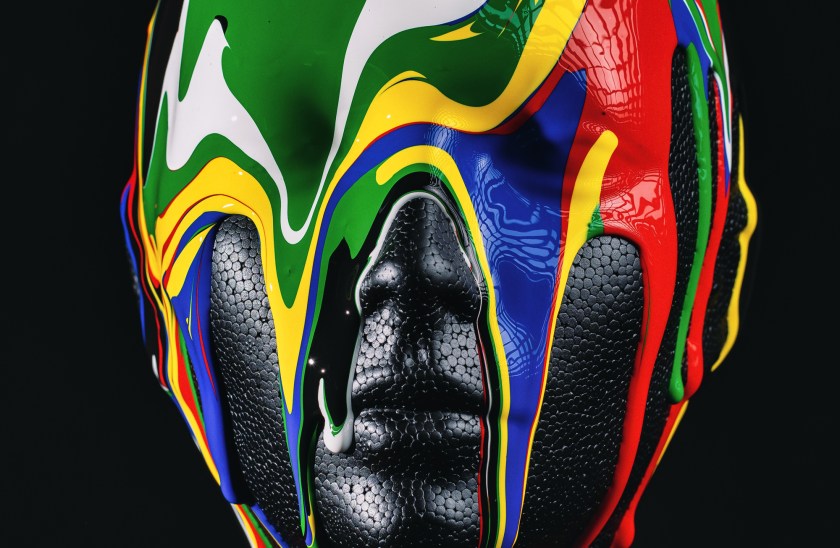
This photograph showcases multicolored paint dripping over a black mannequin head, representing the photographer’s exploration of paint as both subject and medium. By removing human elements, the focus shifts to paint’s properties and gestures, merging classic still life with contemporary material investigations. The composition embodies a dynamic interplay of control and chaos.

Close-up of a black mannequin head covered in glossy, multicolored paint dripping downward against a dark background.
Multicolored paint drips over a black mannequin head in a controlled studio setup.

Within the broader context of tabletop photography’s evolution from classical arrangement to experimental intervention, this photograph represents a decisive moment in the photographer’s exploration of paint as both subject and sculptural medium. The image captures viscous streams of color—green, yellow, red, and blue—descending across a black textured surface in fluid, organic patterns that suggest simultaneous control and surrender.

The composition reveals its conceptual origins while transcending them. Inspired by a live model photograph encountered on social media, the photographer sought to recreate similar effects using a styrofoam mannequin head painted black. This substitution proves significant: by removing the human element, the work shifts focus entirely to the material properties of paint itself—its weight, viscosity, and the temporal nature of its movement. The textured black surface, likely meant to simulate skin or hair, instead becomes an abstract topography across which color flows according to gravitational and physical laws.

Technically, the photograph demonstrates sophisticated handling of surface and light. The glossy quality of the wet paint creates highlights that map the three-dimensional contours beneath, while the matte black texture provides counterpoint and depth. The color palette—primary hues plus white—reads as deliberately elemental, avoiding the complexity of mixed tones in favor of pure chromatic statement. Each rivulet maintains its individual identity even as the colors converge and overlap, creating secondary interactions at their edges without complete integration.

The formal composition operates through diagonal movement and asymmetrical balance. The paint flows establish dynamic vectors across the frame, leading the eye downward and around the curved forms. The black areas function as negative space that gives structure to the chromatic chaos, while the textured surface adds a reptilian or industrial quality that complicates the otherwise organic flow patterns. This tension between the fluid and the fixed, the organic and the manufactured, activates the image beyond mere documentation of an experimental process.

As one of the first edits from this experimental series, the photograph captures the photographer working through ideas in real time. There exists a certain rawness here—an directness in the setup and execution that speaks to initial discovery rather than refined methodology. The black background isolates the subject completely, a studio technique that emphasizes formal relationships over contextual meaning. This approach aligns with classic tabletop photography’s concern with controlled environments, even as the unpredictable paint drips push toward the experimental end of the chapter’s spectrum.

Within Chapter 5’s framework, this piece marks a transition from static arrangement toward time-based phenomena. The dripping paint implies duration—the moment before and after this frozen instant. Unlike traditional still life’s carefully positioned objects, here the photographer choreographs a performance, then selects the decisive moment from its unfolding. The work thus bridges historical still life concerns with contemporary interests in process, materiality, and the indexical trace.

What emerges is less a portrait substitute than an investigation into how materials behave under specific conditions. The styrofoam head becomes armature, the paint becomes protagonist, and the photograph itself becomes evidence of an ephemeral sculptural event. It represents the photographer thinking through his medium, testing possibilities, and documenting the results with the clarity and precision his technical skill affords.

Metallic Army Men Still Life: The Alchemy of Transformation

Greg Urbano’s 2014 still life photograph of metallic army men illustrates a crucial moment in his artistic development. Through intentional composition and lighting, he transforms simple toys into evocative symbols of memory and mythology, balancing childhood nostalgia with adult artistry. The photograph reflects Urbano’s conceptual approach and mastery of his medium.

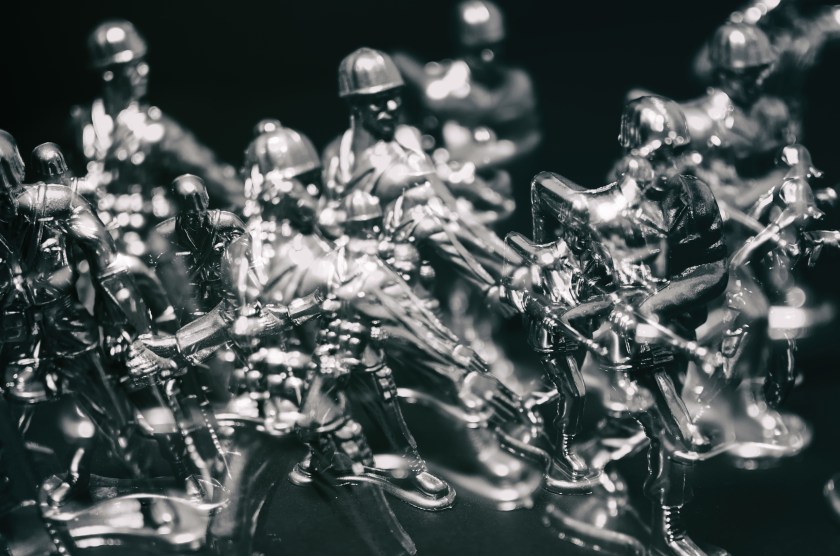
Metallic silver toy army men photographed in dramatic low light against a black background, creating an ethereal tabletop photography scene.
Metallic Army Men Still Life – Purpose-Driven Tabletop Photography (2014)

In the opening chapter of Greg Urbano’s photographic journey, this 2014 still life stands as a pivotal moment—a declaration of intentionality. The image depicts metallic army men frozen mid-action, their silver surfaces catching and scattering light across a void-like background. What began as dollar store plastic toys has been transmuted through spray paint and careful composition into something far more evocative: a meditation on memory, mythology, and the photographer’s emerging visual voice.

The technical execution reveals an artist learning to control his medium with precision. Shot on a Nikon D5100 with a 35mm f/1.8 lens wide open, Urbano exploits the shallow depth of field to create a dreamlike atmosphere. The foreground figures emerge sharp and detailed, their helmets and rifles rendered in crisp focus, while those behind dissolve into soft bokeh. This selective focus mimics the way memory itself operates—certain moments crystalline and vivid, others fading into impressionistic blur. The 1/20 second shutter speed at ISO 100 suggests a carefully controlled tabletop setup, likely using continuous lighting that allowed him to maintain the drama of highlights dancing across metallic surfaces.

What distinguishes this photograph within the “Beginnings” chapter is its purposefulness. Unlike casual snapshots or experimental exercises, this image demonstrates conceptual thinking from inception through execution. The decision to spray paint the figures silver wasn’t merely aesthetic—it stripped these mass-produced symbols of childhood play from their conventional context. No longer green plastic soldiers evoking backyard battles, they become archetypal warriors, their metallic finish suggesting both classical statuary and science fiction. They exist outside time, suspended between the ancient and the futuristic.

The composition itself rewards extended viewing. Urbano arranges the figures in a dynamic diagonal sweep that guides the eye through the frame. There’s a sense of advancing movement, of forces converging, yet the shallow focus and monochromatic treatment create an ethereal quality that contradicts any literal interpretation. These aren’t soldiers storming a beach—they’re specters, memories of conflict rendered as beautiful objects. The black background becomes an infinite space, allowing the figures to float free from any specific context or narrative.

The lighting deserves particular attention. The way highlights trace the contours of each figure—the curve of a helmet, the angle of a raised arm—reveals an understanding of how light sculpts form in photography. Some figures glow almost luminously, while others recede into shadow, creating a tonal range that prevents the silver-on-black palette from becoming monotonous. This careful modulation of light transforms what could have been a simple craft project into a genuine photographic study.

Positioned within Urbano’s broader body of work, this image represents a crucial developmental moment. It demonstrates his willingness to manipulate reality rather than simply document it, to transform found objects into vehicles for artistic expression. The photograph bridges childhood nostalgia and adult artistry, acknowledging the army men’s playful origins while elevating them through photographic treatment.

As a statement of beginnings, this work reveals an artist already thinking beyond the conventional. He wasn’t content to photograph the world as found; instead, he reimagined it, spray paint and camera serving as tools of transformation. The metallic army men become a fitting metaphor for the photographic process itself—ordinary subjects made extraordinary through vision, technique, and intention.