Shannon Quinn Creative Red Mesh 01: Portraiture as Transformation

The portrait of model Shannon Quinn, captured with red mesh fabric, highlights the photographer’s creative departure during a commissioned headshot session in Denver. This image explores themes of identity and concealment, merging fashion and classical techniques. It reflects a sophisticated understanding of light and invites viewers to contemplate the complexities of photographic representation.

Studio portrait of model Shannon Quinn standing against a dark background, partially draped in red mesh fabric with hands raised and visible through the translucent material.
Model Shannon Quinn photographed in a studio portrait using red mesh during a creative headshot session in Denver, Colorado.

Within the context of a commissioned headshot session, the photographer discovered an opportunity for creative departure—a moment when commercial purpose yielded to artistic exploration. This photograph, featuring model Shannon Quinn enveloped in crimson mesh fabric, exemplifies his ability to recognize and pursue unexpected visual possibilities within structured professional environments. The resulting image transcends its utilitarian origins, offering instead a meditation on identity, concealment, and the transformative potential of portraiture.

The composition centers on the subject’s steady, outward gaze, her expression poised between vulnerability and defiance. She holds the translucent red fabric above her head with both hands, creating a canopy that simultaneously reveals and obscures. This gesture—part unveiling, part self-protection—establishes a compelling psychological tension. The mesh filters light across her features while maintaining visual clarity, creating a liminal space where the subject exists between states: seen yet veiled, present yet ethereal, contemporary yet somehow timeless.

The photographer’s handling of light demonstrates technical sophistication and restraint. Working against a dark, neutral background, he allows the ambient illumination to bathe the subject’s face in warm tones that harmonize with the red mesh. The fabric itself becomes an active participant in the lighting scheme, casting subtle patterns and chromatic shifts across her skin and clothing. Her black attire—a textured top with bow detail—provides essential contrast, anchoring the composition while allowing the red fabric to command attention without overwhelming the frame.

What distinguishes this work is its navigation of multiple photographic traditions simultaneously. Elements of fashion photography appear in the subject’s confident pose and styled presentation, while the dramatic use of fabric recalls classical painting techniques where drapery conveys narrative and emotional weight. The dark background and controlled studio lighting situate the image within portraiture’s formal conventions, yet the unconventional use of the mesh material disrupts these expectations, injecting contemporary conceptual sensibility into an otherwise traditional setup.

Positioned within Chapter 6 of his Top 100 Journey—”The Road Ahead: Recent Work & Ongoing Exploration”—this photograph signals the artist’s ongoing investigation into portraiture’s evolving possibilities. The chapter’s emphasis on recent work and exploration finds perfect expression here: a commissioned session becomes a laboratory for creative experimentation, demonstrating that artistic vision need not be confined to personal projects alone. Professional practice and artistic development exist not as separate domains but as mutually enriching pursuits.

The red mesh functions as both literal and metaphorical element—a physical barrier that paradoxically enhances rather than diminishes our connection to the subject. This duality speaks to fundamental questions about photographic representation itself: what do we truly see when we look at a portrait? How do layers of interpretation, context, and visual mediation shape our understanding of another person’s presence?

In Shannon Quinn’s direct gaze, there exists a knowing quality, an awareness of the camera’s scrutiny and the complex transaction occurring between subject, photographer, and eventual viewer. This consciousness elevates the image beyond mere technical accomplishment, transforming it into a collaborative exploration of visibility, identity, and the porous boundaries between commercial and fine art photography. It stands as evidence of his commitment to finding artistic merit wherever circumstances allow, refusing to separate professional obligation from creative possibility.
The Studio as Theater: Classical Portraiture in Contemporary Practice

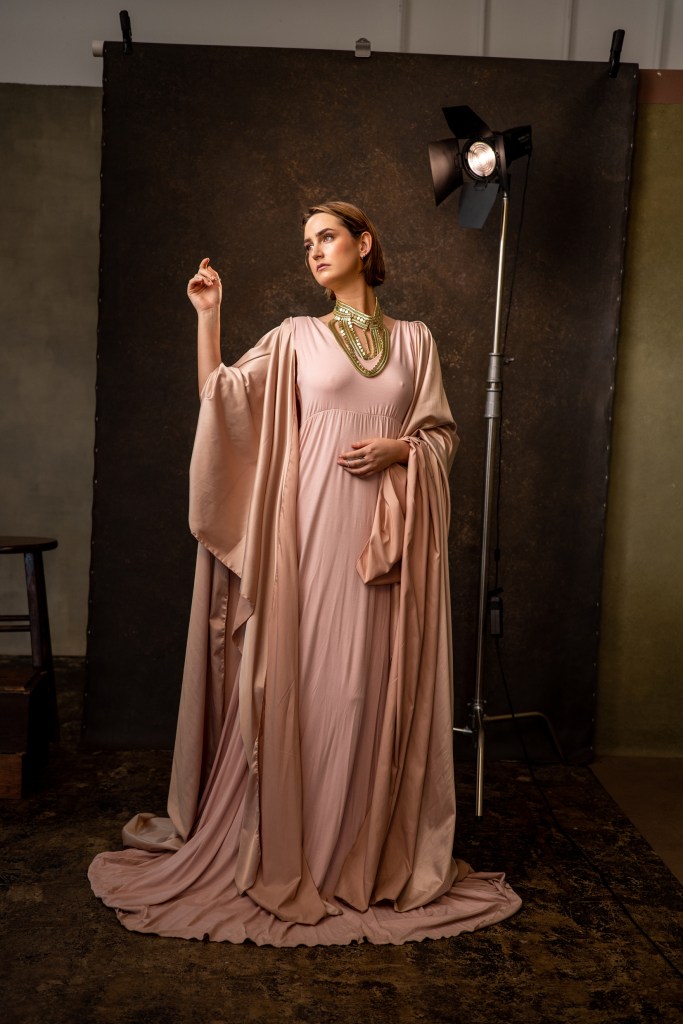
Jessica Lynn’s studio portrait showcases a fusion of classical portraiture and contemporary technique, created during a workshop at Atelier Alchimia. The photograph illustrates the artist’s growth through collaboration, using refined lighting to enhance the subject’s regal appearance. This work embodies artistic evolution, blending tradition with innovation while emphasizing continuous learning.

Studio portrait of Jessica Lynn standing in a flowing blush-colored gown, posed in front of a dark backdrop with a studio light visible behind her.
Jessica Lynn (QueenJess Rising) photographed in a studio setting during a workshop at Atelier Alchimia in Westminster, Colorado.

This studio portrait from Chapter 6 of the photographer’s Top 100 Journey represents a deliberate engagement with the formal traditions of classical portraiture, reimagined through contemporary technical means. Created during a workshop at Atelier Alchimia in Westminster, Colorado, the image demonstrates how collaborative learning environments can yield work of considerable aesthetic merit while advancing the artist’s technical vocabulary.

The subject, Jessica Lynn, is presented in a flowing blush-toned gown with dramatic bell sleeves that cascade to the floor, creating a silhouette reminiscent of Renaissance or Pre-Raphaelite painting. An ornate collar necklace in gold and green adds a regal quality that justifies the image’s title. The photographer has positioned her in a classical contrapposto-inspired stance—weight on one leg, torso gently twisted, one hand raised in a gesture of contemplation or perhaps benediction. This pose, combined with the upward gaze and theatrical lighting, evokes both historical portraiture and contemporary fashion photography’s ongoing dialogue with art history.

The technical execution reveals careful attention to studio craft. A single key light with barn doors, visible in the frame’s right edge, provides directional illumination that sculpts the subject’s features and creates tonal gradation across the fabric’s folds. The mottled canvas backdrop transitions from warm browns to darker tones, providing depth without competing for attention. The lighting setup, developed collaboratively with studio owner Jonny Edwards, demonstrates the photographer’s increasing comfort with controlled environments—a marked evolution from earlier work in the series that frequently engaged with natural light and outdoor settings.

What makes this image particularly relevant to “The Road Ahead: Recent Work & Ongoing Exploration” is its frank acknowledgment of artistic development through structured learning. Shot during a workshop led by Eric Brown, the photograph embodies a philosophy of continuous growth and technical refinement. Rather than presenting only work created in solitary practice, the photographer includes images born from educational contexts, recognizing that mastery often emerges through collaboration and mentorship.

The choice to work with studio lighting represents an expansion of technical range. The careful balance of exposure—maintaining detail in both the luminous fabric and the darker background—suggests growing confidence with artificial light sources. The warm color palette creates cohesion between subject, costume, and environment, while the visible studio elements (backdrop clamps, light stand) provide documentary transparency about the image’s construction.

Within the broader arc of the Top 100 Journey, this portrait signals a willingness to explore different photographic modes. Where earlier chapters emphasized environmental and location work, this studio piece demonstrates versatility and an interest in controlled aesthetic experiences. The theatrical quality—the visible apparatus of image-making—invites viewers into the creative process rather than presenting a seamless illusion.

The photograph succeeds both as a study in classical beauty and as evidence of artistic evolution. It captures a moment of learning translated into accomplished execution, showing that the road ahead need not abandon traditional craft in pursuit of innovation. Instead, it suggests that mastery comes through accumulation—building new skills atop established foundations, always remaining open to guidance, collaboration, and the timeless appeal of light falling gracefully upon fabric and form.

Natural Elegance: A Portrait in Copper and Light

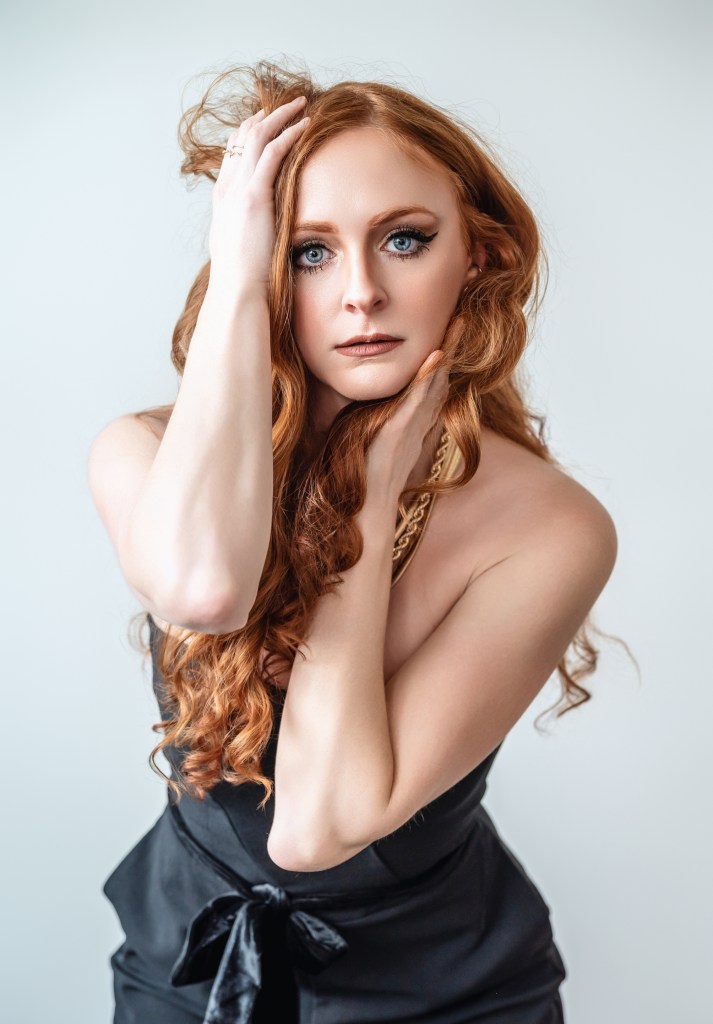
Abigail Marchetti, known as Copper Muse, poses at a Denver Models open shoot, showcasing the photographer’s evolving studio portraiture techniques. Utilizing natural light, he captures her striking features and authentic expression, emphasizing color harmony and psychological presence. This portrait marks a significant step in his artistic development, blending classical principles with a modern sensibility.

Studio portrait of a red-haired woman in a black dress posing against a light background with her hands framing her face.
Model Abigail Marchetti, known as Copper Muse, poses during a Denver Models open shoot at Realm Studio in Denver.

This compelling portrait of model Abigail Marchetti exemplifies the photographer’s deepening engagement with studio portraiture and his refined approach to natural light as a primary sculptural tool. Captured during a Denver Models open shoot at Realm Studio, the image represents continued exploration of collaborative creative environments while demonstrating increasingly sophisticated control of the portraitist’s essential elements: light, gesture, color harmony, and psychological presence.

The composition centers on the model’s striking features—vibrant copper-red hair cascading in loose waves, piercing blue-green eyes meeting the camera with direct but unguarded confidence, and pale skin that catches and reflects the soft window light with luminous clarity. Her pose, with one hand gracefully raised to her hair and the other touching her neck, creates natural framing that draws attention to her face while suggesting unaffected spontaneity. The black strapless garment provides bold tonal contrast against both her skin and the pale backdrop, creating visual drama without competing for attention.

What distinguishes this work is the photographer’s masterful exploitation of natural window light. Rather than relying on the multiple strobes and reflectors typical of commercial studio work, he has chosen a more classical approach that recalls portrait painting traditions. The directional quality of the illumination—soft yet defined—models the subject’s features with sculptural precision while maintaining delicate gradations across skin tones. Highlights along the hair reveal its rich, multidimensional copper coloring, transforming what could be merely descriptive documentation into chromatic study.

The technical execution demonstrates growing confidence with the Nikon Z5 system and the versatile 24-120mm lens. The focal length selection—likely in the moderate telephoto range—provides flattering perspective without distortion, while the depth of field keeps the subject sharply defined against the subtly gradated background. The exposure balances the challenge of pale skin and light background without sacrificing detail in either the model’s features or the deeper tones of her garment.

Within the framework of Chapter 6—”The Road Ahead: Recent Work & Ongoing Exploration”—this portrait signals important developments in his artistic trajectory. The open shoot environment, like the previous workshop-based work, indicates willingness to engage with structured collaborative opportunities while bringing his distinct sensibility to bear. Yet where some open shoots yield generic beauty documentation, this image transcends its circumstances through careful attention to classical portraiture principles: the quality of light, the authenticity of expression, the harmony of color and form.

The model’s direct gaze introduces a quality often absent from his landscape and architectural work—reciprocal acknowledgment between photographer and subject. This mutual recognition adds psychological dimension, transforming technical exercise into genuine encounter. The slight asymmetry in her expression—contemplative rather than performative—suggests comfort and trust within the photographic exchange.

The photograph also reveals evolving aesthetic priorities. While maintaining the tonal sensitivity and compositional rigor evident throughout his portfolio, he demonstrates here that minimalism need not preclude richness. The interplay of copper hair, pale skin, black fabric, and soft grey background creates visual complexity through chromatic relationships rather than environmental detail. This represents a distillation of his practice—finding depth in apparent simplicity, discovering complexity in restraint—now applied to the human figure with increasing assurance and grace.