Gabby: The Architecture of Gesture and High-Key Simplicity

Gabby’s portrait, taken in Denver, showcases the photographer’s shift from low-key to high-key aesthetics, emphasizing brightness and minimalism. Using a Sony A7ii and 85mm lens, the image focuses on the subject’s form and style against a white background. The composition blends casual glamour with commercial appeal, highlighting sophisticated color and texture relationships.

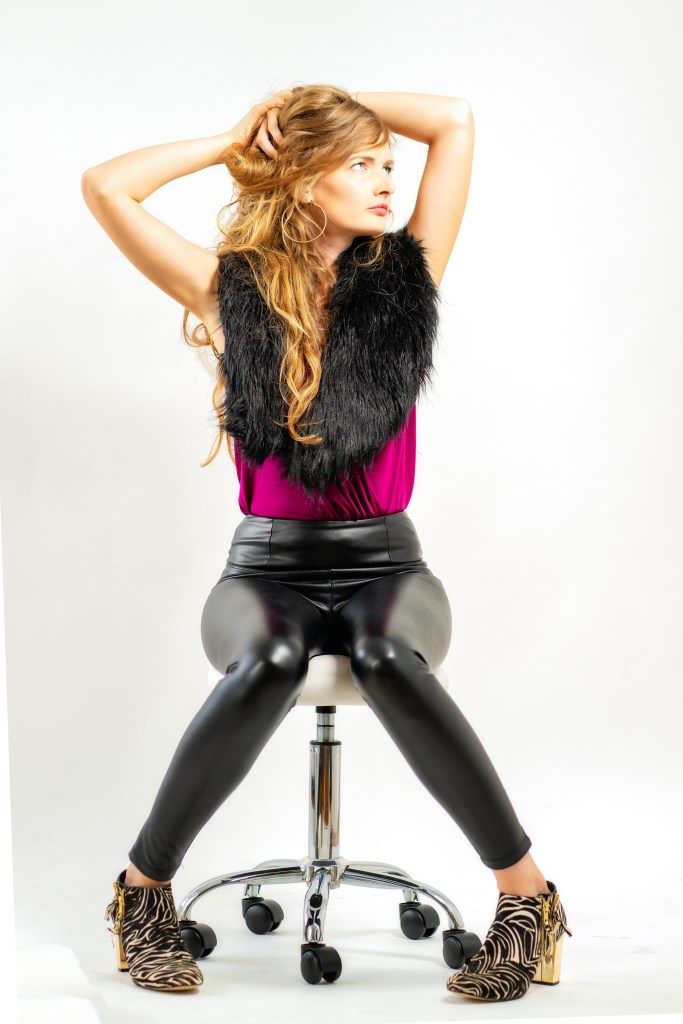
Woman seated on a rolling studio stool against a white background, arms raised behind her head, wearing a sleeveless top and fitted pants.
Gabby poses seated on a stool during a studio portrait session in Denver, Colorado.

This portrait of Gabby, captured at The Headquarter in Denver, exemplifies the photographer’s exploration of high-key studio aesthetics within Chapter 4 of his Top 100 Journey. Where previous work in this chapter has leaned toward dramatic low-key lighting and theatrical darkness, this image pivots toward brightness and negative space, demonstrating the photographer’s versatility in handling opposing approaches to studio portraiture.

The technical foundation remains consistent with his established toolkit: the Sony A7ii paired with the 85mm f/1.8 lens, complemented by Godox V1s flash modified through a shoot-through umbrella. However, the application of this equipment yields an entirely different visual language. The near-white background floods the frame with luminosity, creating an environment where the subject exists in a floating, dimensionless space. This deliberate elimination of context shifts the viewer’s attention entirely onto the subject’s form, gesture, and the carefully constructed interplay of textures and colors.

The composition centers on a moment of suspended motion—arms raised to manipulate cascading blonde hair, the subject positioned on a chrome office chair that introduces an unexpected element of contemporary banality into what might otherwise read as pure fashion imagery. This juxtaposition between the mundane object and the styled subject creates a productive tension. The chair, with its visible wheels and utilitarian design, grounds the photograph in the reality of the studio space while the subject’s pose and styling lift the image toward aspirational fashion photography.

Color relationships anchor the visual hierarchy. The vibrant magenta top creates the primary focal point at the composition’s center, while the black faux-fur vest provides textural complexity and tonal contrast. Below, leather leggings in glossy black establish a continuous dark field that culminates in zebra-print platform booties—a detail that injects pattern and visual interest at the composition’s base. This vertical arrangement of color and texture demonstrates sophisticated styling that the photographer captures without interference, allowing the wardrobe choices to speak clearly against the minimal background.

The pose itself warrants examination. With arms raised and gaze directed away from the camera, the subject embodies a moment of casual glamour—not performing for the lens but existing within her own contemplative space. This approach to direction, whether collaborative or specifically guided, results in imagery that feels less like traditional portraiture and more akin to editorial fashion work. The photographer captures not just appearance but attitude, a quality that elevates studio work beyond documentation.

Within the broader context of Chapter 4, this photograph represents the photographer’s engagement with clean, commercial aesthetics. Where other images in this collection embrace complexity through dramatic lighting or environmental context, “Gabby” finds its power in reduction and clarity. The high-key approach requires precise exposure management—overexposure would flatten the image entirely, while underexposure would render the background gray rather than white. The successful execution here suggests a photographer increasingly confident in technical precision.

Post-processing in Luminar 4 maintains this clarity, with adjustments that preserve the luminous quality of the scene while ensuring adequate separation between subject and background. The result is an image that functions equally well as a portfolio piece, an editorial illustration, or a study in contemporary portrait methodology.
Gnatty Jessica Rabbit: A Study in Theatrical Light and Character Translation

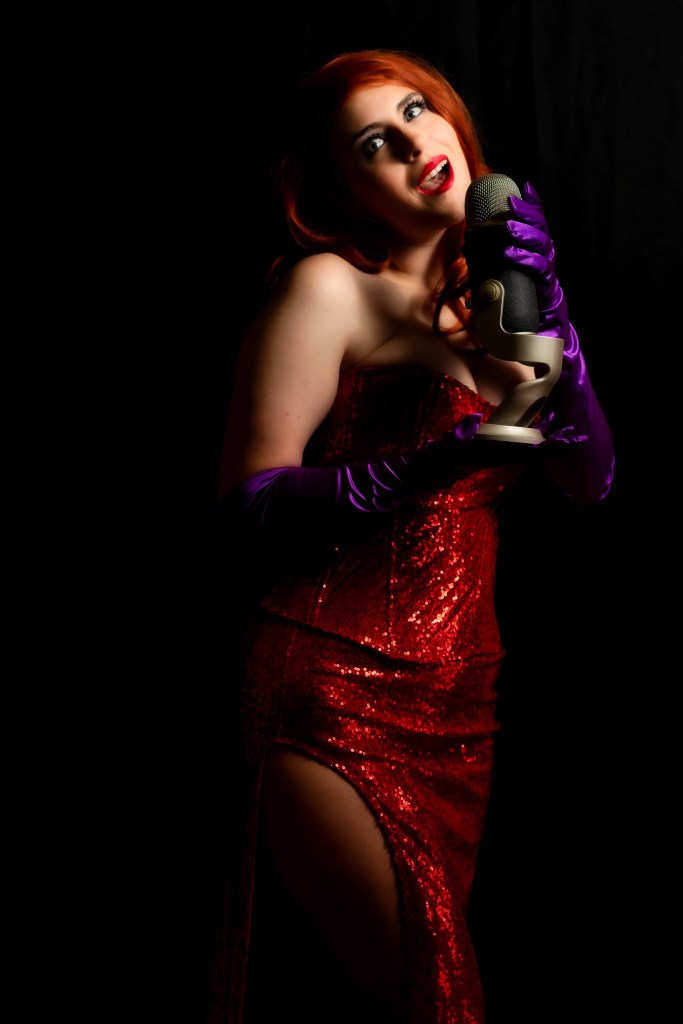
Gnatty Sparkles embodies Jessica Rabbit in a portrait by Greg Urbano, showcasing a blend of pop culture and classical techniques. Set against a dark background, expert lighting highlights the figure and costume details. The image balances theatricality with technical skill, reflecting the photographer’s evolving prowess in creative collaborations.

Woman in a red sequined dress and purple gloves holding a vintage-style microphone against a black background.
Gnatty Sparkles poses as Jessica Rabbit during a studio portrait session in Fort Collins, Colorado.

Within Chapter 4 of Greg Urbano’s Top 100 Journey—dedicated to portrait work spanning studio environments, outdoor sessions, and workshop collaborations—this striking interpretation of Jessica Rabbit through cosplayer Gnatty Sparkles represents a convergence of pop culture iconography and classical portraiture techniques. The photograph demonstrates the photographer’s evolving command of controlled lighting environments and his willingness to embrace theatrical subject matter without sacrificing compositional rigor.

Shot at Old Town Yoga in downtown Fort Collins, the image immediately establishes its vocabulary through the absolute darkness of its background. This void serves not merely as negative space but as a deliberate framing device that forces the viewer’s attention onto the subject with an intensity reminiscent of Baroque portraiture. The photographer employs a Sony A7ii paired with an 85mm f/1.8 lens—a combination favored for its ability to render flattering compression and subtle depth separation in portrait work. The addition of a Godox V1s flash modified through a shoot-through umbrella provides the soft, directional illumination that sculpts the figure from the darkness.

The technical execution reveals a photographer comfortable working within the constraints of artificial lighting. The catch lights in the subject’s eyes confirm the umbrella placement, while the gradual falloff from highlight to shadow demonstrates careful attention to light-to-subject distance. This is not flash photography that announces itself harshly; rather, it mimics the quality of continuous studio lighting while maintaining the power and flexibility of strobe work.

What distinguishes this image within the chapter’s broader context is its negotiation between documentary portraiture and fantasy realization. The subject’s embodiment of Jessica Rabbit—the animated femme fatale from “Who Framed Roger Rabbit”—demands a heightened reality that traditional portrait work might resist. The photographer accommodates this through his lighting choices, creating drama without veering into caricature. The sequined red dress catches and fractures the light into countless micro-reflections, a technical challenge that could easily overwhelm the sensor or create distracting hot spots. Here, the exposure maintains detail within these specular highlights while preserving the richness of the red tones.

The purple opera gloves introduce a complementary color relationship that prevents the image from becoming monotonous in its red-black palette. This attention to color theory—whether conscious or intuitive—suggests a developing sophistication in the photographer’s approach to more theatrical subject matter. The pose itself, with the microphone held close and the subject’s gaze directed past the camera, creates narrative ambiguity. Is this a performance captured mid-song, or a constructed tableau referencing performance?

Post-processing in Luminar 4 indicates a workflow focused on refinement rather than transformation. The skin tones retain a natural quality despite the artificial lighting environment, and the overall tonality suggests selective adjustments rather than heavy-handed filtering. This restraint allows the photograph’s essential qualities—the lighting, the costume, the subject’s expression—to register without distraction.

Within the trajectory of Chapter 4, this image represents the photographer’s engagement with workshop and collaborative environments where subjects arrive with specific creative visions. The success of such work depends on the photographer’s ability to serve that vision while maintaining their own technical and aesthetic standards—a balance this photograph achieves with confident precision.

Kelly

PKelly R. Bienfang’s studio portrait captures the essence of minimalist photography, focusing on the subject against a clean white backdrop. Utilizing controlled lighting and strategic posing, the image showcases the photographer’s skill and adaptability. It highlights the evolving rapport between photographer and subject, emphasizing the importance of genuine collaboration in achieving impactful portraits.

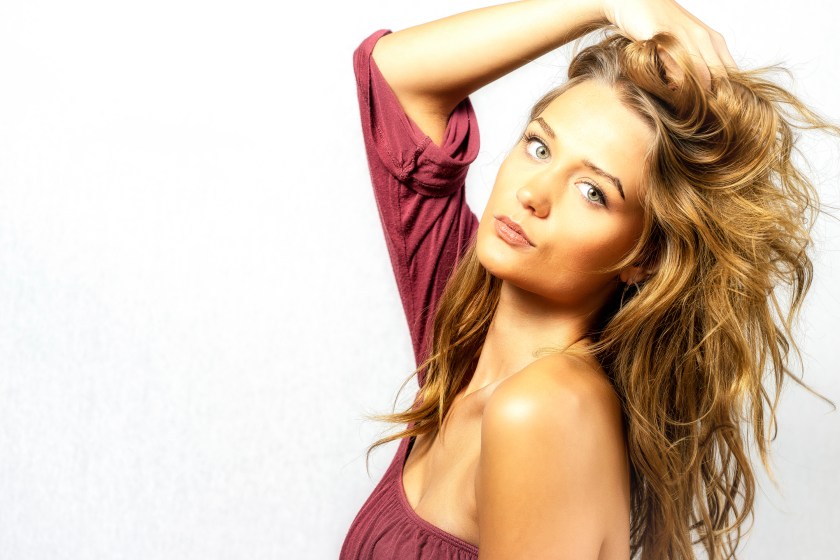
Woman with long light brown hair posing against a white background, one arm raised to her head, wearing a sleeveless top.
PKelly R. Bienfang poses during a studio portrait session in Fort Collins, Colorado.

This portrait from Chapter 4 of Greg Urbano’s Top 100 Journey exemplifies the photographer’s refined approach to studio portraiture, demonstrating how minimalist environments and controlled lighting can distill a subject’s presence to its essential elements. Captured at Old Town Yoga in downtown Fort Collins, Colorado, the image reveals the photographer’s ability to transform functional spaces into effective portrait studios, a skill central to the chapter’s exploration of diverse shooting contexts.

The composition centers on the subject, Kelly, photographed against a pure white backdrop that eliminates all contextual information, focusing attention entirely on her form, expression, and movement. Her pose—arm raised to gather flowing hair, head tilted, gaze directed toward the camera—suggests a moment caught between deliberate positioning and natural gesture. The wind-swept quality of her hair introduces dynamic motion into an otherwise static studio setup, creating visual energy that prevents the portrait from settling into conventional headshot territory.

The photographer’s technical execution demonstrates consistent mastery of the equipment established throughout this chapter. Working with the Sony A7ii and 85mm f/1.8 lens, supplemented by a Godox V1s flash modified through a shoot-through umbrella, he has created illumination that reads as both bright and dimensioned. The lighting wraps evenly across the subject’s features while maintaining sufficient shadow information to model her facial structure and the curves of her shoulders and arms. The high-key approach—white background, luminous skin tones—requires precise exposure control to prevent blown highlights while retaining textural detail in hair and fabric.

Color becomes a critical compositional element in this reduced visual field. The deep burgundy of Kelly’s garment provides the primary chromatic accent against the neutral backdrop and warm skin tones, creating a complementary relationship that anchors the eye. The photographer has allowed the subject’s honey-blonde hair to cascade freely, its varied tones adding subtle complexity to the upper portion of the frame. Post-processing in Luminar 4 has yielded clean, commercial-quality results—polished without appearing artificial, enhanced without sacrificing the authentic quality of skin and texture.

Within the broader context of Chapter 4, this photograph represents the studio portrait in its most distilled form. While other works in this series incorporate environmental elements or natural light scenarios, this image strips away such variables to focus purely on subject, light, and photographer’s vision. The setting at Old Town Yoga—likely chosen for its available space and clean backgrounds rather than thematic connection—underscores the photographer’s adaptability, his capacity to identify and utilize whatever resources a location offers.

The portrait also reflects evolving confidence in direction and collaboration. The pose suggests active guidance rather than passive documentation, indicating the photographer’s growing comfort in shaping rather than merely recording moments. Kelly’s ease before the camera—the natural grace of her gesture, the direct engagement of her gaze—speaks to successful rapport between photographer and subject, that intangible but essential element of portrait work that transcends technical proficiency.

This image stands as evidence of the photographer’s progression toward professional fluency in controlled portrait environments, demonstrating that compelling imagery emerges not from elaborate setups but from clear vision executed with precision.

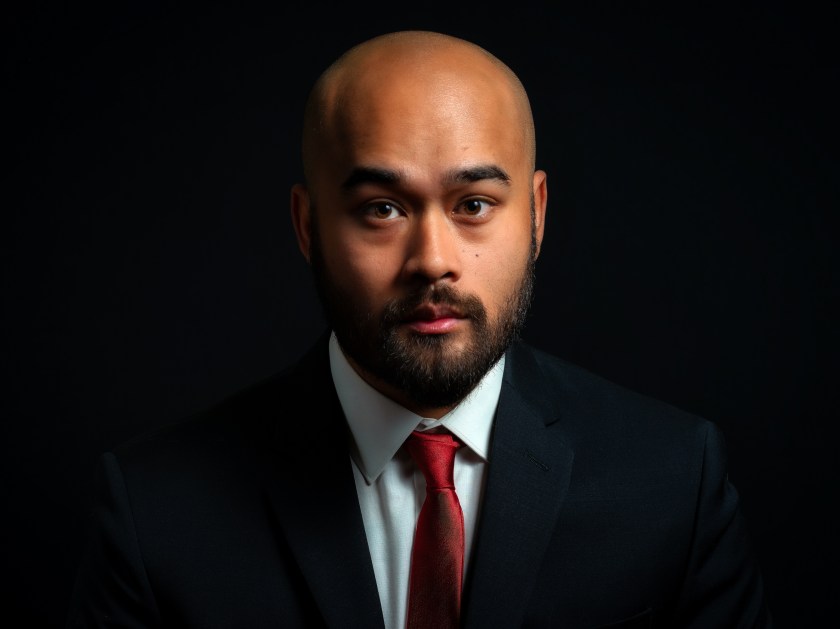
Mike Groth: Classical Studio Portraiture and the Language of Formality

Mike Groth’s studio portrait, featured in Chapter 4 of the Top 100 Journey, exemplifies traditional portraiture through controlled lighting and composition. Shot at Old Town Yoga Studio, the image focuses on character and presence, utilizing a classic backdrop and professional techniques. Its formal simplicity highlights the subject’s confidence, making it versatile across various contexts.

Bald man with a beard wearing a suit and red tie looks directly at the camera against a black background.
Mike Groth is photographed in a studio portrait at Old Town Yoga Studio in Fort Collins, Colorado.

Within Chapter 4 of the photographer’s Top 100 Journey, this portrait of Mike Groth represents a return to the foundational principles of studio portraiture—controlled lighting, deliberate composition, and the timeless formality of traditional headshot aesthetics. Shot at the Old Town Yoga Studio in Fort Collins, Colorado, the image demonstrates the photographer’s facility with classic studio techniques while exploring the psychological dimensions of formal masculine presentation.

The technical execution adheres to established conventions of corporate and editorial portraiture. Utilizing a Sony A7ii with an 85mm f/1.8 lens, the photographer has positioned his subject against a pure black backdrop, eliminating all environmental context to focus entirely on character and presence. A Godox V1s flash paired with a shoot-through umbrella provides the primary illumination—a traditional modifier choice that produces soft, diffused light with gentle shadow gradation across the subject’s features. This approach creates dimensional modeling without the harsh contrast of direct flash, revealing the contours of the face while maintaining a polished, professional quality.

The composition centers the subject in a classical three-quarter view, shoulders angled slightly to create visual interest while the face turns toward the camera. This positioning—neither fully frontal nor profile—has been a cornerstone of portraiture since the Renaissance, offering both dimensionality and direct engagement. The subject’s formal attire—dark suit, white shirt, burgundy tie—reinforces the traditional corporate aesthetic, while his neutral expression and direct gaze suggest confidence tempered with approachability.

What distinguishes this work within the photographer’s broader practice is its embrace of restraint. Where other images in Chapter 4 explore environmental integration and spontaneous moments, this portrait strips away context to examine how lighting, posture, and expression alone can convey character. The black void backdrop functions not merely as a neutral background but as an active element, creating psychological weight and directing all attention to the subtle details: the catch lights in the eyes, the texture of facial hair, the precise fall of shadow along the jawline.

The post-processing in Luminar 4 maintains the studio’s carefully controlled atmosphere. Skin tones are rendered with natural warmth while preserving texture and detail. The lighting reveals itself as directional yet forgiving, highlighting the subject’s facial structure without creating unflattering shadows. This balance between revelation and flattery characterizes effective professional portraiture—honest without being harsh, polished without appearing artificial.

Within the context of Chapter 4’s mission to document studio, outdoor, and workshop methodologies, this image anchors the studio component with particular authority. It demonstrates that contemporary portrait photography need not abandon classical techniques in pursuit of innovation. The photographer’s choice to work within established conventions reflects an understanding that certain approaches endure precisely because they succeed in their essential task: revealing the subject’s presence and character with clarity and dignity.

The formal simplicity of this portrait allows it to function across multiple contexts—editorial, corporate, archival. This versatility speaks to the photographer’s understanding of portraiture not merely as artistic expression but as functional communication. As part of the Top 100 Journey, the image represents a technical benchmark, showcasing the fundamental competencies upon which more experimental work can build. It is portraiture in its most distilled form: light, subject, and the photographer’s ability to orchestrate their interaction with precision and purpose.

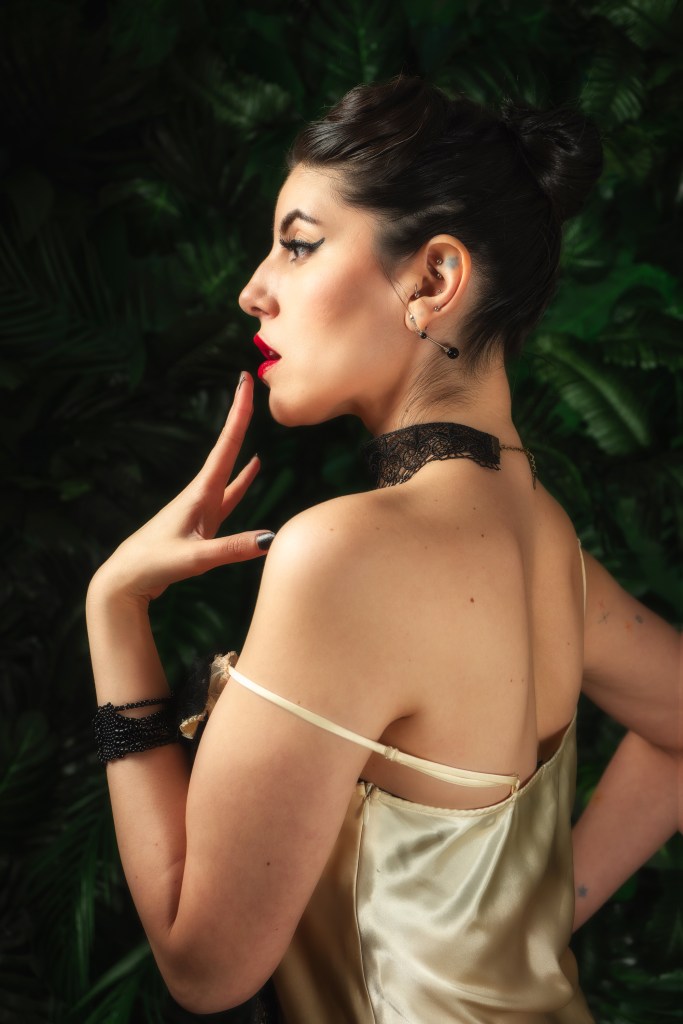
Silhouette and Subversion: A Study in Controlled Drama

The portrait of Savage Van Sage by Greg Urbano in Chapter 4 of Top 100 Journey exemplifies refined environmental portraiture. It captures a blend of vulnerability and confidence through composition, lighting, and setting. The ivy backdrop, along with the model’s pose, invites viewers to engage with the complex narrative, reflecting Urbano’s artistic evolution and technical mastery.

Woman in a satin dress shown in side profile against a dark leafy background, with hair in an updo and red lipstick.
Savage Van Sage poses in profile in a studio portrait with an ivy-covered wall near Denver, Colorado.

Within Chapter 4 of Greg Urbano’s Top 100 Journey—a section devoted to studio portraiture and collaborative workshop explorations—this photograph of model Savage Van Sage stands as a masterclass in theatrical restraint. Shot against an ivy-laden wall at the Headquarters studio near Denver, the image demonstrates the photographer’s evolving command of environmental portraiture, where setting and subject engage in a carefully choreographed dialogue.

The composition reveals sophisticated technical decision-making. Urbano positions his subject in profile, her face turned away from the camera yet fully engaged with the viewer through gesture and posture. The silhouette technique employed here—enhanced through post-processing in Adobe Camera Raw and Luminar 4—creates a striking interplay between illumination and shadow. Light sculpts the model’s features with precision, catching the curve of her jawline, the delicate architecture of her ear adorned with multiple piercings, and the bold contrast of crimson lips against porcelain skin.

What distinguishes this work within the chapter’s broader exploration of portrait photography is its willingness to embrace ambiguity. The model’s bare shoulder and the gossamer straps of her garment suggest vulnerability, yet her pose—hand raised to chin in a gesture of thoughtful poise—projects confidence and self-possession. The black lace choker and wrist accessory introduce elements of vintage glamour and contemporary subculture, positioning the subject at the intersection of multiple aesthetic traditions. This fusion of pin-up sensibility with darker, more enigmatic styling reflects Urbano’s interest in portraits that resist singular interpretation.

The natural ivy backdrop functions as more than mere decoration. Its organic chaos provides textural depth and creates a liminal space—neither entirely studio nor wholly natural environment. This choice aligns with the chapter’s documentation of the photographer’s studio and workshop methodologies, demonstrating how controlled environments can be manipulated to suggest narrative possibilities beyond their physical constraints. The deep greens recede into darkness, focusing attention on the figure while maintaining atmospheric richness.

Technically, the photograph showcases the photographer’s proficiency with studio lighting configurations. The illumination appears to originate from a single, directional source, creating the dramatic side-lighting characteristic of classic portraiture while maintaining sufficient fill to preserve detail in shadow areas. This approach—refined through workshop collaborations and repeated studio sessions—demonstrates a maturation from documentary impulses toward more deliberately constructed imagery.

The inclusion of this photograph in the Top 100 Journey marks a significant moment in Urbano’s artistic development. Where earlier chapters might emphasize spontaneity or environmental documentation, this studio work reveals an artist increasingly comfortable with artifice and construction. The model becomes collaborator rather than subject, her professional experience evident in the precision of her pose and the deliberate theatricality of her presentation.

Ultimately, this portrait succeeds because it understands the power of suggestion over declaration. The viewer receives fragments—a profile, a gesture, a carefully composed environment—and must construct meaning from these elements. It is portrait photography that honors both the technical traditions of studio work and the contemporary expectation that images should provoke rather than simply document. Within Urbano’s evolving practice, it represents a confident synthesis of technical skill and artistic vision.