Light Paint Egg: Precision and Wonder in Contemporary Still Life

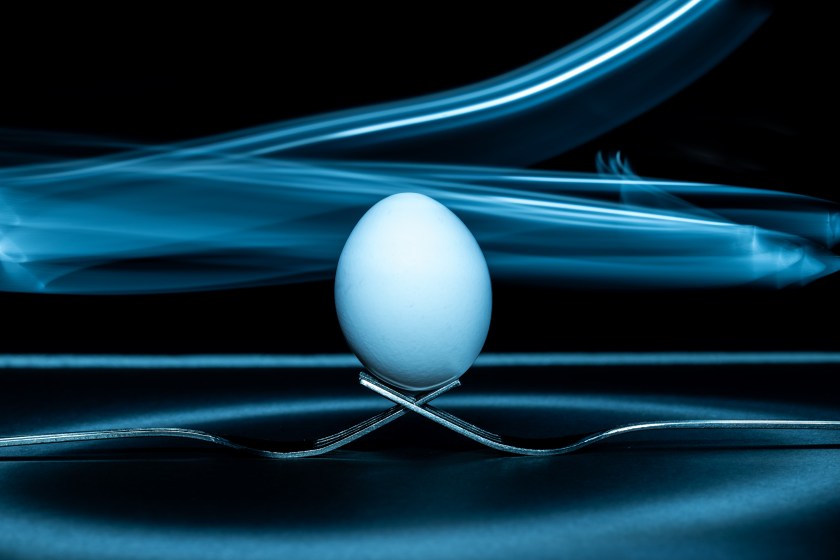
The photograph “Light Paint Egg” showcases a white egg balanced on crossed forks, illuminated through light painting techniques. This work exemplifies the artist’s blend of traditional and contemporary methods, capturing a balance between stasis and motion. It represents an innovative departure in still life, emphasizing creativity and technical mastery despite simple materials.

White egg balanced upright on crossed metal forks, photographed against a dark background with blue light trails created through light painting.
A white egg balanced on crossed forks, photographed using light painting techniques for the 52 Frames Week 11 “Egg” challenge.

In this meticulously crafted photograph, the artist demonstrates a masterful command of light painting technique, transforming an ordinary subject into an object of contemplation. The egg, positioned at the composition’s center, becomes a luminous focal point—its pale, almost ethereal surface contrasting dramatically against the deep black void that surrounds it. This is not merely documentation of an object, but rather an exploration of form, light, and the delicate balance between the tangible and the abstract.

The technical execution reveals a photographer working at the intersection of traditional still life aesthetics and contemporary experimental methods. Inspired by demonstrations from the lighting equipment company Adaptalux, he pursued this vision independently, relying on his own resourcefulness and understanding of photographic principles rather than specialized gear. This approach speaks to a fundamental confidence in craft—the knowledge that compelling imagery emerges not from equipment alone, but from vision and technical literacy working in concert.

The light trails that sweep through the frame possess an almost calligraphic quality, their cool blue tones suggesting both movement and stillness simultaneously. These luminous threads create a complex spatial environment, establishing depth and dimensionality around the egg while reinforcing its solidity and sculptural presence. The waves beneath appear to cradle the subject, while the diagonal streaks above suggest trajectory, momentum, perhaps even flight. There exists here a visual tension between stasis and motion, weight and weightlessness—themes that resonate throughout his broader body of work.

Positioned within Chapter 6 of his Top 100 Journey—”The Road Ahead: Recent Work & Ongoing Exploration”—this photograph exemplifies the artist’s willingness to embrace technical challenges and aesthetic risks. The chapter’s title suggests forward movement, continued evolution, and the photographer’s commitment to expanding his visual vocabulary. Indeed, this image represents a departure from more conventional approaches to still life, demonstrating how constraints—in this case, a weekly theme challenge—can catalyze creative innovation.

The composition adheres to classical principles while subverting expectations. The egg, that most ancient and universal of symbols, is elevated beyond its associations with fragility and potential. Here it becomes something simultaneously organic and otherworldly, as though suspended in a dimension where the laws of physics bend to artistic intention. The photographer’s choice to work with long exposure and moving light sources transforms the medium itself into a drawing tool, blurring the boundaries between photography, painting, and performance.

What distinguishes this work within his oeuvre is its synthesis of technical precision and poetic sensibility. The execution required careful planning—controlling exposure duration, choreographing light movement, managing ambient contamination—yet the final image transcends its methodology. It invites meditation on form, on the nature of photographic representation, and on how familiar objects can be estranged and renewed through careful observation and technical intervention.

As part of his ongoing exploration documented in the Top 100 Journey project, “Light Paint Egg” signals a photographer unafraid to experiment, to respond to creative prompts with rigor and imagination, and to push the boundaries of his practice. It stands as evidence that profound imagery can emerge from simple materials when vision, patience, and technical mastery converge.
Ancient Greek Coin, Head of Alexander II Zebina

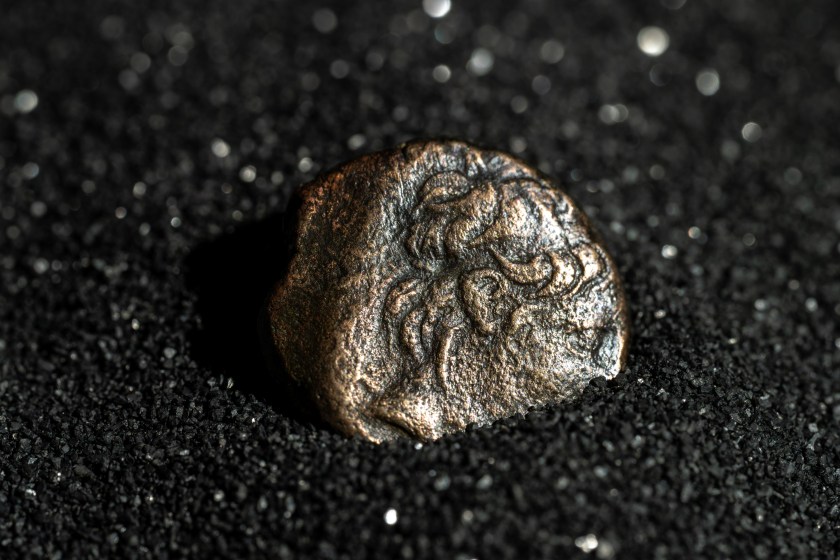
A macro photograph of a 123 BC Greek coin by Alexander II Zebina captures its historical significance and texture. The artist avoids over-sharpening, choosing selective focus to highlight the coin’s surface. This work raises questions about ownership, memory, and our connection to time, ultimately transforming the coin into a philosophical exploration of history.

Close-up of a worn ancient Greek coin showing a raised portrait, resting on coarse black granular material.
A macro photograph of an ancient Greek coin with a portrait relief placed on a dark textured surface.

In this macro study from Chapter 6 of his Top 100 Journey, the photographer confronts an artifact that predates the medium of photography by over two millennia. The coin—a bronze piece from 123 BC bearing the portrait of Alexander II Zebina—becomes both subject and collaborator, its weathered surface telling stories that extend far beyond the frame. This single exposure, created for the 52 Frames challenge, demonstrates a mature understanding of how light and composition can resurrect history from oxidized metal.

The technical execution reveals deliberate restraint. Rather than employ focus stacking to render every millimeter sharp, he opts for a single capture that honors the coin’s irregular topography through selective focus. The shallow depth of field becomes a curatorial choice: not everything from antiquity needs to be preserved with clinical precision. Some details fade into soft ambiguity, much as memory itself blurs across centuries. The side lighting—achieved through what appears to be a carefully positioned single source—rakes across the relief, transforming corrosion patterns into a luminous bronze landscape. Highlights catch on the highest points of wear, creating a constellation of golden moments against near-black valleys of shadow.

The substrate selection proves equally thoughtful. Black granular material, possibly sand or volcanic rock, provides textural contrast while introducing delicate bokeh spheres that float in the background like suspended time. This environmental choice feels archaeological, suggesting the coin might have just emerged from excavation rather than from a flea market display case. The photographer resists any impulse toward nostalgic sepia or artificial aging effects; instead, he allows the genuine patina—two thousand years in the making—to provide all the historical gravitas the image requires.

What distinguishes this work within Chapter 6’s framework of ongoing exploration is its meditation on ownership and stewardship. The accompanying note reveals this coin represents “the oldest man-made thing I have ever owned,” yet the photograph itself seems to question that possessive relationship. Can anyone truly own such an object, or are we merely temporary custodians in an impossibly long chain of hands? The macro perspective literalizes this contemplation, bringing the viewer so close that individual crystals of corrosion become visible, each one a marker of time the photographer will never witness.

The portrait of Alexander II Zebina—barely discernible beneath centuries of oxidation—emerges as a ghost in metal, features obscured yet undeniably present. This parallel between photographic and numismatic portraiture feels intentional. Both mediums attempt to freeze time, to preserve likeness against entropy’s relentless work. The photograph succeeds where the coin has partially failed, capturing not just the object but the precise quality of light falling upon it on a specific day in 2025, creating a new historical layer atop the ancient one.

Within the photographer’s evolving practice, this image represents a turn toward material intimacy and temporal reflection. The macro lens becomes a tool for philosophical inquiry rather than mere magnification. By isolating this small artifact against darkness and bringing such focused attention to its corrupted beauty, he creates space for viewers to contemplate their own relationship with history, permanence, and the objects that outlive their makers by millennia.

Deadpool Lucha Libre: Chromatic Drama in Miniature

The photograph of a Marvel Lucha Libre Funko Pop Deadpool figure exemplifies a blend of commercial and fine art photography. Utilizing dramatic lighting and technical precision, it transforms a mass-produced collectible into a subject of contemplation. The piece reflects the cultural hybridity of its character, bridging traditional still life with contemporary themes.

Studio photograph of a Marvel Lucha Libre Deadpool Funko Pop figure standing on a reflective black surface against a dark background.
A studio still life of a Marvel Lucha Libre Funko Pop Deadpool figure posed on black acrylic.

Within Chapter 5’s exploration of tabletop still life—from classical arrangements to experimental departures—this photograph of the Marvel Lucha Libre Funko Pop! figure demonstrates the photographer’s command of dramatic lighting and his willingness to elevate commercial objects into subjects worthy of sustained contemplation. The piece functions as both technical exercise and cultural commentary, bridging the gap between traditional product photography and fine art still life.

The composition centers on El Chimichanga De La Muerte, the Deadpool variant rendered in the distinctive aesthetic of Mexican lucha libre wrestling. Against an uncompromising black void, the figure emerges through carefully controlled illumination that recalls the chiaroscuro techniques of Dutch Golden Age painting. The photographer has employed a Godox AD100 with gridded softbox to create a focused pool of light that caresses the figure’s surfaces while allowing the background to recede entirely. This technical choice—stark, theatrical, unforgiving—transforms what might have been simple documentation into something approaching portraiture.

The red and gold color palette dominates with painterly intensity. The matte finish of the vinyl catches light selectively, creating subtle gradations across the mask’s sculptural forms. Each stitch line in the figure’s costume becomes a shadow-casting element, adding textural complexity to what is, in reality, molded plastic. The photographer’s choice of the Tamron 35mm f/2.8 lens on his Sony A7II suggests a deliberate approach to depth and perspective—close enough to capture minute details, yet distant enough to maintain the figure’s proportional integrity and comic heroism.

What elevates this work within the chapter’s trajectory is its dialogue between high and low culture. Funko Pop! figures exist as mass-produced collectibles, yet the photographer treats this specimen with the reverence typically reserved for precious antiquities or fine crafts. The shirtless, muscular torso—absurdly rendered in the Funko aesthetic with its characteristic oversized head and simplified body—becomes an exercise in form and volume under his lighting scheme. The reflection on the glossy black surface beneath adds a layer of sophistication, grounding the floating figure in space while doubling its visual presence.

The image represents a contemporary evolution in still life photography where the distinction between commercial and fine art intentionally blurs. By applying gallery-level lighting techniques to a pop culture artifact, the photographer participates in a broader artistic conversation about value, nostalgia, and the objects we choose to collect and immortalize. The lucha libre variant itself carries layers of cultural hybridity—an American comic character filtered through Mexican wrestling tradition, then reimagined as a Japanese-influenced vinyl toy.

The technical execution is nearly flawless. Exposure is carefully balanced to preserve detail in both the deepest reds and the highlighted edges of the mask. The black background shows no distracting gradients or light spill, evidence of precise modifier control and post-processing restraint. This discipline allows the figure to exist in a realm of pure focus, removed from context yet somehow more present because of that isolation.

Within the broader context of Chapter 5’s examination of still life evolution, this photograph demonstrates how experimental approaches need not abandon classical principles. The work honors centuries of still life tradition while embracing decidedly modern subject matter, creating a bridge between photographic eras.

Morgan Silver Dollars: Texture, Time, and Monochromatic Study

The photographed still life of overlapping late nineteenth-century Morgan silver dollars showcases a detailed exploration of numismatic design through macro photography. The monochromatic treatment emphasizes surface textures and historical nuances while controlled lighting enhances the sculptural qualities. This work merges traditional still life methodologies with contemporary techniques, documenting valuable artifacts within a modern context.

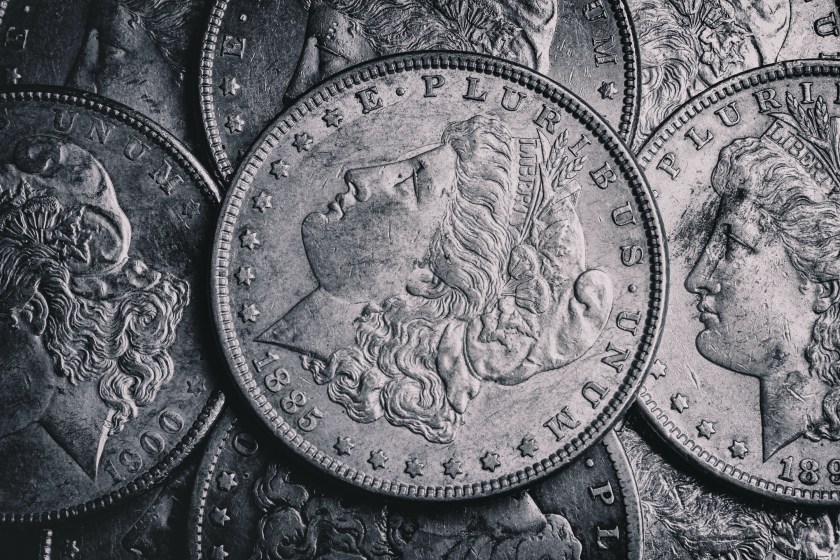
Close-up photograph of overlapping Morgan silver dollar coins showing worn engraved profiles and inscriptions.
A close-up still life of overlapping Morgan silver dollar coins from the late nineteenth century.

This monochromatic study of late nineteenth-century Morgan Silver Dollars represents the photographer’s deliberate expansion into controlled still life work, demonstrating how historical objects can serve as compelling subjects for formal exploration. The composition arranges multiple coins in overlapping layers, creating a topographical landscape of circular forms that invites close examination of surface detail, wear patterns, and the inherent sculptural qualities of numismatic design.

The technical approach centers on macro photography, executed with a Meike 85mm f/2.8 lens paired with his Sony A7ii system. This focal length and aperture combination allows for selective focus that emphasizes the central Morgan Dollar while surrounding coins recede into varying degrees of sharpness. The viewer’s eye naturally gravitates to the prominently featured coin displaying Liberty’s profile, her flowing hair rendered in remarkable relief detail. The inscription “E PLURIBUS UNUM” curves along the upper edge, each letter capturing light differently based on the coin’s worn topography—evidence of decades in circulation.

His conversion to black and white through Nik Silver Efex Pro proves particularly astute for this subject matter. The monochromatic treatment unifies the silver surfaces while accentuating tonal variations that reveal the coins’ individual histories. Scratches, patina, and areas of polish loss become visual information rather than mere damage. The grayscale palette also reinforces the historical nature of these artifacts, creating an aesthetic continuity between the coins’ era of origin and the contemporary photograph documenting them.

The lighting strategy deserves attention for its subtlety. Diffuse illumination reveals the bas-relief portraits and decorative elements without creating harsh specular highlights that might obscure detail or introduce unwanted contrast. Shadows between stacked coins provide dimensional information, suggesting weight and materiality. The photographer has avoided the common pitfall of overworking metallic surfaces, instead allowing the silver to speak through its natural reflective properties and acquired character.

Within Chapter 5’s framework examining still life photography from classic to experimental approaches, this work anchors itself firmly in traditional methodology. The arrangement recalls centuries of vanitas imagery where objects of commerce and temporal value serve as subjects for formal study. Yet the execution benefits from modern digital capture capabilities—the macro lens resolving minute surface textures that would challenge film-based systems, and post-processing software offering precise tonal control.

The choice to work with borrowed objects introduces an interesting collaborative element to his expanding still life practice. These coins carry not only their original historical context but also the contemporary narrative of a colleague’s collection—objects held, preserved, and valued by someone within his immediate circle. This transforms the exercise from pure technical study into a form of visual preservation, documenting specific artifacts at a particular moment in their continuing existence.

As an entry point into product and still life photography practiced within the domestic studio environment, this image succeeds in demonstrating foundational skills: controlled lighting, thoughtful composition, appropriate lens selection, and sensitive post-processing. The Morgan Dollars provide subject matter rich enough to reward close attention while remaining accessible—a practical choice for developing technical proficiency that yields aesthetically resolved results worthy of inclusion in his curated collection.

Big Daddy: Layered Depth in Contemporary Tabletop Composition

A focus-stacked image of a Funko Pop BioShock Big Daddy figure highlights the photographer’s skill in elevating a mass-market collectible to art. By mastering focus stacking and lighting techniques, he achieves hyperreal detail and visual analysis, suggesting aesthetic value exists beyond an object’s origins. This work bridges traditional and modern photography, emphasizing form and texture.

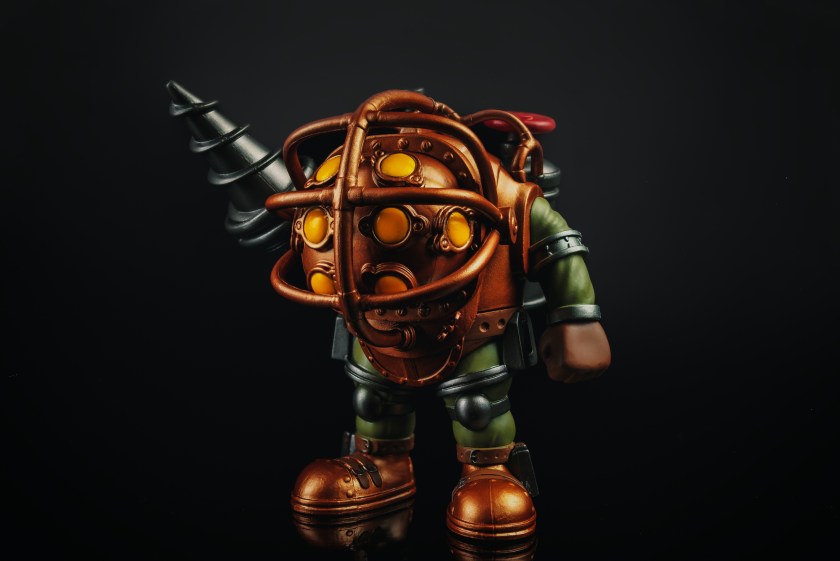
Studio photograph of a Funko Pop Big Daddy figure from BioShock, lit against a black background.
A focus-stacked studio image of a Funko Pop Games BioShock Big Daddy figure on black acrylic against a black backdrop.

In this striking tabletop study, the photographer transforms a mass-market collectible into a subject worthy of contemplated observation. The Funko Pop! Games Bioshock 65 figure—depicting the iconic Big Daddy character—emerges from absolute darkness with a presence that transcends its commercial origins. This work exemplifies the photographer’s evolving command of still life technique, demonstrating how contemporary imaging technology can elevate genre photography into something more architecturally precise and visually arresting.

The technical execution reveals a sophisticated understanding of focus stacking methodology. By compositing multiple exposures captured at incrementally adjusted focal planes, he has achieved a depth of field impossible through traditional single-exposure photography. Every riveted seam of the copper-toned diving helmet, each glowing porthole window, and the textured surfaces of the green atmospheric diving suit maintain perfect clarity throughout the frame. This exhaustive sharpness creates an almost hyperreal quality, allowing viewers to examine the figure with a scrutiny typically reserved for museum artifacts rather than vinyl toys.

His lighting strategy demonstrates restraint and intentionality. The stripbox and softbox configuration creates dimensional modeling that accentuates the sculptural qualities of the form. The warm metallic tones of the helmet and boots catch highlights that suggest weight and substance, while the darker green suit recedes appropriately into shadow. The signature yellow portholes glow with an internal luminosity, creating focal points that guide the eye through the composition. Against the black acrylic surface and backdrop, the figure exists in a void that emphasizes form over context—a classic gallery presentation strategy that isolates the subject for pure visual analysis.

Within the framework of Chapter 5’s exploration of tabletop photography from classic to experimental, this image occupies an interesting transitional space. The setup itself—studio lighting, controlled environment, careful composition—adheres to traditional still life conventions established over centuries of studio practice. Yet the technical execution, particularly the focus stacking process completed in Affinity Photo, represents distinctly contemporary capabilities. The photographer bridges historical methodology with digital innovation, creating work that honors tradition while exploiting modern tools.

The choice of subject matter also merits consideration. By photographing a figure from video game culture with the same technical rigor one might apply to antique objects or fine art pieces, he democratizes the still life genre. This approach suggests that aesthetic value exists independent of an object’s pedigree or market position. The Big Daddy, rendered with such meticulous attention, becomes a study in form, light, and texture—qualities inherent to all successful still life work regardless of subject provenance.

The reflection visible on the glossy black surface beneath the figure adds a subtle but important element of depth. This mirroring effect grounds the subject in space while maintaining the minimalist aesthetic. The overall composition reads as both technically accomplished and conceptually considered—a balance not always achieved in enthusiast tabletop work.

As part of his Top 100 Journey, this photograph represents his technical proficiency in a controlled environment, showcasing abilities that extend beyond spontaneous capture into the realm of constructed, considered image-making where patience and precision yield images of remarkable clarity and presence.

Elkins Apple Spiced Liqueur: Vernacular Object as Subject

The photograph of Elkins Apple Spiced Liqueur exemplifies a blend of commercial product photography and fine art still life, using classical composition techniques. The arrangement of the bottle with apples and cinnamon sticks highlights flavor context while demonstrating technical skill in lighting and focus. The image showcases an accessible beauty in everyday items, merging artistic intent with commercial appeal.

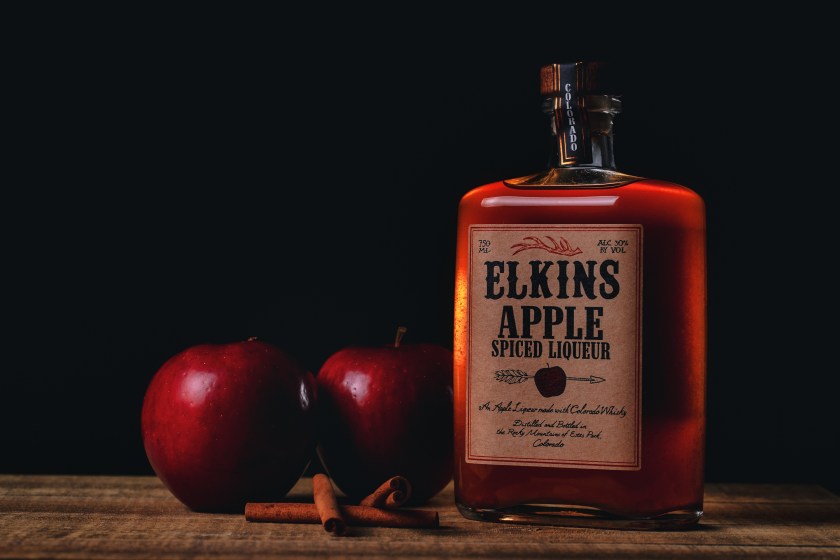
Bottle of Elkins Apple Spiced Liqueur on a wooden surface with red apples and cinnamon sticks against a dark background.
Elkins Apple Spiced Liqueur is photographed with apples and cinnamon sticks in a studio still life.

This photograph demonstrates the photographer’s engagement with commercial product photography conventions while maintaining artistic intentionality characteristic of fine art still life practice. The composition centers on a bottle of Elkins Apple Spiced Liqueur from Estes Park, Colorado, flanked by red apples and cinnamon sticks—elements that function both as contextual reinforcement of the product’s flavor profile and as formal echoes of color and shape within the frame.

The arrangement follows classical still life principles: objects positioned on a weathered wooden surface against a dark, graduated background that moves from deep black to subtle illumination. This chiaroscuro approach recalls Dutch Golden Age painting traditions, where selective lighting carves form from darkness and imbues everyday objects with weight and presence. The bottle’s amber-red liquid becomes luminous against the void, while the apples emerge from shadow with enough detail to register their texture and mass without competing for primary focus.

Technically, the image reveals deliberate choices in equipment and lighting strategy. Shot with a Sony A7ii and 85mm f/1.8 lens, the photographer employs a focal length typically reserved for portraiture, which compresses space slightly and allows selective focus while maintaining natural perspective. The use of a Godox softbox combined with a secondary flash creates dimensional lighting—the main light source appears positioned to camera right, creating highlights on the bottle’s curved surface and label while the fill light softens shadows without eliminating them entirely. This two-light setup produces the polished yet natural quality that distinguishes professional product photography from amateur attempts.

The label itself becomes a compositional element worth examining. Its vintage-inspired design, complete with wheat motif and hand-drawn typography, speaks to contemporary craft distillery aesthetics that reference historical authenticity. The photographer allows this graphic element full legibility, understanding that typography and branding function as visual information within the frame. The cork cap with its branded sleeve adds vertical interest and completes the bottle’s narrative as an artisanal product.

Within Chapter 5’s spectrum from classic to experimental still life, this work occupies the classical end—a straightforward, beautifully executed product study that prioritizes clarity, atmosphere, and material fidelity over conceptual disruption. Yet the photographer’s decision to include this image in his top 100 suggests recognition that mastery of foundational approaches remains essential even as one pushes toward experimental territories. The work demonstrates technical competence: precise focus, appropriate depth of field, balanced exposure across a challenging tonal range, and color palette that feels both rich and naturalistic.

The supporting elements—grocery store apples and cinnamon sticks—ground the image in accessible reality rather than aspirational luxury. This democratic approach to sourcing props reflects contemporary still life practice that finds beauty in the everyday rather than the exotic. The wooden surface, likely the photographer’s own workspace, bears authentic wear that reads as character rather than distress.

Post-processing in Luminar 4 appears restrained, enhancing rather than transforming the captured scene. The final image possesses the polish of commercial work while retaining the considered composition and atmospheric quality that elevates it to fine art documentation of material culture and regional craft production.

Color Drip: Materiality and Motion in Contemporary Still Life

This photograph showcases multicolored paint dripping over a black mannequin head, representing the photographer’s exploration of paint as both subject and medium. By removing human elements, the focus shifts to paint’s properties and gestures, merging classic still life with contemporary material investigations. The composition embodies a dynamic interplay of control and chaos.

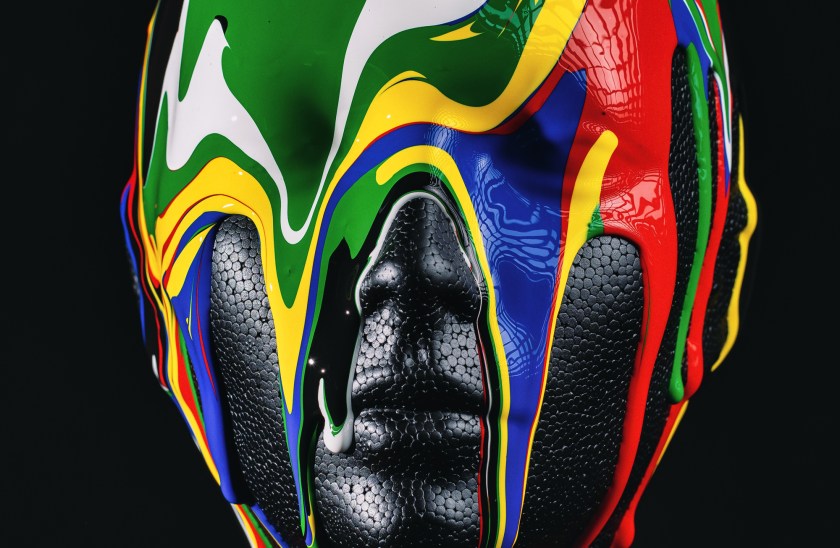
Close-up of a black mannequin head covered in glossy, multicolored paint dripping downward against a dark background.
Multicolored paint drips over a black mannequin head in a controlled studio setup.

Within the broader context of tabletop photography’s evolution from classical arrangement to experimental intervention, this photograph represents a decisive moment in the photographer’s exploration of paint as both subject and sculptural medium. The image captures viscous streams of color—green, yellow, red, and blue—descending across a black textured surface in fluid, organic patterns that suggest simultaneous control and surrender.

The composition reveals its conceptual origins while transcending them. Inspired by a live model photograph encountered on social media, the photographer sought to recreate similar effects using a styrofoam mannequin head painted black. This substitution proves significant: by removing the human element, the work shifts focus entirely to the material properties of paint itself—its weight, viscosity, and the temporal nature of its movement. The textured black surface, likely meant to simulate skin or hair, instead becomes an abstract topography across which color flows according to gravitational and physical laws.

Technically, the photograph demonstrates sophisticated handling of surface and light. The glossy quality of the wet paint creates highlights that map the three-dimensional contours beneath, while the matte black texture provides counterpoint and depth. The color palette—primary hues plus white—reads as deliberately elemental, avoiding the complexity of mixed tones in favor of pure chromatic statement. Each rivulet maintains its individual identity even as the colors converge and overlap, creating secondary interactions at their edges without complete integration.

The formal composition operates through diagonal movement and asymmetrical balance. The paint flows establish dynamic vectors across the frame, leading the eye downward and around the curved forms. The black areas function as negative space that gives structure to the chromatic chaos, while the textured surface adds a reptilian or industrial quality that complicates the otherwise organic flow patterns. This tension between the fluid and the fixed, the organic and the manufactured, activates the image beyond mere documentation of an experimental process.

As one of the first edits from this experimental series, the photograph captures the photographer working through ideas in real time. There exists a certain rawness here—an directness in the setup and execution that speaks to initial discovery rather than refined methodology. The black background isolates the subject completely, a studio technique that emphasizes formal relationships over contextual meaning. This approach aligns with classic tabletop photography’s concern with controlled environments, even as the unpredictable paint drips push toward the experimental end of the chapter’s spectrum.

Within Chapter 5’s framework, this piece marks a transition from static arrangement toward time-based phenomena. The dripping paint implies duration—the moment before and after this frozen instant. Unlike traditional still life’s carefully positioned objects, here the photographer choreographs a performance, then selects the decisive moment from its unfolding. The work thus bridges historical still life concerns with contemporary interests in process, materiality, and the indexical trace.

What emerges is less a portrait substitute than an investigation into how materials behave under specific conditions. The styrofoam head becomes armature, the paint becomes protagonist, and the photograph itself becomes evidence of an ephemeral sculptural event. It represents the photographer thinking through his medium, testing possibilities, and documenting the results with the clarity and precision his technical skill affords.