Through the Looking Glass: A Meditation on Medium and Moment

A glass sphere is used to refract and invert the final print issue of Digital Photographer magazine in a still life composition that explores themes of perception, preservation, and the transition from analog to digital media. The work reflects on the obsolescence of print, intertwining technical prowess with a thoughtful commentary on photography’s evolution.

Glass sphere placed over a stack of photography magazines, magnifying and inverting the “Digital Photographer” cover through refraction.
A glass sphere refracts and inverts photography magazines, including the final print issue of Digital Photographer, photographed for the 52 Frames “Through the Looking Glass” challenge.

In this carefully orchestrated still life, the photographer employs a glass sphere as both subject and optical instrument, creating a work that functions simultaneously as technical demonstration and elegiac commentary on the evolution of print media. The composition centers on a crystal orb that inverts and refracts the image of Digital Photographer magazine—specifically, its final print edition—transforming a moment of cultural transition into a study of perception, preservation, and the inevitable passage of analog traditions into digital memory.

The technical execution reveals a photographer comfortable with the complexities of refractive optics. The sphere acts as a lens within the lens, compressing the magazine’s cover into a miniaturized, inverted world that paradoxically sharpens our attention to what might otherwise be overlooked. The purple masthead, readable despite its reversal, anchors the composition with bold color, while the surrounding magazines create a layered backdrop that suggests abundance even as the image mourns scarcity. The decision to flip certain magazines for the “extra credit of refraction” demonstrates a playful engagement with the assignment’s constraints, yet this playfulness does not diminish the work’s underlying melancholy.

What elevates this photograph beyond mere technical exercise is its timing and intentionality. The artist notes he possessed this glass sphere for years before deploying it—a detail that speaks to the patience required in photographic practice, the waiting for subject and tool to find their proper alignment. That this alignment occurred during the week Digital Photographer ceased print publication transforms the image into an unintentional requiem, a visual preservation of a medium announcing its own obsolescence.

Within Chapter 6 of the Top 100 Journey—titled “The Road Ahead: Recent Work & Ongoing Exploration”—this photograph occupies particularly rich territory. The chapter’s title suggests forward momentum, yet this image looks both forward and backward simultaneously. The glass sphere, an ancient optical device, refracts contemporary printed matter about digital photography, creating a temporal layering that mirrors the photographer’s position at a crossroads between mastered techniques and emerging possibilities. The work acknowledges what is being left behind even as it demonstrates facility with the tools of the present.

The composition’s formal qualities reward extended viewing. The shallow depth of field isolates the sphere against the deliberately blurred magazine stack, creating spatial hierarchy while maintaining contextual legibility. The lighting, presumably controlled given the studio-like precision of the setup, wraps around the sphere’s curved surface without harsh reflections, suggesting either diffused natural light or carefully positioned artificial sources. The wooden surface beneath provides warmth and texture, grounding the optical trickery in tangible materiality.

Conceptually, the photograph engages with themes of representation and mediation that recur throughout photographic history. The sphere presents the magazine not as it is, but as refracted, inverted, compressed—much as photography itself presents the world not as direct experience but as mediated image. This self-reflexive quality, combined with the specific poignancy of documenting a publication’s final issue, positions the work within broader conversations about photography’s relationship to preservation, memory, and loss.

As the photographer continues his ongoing exploration, this image suggests an artist increasingly interested in photography that thinks about photography—work that acknowledges the medium’s materiality, history, and transformations while demonstrating technical mastery that never becomes mere showmanship.

Ancient Greek Coin, Head of Alexander II Zebina

A macro photograph of a 123 BC Greek coin by Alexander II Zebina captures its historical significance and texture. The artist avoids over-sharpening, choosing selective focus to highlight the coin’s surface. This work raises questions about ownership, memory, and our connection to time, ultimately transforming the coin into a philosophical exploration of history.

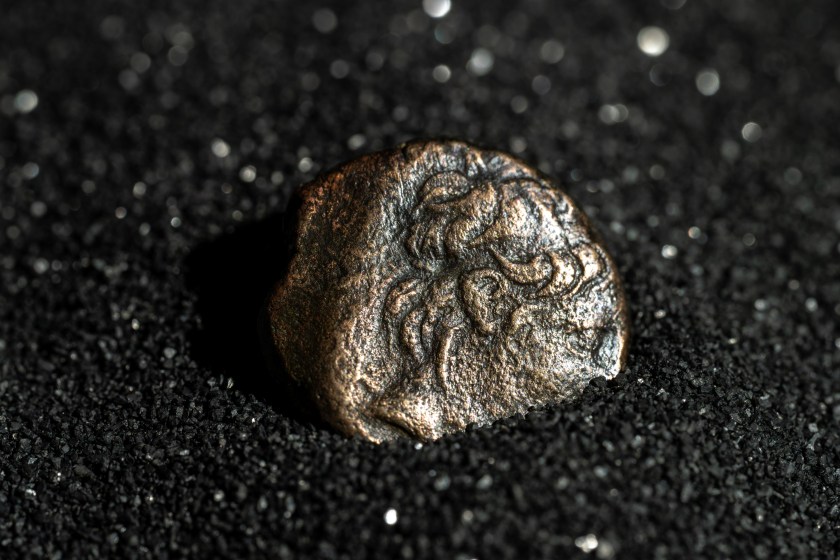
Close-up of a worn ancient Greek coin showing a raised portrait, resting on coarse black granular material.
A macro photograph of an ancient Greek coin with a portrait relief placed on a dark textured surface.

In this macro study from Chapter 6 of his Top 100 Journey, the photographer confronts an artifact that predates the medium of photography by over two millennia. The coin—a bronze piece from 123 BC bearing the portrait of Alexander II Zebina—becomes both subject and collaborator, its weathered surface telling stories that extend far beyond the frame. This single exposure, created for the 52 Frames challenge, demonstrates a mature understanding of how light and composition can resurrect history from oxidized metal.

The technical execution reveals deliberate restraint. Rather than employ focus stacking to render every millimeter sharp, he opts for a single capture that honors the coin’s irregular topography through selective focus. The shallow depth of field becomes a curatorial choice: not everything from antiquity needs to be preserved with clinical precision. Some details fade into soft ambiguity, much as memory itself blurs across centuries. The side lighting—achieved through what appears to be a carefully positioned single source—rakes across the relief, transforming corrosion patterns into a luminous bronze landscape. Highlights catch on the highest points of wear, creating a constellation of golden moments against near-black valleys of shadow.

The substrate selection proves equally thoughtful. Black granular material, possibly sand or volcanic rock, provides textural contrast while introducing delicate bokeh spheres that float in the background like suspended time. This environmental choice feels archaeological, suggesting the coin might have just emerged from excavation rather than from a flea market display case. The photographer resists any impulse toward nostalgic sepia or artificial aging effects; instead, he allows the genuine patina—two thousand years in the making—to provide all the historical gravitas the image requires.

What distinguishes this work within Chapter 6’s framework of ongoing exploration is its meditation on ownership and stewardship. The accompanying note reveals this coin represents “the oldest man-made thing I have ever owned,” yet the photograph itself seems to question that possessive relationship. Can anyone truly own such an object, or are we merely temporary custodians in an impossibly long chain of hands? The macro perspective literalizes this contemplation, bringing the viewer so close that individual crystals of corrosion become visible, each one a marker of time the photographer will never witness.

The portrait of Alexander II Zebina—barely discernible beneath centuries of oxidation—emerges as a ghost in metal, features obscured yet undeniably present. This parallel between photographic and numismatic portraiture feels intentional. Both mediums attempt to freeze time, to preserve likeness against entropy’s relentless work. The photograph succeeds where the coin has partially failed, capturing not just the object but the precise quality of light falling upon it on a specific day in 2025, creating a new historical layer atop the ancient one.

Within the photographer’s evolving practice, this image represents a turn toward material intimacy and temporal reflection. The macro lens becomes a tool for philosophical inquiry rather than mere magnification. By isolating this small artifact against darkness and bringing such focused attention to its corrupted beauty, he creates space for viewers to contemplate their own relationship with history, permanence, and the objects that outlive their makers by millennia.

Maia del Mazo: Intimate Focus in Environmental Context

Maia del Mazo’s portrait, taken in City Park, Fort Collins, showcases a sophisticated blend of technical skill and authentic presence in outdoor environmental portraiture. The controlled lighting, tight framing, and engaging gaze create intimacy, emphasizing psychological connection. This work reflects the photographer’s evolving style, merging formal excellence with genuine subject interaction.

Woman with short dark hair and facial piercings looks off-camera in a park, with green foliage softly blurred behind her.
Maia del Mazo is photographed in City Park, Fort Collins, Colorado.

This portrait of Maia del Mazo demonstrates the photographer’s evolving approach to environmental portraiture, where technical control and authentic subject presence converge within naturalistic settings. Created in City Park, Fort Collins, the image exemplifies how careful light management can produce studio-quality results while preserving the atmospheric qualities inherent to outdoor locations.

The composition employs a tight framing strategy that prioritizes facial features and direct eye contact over environmental context. While the verdant park setting remains visible through soft bokeh, it functions primarily as chromatic backdrop—its luminous greens providing color temperature contrast against the subject’s warm skin tones and earth-toned clothing. This compositional choice reflects a portrait philosophy centered on psychological connection rather than contextual documentation, using location as supporting element rather than co-protagonist.

The lighting execution reveals refined outdoor flash technique. Employing a single strobe with shoot-through umbrella, the photographer has created illumination that appears both directional and enveloping. The soft light wraps around facial contours with dimensional subtlety, evident in the delicate shadow transitions beneath the cheekbones and jawline. This quality suggests careful modifier positioning—likely placed to camera left, creating gentle modeling while maintaining even exposure across the subject’s face. The approach successfully mimics the flattering characteristics of window light or late-day sun while providing consistent exposure control impossible with ambient illumination alone.

The subject’s direct gaze creates immediate engagement, her slight smile and relaxed demeanor suggesting collaborative rapport rather than performative posing. The styling elements—including visible piercings, layered chokers, and olive-toned garment—construct contemporary identity markers that the photographer neither emphasizes nor downplays, allowing personal expression to coexist naturally with formal portrait structure. This balance between individual authenticity and aesthetic cohesion marks a mature approach to contemporary portraiture.

Technical choices throughout support the image’s intimate character. The Sony 85mm f/1.8 lens, deployed at wide aperture on the Sony A7II, produces the shallow depth of field that isolates the subject while maintaining sharpness across critical focal planes. The resulting background compression creates spatial ambiguity—the viewer understands outdoor context without distraction from precise environmental detail. Post-processing in Luminar 4 has enhanced color separation, particularly emphasizing the complementary relationship between cool background tones and warm subject illumination.

Within Chapter 4’s examination of portrait methodologies, this photograph represents outdoor work informed by studio sensibility. The technical execution—single light source, controlled depth of field, precise subject positioning—demonstrates principles typically associated with interior photography adapted to location constraints. This synthesis suggests workshop-influenced learning, where traditional lighting fundamentals are studied and subsequently applied across varied environments.

The image also reflects broader developments in his portrait practice. Compared to more environmental portraits that incorporate gesture and setting, this work focuses attention inward, using technical precision to facilitate psychological presence. The direct gaze and tight framing create intimacy despite the public park location, demonstrating how formal control can serve rather than diminish authentic connection.

As part of his Top 100 Journey documentation, this portrait affirms the photographer’s technical versatility while revealing his growing interest in portraiture that balances formal excellence with genuine subject engagement. It represents work where technical mastery becomes invisible infrastructure—present in every aspect of execution yet never overshadowing the essential human element at the photograph’s center.

Kelly: Classical Portraiture in Natural Light

Kelly R. Bienfang’s portrait in Fort Collins’ City Park showcases refined environmental portraiture, merging classic lighting techniques with natural settings. The composition emphasizes psychological presence through thoughtful framing and soft lighting, achieving dimensionality. Using traditional optics and careful post-processing, the image balances contemporary authenticity with technical precision, reinforcing the importance of classical methods in outdoor photography.

Woman with light brown hair stands beside a tree in a park, looking toward the camera with a soft green background.
Kelly R. Bienfang poses beside a tree in City Park, Fort Collins, Colorado.

This portrait of Kelly exemplifies the photographer’s command of environmental portraiture, demonstrating how classical lighting techniques can be sensitively adapted to outdoor contexts. Created in City Park, Fort Collins, the image represents a refinement of traditional portrait methodology—translating studio principles into naturalistic settings while preserving the intimacy and control typically associated with interior work.

The composition centers on a three-quarter view of the subject positioned against the textured bark of a substantial tree trunk. This anchoring element provides both physical and visual grounding, its vertical mass creating structural balance while its organic texture contrasts productively with the smooth contours of the subject’s face. The decision to place Kelly against this natural backdrop rather than opening the frame to broader park vistas reflects deliberate focus—prioritizing psychological presence over environmental documentation.

The lighting execution reveals sophisticated outdoor flash technique. Employing a single strobe with shoot-through umbrella, the photographer has created illumination that appears to extend rather than contradict the existing ambient light. The soft directional quality—evident in the delicate gradation across the subject’s face and the luminous edge separation along her profile—suggests careful positioning to mimic golden hour sun while maintaining consistent exposure control. This hybrid approach, blending natural and artificial light sources, achieves what purely available light could not: sculptural dimensionality without harsh shadow or unflattering overhead illumination.

The subject’s positioning and expression demonstrate thoughtful directorial collaboration. Kelly’s gaze, angled slightly upward and away from the lens, creates contemplative distance while her hand’s gentle placement at the shoulder introduces subtle gesture without performative emphasis. This combination of turned body and averted eyes establishes a portrait that feels observed rather than confrontational—inviting viewer attention while maintaining the subject’s interior privacy. The styling choice of a simple white garment serves the image’s tonal strategy, providing clean highlight mass that draws focus toward facial features and natural coloring.

Technical choices throughout support this classical approach. The Sony 85mm f/1.8 lens, deployed on the Sony A7II body, offers the compression and shallow depth of field characteristic of traditional portrait optics. The resulting background dissolution—visible in the soft green bokeh representing distant foliage—eliminates visual competition while establishing atmospheric color context. Post-processing in Luminar 4 has enhanced the warm color palette, emphasizing the golden light quality playing across skin tones and hair while maintaining natural saturation levels.

Within Chapter 4’s examination of portrait methodologies, this photograph demonstrates the photographer’s ability to execute formal portraiture outside controlled studio environments. The work shows less interest in contemporary street portrait spontaneity than in translating time-tested studio aesthetics into outdoor practice—a technically demanding approach requiring precise light manipulation and environmental awareness simultaneously.

The image also illustrates evolution in his workshop-informed practice. The confidence evident in both lighting execution and subject direction suggests accumulated knowledge from collaborative learning environments, where traditional portrait techniques are studied and adapted. This photograph represents portraiture rooted in classical principles—emphasizing beauty, technical precision, and dignified subject representation—while acknowledging contemporary preferences for natural settings and authentic expression.

As part of his broader Top 100 Journey documentation, this work affirms the continuing relevance of foundational portrait techniques when executed with skill and sensitivity. It demonstrates how environmental portraiture can achieve the polish and intentionality of studio work without sacrificing the organic qualities that location shooting provides.

Metallic Army Men Still Life: The Alchemy of Transformation

Greg Urbano’s 2014 still life photograph of metallic army men illustrates a crucial moment in his artistic development. Through intentional composition and lighting, he transforms simple toys into evocative symbols of memory and mythology, balancing childhood nostalgia with adult artistry. The photograph reflects Urbano’s conceptual approach and mastery of his medium.

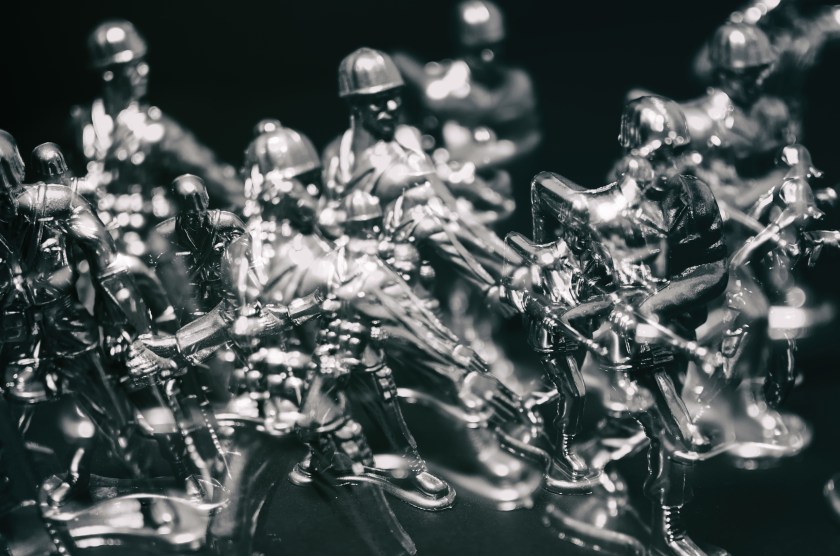
Metallic silver toy army men photographed in dramatic low light against a black background, creating an ethereal tabletop photography scene.
Metallic Army Men Still Life – Purpose-Driven Tabletop Photography (2014)

In the opening chapter of Greg Urbano’s photographic journey, this 2014 still life stands as a pivotal moment—a declaration of intentionality. The image depicts metallic army men frozen mid-action, their silver surfaces catching and scattering light across a void-like background. What began as dollar store plastic toys has been transmuted through spray paint and careful composition into something far more evocative: a meditation on memory, mythology, and the photographer’s emerging visual voice.

The technical execution reveals an artist learning to control his medium with precision. Shot on a Nikon D5100 with a 35mm f/1.8 lens wide open, Urbano exploits the shallow depth of field to create a dreamlike atmosphere. The foreground figures emerge sharp and detailed, their helmets and rifles rendered in crisp focus, while those behind dissolve into soft bokeh. This selective focus mimics the way memory itself operates—certain moments crystalline and vivid, others fading into impressionistic blur. The 1/20 second shutter speed at ISO 100 suggests a carefully controlled tabletop setup, likely using continuous lighting that allowed him to maintain the drama of highlights dancing across metallic surfaces.

What distinguishes this photograph within the “Beginnings” chapter is its purposefulness. Unlike casual snapshots or experimental exercises, this image demonstrates conceptual thinking from inception through execution. The decision to spray paint the figures silver wasn’t merely aesthetic—it stripped these mass-produced symbols of childhood play from their conventional context. No longer green plastic soldiers evoking backyard battles, they become archetypal warriors, their metallic finish suggesting both classical statuary and science fiction. They exist outside time, suspended between the ancient and the futuristic.

The composition itself rewards extended viewing. Urbano arranges the figures in a dynamic diagonal sweep that guides the eye through the frame. There’s a sense of advancing movement, of forces converging, yet the shallow focus and monochromatic treatment create an ethereal quality that contradicts any literal interpretation. These aren’t soldiers storming a beach—they’re specters, memories of conflict rendered as beautiful objects. The black background becomes an infinite space, allowing the figures to float free from any specific context or narrative.

The lighting deserves particular attention. The way highlights trace the contours of each figure—the curve of a helmet, the angle of a raised arm—reveals an understanding of how light sculpts form in photography. Some figures glow almost luminously, while others recede into shadow, creating a tonal range that prevents the silver-on-black palette from becoming monotonous. This careful modulation of light transforms what could have been a simple craft project into a genuine photographic study.

Positioned within Urbano’s broader body of work, this image represents a crucial developmental moment. It demonstrates his willingness to manipulate reality rather than simply document it, to transform found objects into vehicles for artistic expression. The photograph bridges childhood nostalgia and adult artistry, acknowledging the army men’s playful origins while elevating them through photographic treatment.

As a statement of beginnings, this work reveals an artist already thinking beyond the conventional. He wasn’t content to photograph the world as found; instead, he reimagined it, spray paint and camera serving as tools of transformation. The metallic army men become a fitting metaphor for the photographic process itself—ordinary subjects made extraordinary through vision, technique, and intention.