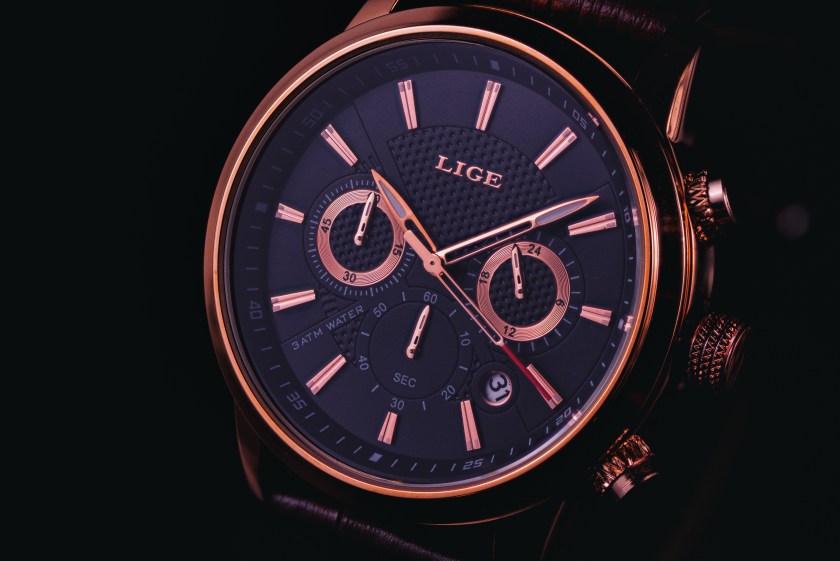
Chronograph Study: Precision Through Layered Focus

The macro photograph of a Lige men’s chronograph watch showcases a blend of technical and aesthetic mastery. Utilizing focus stacking techniques, the image reveals intricate horological details against a minimalist backdrop. This work reflects a modern interpretation of still life, merging commercial photography with fine art, while democratizing the perception of craftsmanship and beauty.

Close-up photograph of a Lige men’s chronograph wristwatch with rose gold accents on a black dial against a dark background.
A macro studio photograph of a Lige men’s chronograph wristwatch on black acrylic against a black backdrop.

This macro examination of a Lige chronograph watch represents a sophisticated merger of technical methodology and aesthetic consideration within Chapter 5’s still life continuum. The photograph transcends conventional product documentation, employing focus stacking techniques to achieve a level of dimensional clarity impossible through single-exposure photography. In doing so, the work engages directly with experimental tabletop practices while maintaining dialogue with classical still life traditions of celebrating craftsmanship and material culture.

The composition presents the watch face at a dramatic angle, filling the frame with horological detail. Rose gold casing catches and redirects light across curved surfaces, creating warm highlights that contrast elegantly against the deep navy dial. The textured carbon fiber pattern at the dial’s center adds tactile interest, while the subdials—marking seconds, minutes, and 24-hour time—create geometric counterpoints within the circular form. Every element, from the applied hour markers to the knurled chronograph pushers, exists in sharp focus through the photographer’s meticulous focus stacking process.

The technical approach merits careful consideration. Shot with a Meike 85mm macro lens on the Sony A7II, the photographer captured multiple exposures at varying focal planes, later combining them in Affinity Photo to create a composite image with extended depth of field. This method addresses the fundamental challenge of macro photography: at high magnification, depth of field collapses to millimeters. By stacking focused slices, he constructs an image where mechanical complexity remains readable across the watch’s curved topography—a technical solution serving aesthetic purpose.

Lighting design reveals sophisticated restraint. The Godox SL60W continuous LED, diffused through a panel, provides even illumination that honors the watch’s metallurgy without creating harsh specular highlights. Set against black acrylic with a black backdrop, the watch floats in negative space, the glossy surface beneath creating a subtle reflection that grounds the object while maintaining the composition’s minimalist severity. This approach recalls commercial photography’s controlled environments while pushing toward fine art’s conceptual concerns.

Post-processing extends beyond technical correction into creative territory. Following the initial focus stack assembly, the photographer employed spot removal for sensor dust and surface imperfections, then adjusted contrast and levels in Adobe Photoshop Elements. Final refinements in Skylum Luminar 4 suggest attention to tonal relationships and color fidelity—ensuring the rose gold reads authentically while the navy dial maintains its saturated depth against the void.

Within Chapter 5’s exploration of still life evolution, this work demonstrates how contemporary digital techniques enable new forms of observation. The focus stacking methodology itself represents an experimental departure from traditional single-capture photography, yet the subject matter and presentation remain rooted in still life’s historical mission: to examine objects with sustained attention, revealing qualities invisible to casual observation.

The photograph also participates in broader conversations about value and craftsmanship. By applying fine art techniques to an accessible timepiece, the photographer democratizes the visual language typically reserved for luxury watch advertising, suggesting that beauty and mechanical interest exist across market segments. The image becomes simultaneously catalog and contemplation, utility and art—a productive tension that characterizes much of his tabletop work.

Big Daddy: Layered Depth in Contemporary Tabletop Composition

A focus-stacked image of a Funko Pop BioShock Big Daddy figure highlights the photographer’s skill in elevating a mass-market collectible to art. By mastering focus stacking and lighting techniques, he achieves hyperreal detail and visual analysis, suggesting aesthetic value exists beyond an object’s origins. This work bridges traditional and modern photography, emphasizing form and texture.

Studio photograph of a Funko Pop Big Daddy figure from BioShock, lit against a black background.
A focus-stacked studio image of a Funko Pop Games BioShock Big Daddy figure on black acrylic against a black backdrop.

In this striking tabletop study, the photographer transforms a mass-market collectible into a subject worthy of contemplated observation. The Funko Pop! Games Bioshock 65 figure—depicting the iconic Big Daddy character—emerges from absolute darkness with a presence that transcends its commercial origins. This work exemplifies the photographer’s evolving command of still life technique, demonstrating how contemporary imaging technology can elevate genre photography into something more architecturally precise and visually arresting.

The technical execution reveals a sophisticated understanding of focus stacking methodology. By compositing multiple exposures captured at incrementally adjusted focal planes, he has achieved a depth of field impossible through traditional single-exposure photography. Every riveted seam of the copper-toned diving helmet, each glowing porthole window, and the textured surfaces of the green atmospheric diving suit maintain perfect clarity throughout the frame. This exhaustive sharpness creates an almost hyperreal quality, allowing viewers to examine the figure with a scrutiny typically reserved for museum artifacts rather than vinyl toys.

His lighting strategy demonstrates restraint and intentionality. The stripbox and softbox configuration creates dimensional modeling that accentuates the sculptural qualities of the form. The warm metallic tones of the helmet and boots catch highlights that suggest weight and substance, while the darker green suit recedes appropriately into shadow. The signature yellow portholes glow with an internal luminosity, creating focal points that guide the eye through the composition. Against the black acrylic surface and backdrop, the figure exists in a void that emphasizes form over context—a classic gallery presentation strategy that isolates the subject for pure visual analysis.

Within the framework of Chapter 5’s exploration of tabletop photography from classic to experimental, this image occupies an interesting transitional space. The setup itself—studio lighting, controlled environment, careful composition—adheres to traditional still life conventions established over centuries of studio practice. Yet the technical execution, particularly the focus stacking process completed in Affinity Photo, represents distinctly contemporary capabilities. The photographer bridges historical methodology with digital innovation, creating work that honors tradition while exploiting modern tools.

The choice of subject matter also merits consideration. By photographing a figure from video game culture with the same technical rigor one might apply to antique objects or fine art pieces, he democratizes the still life genre. This approach suggests that aesthetic value exists independent of an object’s pedigree or market position. The Big Daddy, rendered with such meticulous attention, becomes a study in form, light, and texture—qualities inherent to all successful still life work regardless of subject provenance.

The reflection visible on the glossy black surface beneath the figure adds a subtle but important element of depth. This mirroring effect grounds the subject in space while maintaining the minimalist aesthetic. The overall composition reads as both technically accomplished and conceptually considered—a balance not always achieved in enthusiast tabletop work.

As part of his Top 100 Journey, this photograph represents his technical proficiency in a controlled environment, showcasing abilities that extend beyond spontaneous capture into the realm of constructed, considered image-making where patience and precision yield images of remarkable clarity and presence.

Downtown Denver Dance in the Streets with Nina Harrington

Nina Harrington’s dance pose in downtown Denver exemplifies a sophisticated blend of environmental portraiture and spontaneous movement. The photographer skillfully uses off-camera flash and a low angle to enhance the scene, revealing dynamic interplay between light, architecture, and the dancer’s grace. This image highlights the artist’s technical evolution in outdoor portrait work.

Dancer balancing on one foot along a yellow centerline in a city street, arms extended, with buildings lining both sides.
Nina Harrington performs a dance pose in the middle of a downtown Denver street.

In this striking urban portrait, the photographer demonstrates a sophisticated command of environmental portraiture, transforming a mundane city thoroughfare into a stage for dynamic human expression. The image captures dancer Nina Harrington suspended mid-leap above yellow road markings in downtown Denver, her body forming an elegant arc against the crisp Colorado sky. The composition exemplifies the photographer’s evolving approach to outdoor portrait work, where controlled lighting meets spontaneous movement in public spaces.

The technical execution reveals deliberate choices that elevate this beyond documentary street photography. Shot at midday—traditionally challenging lighting conditions—the photographer employed a Godox AD100 pro strobe without modification to combat the harsh overhead sun. This off-camera flash technique creates a subtle but crucial fill that prevents the subject from becoming a silhouette while maintaining the natural warmth of the ambient light. The decision to forgo light modifiers preserves the hard-edged quality of the urban environment, allowing the concrete, asphalt, and brick architecture to retain their textural integrity.

Compositionally, the low vantage point proves essential to the image’s impact. By positioning the camera near street level, the photographer achieves multiple objectives: the dancer’s figure dominates the frame against the sky, creating separation from the complex urban backdrop; the road’s yellow double lines converge dramatically toward the vanishing point, providing powerful leading lines that anchor the viewer’s eye; and the surrounding buildings—including the distinctive Paramount sign—frame the action without overwhelming it. This perspective transforms the ordinary into the theatrical.

The choice of the Nikkor 24-120mm f/4 lens suggests a working distance that allowed the subject freedom of movement while maintaining compositional control. The focal length appears moderate within that range, neither compressing the perspective dramatically nor exaggerating the spatial relationships. This middle-ground approach serves the narrative well, presenting the scene as the viewer might experience it while standing in that same intersection.

Within Chapter 4’s exploration of portraits created in studios, outdoor environments, and workshop settings, this photograph represents the photographer’s confidence in synthesizing multiple disciplines. The image incorporates studio lighting principles applied to an uncontrolled environment, the collaborative relationship between photographer and subject typical of workshop environments, and the opportunistic awareness required for successful street photography. The dancer’s athletic grace becomes a vehicle for exploring light, geometry, and decisive moment—themes that recur throughout his portraiture work.

The post-processing in Luminar AI enhances rather than transforms the captured scene. The color palette—dominated by blues, warm earth tones, and the vibrant yellow road markings—feels authentic to the high-altitude western light. There’s a clarity and dimensional quality to the image that suggests thoughtful tonal adjustments without the oversaturation or artificial drama that often plague urban photography.

What distinguishes this work within the photographer’s broader journey is the seamless integration of technical skill and artistic vision. The image requires split-second timing, precise exposure calculation, spatial awareness, and the ability to direct movement—all while working in a public street with its inherent unpredictability. That such complexity appears effortless in the final result speaks to the photographer’s maturation in outdoor portrait work, where preparation meets spontaneity in equal measure.

Gabby: The Architecture of Gesture and High-Key Simplicity

Gabby’s portrait, taken in Denver, showcases the photographer’s shift from low-key to high-key aesthetics, emphasizing brightness and minimalism. Using a Sony A7ii and 85mm lens, the image focuses on the subject’s form and style against a white background. The composition blends casual glamour with commercial appeal, highlighting sophisticated color and texture relationships.

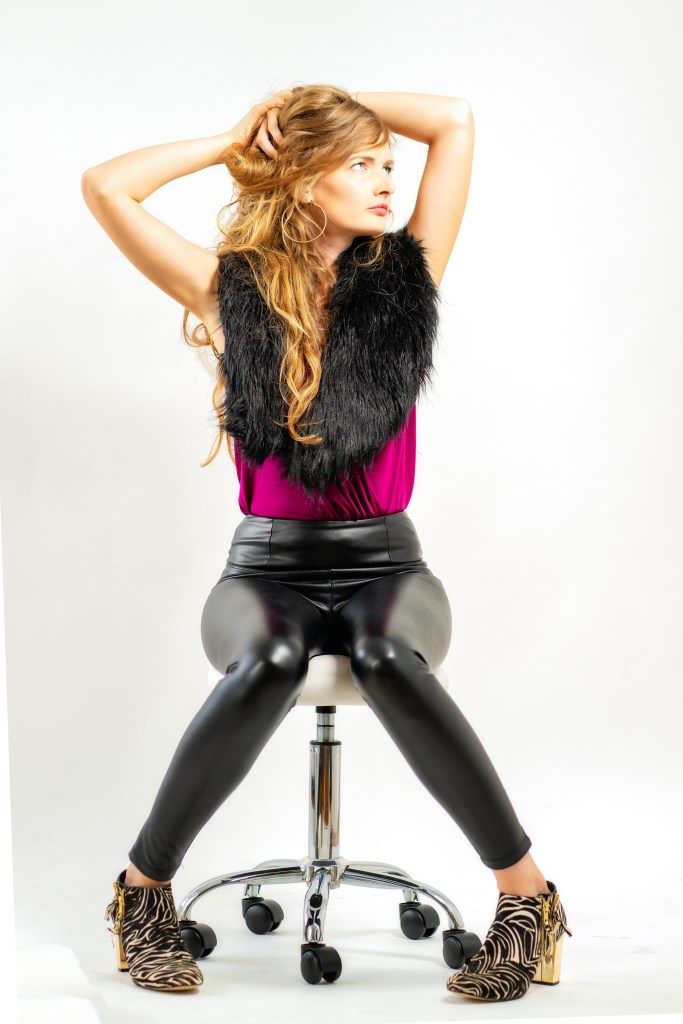
Woman seated on a rolling studio stool against a white background, arms raised behind her head, wearing a sleeveless top and fitted pants.
Gabby poses seated on a stool during a studio portrait session in Denver, Colorado.

This portrait of Gabby, captured at The Headquarter in Denver, exemplifies the photographer’s exploration of high-key studio aesthetics within Chapter 4 of his Top 100 Journey. Where previous work in this chapter has leaned toward dramatic low-key lighting and theatrical darkness, this image pivots toward brightness and negative space, demonstrating the photographer’s versatility in handling opposing approaches to studio portraiture.

The technical foundation remains consistent with his established toolkit: the Sony A7ii paired with the 85mm f/1.8 lens, complemented by Godox V1s flash modified through a shoot-through umbrella. However, the application of this equipment yields an entirely different visual language. The near-white background floods the frame with luminosity, creating an environment where the subject exists in a floating, dimensionless space. This deliberate elimination of context shifts the viewer’s attention entirely onto the subject’s form, gesture, and the carefully constructed interplay of textures and colors.

The composition centers on a moment of suspended motion—arms raised to manipulate cascading blonde hair, the subject positioned on a chrome office chair that introduces an unexpected element of contemporary banality into what might otherwise read as pure fashion imagery. This juxtaposition between the mundane object and the styled subject creates a productive tension. The chair, with its visible wheels and utilitarian design, grounds the photograph in the reality of the studio space while the subject’s pose and styling lift the image toward aspirational fashion photography.

Color relationships anchor the visual hierarchy. The vibrant magenta top creates the primary focal point at the composition’s center, while the black faux-fur vest provides textural complexity and tonal contrast. Below, leather leggings in glossy black establish a continuous dark field that culminates in zebra-print platform booties—a detail that injects pattern and visual interest at the composition’s base. This vertical arrangement of color and texture demonstrates sophisticated styling that the photographer captures without interference, allowing the wardrobe choices to speak clearly against the minimal background.

The pose itself warrants examination. With arms raised and gaze directed away from the camera, the subject embodies a moment of casual glamour—not performing for the lens but existing within her own contemplative space. This approach to direction, whether collaborative or specifically guided, results in imagery that feels less like traditional portraiture and more akin to editorial fashion work. The photographer captures not just appearance but attitude, a quality that elevates studio work beyond documentation.

Within the broader context of Chapter 4, this photograph represents the photographer’s engagement with clean, commercial aesthetics. Where other images in this collection embrace complexity through dramatic lighting or environmental context, “Gabby” finds its power in reduction and clarity. The high-key approach requires precise exposure management—overexposure would flatten the image entirely, while underexposure would render the background gray rather than white. The successful execution here suggests a photographer increasingly confident in technical precision.

Post-processing in Luminar 4 maintains this clarity, with adjustments that preserve the luminous quality of the scene while ensuring adequate separation between subject and background. The result is an image that functions equally well as a portfolio piece, an editorial illustration, or a study in contemporary portrait methodology.

Gnatty Jessica Rabbit: A Study in Theatrical Light and Character Translation

Gnatty Sparkles embodies Jessica Rabbit in a portrait by Greg Urbano, showcasing a blend of pop culture and classical techniques. Set against a dark background, expert lighting highlights the figure and costume details. The image balances theatricality with technical skill, reflecting the photographer’s evolving prowess in creative collaborations.

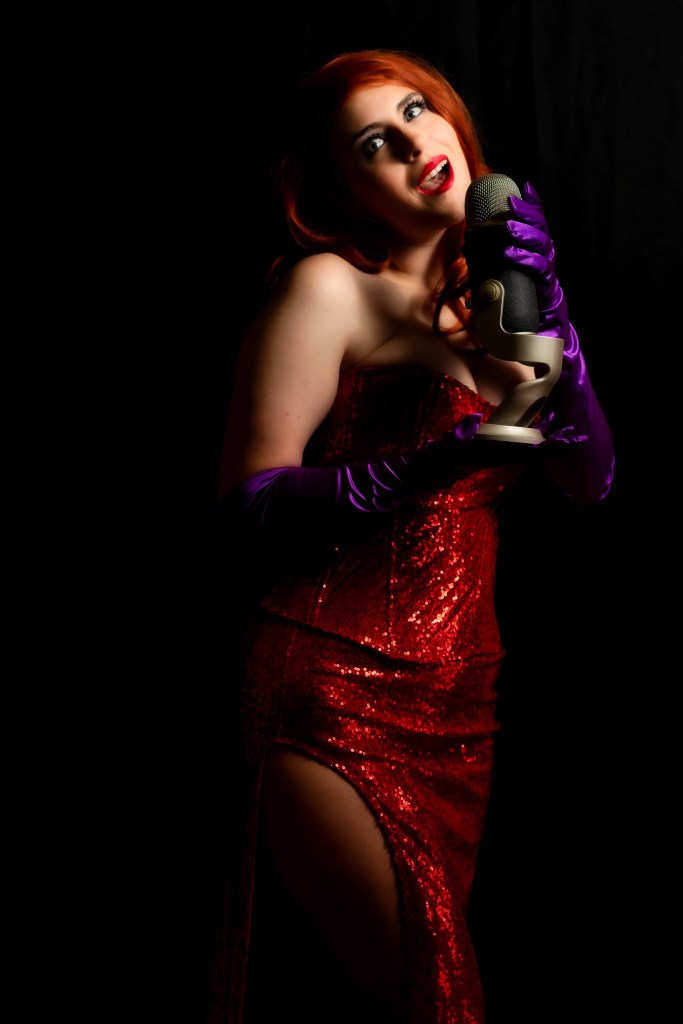
Woman in a red sequined dress and purple gloves holding a vintage-style microphone against a black background.
Gnatty Sparkles poses as Jessica Rabbit during a studio portrait session in Fort Collins, Colorado.

Within Chapter 4 of Greg Urbano’s Top 100 Journey—dedicated to portrait work spanning studio environments, outdoor sessions, and workshop collaborations—this striking interpretation of Jessica Rabbit through cosplayer Gnatty Sparkles represents a convergence of pop culture iconography and classical portraiture techniques. The photograph demonstrates the photographer’s evolving command of controlled lighting environments and his willingness to embrace theatrical subject matter without sacrificing compositional rigor.

Shot at Old Town Yoga in downtown Fort Collins, the image immediately establishes its vocabulary through the absolute darkness of its background. This void serves not merely as negative space but as a deliberate framing device that forces the viewer’s attention onto the subject with an intensity reminiscent of Baroque portraiture. The photographer employs a Sony A7ii paired with an 85mm f/1.8 lens—a combination favored for its ability to render flattering compression and subtle depth separation in portrait work. The addition of a Godox V1s flash modified through a shoot-through umbrella provides the soft, directional illumination that sculpts the figure from the darkness.

The technical execution reveals a photographer comfortable working within the constraints of artificial lighting. The catch lights in the subject’s eyes confirm the umbrella placement, while the gradual falloff from highlight to shadow demonstrates careful attention to light-to-subject distance. This is not flash photography that announces itself harshly; rather, it mimics the quality of continuous studio lighting while maintaining the power and flexibility of strobe work.

What distinguishes this image within the chapter’s broader context is its negotiation between documentary portraiture and fantasy realization. The subject’s embodiment of Jessica Rabbit—the animated femme fatale from “Who Framed Roger Rabbit”—demands a heightened reality that traditional portrait work might resist. The photographer accommodates this through his lighting choices, creating drama without veering into caricature. The sequined red dress catches and fractures the light into countless micro-reflections, a technical challenge that could easily overwhelm the sensor or create distracting hot spots. Here, the exposure maintains detail within these specular highlights while preserving the richness of the red tones.

The purple opera gloves introduce a complementary color relationship that prevents the image from becoming monotonous in its red-black palette. This attention to color theory—whether conscious or intuitive—suggests a developing sophistication in the photographer’s approach to more theatrical subject matter. The pose itself, with the microphone held close and the subject’s gaze directed past the camera, creates narrative ambiguity. Is this a performance captured mid-song, or a constructed tableau referencing performance?

Post-processing in Luminar 4 indicates a workflow focused on refinement rather than transformation. The skin tones retain a natural quality despite the artificial lighting environment, and the overall tonality suggests selective adjustments rather than heavy-handed filtering. This restraint allows the photograph’s essential qualities—the lighting, the costume, the subject’s expression—to register without distraction.

Within the trajectory of Chapter 4, this image represents the photographer’s engagement with workshop and collaborative environments where subjects arrive with specific creative visions. The success of such work depends on the photographer’s ability to serve that vision while maintaining their own technical and aesthetic standards—a balance this photograph achieves with confident precision.

Kelly

PKelly R. Bienfang’s studio portrait captures the essence of minimalist photography, focusing on the subject against a clean white backdrop. Utilizing controlled lighting and strategic posing, the image showcases the photographer’s skill and adaptability. It highlights the evolving rapport between photographer and subject, emphasizing the importance of genuine collaboration in achieving impactful portraits.

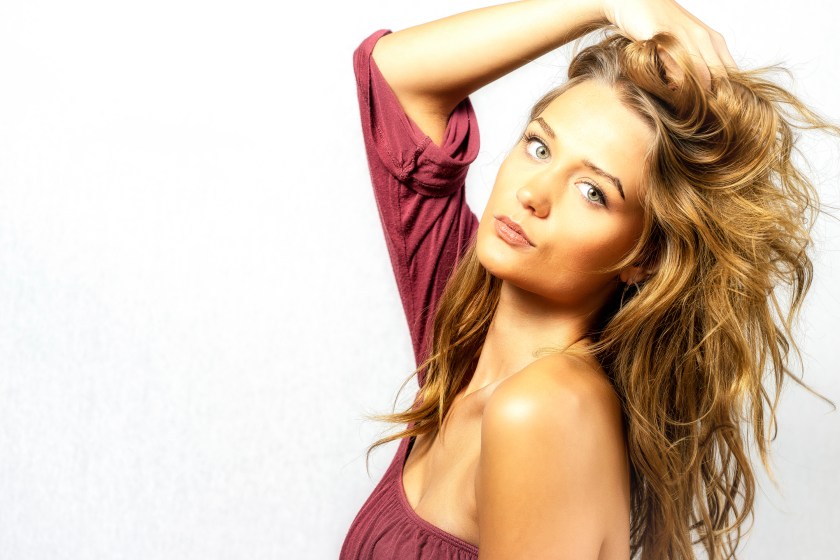
Woman with long light brown hair posing against a white background, one arm raised to her head, wearing a sleeveless top.
PKelly R. Bienfang poses during a studio portrait session in Fort Collins, Colorado.

This portrait from Chapter 4 of Greg Urbano’s Top 100 Journey exemplifies the photographer’s refined approach to studio portraiture, demonstrating how minimalist environments and controlled lighting can distill a subject’s presence to its essential elements. Captured at Old Town Yoga in downtown Fort Collins, Colorado, the image reveals the photographer’s ability to transform functional spaces into effective portrait studios, a skill central to the chapter’s exploration of diverse shooting contexts.

The composition centers on the subject, Kelly, photographed against a pure white backdrop that eliminates all contextual information, focusing attention entirely on her form, expression, and movement. Her pose—arm raised to gather flowing hair, head tilted, gaze directed toward the camera—suggests a moment caught between deliberate positioning and natural gesture. The wind-swept quality of her hair introduces dynamic motion into an otherwise static studio setup, creating visual energy that prevents the portrait from settling into conventional headshot territory.

The photographer’s technical execution demonstrates consistent mastery of the equipment established throughout this chapter. Working with the Sony A7ii and 85mm f/1.8 lens, supplemented by a Godox V1s flash modified through a shoot-through umbrella, he has created illumination that reads as both bright and dimensioned. The lighting wraps evenly across the subject’s features while maintaining sufficient shadow information to model her facial structure and the curves of her shoulders and arms. The high-key approach—white background, luminous skin tones—requires precise exposure control to prevent blown highlights while retaining textural detail in hair and fabric.

Color becomes a critical compositional element in this reduced visual field. The deep burgundy of Kelly’s garment provides the primary chromatic accent against the neutral backdrop and warm skin tones, creating a complementary relationship that anchors the eye. The photographer has allowed the subject’s honey-blonde hair to cascade freely, its varied tones adding subtle complexity to the upper portion of the frame. Post-processing in Luminar 4 has yielded clean, commercial-quality results—polished without appearing artificial, enhanced without sacrificing the authentic quality of skin and texture.

Within the broader context of Chapter 4, this photograph represents the studio portrait in its most distilled form. While other works in this series incorporate environmental elements or natural light scenarios, this image strips away such variables to focus purely on subject, light, and photographer’s vision. The setting at Old Town Yoga—likely chosen for its available space and clean backgrounds rather than thematic connection—underscores the photographer’s adaptability, his capacity to identify and utilize whatever resources a location offers.

The portrait also reflects evolving confidence in direction and collaboration. The pose suggests active guidance rather than passive documentation, indicating the photographer’s growing comfort in shaping rather than merely recording moments. Kelly’s ease before the camera—the natural grace of her gesture, the direct engagement of her gaze—speaks to successful rapport between photographer and subject, that intangible but essential element of portrait work that transcends technical proficiency.

This image stands as evidence of the photographer’s progression toward professional fluency in controlled portrait environments, demonstrating that compelling imagery emerges not from elaborate setups but from clear vision executed with precision.

Joy

Joy’s portraiture, captured during a studio session in Denver, exemplifies contemporary photography that harmonizes technical prowess with intimate atmosphere. Using controlled lighting and thoughtful composition, the image showcases Joy’s comfort and presence. It reflects the photographer’s growth in creating authentic portrayals within collaborative workshop settings, emphasizing spontaneity amidst structure.

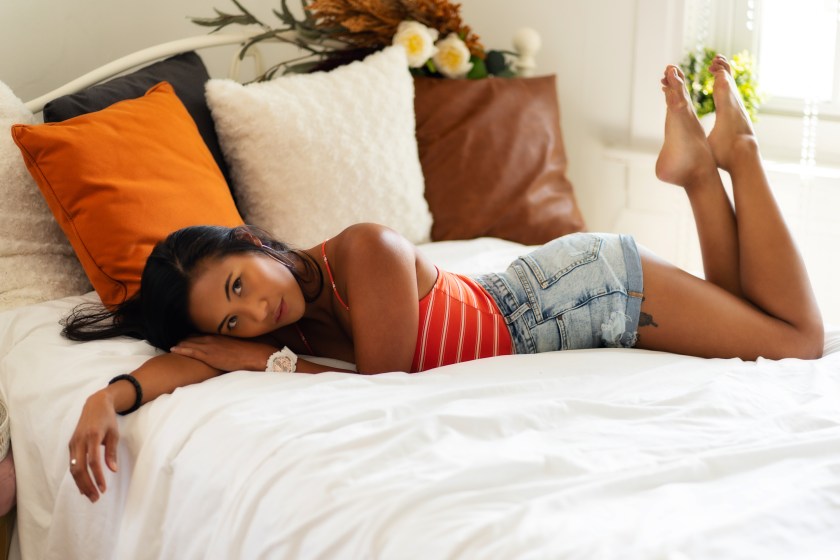
Woman lies on her stomach on a bed with pillows, looking toward the camera in a softly lit indoor space.
Joy reclines on a bed during a studio session at Headquarters in Denver, Colorado.

Within Chapter 4 of Greg Urbano’s Top 100 Journey—a section dedicated to studio, outdoor, and workshop portraiture—this photograph stands as a compelling study in contemporary portraiture that balances technical precision with an atmosphere of relaxed intimacy. Captured during the Sunday Night Meets sessions at the Headquarters in Denver, Colorado, the image demonstrates the photographer’s evolving command of controlled lighting environments and his ability to translate spontaneity into refined compositional structure.

The subject, identified simply as Joy, reclines across a bed adorned with an array of textured pillows in warm earth tones—burnt orange, cream, and cognac leather—that create a sophisticated color palette against crisp white linens. Her pose suggests ease and self-possession, legs bent upward, body stretched diagonally across the frame in a manner that fills the space without appearing contrived. The composition guides the viewer’s eye from her contemplative expression through the length of her form, utilizing the diagonal as a classical device to create visual momentum within an otherwise still domestic scene.

Technically, the photographer employed a Sony A7ii paired with an 85mm f/1.8 lens, supplemented by a Godox V1s flash fired through a shoot-through umbrella. This setup reveals a deliberate approach to managing the challenge of interior lighting. The umbrella modifier produces soft, directional illumination that wraps around the subject’s features and limbs, creating gentle gradations of shadow that model form without harsh contrast. The 85mm focal length, a portrait standard, maintains proper perspective while allowing sufficient working distance in what appears to be a modest interior space. The choice to augment available window light with flash demonstrates an understanding that control, rather than pure naturalism, often serves the portrait best.

The environmental context—a workshop setting where photographers gather to practice and experiment—adds significance to the technical choices evident here. Such collaborative sessions demand efficiency and adaptability, requiring the photographer to balance artistic vision with the practical constraints of shared time and space. That this image emerged from such circumstances speaks to his ability to synthesize technical preparation with responsive observation, recognizing and capturing moments of genuine presence even within structured shooting scenarios.

Post-processing in Skylum’s Luminar 4 has yielded a polished yet authentic aesthetic. The skin tones register warmly against the cooler neutrals of the background, while the overall color grading maintains consistency with the chapter’s broader visual language. The photographer has avoided the temptation toward heavy manipulation, instead allowing the fundamental strength of the capture—lighting, composition, and subject rapport—to carry the image.

Within the trajectory of Chapter 4, this photograph represents the photographer’s progression from purely technical competency toward a more holistic understanding of portraiture as collaborative performance. The subject’s comfort before the camera, the thoughtfully curated environment, and the measured application of artificial light combine to create an image that feels both intentional and uncontrived. It exemplifies the workshop paradigm at its most productive: controlled conditions that paradoxically enable spontaneity, resulting in portraiture that documents not just appearance, but a quality of presence that transcends the specifics of its making.