LilithW 16th Street Mall Denver

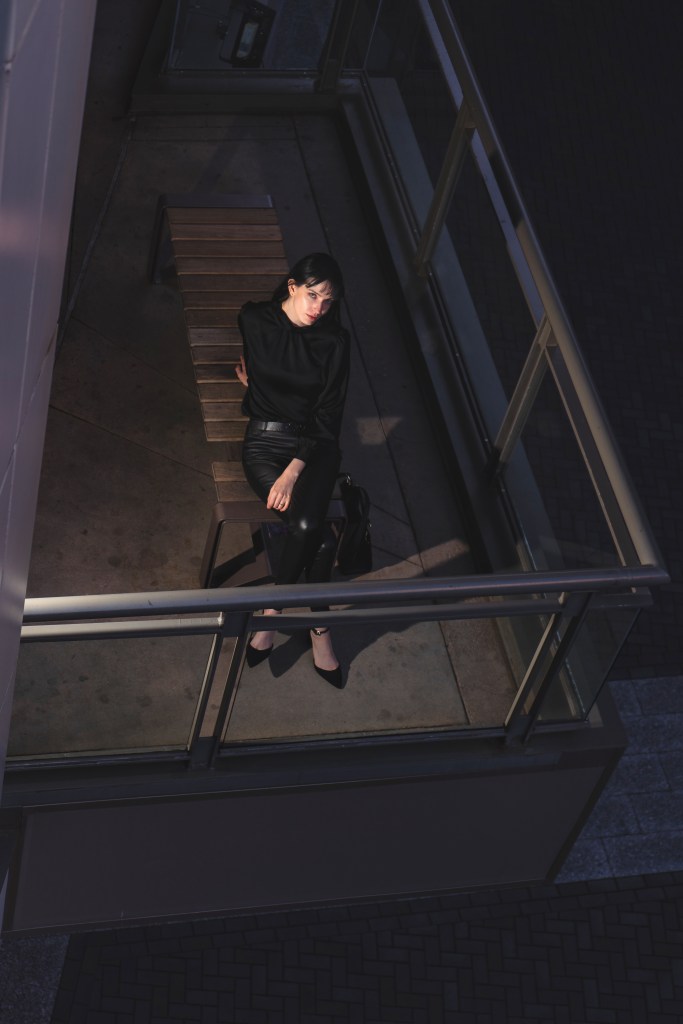
The photograph featuring model LilithW on Denver’s 16th Street Mall showcases an innovative blend of urban architecture and contemporary fashion. Through careful lighting, geometric framing, and thoughtful styling, the image transforms a functional stairwell into a dramatic portrait setting, emphasizing the photographer’s skill in capturing emotional depth within architectural spaces.

Woman dressed in black sits on a bench on an elevated walkway, viewed from above in an urban setting.
LilithW sits on a balcony along the 16th Street Mall in Denver, Colorado.

The photographer transforms an urban stairwell into a study of geometry, shadow, and contemporary fashion portraiture in this striking image from Denver’s 16th Street Mall. Shot with model LilithW, the photograph demonstrates a sophisticated understanding of architectural space as portraiture framework—a conceptual approach that positions this work as a significant entry within Chapter 4 of his Top 100 Journey project.

The compositional strategy reveals deliberate technical choices. Photographed from below, looking upward through the stairwell’s descending levels, the image creates a vertiginous sense of depth through repeating geometric forms. The metal railings create strong diagonal and horizontal lines that frame the subject, while the stairway’s perspective draws the eye upward toward LilithW’s figure. This bird’s-eye vantage point—or rather, its inverse—transforms a functional architectural space into a dramatic stage, demonstrating how environmental awareness can elevate location portraiture beyond mere documentation.

The lighting execution shows particular sophistication given the equipment employed. Using a single Godox AD100 flash without modifiers, the photographer has created directional illumination that separates the subject from the ambient darkness of the stairwell. The unmodified flash produces harder shadows and more dramatic contrast than diffused light would offer, a choice that complements the industrial setting’s angular architecture. This approach to lighting reveals growing confidence in working with minimal gear to maximum effect—a hallmark of photographers who understand that vision matters more than equipment inventory.

LilithW’s styling—black turtleneck, leather pants, and ankle boots—creates a monochromatic palette that harmonizes with the urban environment while maintaining visual distinction through texture and form. Her pose, caught mid-descent with hand resting on the railing, suggests movement arrested rather than static positioning. The downward gaze and slight forward lean create psychological engagement, as though the subject exists within her own narrative rather than performing for the camera.

Within the context of Chapter 4’s focus on studio, outdoor, and workshop portraiture, this image exemplifies the photographer’s ability to treat urban environments as found studios. The controlled lighting approach mirrors studio methodology, while the architectural setting provides the visual complexity and authentic texture that outdoor locations offer. The technical specifications—Sony A7II with the 28-70mm kit lens—underscore an important curatorial observation: this body of work privileges compositional intelligence and lighting understanding over equipment prestige.

The post-processing workflow, combining Adobe Photoshop Elements and Luminar AI, has enhanced the image’s moody atmosphere without sacrificing naturalism. The color grading emphasizes cool tones that reinforce the urban setting’s industrial character, while careful shadow detail preservation maintains dimensionality throughout the frame’s darker regions.

From a curatorial perspective, this photograph represents the photographer’s evolving facility with architectural portraiture—a subgenre that requires simultaneous attention to human subject, spatial geometry, and lighting choreography. The work’s inclusion in the Top 100 Journey project acknowledges its success in synthesizing these elements into a cohesive visual statement. The stairwell becomes more than backdrop; it functions as collaborator in creating psychological depth and visual drama. This image demonstrates how thoughtful photographers can transform everyday urban infrastructure into compelling portrait environments, finding beauty and narrative possibility in overlooked transitional spaces.

Under Naples Pier at Sunset: Architecture Meets the Ethereal

Greg Urbano’s long exposure photograph beneath Naples Pier captures the interplay of human architecture and nature, highlighting time and impermanence. Shot with meticulous technique, the image transforms a familiar locale into a contemplative space where smooth Gulf waters contrast with weathered pilings, emphasizing Florida’s geography and the enduring power of the natural world.

Long exposure photograph taken beneath the Naples Pier in Florida, showing weathered support columns receding into the distance with smooth, blurred water and soft sunset light.
Long exposure view beneath the Naples Pier in Florida, captured with softened water and warm evening light.

In Greg Urbano’s exploration of Florida’s coastal landscapes, this long exposure beneath Naples Pier represents a masterful convergence of structural geometry and natural fluidity. The photograph transforms a familiar tourist destination into something altogether more contemplative—a meditation on time, permanence, and the quiet persistence of natural forces.

The technical execution reveals deliberate artistic choices that elevate the image beyond documentary. Shot at a 30-second exposure with an aperture of ƒ/10, Urbano allows the Gulf waters to smooth into an almost supernatural plane of silk, while the pier’s wooden pilings remain sharply rendered, their weathered surfaces recording years of salt spray and tidal rhythms. The ISO 100 setting preserves exceptional clarity in both the concrete deck overhead and the barnacle-encrusted bases of each column, where marine life has claimed the structure as its own.

What distinguishes this photograph within the Florida Landscapes & Cityscapes chapter is its unique vantage point. Rather than capturing the pier from the beach or along its walkway—the conventional approaches—Urbano positions himself in the liminal space beneath, where human architecture and marine environment intersect. This perspective creates a vanishing point that draws the eye through the repetitive columns, suggesting infinity while simultaneously framing the horizon in measured increments. The composition speaks to Florida’s essential character: a place where human development exists in constant negotiation with water, weather, and an environment that ultimately cannot be controlled.

The color palette captures that transitional moment when day surrenders to evening. Soft blues dominate the frame, punctuated by warmer tones filtering through the gaps between pilings where the setting sun still reaches. The long exposure has rendered a handful of beachgoers as ghostly presences, barely perceptible in the distance—a reminder that even in this serene moment, human activity continues, though made insignificant by the photograph’s emphasis on timelessness over immediacy.

The textural contrasts throughout the frame reward sustained viewing. The smooth, almost liquid sand in the foreground shows subtle patterns from receding water, while the pier pilings display years of weathering—concrete cracking and staining, wooden supports silvered by sun and salt. Most striking are the organic clusters clinging to each column where water regularly submerges them, dark masses of mussels and barnacles that testify to the structure’s dual existence above and below the tideline.

This image exemplifies why Urbano selected Naples Pier for inclusion in his exploration of Florida’s diverse landscapes. The state’s geography is defined by its relationship with water—the Atlantic, the Gulf, the Everglades, countless rivers and springs. Here, that relationship is made architectural, structured, yet the photograph ultimately reveals nature’s quiet supremacy. The pier may impose order with its regular spacing and engineered strength, but the barnacles reclaim it, the water smooths away footprints, and time—made visible through long exposure—reveals the impermanence of even our most solid constructions.

Within the broader context of the Top 100 Journey, this photograph demonstrates Urbano’s ability to find fresh perspectives on familiar subjects, transforming a popular sunset location into a study of geometry, time, and the persistent dialogue between built and natural environments that defines Florida’s coastal identity.