Entanglement: Portrait as Performance at the Haunt Slam

During the 2025 Portrait Slam in Denver, a striking portrait of a model named Wednesday showcases the photographer’s evolution into theatrical portraiture. The image, emphasizing themes of entrapment and performance, uses sophisticated artificial lighting to create dramatic effects. It reflects a shift towards collaborative photography, merging documentation with creative expression.

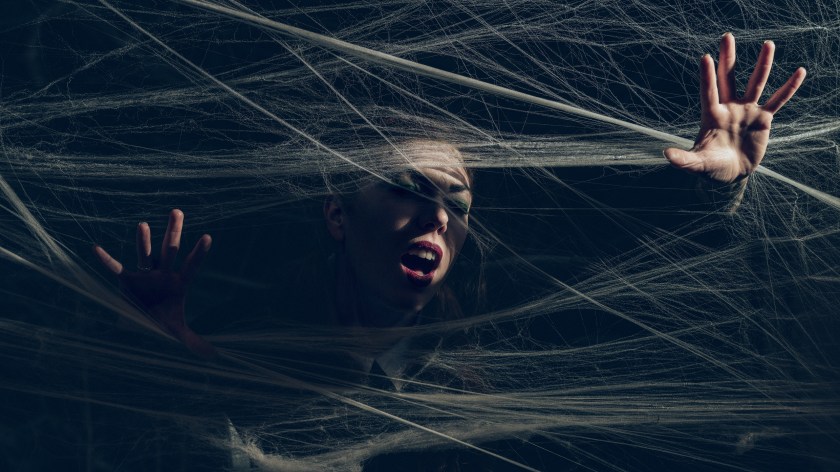
Portrait of a person pressing their hands forward through layers of stretched web-like material, with dramatic low-key lighting against a dark background.
Wednesday photographed during the 2025 Portrait Slam (Haunt Slam) at the DCO space in Denver, Colorado.

This striking portrait, captured during the 2025 Portrait Slam at Denver’s DCO space, represents a significant departure into theatrical portraiture for a photographer whose journey has increasingly embraced collaborative, event-based work. The image—featuring a model known as Wednesday—transcends conventional portraiture to become a study in entrapment, theatrical expression, and the controlled chaos of performance photography.

The composition immediately arrests the viewer with its central tension: a figure ensnared in what appears to be synthetic webbing, hands pressed outward in a gesture simultaneously defensive and reaching. The model’s expression—mouth open in what could be read as exhilaration, distress, or performative intensity—refuses easy interpretation. This ambiguity serves the work well, inviting prolonged examination rather than immediate comprehension.

Technically, the photograph demonstrates sophisticated command of artificial lighting in challenging circumstances. Shot with a Nikon Z7ii and illuminated by a Godox AD100 with grid, the lighting scheme creates dramatic chiaroscuro that sculpts the figure from the deep, nearly black background. The gridded modifier produces focused illumination that highlights the face and hands while allowing the surrounding webbing to catch light selectively, creating a three-dimensional mesh that appears to hover in space. This precision lighting transforms what could be simple event documentation into controlled studio-quality portraiture executed in a dynamic environment.

The web itself functions as both literal and metaphorical element. Its physical presence creates visual texture and geometric complexity, the crossing strands forming a secondary compositional structure that both fragments and frames the subject. Metaphorically, it invites reading as constraint, connection, or cocoon—interpretations that align with the “Haunt Slam” context while transcending mere Halloween theatrics to suggest broader themes of entanglement with technology, society, or creative process itself.

Within Chapter 6—”The Road Ahead: Recent Work & Ongoing Exploration”—this photograph signals the photographer’s continued engagement with collaborative, community-centered photography. The Portrait Slam format, hosted by Denver Models and Mike’s Camera, represents a democratization of studio portraiture, bringing together photographers, models, and creative collaborators in rapid-fire shooting sessions. That he selected this image for his Top 100 Journey suggests recognition that contemporary photographic practice increasingly exists within networks of creative exchange rather than isolated studio work.

The post-processing in Evoto maintains dramatic impact while preserving textural detail in both skin tones and the surrounding webbing. The color palette—dominated by deep teals and shadows punctuated by warm skin tones and crimson lips—creates visual coherence without sacrificing the image’s raw energy. The photographer resists over-polishing, allowing slight imperfections and authentic texture to ground the theatrical presentation in physical reality.

This work demonstrates evolution from earlier documentary and landscape work toward portraiture that embraces performance, collaboration, and conceptual staging. Yet it retains the technical rigor and compositional awareness evident throughout the Top 100 Journey. As the photographer continues exploring “the road ahead,” this image suggests that path leads toward increasingly theatrical, collaborative work that blurs boundaries between documentation and creation, between capturing moments and constructing them.

Downtown Denver Dance in the Streets with Nina Harrington

Nina Harrington’s dance pose in downtown Denver exemplifies a sophisticated blend of environmental portraiture and spontaneous movement. The photographer skillfully uses off-camera flash and a low angle to enhance the scene, revealing dynamic interplay between light, architecture, and the dancer’s grace. This image highlights the artist’s technical evolution in outdoor portrait work.

Dancer balancing on one foot along a yellow centerline in a city street, arms extended, with buildings lining both sides.
Nina Harrington performs a dance pose in the middle of a downtown Denver street.

In this striking urban portrait, the photographer demonstrates a sophisticated command of environmental portraiture, transforming a mundane city thoroughfare into a stage for dynamic human expression. The image captures dancer Nina Harrington suspended mid-leap above yellow road markings in downtown Denver, her body forming an elegant arc against the crisp Colorado sky. The composition exemplifies the photographer’s evolving approach to outdoor portrait work, where controlled lighting meets spontaneous movement in public spaces.

The technical execution reveals deliberate choices that elevate this beyond documentary street photography. Shot at midday—traditionally challenging lighting conditions—the photographer employed a Godox AD100 pro strobe without modification to combat the harsh overhead sun. This off-camera flash technique creates a subtle but crucial fill that prevents the subject from becoming a silhouette while maintaining the natural warmth of the ambient light. The decision to forgo light modifiers preserves the hard-edged quality of the urban environment, allowing the concrete, asphalt, and brick architecture to retain their textural integrity.

Compositionally, the low vantage point proves essential to the image’s impact. By positioning the camera near street level, the photographer achieves multiple objectives: the dancer’s figure dominates the frame against the sky, creating separation from the complex urban backdrop; the road’s yellow double lines converge dramatically toward the vanishing point, providing powerful leading lines that anchor the viewer’s eye; and the surrounding buildings—including the distinctive Paramount sign—frame the action without overwhelming it. This perspective transforms the ordinary into the theatrical.

The choice of the Nikkor 24-120mm f/4 lens suggests a working distance that allowed the subject freedom of movement while maintaining compositional control. The focal length appears moderate within that range, neither compressing the perspective dramatically nor exaggerating the spatial relationships. This middle-ground approach serves the narrative well, presenting the scene as the viewer might experience it while standing in that same intersection.

Within Chapter 4’s exploration of portraits created in studios, outdoor environments, and workshop settings, this photograph represents the photographer’s confidence in synthesizing multiple disciplines. The image incorporates studio lighting principles applied to an uncontrolled environment, the collaborative relationship between photographer and subject typical of workshop environments, and the opportunistic awareness required for successful street photography. The dancer’s athletic grace becomes a vehicle for exploring light, geometry, and decisive moment—themes that recur throughout his portraiture work.

The post-processing in Luminar AI enhances rather than transforms the captured scene. The color palette—dominated by blues, warm earth tones, and the vibrant yellow road markings—feels authentic to the high-altitude western light. There’s a clarity and dimensional quality to the image that suggests thoughtful tonal adjustments without the oversaturation or artificial drama that often plague urban photography.

What distinguishes this work within the photographer’s broader journey is the seamless integration of technical skill and artistic vision. The image requires split-second timing, precise exposure calculation, spatial awareness, and the ability to direct movement—all while working in a public street with its inherent unpredictability. That such complexity appears effortless in the final result speaks to the photographer’s maturation in outdoor portrait work, where preparation meets spontaneity in equal measure.

Gnatty Jessica Rabbit: A Study in Theatrical Light and Character Translation

Gnatty Sparkles embodies Jessica Rabbit in a portrait by Greg Urbano, showcasing a blend of pop culture and classical techniques. Set against a dark background, expert lighting highlights the figure and costume details. The image balances theatricality with technical skill, reflecting the photographer’s evolving prowess in creative collaborations.

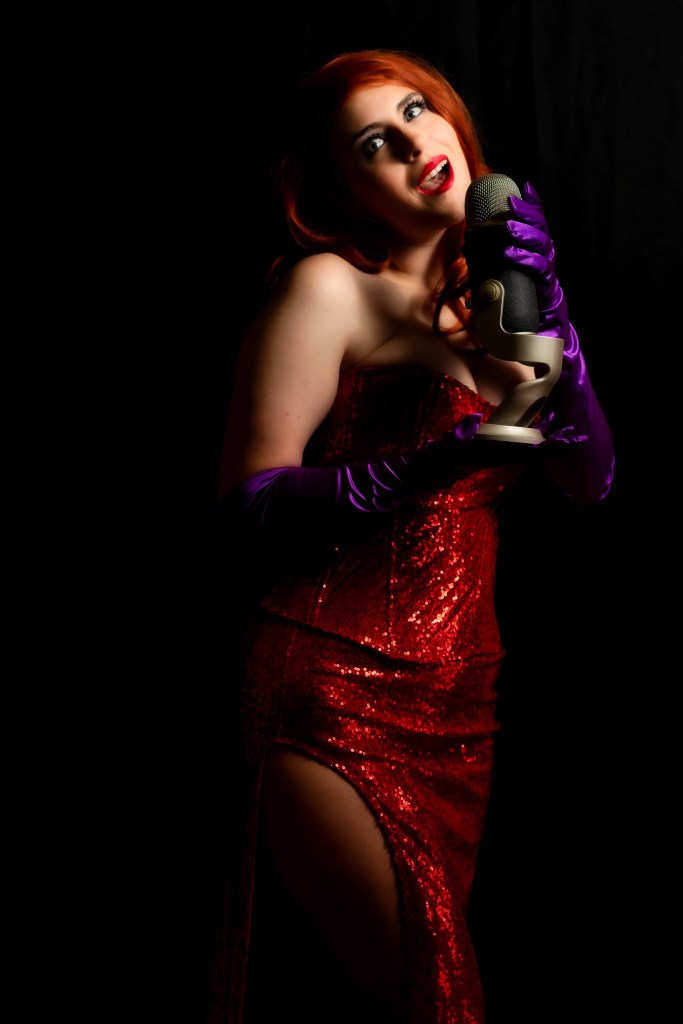
Woman in a red sequined dress and purple gloves holding a vintage-style microphone against a black background.
Gnatty Sparkles poses as Jessica Rabbit during a studio portrait session in Fort Collins, Colorado.

Within Chapter 4 of Greg Urbano’s Top 100 Journey—dedicated to portrait work spanning studio environments, outdoor sessions, and workshop collaborations—this striking interpretation of Jessica Rabbit through cosplayer Gnatty Sparkles represents a convergence of pop culture iconography and classical portraiture techniques. The photograph demonstrates the photographer’s evolving command of controlled lighting environments and his willingness to embrace theatrical subject matter without sacrificing compositional rigor.

Shot at Old Town Yoga in downtown Fort Collins, the image immediately establishes its vocabulary through the absolute darkness of its background. This void serves not merely as negative space but as a deliberate framing device that forces the viewer’s attention onto the subject with an intensity reminiscent of Baroque portraiture. The photographer employs a Sony A7ii paired with an 85mm f/1.8 lens—a combination favored for its ability to render flattering compression and subtle depth separation in portrait work. The addition of a Godox V1s flash modified through a shoot-through umbrella provides the soft, directional illumination that sculpts the figure from the darkness.

The technical execution reveals a photographer comfortable working within the constraints of artificial lighting. The catch lights in the subject’s eyes confirm the umbrella placement, while the gradual falloff from highlight to shadow demonstrates careful attention to light-to-subject distance. This is not flash photography that announces itself harshly; rather, it mimics the quality of continuous studio lighting while maintaining the power and flexibility of strobe work.

What distinguishes this image within the chapter’s broader context is its negotiation between documentary portraiture and fantasy realization. The subject’s embodiment of Jessica Rabbit—the animated femme fatale from “Who Framed Roger Rabbit”—demands a heightened reality that traditional portrait work might resist. The photographer accommodates this through his lighting choices, creating drama without veering into caricature. The sequined red dress catches and fractures the light into countless micro-reflections, a technical challenge that could easily overwhelm the sensor or create distracting hot spots. Here, the exposure maintains detail within these specular highlights while preserving the richness of the red tones.

The purple opera gloves introduce a complementary color relationship that prevents the image from becoming monotonous in its red-black palette. This attention to color theory—whether conscious or intuitive—suggests a developing sophistication in the photographer’s approach to more theatrical subject matter. The pose itself, with the microphone held close and the subject’s gaze directed past the camera, creates narrative ambiguity. Is this a performance captured mid-song, or a constructed tableau referencing performance?

Post-processing in Luminar 4 indicates a workflow focused on refinement rather than transformation. The skin tones retain a natural quality despite the artificial lighting environment, and the overall tonality suggests selective adjustments rather than heavy-handed filtering. This restraint allows the photograph’s essential qualities—the lighting, the costume, the subject’s expression—to register without distraction.

Within the trajectory of Chapter 4, this image represents the photographer’s engagement with workshop and collaborative environments where subjects arrive with specific creative visions. The success of such work depends on the photographer’s ability to serve that vision while maintaining their own technical and aesthetic standards—a balance this photograph achieves with confident precision.