Long Exposure Dillon Reservoir: A Study in Temporal Meditation

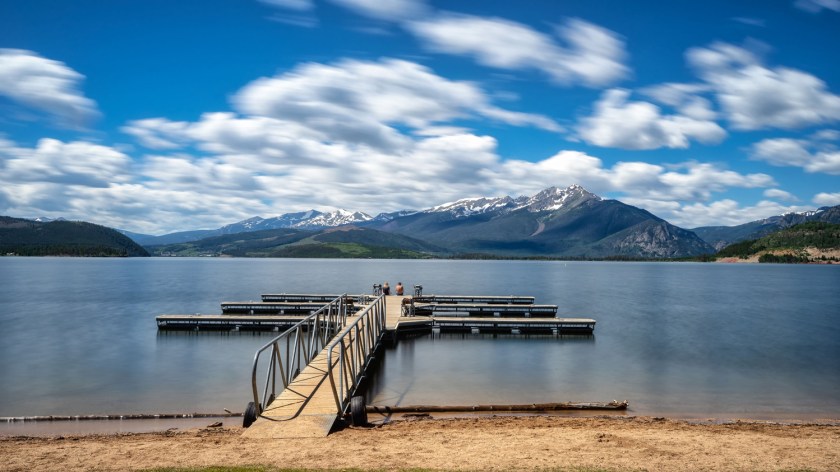
The photograph from Dillon Reservoir near Silverthorne, Colorado, features a dock leading into tranquil waters, showcasing the photographer’s technical skill and evolving artistic vision. Utilizing long exposure, the image captures a balance of nature and human infrastructure, encouraging contemplation on time, landscape, and accessibility, while inviting viewers to engage further with their surroundings.

Long exposure view of a dock extending into Dillon Reservoir with mountains and blurred clouds in the background.
A dock extends into Dillon Reservoir near Silverthorne, Colorado, with mountains rising beyond the water.

In this carefully composed study from Dillon Reservoir, the photographer employs extended exposure to transform a commonplace mountain scene into something approaching the transcendent. The image stands as a compelling entry within Chapter 3 of his Top 100 Journey, demonstrating a technical maturity and conceptual clarity that marks his evolving engagement with Colorado’s diverse landscapes.

The composition centers on a weathered dock extending into the reservoir’s calm waters, its wooden walkway and metal railings leading the viewer’s eye toward distant figures positioned at the structure’s terminus. By utilizing a 10-stop neutral density filter with his Sony A7II, the photographer has rendered the water as a glassy, almost ethereal surface—its texture smoothed into gradations of subtle color that suggest movement while paradoxically conveying absolute stillness. This temporal compression transforms fleeting moments into something more permanent, inviting contemplation of how we perceive and record the passage of time.

The technical execution reveals a photographer comfortable with his equipment’s capabilities and limitations. Working with the camera’s kit lens, he has extracted remarkable clarity across the frame, from the sandy foreground through the architectural elements of the dock to the snow-capped peaks beyond. The slight motion blur in the clouds—streaked horizontally across an impeccable blue sky—provides visual rhythm and suggests the duration of the exposure without overwhelming the image’s serene character.

What distinguishes this photograph within the Colorado landscapes chapter is its successful marriage of the state’s iconic mountain scenery with human infrastructure. Rather than presenting wilderness in isolation, the image acknowledges recreational use and accessibility, grounding the sublime natural setting in contemporary experience. The dock becomes a metaphor for our relationship with landscape—a point of interface, an invitation to venture further, a structure that both facilitates and frames our encounter with nature.

Compositionally, the photographer demonstrates sophisticated understanding of visual weight and balance. The curved railing in the immediate foreground creates dynamic entry into the frame, while the horizontal platforms and vertical posts establish geometric order against the organic forms of mountains and clouds. The small human figures at the dock’s end provide crucial scale, reminding viewers of the landscape’s monumentality while suggesting contemplative communion with place.

The color palette rewards close examination. Warm sandy tones in the foreground transition to the cool grays and blues of water and sky, punctuated by the brilliant whites of snow and cloud. This chromatic progression creates depth while maintaining overall tonal harmony. The long exposure has also produced subtle color shifts in the water, where reflected sky and submerged earth combine into something neither purely blue nor brown but somewhere beautifully between.

Within the broader context of his Top 100 Journey, this image represents a photographer increasingly confident in his technical command and artistic vision. The decision to work near Silverthorne—accessible from Interstate 70 rather than requiring backcountry expedition—suggests a mature understanding that compelling photographs need not emerge solely from remote locations. Instead, seeing becomes the essential act, recognizing potential in familiar places and applying technique to reveal what casual observation might miss.

This photograph ultimately asks viewers to pause, to consider how we move through landscape and how landscape moves through time. It is work that respects both craft and subject, offering neither mere technical display nor sentimental postcard but something more considered: a meditation on place, presence, and the strange alchemy of photography itself.

Fly Fisherman, Poudre River: Solitude and Seasonal Transition

The photograph of a fly fisherman in the Poudre River during autumn integrates human presence into Colorado’s natural landscape. Positioned mid-stream, the figure enhances the scene’s narrative and scale. This image balances aesthetics and documentary elements, showcasing a peaceful coexistence between nature and human activity amid vibrant seasonal colors.

A lone fly fisherman stands in a calm river beneath a small bridge, surrounded by autumn trees with yellow foliage.
A fly fisherman wades the Poudre River beneath a bridge during autumn in Colorado.

Among the works comprising Chapter 3—Colorado Landscapes & Cityscapes—this autumn scene along the Poudre River introduces a human presence that has been notably absent from much of the photographer’s natural landscape documentation. A lone fly fisherman stands mid-stream, his figure providing both scale and narrative focus within a composition dominated by seasonal color and the interplay of light on moving water. The image succeeds in balancing documentary observation with careful aesthetic consideration, capturing what appears to be a chance encounter during the photographer’s search for the last vestiges of fall color along this northern Colorado waterway.

The composition employs a classic landscape structure, divided roughly into thirds by the horizontal elements: the reflective water surface in the foreground, the bridge and human figure in the middle ground, and the autumn-touched forest rising beyond. The fisherman, positioned slightly off-center, serves as the crucial point of human scale that transforms what might otherwise be a standard seasonal landscape into something more contemplative. His solitary presence—the photographer notes he was likely the only other person at this remote turnoff—adds an element of quietude and shared appreciation for the conditions that drew both individuals to this location on a Saturday afternoon.

The treatment of water demonstrates technical proficiency with the Sony A7ii and kit lens combination. A moderate exposure time renders the river surface with subtle motion blur, smoothing ripples into gentle gradations of reflected light while maintaining enough definition to distinguish current patterns and submerged rocks. The right portion of the frame captures direct sunlight on the water, creating a bright zone of contrast against the darker, shadowed areas. This tonal range—from deep amber reflections to brilliant highlights—gives the water substantial visual weight and complexity.

Autumn color saturates the background, with golden aspens and cottonwoods forming luminous masses against the darker evergreens. The trees are captured at what the photographer sought—the final days of peak color—evident in the richness of the yellows and the beginning transitions toward bare branches. The small bridge, a modest steel and concrete structure, provides architectural grounding without overwhelming the natural elements. Its weathered construction suggests a rural access point rather than a major thoroughfare, reinforcing the sense of a discovered location rather than a destination.

What distinguishes this photograph within the broader chapter is its acknowledgment of human interaction with Colorado’s landscapes. Where other works present wilderness as untouched or urban environments as purely architectural, this image occupies a middle ground. The fisherman is neither intruder nor irrelevance; he belongs to this scene as much as the bridge or the turning leaves. His activity—fly fishing, with its requirements of patience, skill, and intimate knowledge of the water—suggests a relationship with place rather than mere passage through it.

The photographer’s decision to include this figure, captured during what he describes as a casual Saturday excursion, reveals an evolving understanding of how to represent place. Colorado’s identity encompasses not only its dramatic geology and seasonal transformations but also the quiet pursuits of those who seek out its rivers and forests during brief windows of perfect weather and fading color.