Fallen Tree: The Foundation of Seeing

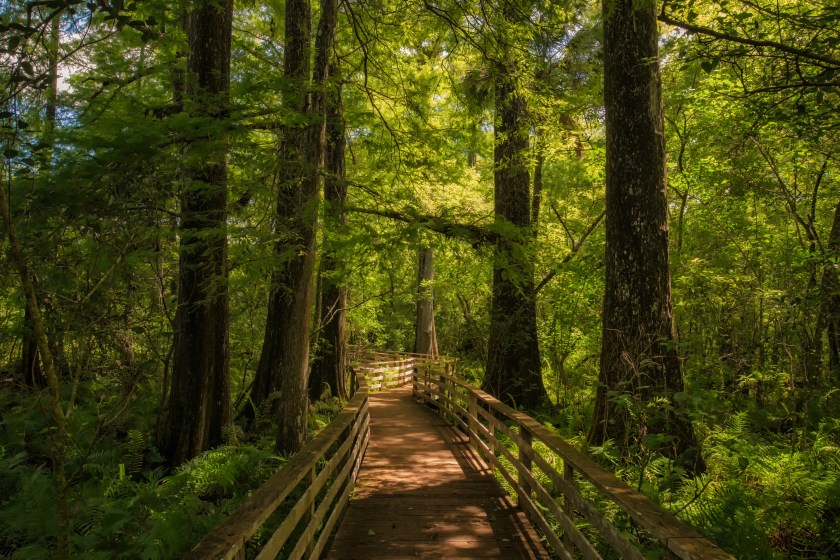
The photograph from Hillsborough River State Park, taken by Greg Urbano in 2013 with a Nikon D7100, captures a pivotal moment in his artistic development. It reflects his early understanding of composition and intentionality, showcasing the dense subtropical landscape through HDR processing. This image symbolizes the importance of beginnings and learning in photography.

Landscape in HDR 2013, Fallen Tree
Landscapes in HDR, this is an image taken along the trail in Hillsborough River State Park. Before moving to Colorado this park offered my best opportunity to capture flowing water over river rocks. Now I am spoiled with the Big Thompson and Cache la Poudre so close by.
Shot with a Nikon D7100.

In the opening chapter of Greg Urbano’s photographic journey, this image from Hillsborough River State Park stands as a testament to the essential nature of beginnings. Shot in 2013 with a Nikon D7100, the photograph captures more than a forest scene—it documents the foundational moment when a photographer learns to truly see the landscape before him.

The composition reveals an intuitive understanding of depth and perspective. Shot at 10mm, the wide-angle lens creates an immersive quality that draws viewers directly onto the trail. The fallen log in the foreground serves as both literal and metaphorical threshold, inviting passage into the deeper woods beyond. This diagonal element cuts across the frame with authority, its weathered texture rendered in sharp detail by the f/8.0 aperture, demonstrating Urbano’s early grasp of how to balance foreground interest with background context.

The HDR processing technique employed here reflects the experimental spirit characteristic of this pre-2015 period. While HDR would later fall somewhat out of favor in fine art photography circles, its application in this image serves a clear purpose: to capture the dynamic range of a Florida forest understory, where dappled sunlight creates extreme contrasts between shadow and highlight. The palmetto fronds and oak canopy are rendered with an almost hyper-real clarity that emphasizes the dense, layered nature of this subtropical ecosystem.

What makes this photograph particularly significant within the “Beginnings” chapter is its honesty about place and limitation. Urbano’s accompanying note—that this Florida park offered his “best opportunity to capture flowing water over river rocks” before relocating to Colorado—reveals something crucial about artistic development. Great photography emerges not from waiting for perfect conditions, but from working intensively with what’s available. This trail became his classroom, this fallen log his teacher.

The technical choices demonstrate a photographer thinking through his craft. The 1/50s shutter speed suggests deliberate handholding technique, while the ISO 200 setting indicates available light conditions and a preference for image quality. These aren’t the settings of someone simply pointing and shooting; they reveal consideration and intentionality, even in these early stages.

The color palette—predominantly greens with earth-toned accents—creates a cohesive, naturalistic feel despite the HDR processing. The slight motion blur in the foliage adds an organic quality, a reminder that this is a living landscape caught in a specific moment. The trail itself winds invitingly into the frame’s depth, disappearing around a bend that promises further discovery—a fitting metaphor for the artistic journey being documented.

In the context of Urbano’s larger body of work, this image represents more than just an early attempt. It embodies the crucial truth that mastery begins with showing up, with making photographs even when the circumstances aren’t ideal, even when the technique hasn’t been perfected. The photograph’s inclusion in his top 100 collection isn’t about technical perfection but about recognizing the importance of foundation.

Every artist’s journey requires a starting point, a place where curiosity meets commitment. This fallen tree, this Florida trail, this moment of learning to see—these are the essential ingredients that would eventually lead to mountain streams in Colorado and a mature photographic vision. The imperfect attempt, it turns out, isn’t just necessary. It’s everything.

The Gulf Pier: A Foundation in Light and Structure

Greg Urbano’s “Landscapes in HDR” captures the Gulf Fishing Pier at Fort de Soto Park, reflecting his artistic development in photography. Utilizing a Nikon D7100, he balances composition with HDR techniques, achieving naturalistic vibrancy without over-processing. The image embodies a pivotal moment in skill mastery, exploring the connection between environment and human creation.

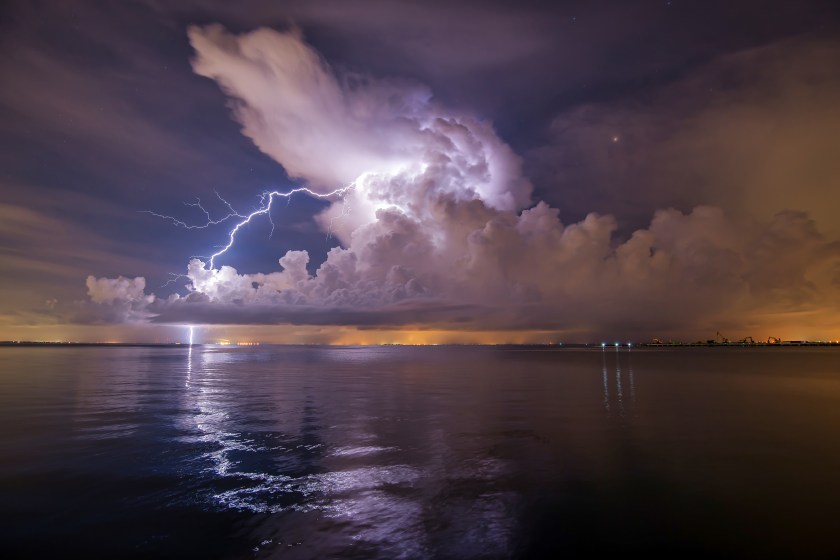
Landscapes in HDR, this is an image taken at Fort de Soto park in Pinellas county Florida of the Gulf Fishing Pier. This was one of my favorite places to visit on an almost weekly basis while living in St Pete. What a beautiful view of the Gulf of Mexico! Shot with a Nikon D7100.

In the early stages of any photographer’s journey, there exists a pivotal moment when technical curiosity converges with artistic vision. Greg Urbano’s “Landscapes in HDR” from 2013 captures precisely this convergence—a photograph that speaks to the fundamentals of seeing while revealing the seeds of a maturing artistic voice.

The Gulf Fishing Pier at Fort de Soto Park presents itself as an exercise in classical composition, yet the image transcends mere documentation. Shot with a Nikon D7100 at 14mm, the photographer embraced the distortion inherent in ultra-wide-angle photography, using it not as a limitation but as a tool for emphasis. The pier’s concrete pathway stretches toward the horizon with geometric insistence, its weathered surface textured with salt stains and age—details that anchor the ethereal quality of the surrounding environment.

What distinguishes this work within the context of Chapter 1—Beginnings is the deliberate exploration of HDR processing, a technique that dominated landscape photography in the early 2010s. Rather than falling into the trap of over-processing that plagued much HDR work of this era, Urbano demonstrates restraint. The luminous gradations in the sky—from deep azure to wispy white—retain a naturalistic quality while revealing detail across an impressive tonal range. The turquoise waters of the Gulf of Mexico maintain their vibrancy without crossing into hypersaturation, suggesting an eye already sensitive to the boundaries between enhancement and artifice.

The technical choices reveal a photographer building his fundamental vocabulary. The aperture of ƒ/8.0 ensures critical sharpness from the foreground concrete to the distant structures, while the fast shutter speed of 1/400s freezes the subtle motion of the scene—likely the flutter of distant flags or the movement of the few figures visible along the pier. At ISO 100, the image maintains clarity in its textures, from the horizontal railings that create rhythmic lines to the architectural shelters that punctuate the composition’s middle ground.

What makes this photograph significant in understanding Urbano’s artistic evolution is not its perfection but its purposefulness. The nearly symmetrical composition, the careful attention to the leading lines, the consideration of how architectural elements frame the natural environment—these are the building blocks upon which more complex visual narratives are constructed. The weekly visits to this location mentioned in his notes speak to something essential in photographic development: the practice of returning, of seeing the same subject under different conditions, of learning through repetition.

The landscape itself offers something eternal—the meeting point of human construction and natural expanse. The pier extends confidently into the Gulf, a gesture of connection between land and water, between the photographer’s position and the infinite horizon. In capturing this scene, Urbano was not merely documenting a favorite location but engaging with fundamental questions about how we frame our relationship to place and space.

Within the broader context of “Beginnings,” this image exemplifies the necessary stage of mastering craft before transcending it. The imperfect attempts referenced in the chapter description are not failures but essential experiments. Here, we witness a photographer learning to see in high dynamic range, to compose with geometric precision, and to capture the luminous quality of coastal light—all foundational skills that would inform the more sophisticated work to come.

This is where journeys begin: in the clarity of intention, the discipline of practice, and the recognition that every master was once a student of light.

Into the Green Cathedral: Highlands Hammock State Park, 2011

Greg Urbano’s 2011 photograph from the Cypress Swamp Trail reflects the intersection of technical skill and artistic vision in photography. Using a Pentax K-x, he captures a weathered boardwalk amidst Florida’s lush swamp, illustrating the relationship between nature and human presence. The image balances light and texture, inviting viewers into a transformative experience.

Highlands Hammock State
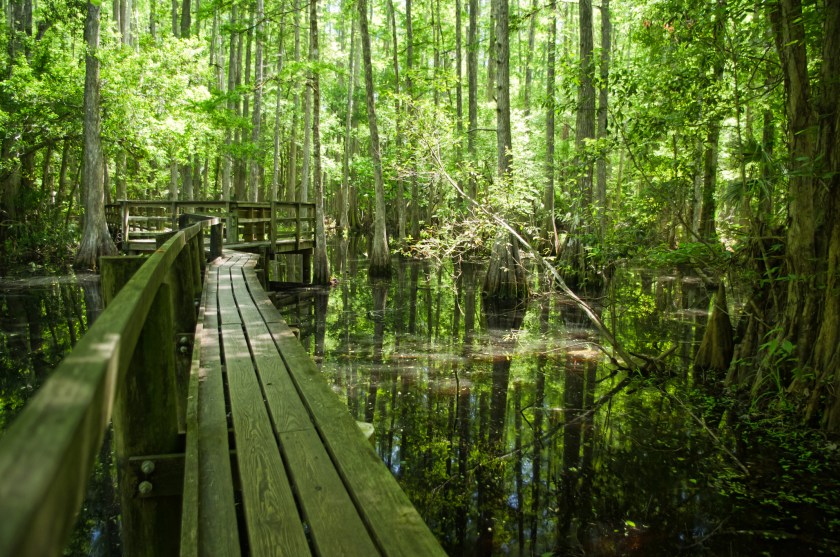
Photograph taken in Highlands Hammock State Park of the Cypress Swamp Trail, 2011. Shot with the Pentax K-x.

In the early stages of any photographer’s journey, there exists a pivotal moment when technical capability intersects with artistic vision—when the craft begins to serve something deeper than mere documentation. Greg Urbano’s 2011 photograph from the Cypress Swamp Trail at Highlands Hammock State Park captures precisely this threshold, presenting a meditation on entrance, passage, and the liminal spaces where human intervention meets primordial nature.

The composition anchors itself on a weathered wooden boardwalk that curves through the left third of the frame, its moss-stained surface bearing witness to countless footsteps and Florida’s relentless humidity. Shot at 18mm on a Pentax K-x with the kit lens, Urbano demonstrates an understanding that wide-angle photography isn’t about capturing everything—it’s about creating context and relationship. The boardwalk serves as both literal path and visual guide, drawing the eye from the immediate foreground deep into the swamp’s verdant interior.

What distinguishes this image from typical nature photography is its masterful handling of light in a notoriously challenging environment. Shooting at f/4.0 with a 1/40s shutter speed and ISO 400, Urbano navigated the technical constraints of a modestly equipped camera to capture the dappled luminosity filtering through the canopy. The exposure balances the bright patches of sky visible through the trees with the darker water below, creating a tonal range that feels both accurate and atmospheric. The slightly elevated ISO introduces a subtle grain that, rather than detracting from the image, contributes to its organic texture.

The swamp water itself becomes a secondary canvas, reflecting the surrounding cypress trunks and creating visual echoes that blur the boundary between substance and reflection. Fallen branches break the surface tension, their pale, skeletal forms contrasting with the vibrant greens of new growth. This juxtaposition of decay and vitality speaks to the swamp’s essential nature as a place of transformation, where death continuously feeds life.

The color palette reveals a sophisticated eye for harmony—countless variations of green layer upon one another, from the luminous chartreuse of sunlit leaves to the deep olive shadows beneath the boardwalk. The aged wood introduces warmer earth tones, grounding the composition and providing respite from the overwhelming verdancy. These are the subtle decisions that separate intentional photography from happy accidents.

Within the context of a photographer’s formative work, this image represents more than technical competence. It demonstrates an emerging awareness of how to use man-made structures not as intrusions upon nature, but as framers of experience—the boardwalk doesn’t dominate the swamp; it offers a way to witness it. The slight curve of the path suggests journey and discovery, inviting viewers to imagine themselves walking deeper into this green cathedral.

Shot with entry-level equipment during a period when digital photography was becoming democratized, this photograph affirms that vision matters more than gear. The Pentax K-x and kit lens proved sufficient tools for capturing not just a place, but an atmosphere—the particular quality of light, air, and time that defines Florida’s ancient swamplands. It stands as evidence of a photographer learning to see, to compose, and to recognize moments worth preserving.