Denver Union Station Two Trains: Urban Infrastructure as Visual Poetry

The photograph of Denver Union Station marks a shift in the photographer’s journey from natural landscapes to urban architecture. It highlights the interplay of light, color, and geometry while capturing quiet moments in public spaces. The image symbolizes Denver’s evolution in sustainable transit, merging historical preservation with contemporary design.

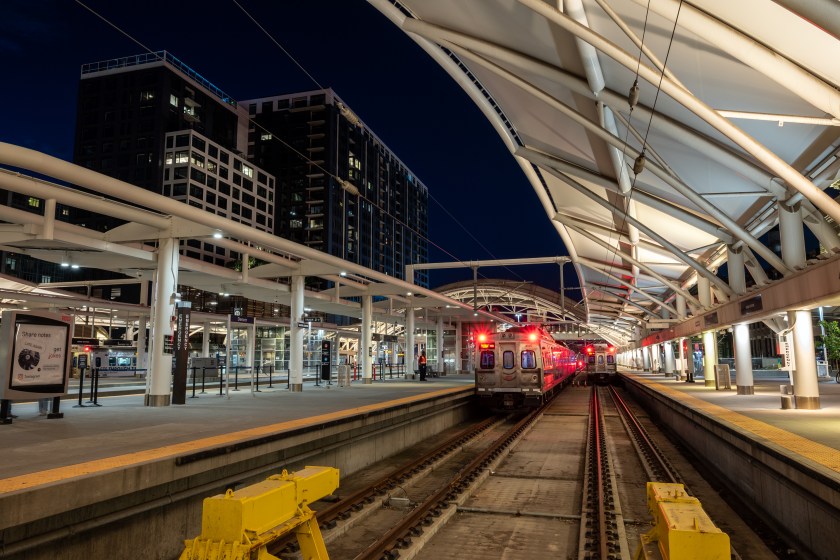
Two light rail trains sit on parallel tracks beneath the covered platforms at Denver Union Station at night.
Two RTD light rail trains are stopped on adjacent tracks at Denver Union Station in downtown Denver, Colorado.

This nocturnal study of Denver Union Station represents a compelling pivot within Chapter 3 of the photographer’s Top 100 Journey project—a shift from natural landscapes to the constructed geometries of urban infrastructure. Where previous works in this chapter have explored Colorado’s geological grandeur, this image examines the state’s architectural identity through one of its most significant transit hubs.

The composition is defined by bold linear perspective. Shot with a 14-30mm wide-angle lens, the photographer has positioned himself within the transit platform itself, allowing the parallel tracks to create strong diagonal lines that converge toward the vanishing point. This classical use of perspective transforms functional railway infrastructure into formal geometric study. The canopy overhead—a sweeping white lattice of structural supports—echoes and reinforces these diagonals, creating a rhythmic repetition that draws the eye inexorably toward the illuminated train in the distance.

Color plays a crucial role in establishing atmosphere. The deep navy blue of twilight sky provides saturated contrast against the warm artificial lighting of the station. The train’s red running lights introduce an accent of vivid color that punctuates the otherwise neutral palette of whites, grays, and concrete tones. A yellow maintenance box in the lower foreground adds an unexpected chromatic note—industrial, utilitarian, yet compositionally important as a counterweight to the red lights above.

The technical execution demonstrates careful consideration of low-light conditions. The exposure balances multiple light sources: the cool fluorescent platform lighting, the warm glow from the station building visible on the left, and the colored signals of the train itself. The photographer has managed to maintain detail throughout the frame—from the textured concrete of the platform to the lit windows of the distant residential tower—suggesting precise metering and likely the use of a tripod for stability during what was presumably a longer exposure.

What distinguishes this work is its treatment of public space during a quiet moment. The platform is nearly empty; a single figure appears as a small presence near the center, emphasizing scale and the architectural vastness of the station. This human element, though minimal, is essential—it prevents the image from becoming purely abstract geometry and reminds viewers that this is infrastructure designed for movement, for connection, for the daily transit of thousands.

Within the context of Colorado Cityscapes, this photograph documents Denver’s ongoing evolution as a metropolitan center investing in sustainable transit infrastructure. Union Station, a historic landmark renovated in recent years, represents the intersection of preservation and progress. The photographer captures this duality: the contemporary design of the platform canopy suggests forward-looking urban planning, while the fundamental elements—trains, tracks, waiting passengers—evoke the timeless ritual of rail travel.

The use of the Nikon Z5 with ultra-wide glass allows the photographer to emphasize architectural span while maintaining sharpness across the frame. The wide angle compresses multiple planes of depth into a single coherent visual statement, creating an image that functions simultaneously as documentary record and formal composition.

This photograph confirms the photographer’s ability to find visual poetry in utilitarian spaces, demonstrating that the “cityscape” portion of Chapter 3 merits equal attention to Colorado’s celebrated natural landscapes.

Architectural Symmetry and Urban Solitude: An HDR Study of Denver Union Station

The photographer’s nocturnal exploration of Denver Union Station highlights its architectural beauty through HDR techniques. Using a Nikon Z5, he captures the arched canopy and geometric metalwork, emphasizing both urban context and functional identity. This work redefines landscape photography, recognizing the significance of transportation infrastructure in Colorado’s cultural identity.

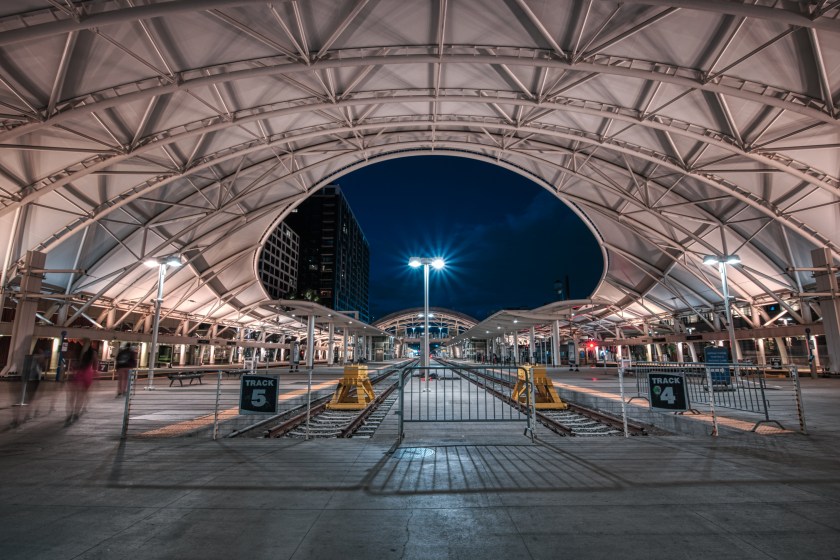
Symmetrical view of covered light rail platforms inside Denver Union Station at night, with tracks centered beneath a white arched roof.
The light rail platforms inside Denver Union Station are shown at night beneath the station’s arched canopy.

The photographer’s exploration of Colorado’s built environment finds a striking culmination in this nocturnal study of Denver Union Station’s interior architecture. Captured with a Nikon Z5 and Nikkor 14-30mm wide-angle lens, this HDR composition demonstrates a mature understanding of how contemporary digital techniques can reveal the inherent drama within civic spaces.

The image centers on the station’s distinctive arched canopy structure, a feat of engineering that dominates the frame with rhythmic precision. Metal trusses radiate outward in geometric patterns, their repetition creating a sense of ordered monumentality. The wide-angle lens choice proves deliberate rather than merely expedient—it allows the photographer to encompass both the sweeping overhead architecture and the rail infrastructure below while maintaining the spatial relationship that gives the composition its power. The central void, opening to the deep blue evening sky and a distant office tower, punctuates the manufactured enclosure with a reminder of the urban context beyond.

His HDR processing through Aurora software reveals a considered approach to tonal range. The metalwork retains textural detail without the artificial hyper-clarity that often plagues high dynamic range photography. The warm metallic tones of the canopy structure contrast effectively with the cooler blues of the twilight sky and platform lighting, establishing a color palette that feels naturalistic despite the technical manipulation required to balance such extreme luminance values.

The human element appears deliberately subdued—motion-blurred figures at the platform edges suggest activity without demanding attention, reinforcing the architectural subject while maintaining the space’s functional identity as a transportation hub. Yellow bumper stops and safety railings provide geometric counterpoints to the dominant curves above, their utilitarian forms grounding the composition in operational reality.

Within the context of Chapter 3’s focus on Colorado landscapes and cityscapes, this work represents a conceptual bridge. While the chapter presumably encompasses the state’s renowned natural vistas, the photographer recognizes that Colorado’s urban environments possess their own topography worth documenting. Denver Union Station, a historic structure serving contemporary transit needs, embodies the intersection of preservation and progress that characterizes much of the American West’s relationship with its past.

The technical execution reflects growing confidence with the Z5 system’s capabilities in challenging lighting conditions. Night photography in mixed-light environments demands both equipment competence and processing discipline, both evident here. The decision to shoot during the transitional moment between day and night—when ambient light still registers in the sky while artificial illumination dominates the platform—demonstrates an understanding of how fleeting conditions can elevate architectural documentation beyond mere record-keeping.

This image functions as more than a single photograph within his Top 100 Journey project; it suggests an expanding definition of landscape photography itself. The constructed landscape of transportation infrastructure, with its own valleys and peaks of metal and light, receives the same considered attention he might afford a mountain vista. The result is a document that honors both the anonymous designers who created this functional space and the ongoing human movement that gives it purpose.

In positioning this work within his curated collection, the photographer asserts that Colorado’s identity exists not only in its natural grandeur but in the spaces where communities gather, depart, and return—the thresholds that connect wilderness to civilization.

City Pier on Anna Maria Island: A Study in Patience and Atmospheric Drama

The long exposure photograph of the City Pier on Anna Maria Island captures the unique interplay of land, water, and sky under dramatic storm clouds. Through technical mastery, the image transforms fleeting moments into timelessness, blending sharp details of the pier with ethereal human figures and smooth water, reflecting deep engagement with Florida’s coastal landscapes.

Long exposure photograph of the City Pier on Anna Maria Island, showing a wooden pier leading to a waterfront building under dark storm clouds.
Long exposure view of the City Pier on Anna Maria Island beneath dramatic storm clouds.

Within the photographer’s carefully curated Top 100 Journey, this long exposure study of the City Pier on Anna Maria Island stands as a masterful example of how technical discipline can amplify emotional resonance. Positioned within Chapter 2—Florida Landscapes & Cityscapes—the image demonstrates a sophisticated understanding of the Gulf Coast’s unique visual character, where land, water, and sky exist in constant, subtle negotiation.

The composition reveals itself through classical simplicity: a weathered wooden pier extends from foreground to middle distance, leading the viewer’s eye toward a modest building crowned with an American flag. Yet what elevates this photograph beyond documentary record is the photographer’s deliberate manipulation of time itself. Shot with a fifteen-second exposure at f/18, the image transforms fleeting atmospheric conditions into something more permanent and contemplative. The threatening cloud formations above, rather than appearing frozen in mid-motion, achieve a painterly quality—their movement compressed and softened into bands of gray and white that suggest both weight and ethereality.

This temporal expansion creates a fascinating duality throughout the frame. While the pier’s wooden planks remain sharp and detailed, bearing the textural evidence of salt air and countless footfalls, the human figures near the building dissolve into ghostly presences, their individual identities surrendered to the longer rhythm of place. The water, too, undergoes transformation; what would typically appear as distinct waves and surface texture becomes a smooth, almost metallic gradient stretching from jade green to soft gray, merging seamlessly with the horizon.

The technical execution here deserves careful consideration. Working with a Nikon D610 and an 18-35mm lens set to 35mm, the photographer has achieved remarkable sharpness across the entire frame. The f/18 aperture ensures deep depth of field while the ISO 100 setting maintains clean tonal gradations essential for the image’s subtle atmospheric rendering. These choices reflect not mere technical competence but aesthetic intention—a desire to capture both concrete detail and ephemeral mood simultaneously.

Within the broader context of Chapter 2, this photograph exemplifies the photographer’s evolving relationship with Florida’s coastal environments. Where lesser practitioners might seek the obvious drama of golden hour or storm-tossed seas, he finds complexity in overcast conditions and the patient observation they demand. The image refuses easy categorization: it is neither purely documentary nor overtly romantic, but occupies a thoughtful middle ground where observation and interpretation merge.

The architectural elements—particularly the modest pier building with its peaked roof and practical design—anchor the composition in specificity while the long exposure technique universalizes the experience. This is simultaneously a portrait of a particular place and a meditation on impermanence, on how human structures persist while human presence itself becomes fluid and uncertain.

As part of a long-term project, this photograph suggests an artist committed to deep engagement rather than superficial tourism. The willingness to wait for proper atmospheric conditions, to set up the necessary equipment for extended exposures, and to see beyond the immediate toward something more contemplative marks this as serious photographic inquiry. Within his Top 100 Journey, it stands as evidence that Florida’s landscapes, often dismissed as visually unchallenging, reward patient observation with unexpected subtlety and depth.

Metallic Army Men Still Life: The Alchemy of Transformation

Greg Urbano’s 2014 still life photograph of metallic army men illustrates a crucial moment in his artistic development. Through intentional composition and lighting, he transforms simple toys into evocative symbols of memory and mythology, balancing childhood nostalgia with adult artistry. The photograph reflects Urbano’s conceptual approach and mastery of his medium.

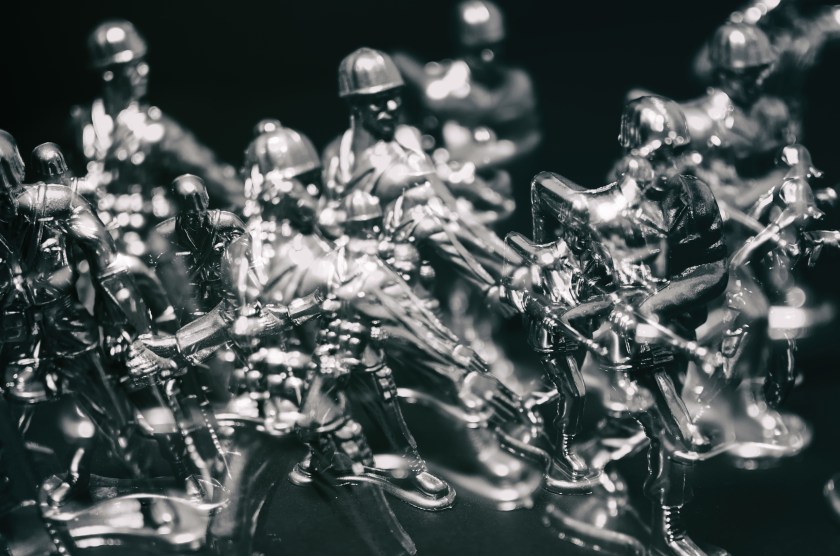
Metallic silver toy army men photographed in dramatic low light against a black background, creating an ethereal tabletop photography scene.
Metallic Army Men Still Life – Purpose-Driven Tabletop Photography (2014)

In the opening chapter of Greg Urbano’s photographic journey, this 2014 still life stands as a pivotal moment—a declaration of intentionality. The image depicts metallic army men frozen mid-action, their silver surfaces catching and scattering light across a void-like background. What began as dollar store plastic toys has been transmuted through spray paint and careful composition into something far more evocative: a meditation on memory, mythology, and the photographer’s emerging visual voice.

The technical execution reveals an artist learning to control his medium with precision. Shot on a Nikon D5100 with a 35mm f/1.8 lens wide open, Urbano exploits the shallow depth of field to create a dreamlike atmosphere. The foreground figures emerge sharp and detailed, their helmets and rifles rendered in crisp focus, while those behind dissolve into soft bokeh. This selective focus mimics the way memory itself operates—certain moments crystalline and vivid, others fading into impressionistic blur. The 1/20 second shutter speed at ISO 100 suggests a carefully controlled tabletop setup, likely using continuous lighting that allowed him to maintain the drama of highlights dancing across metallic surfaces.

What distinguishes this photograph within the “Beginnings” chapter is its purposefulness. Unlike casual snapshots or experimental exercises, this image demonstrates conceptual thinking from inception through execution. The decision to spray paint the figures silver wasn’t merely aesthetic—it stripped these mass-produced symbols of childhood play from their conventional context. No longer green plastic soldiers evoking backyard battles, they become archetypal warriors, their metallic finish suggesting both classical statuary and science fiction. They exist outside time, suspended between the ancient and the futuristic.

The composition itself rewards extended viewing. Urbano arranges the figures in a dynamic diagonal sweep that guides the eye through the frame. There’s a sense of advancing movement, of forces converging, yet the shallow focus and monochromatic treatment create an ethereal quality that contradicts any literal interpretation. These aren’t soldiers storming a beach—they’re specters, memories of conflict rendered as beautiful objects. The black background becomes an infinite space, allowing the figures to float free from any specific context or narrative.

The lighting deserves particular attention. The way highlights trace the contours of each figure—the curve of a helmet, the angle of a raised arm—reveals an understanding of how light sculpts form in photography. Some figures glow almost luminously, while others recede into shadow, creating a tonal range that prevents the silver-on-black palette from becoming monotonous. This careful modulation of light transforms what could have been a simple craft project into a genuine photographic study.

Positioned within Urbano’s broader body of work, this image represents a crucial developmental moment. It demonstrates his willingness to manipulate reality rather than simply document it, to transform found objects into vehicles for artistic expression. The photograph bridges childhood nostalgia and adult artistry, acknowledging the army men’s playful origins while elevating them through photographic treatment.

As a statement of beginnings, this work reveals an artist already thinking beyond the conventional. He wasn’t content to photograph the world as found; instead, he reimagined it, spray paint and camera serving as tools of transformation. The metallic army men become a fitting metaphor for the photographic process itself—ordinary subjects made extraordinary through vision, technique, and intention.

Coney Island Grill, 2011

Greg Urbano’s 2011 photograph of Coney Island Grill in St. Petersburg, Florida, captures the intersection of nostalgia and contemporary life. Through careful composition and lighting, Urbano highlights the diner as a communal space. The image preserves a sense of belonging while acknowledging economic pressures facing such establishments, transforming it into a documentary elegy.

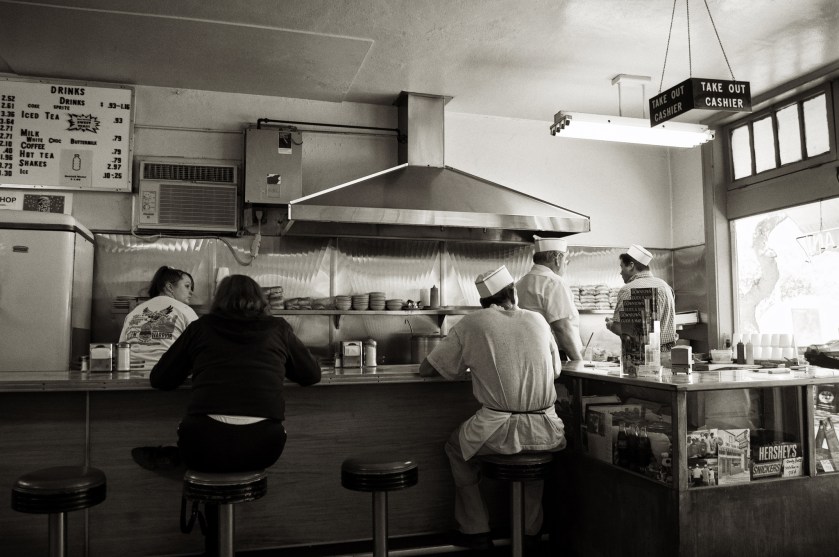
Black and white interior photograph of Coney Island Grill diner in St. Petersburg, Florida, showing customers at counter with chrome stools, cooks in white uniforms behind the counter, vintage menu board, and classic diner lighting and fixtures.
The timeless charm of Coney Island Grill in downtown St. Petersburg, Florida, 2011. This black and white photograph captures the authentic American diner experience with counter service, vintage stools, and white-uniformed cooks serving up classic hot dogs and nostalgia in this beloved St. Pete institution.

In the monochromatic stillness of this 2011 photograph, Greg Urbano captures the Coney Island Grill in downtown St. Petersburg, Florida, not as a restaurant, but as a theater of American nostalgia. The image presents a classic counter-service establishment frozen in a moment that feels simultaneously contemporary and timeless, a quality that speaks to the enduring nature of these communal spaces in American culture.

The composition demonstrates Urbano’s understanding of documentary photography’s essential paradox: how to frame the ordinary in ways that reveal its extraordinary nature. Shot with a Pentax K-x at 18mm, the wide-angle perspective encompasses the full breadth of the counter scene while maintaining intimate proximity to the subjects. The technical choices—f/5.6 at 1/40s, ISO 400—suggest available light work, resulting in the soft, natural illumination that bathes the scene in an almost ethereal quality despite the grittiness of the setting.

What commands attention is the photographer’s positioning. Urbano places the viewer among the patrons, seated at the counter alongside two customers whose backs form the photograph’s foreground. This deliberate framing creates layers of engagement: we observe not just the space, but the act of inhabiting it. The diner on the left, in a dark jacket, and the chef in white with his distinctive paper hat become characters in a narrative about place and belonging.

The tonal range of the black and white rendering amplifies the scene’s nostalgic register. Notice how the overhead hood reflects light downward onto the work surface, creating a stage-like illumination for the kitchen staff. The ribbed metal backdrop, the orderly rows of plates, the utilitarian equipment—all these elements speak to efficiency and tradition. Yet Urbano avoids romanticizing the space. The air conditioning unit, the fluorescent fixtures, the practical signage directing customers to the “TAKE OUT CASHIER”—these details ground the image in working-class reality.

The drinks menu board, visible in the upper left corner, provides cultural specificity. Iced tea, milk, hot chocolate, shakes—this is comfort food territory, unpretentious and familiar. The pricing, the handwritten additions, the weathered appearance of the signage all contribute to the sense that this establishment has served its community for years, possibly decades.

Within the context of Urbano’s Top 100 Journey, this photograph functions as documentary evidence of endangered spaces. Classic diners and grills face mounting economic pressures, often displaced by chains or upscale development. By photographing the Coney Island Grill with such careful attention to atmosphere and human presence, Urbano creates both record and elegy. The image honors the social function of these establishments—as gathering places, as democratic spaces where counter seats make everyone equal, where the transaction between server and served maintains its human dimension.

The geometry of the composition reinforces this democratic spirit. The long horizontal line of the counter, repeated in the overhead hood and service shelf, creates stability and continuity. The figures, distributed across the frame, suggest community without crowding. Even in stillness, the photograph conveys the rhythm of daily life, the quiet choreography of ordering, preparing, and serving food.

This is photography that understands place as palimpsest—layers of time, use, and memory inscribed in a single frame.

See this image on:

500px

Flickr