Morgan Silver Dollars: Texture, Time, and Monochromatic Study

The photographed still life of overlapping late nineteenth-century Morgan silver dollars showcases a detailed exploration of numismatic design through macro photography. The monochromatic treatment emphasizes surface textures and historical nuances while controlled lighting enhances the sculptural qualities. This work merges traditional still life methodologies with contemporary techniques, documenting valuable artifacts within a modern context.

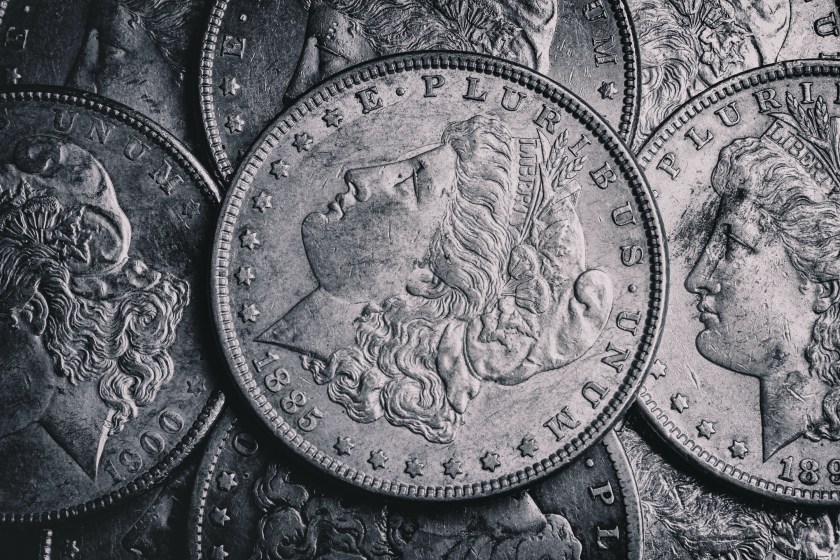
Close-up photograph of overlapping Morgan silver dollar coins showing worn engraved profiles and inscriptions.
A close-up still life of overlapping Morgan silver dollar coins from the late nineteenth century.

This monochromatic study of late nineteenth-century Morgan Silver Dollars represents the photographer’s deliberate expansion into controlled still life work, demonstrating how historical objects can serve as compelling subjects for formal exploration. The composition arranges multiple coins in overlapping layers, creating a topographical landscape of circular forms that invites close examination of surface detail, wear patterns, and the inherent sculptural qualities of numismatic design.

The technical approach centers on macro photography, executed with a Meike 85mm f/2.8 lens paired with his Sony A7ii system. This focal length and aperture combination allows for selective focus that emphasizes the central Morgan Dollar while surrounding coins recede into varying degrees of sharpness. The viewer’s eye naturally gravitates to the prominently featured coin displaying Liberty’s profile, her flowing hair rendered in remarkable relief detail. The inscription “E PLURIBUS UNUM” curves along the upper edge, each letter capturing light differently based on the coin’s worn topography—evidence of decades in circulation.

His conversion to black and white through Nik Silver Efex Pro proves particularly astute for this subject matter. The monochromatic treatment unifies the silver surfaces while accentuating tonal variations that reveal the coins’ individual histories. Scratches, patina, and areas of polish loss become visual information rather than mere damage. The grayscale palette also reinforces the historical nature of these artifacts, creating an aesthetic continuity between the coins’ era of origin and the contemporary photograph documenting them.

The lighting strategy deserves attention for its subtlety. Diffuse illumination reveals the bas-relief portraits and decorative elements without creating harsh specular highlights that might obscure detail or introduce unwanted contrast. Shadows between stacked coins provide dimensional information, suggesting weight and materiality. The photographer has avoided the common pitfall of overworking metallic surfaces, instead allowing the silver to speak through its natural reflective properties and acquired character.

Within Chapter 5’s framework examining still life photography from classic to experimental approaches, this work anchors itself firmly in traditional methodology. The arrangement recalls centuries of vanitas imagery where objects of commerce and temporal value serve as subjects for formal study. Yet the execution benefits from modern digital capture capabilities—the macro lens resolving minute surface textures that would challenge film-based systems, and post-processing software offering precise tonal control.

The choice to work with borrowed objects introduces an interesting collaborative element to his expanding still life practice. These coins carry not only their original historical context but also the contemporary narrative of a colleague’s collection—objects held, preserved, and valued by someone within his immediate circle. This transforms the exercise from pure technical study into a form of visual preservation, documenting specific artifacts at a particular moment in their continuing existence.

As an entry point into product and still life photography practiced within the domestic studio environment, this image succeeds in demonstrating foundational skills: controlled lighting, thoughtful composition, appropriate lens selection, and sensitive post-processing. The Morgan Dollars provide subject matter rich enough to reward close attention while remaining accessible—a practical choice for developing technical proficiency that yields aesthetically resolved results worthy of inclusion in his curated collection.
Hidden Valley Hike: A Study in Atmospheric Depth and Winter Quietude

The photograph from Hidden Valley in Rocky Mountain National Park captures a snow-covered trail among dense trees, showcasing Greg Urbano’s skill in monochromatic winter photography. Emphasizing subtlety over grandeur, it conveys solitude and wilderness through careful composition and tonal restraint, highlighting ecological specifics and the beauty of intimate landscapes.

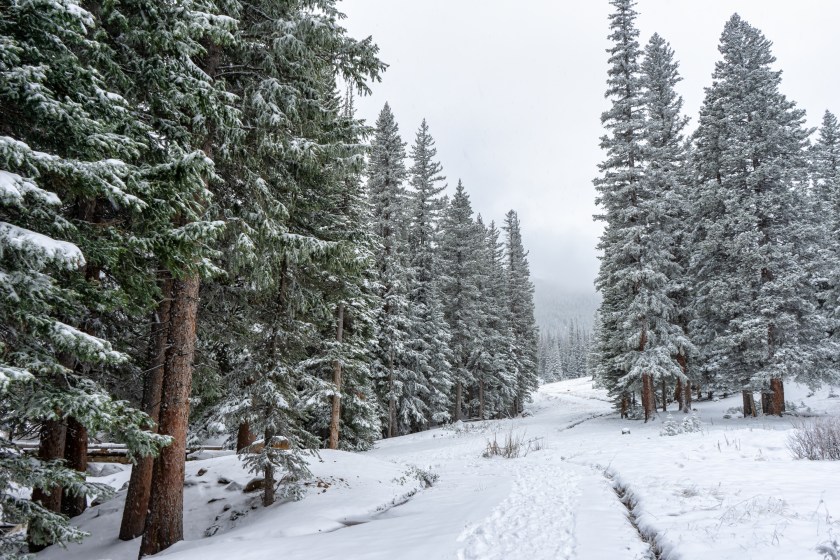
Snow-covered hiking trail winding through evergreen forest at Hidden Valley in Rocky Mountain National Park.
A snowy trail leads through dense evergreen trees at Hidden Valley in Rocky Mountain National Park, Colorado.

Within Chapter 3 of Greg Urbano’s Top 100 Journey—devoted to Colorado Landscapes & Cityscapes—this photograph from Hidden Valley in Rocky Mountain National Park represents a masterful engagement with the challenges of monochromatic winter photography. The image captures a snow-laden trail ascending through dense coniferous forest, where atmospheric conditions have reduced the distant peaks to mere suggestions within a veil of falling snow and fog.

The photographer’s compositional strategy reveals a sophisticated understanding of visual hierarchy. The trail itself functions as both literal and metaphorical pathway, drawing the viewer’s eye from the textured foreground snow through the middle ground’s architectural arrangement of pines and firs, before dissolving into the atmospheric void of the background. This recession creates a palpable sense of depth despite the flattening effect that overcast winter light typically imposes on landscape photography.

What distinguishes this work within Urbano’s broader Colorado portfolio is its restraint. Rather than pursuing the dramatic vistas and saturated alpine glow that characterize much Rocky Mountain photography, he has chosen to document a moment of visual subtlety—a soft, nearly monochromatic palette punctuated only by the warm sienna of exposed tree bark. The decision to work within such a limited tonal range demonstrates confidence in form and composition rather than relying on chromatic spectacle.

The technical execution merits particular attention. The photographer has maintained remarkable detail in the snow-weighted evergreen boughs while preserving the delicate gradation of gray tones that define the misty background. This balance suggests careful exposure management in conditions that would challenge most practitioners—the high reflectivity of fresh snow against dark timber, compounded by active precipitation and low contrast lighting.

From a thematic perspective, this photograph speaks to the contemplative dimension of Urbano’s landscape practice. The absence of human figures—save for the implicit presence suggested by the trail itself—invites meditation on solitude and the experience of wilderness in its less hospitable moments. This is not the Colorado of tourism brochures, but rather an intimate encounter with the state’s winter reality, where beauty reveals itself through subtlety rather than grandeur.

The image also functions as documentation of a specific ecological zone within Rocky Mountain National Park. The mixed conifer forest, dominated by what appear to be Engelmann spruce and subalpine fir, places the photograph within the park’s upper montane and subalpine life zones. The photographer’s attention to these botanical particulars grounds the work in a specific geographic and ecological context, elevating it beyond generic winter scenery.

Within the arc of the Top 100 Journey project, this photograph demonstrates stylistic evolution—a willingness to embrace quieter moments alongside more conventionally dramatic subjects. It suggests that Urbano’s curatorial eye has matured toward valuing atmospheric mood and compositional sophistication over spectacular subject matter alone.

The final consideration is one of timing and patience. Winter photography in Rocky Mountain National Park demands both technical preparation and willingness to work in physically demanding conditions. That this image exists at all speaks to the photographer’s commitment to documenting the full range of Colorado’s landscape character, not merely its most accessible or comfortable manifestations. The result is a work that rewards sustained attention, revealing its carefully calibrated tonal relationships and spatial complexities gradually, much like the trail itself emerging from and dissolving into winter’s embrace.