Burning Sands: A Meditation on Ephemeral Beginnings

The 2014 photograph from Greg Urbano’s “Burning Sands” captures a sand sculpture at Treasure Island, Florida, portraying the transient nature of creation. It juxtaposes themes of existence and decay through an overcast atmosphere, intricate details, and a solitary figure, emphasizing the cycle of beginnings and endings inherent in art and life.

Detailed sand sculpture on a beach under an overcast sky at the Sanding Ovations event in Treasure Island, Florida, photographed with a Nikon D7100 at 11.5mm.
A 2014 photograph of a sand sculpture at the Sanding Ovations event on Treasure Island Beach, Florida.

In the opening chapter of Greg Urbano’s photographic journey, “Burning Sands” stands as a profound meditation on the transient nature of creation itself. Captured in 2014 at the Sanding Ovations event in Treasure Island, Florida, this image transcends its origins as documentary photography to become something altogether more contemplative—a visual poem about the delicate threshold between existence and dissolution.

The photograph presents an intricate sand sculpture rendered in monochromatic tones, its draped forms suggesting both shelter and sorrow. A solitary figure crouches within an arched doorway, while skeletal remains sprawl at the sculpture’s base, creating a narrative that feels simultaneously ancient and immediate. What elevates this work beyond mere documentation is the atmospheric haze that envelops the scene—that distinctive quality the photographer describes as having a “Burning Man vibe.” The overcast morning has transformed the beach into an otherworldly playa, where the sun becomes a pale disk suspended in a beige firmament.

Urbano’s technical approach demonstrates a sophisticated understanding of environmental photography. Shot with a Nikon D7100 at 11.5mm, the ultra-wide angle encompasses not only the foreground sculpture but also the secondary forms receding into the atmospheric distance, creating layers of depth that pull the viewer’s eye through the composition. The aperture of f/6.3 maintains critical sharpness across the sculptural details while allowing the background to soften naturally into the haze. At 1/1600s, the shutter freezes what is essentially a meditation on impermanence—an irony not lost on the careful observer.

The positioning of this work within Chapter 1—Beginnings feels particularly apt. Sand sculptures exist in perhaps the most precarious state of any art form: they are born from the beach and inevitably return to it, whether through wind, tide, or the simple passage of time. There is something profoundly instructive about beginning a photographic journey with such ephemeral subject matter. It suggests an artist already attuned to photography’s essential purpose: to preserve the fleeting, to honor what cannot last.

The sculpture’s symbolic vocabulary—the draped archway, the protective figure, the bones suggesting mortality—reads as universal rather than specific. These are archetypal forms that resonate across cultures and epochs. Yet the photographer’s framing transforms these symbols into something fresh. The ropes cordoning the installation, visible in the foreground, serve as a subtle reminder of the boundary between art and observer, between preservation and inevitable decay.

What makes “Burning Sands” particularly compelling within Urbano’s broader body of work is its early demonstration of his eye for the liminal—those in-between spaces where conditions create unexpected beauty. The hazy atmosphere wasn’t planned or controlled; it was observed, recognized, and captured. This sensitivity to environmental gift-giving would become a hallmark of his photographic practice.

In the context of beginnings, this image offers a paradox: it documents creation while simultaneously evoking dissolution. The pale sun, the encompassing haze, the skeletal remains—all suggest endings as much as beginnings. Perhaps that’s the deeper wisdom captured here: that every beginning contains within it the seed of its own conclusion, and the artist’s task is simply to bear witness to both with equal reverence.
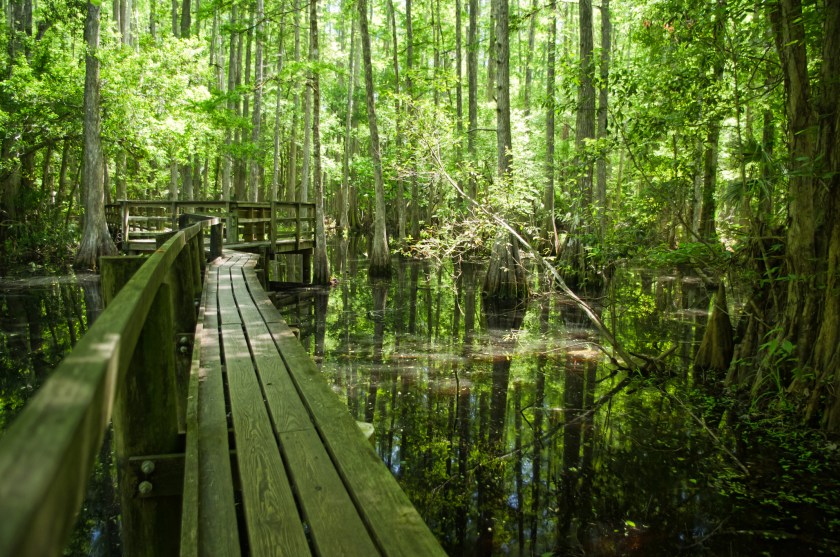
Into the Green Cathedral: Highlands Hammock State Park, 2011

Greg Urbano’s 2011 photograph from the Cypress Swamp Trail reflects the intersection of technical skill and artistic vision in photography. Using a Pentax K-x, he captures a weathered boardwalk amidst Florida’s lush swamp, illustrating the relationship between nature and human presence. The image balances light and texture, inviting viewers into a transformative experience.

Wooden boardwalk winding through a cypress swamp with tall trees, exposed roots, and reflective dark water, photographed in 2011 with a Pentax K‑x.
A 2011 photograph of the Cypress Swamp Trail boardwalk at Highlands Hammock State Park in Florida.

In the early stages of any photographer’s journey, there exists a pivotal moment when technical capability intersects with artistic vision—when the craft begins to serve something deeper than mere documentation. Greg Urbano’s 2011 photograph from the Cypress Swamp Trail at Highlands Hammock State Park captures precisely this threshold, presenting a meditation on entrance, passage, and the liminal spaces where human intervention meets primordial nature.

The composition anchors itself on a weathered wooden boardwalk that curves through the left third of the frame, its moss-stained surface bearing witness to countless footsteps and Florida’s relentless humidity. Shot at 18mm on a Pentax K-x with the kit lens, Urbano demonstrates an understanding that wide-angle photography isn’t about capturing everything—it’s about creating context and relationship. The boardwalk serves as both literal path and visual guide, drawing the eye from the immediate foreground deep into the swamp’s verdant interior.

What distinguishes this image from typical nature photography is its masterful handling of light in a notoriously challenging environment. Shooting at f/4.0 with a 1/40s shutter speed and ISO 400, Urbano navigated the technical constraints of a modestly equipped camera to capture the dappled luminosity filtering through the canopy. The exposure balances the bright patches of sky visible through the trees with the darker water below, creating a tonal range that feels both accurate and atmospheric. The slightly elevated ISO introduces a subtle grain that, rather than detracting from the image, contributes to its organic texture.

The swamp water itself becomes a secondary canvas, reflecting the surrounding cypress trunks and creating visual echoes that blur the boundary between substance and reflection. Fallen branches break the surface tension, their pale, skeletal forms contrasting with the vibrant greens of new growth. This juxtaposition of decay and vitality speaks to the swamp’s essential nature as a place of transformation, where death continuously feeds life.

The color palette reveals a sophisticated eye for harmony—countless variations of green layer upon one another, from the luminous chartreuse of sunlit leaves to the deep olive shadows beneath the boardwalk. The aged wood introduces warmer earth tones, grounding the composition and providing respite from the overwhelming verdancy. These are the subtle decisions that separate intentional photography from happy accidents.

Within the context of a photographer’s formative work, this image represents more than technical competence. It demonstrates an emerging awareness of how to use man-made structures not as intrusions upon nature, but as framers of experience—the boardwalk doesn’t dominate the swamp; it offers a way to witness it. The slight curve of the path suggests journey and discovery, inviting viewers to imagine themselves walking deeper into this green cathedral.

Shot with entry-level equipment during a period when digital photography was becoming democratized, this photograph affirms that vision matters more than gear. The Pentax K-x and kit lens proved sufficient tools for capturing not just a place, but an atmosphere—the particular quality of light, air, and time that defines Florida’s ancient swamplands. It stands as evidence of a photographer learning to see, to compose, and to recognize moments worth preserving.

See this image on:

500px

Flickr