St. Vrain Waterfall: A Study in Motion and Permanence

The photograph of a small waterfall along St. Vrain Creek embodies the tension between geological permanence and water’s fleeting essence. Using long exposure, it transforms the scene into a contemplative study of motion and stillness. The intimate scale highlights the beauty of overlooked subjects, emphasizing the profound within Colorado’s landscapes.

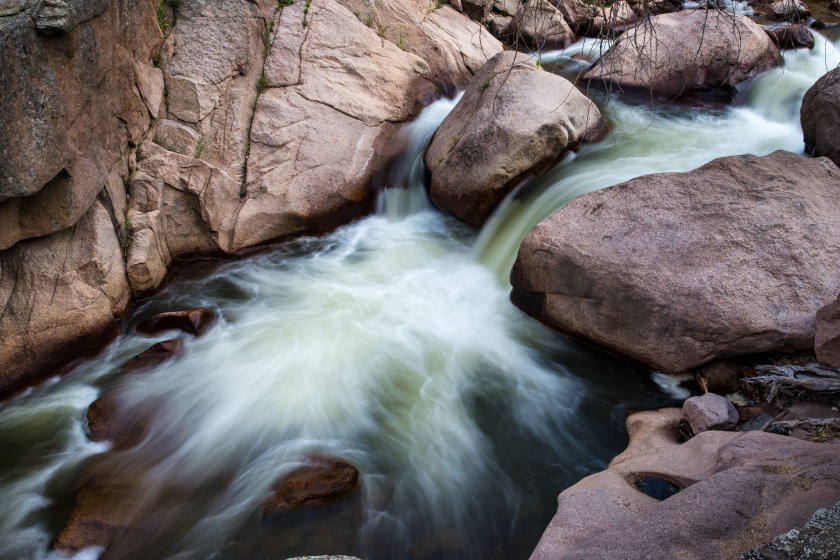
Long exposure view of a small waterfall flowing through smooth granite boulders along St. Vrain Creek.
A small waterfall flows between granite rocks along St. Vrain Creek in northern Colorado.

Within the third chapter of Greg Urbano’s Top 100 Journey—devoted to Colorado Landscapes & Cityscapes—this long exposure photograph of the St. Vrain presents a meditation on the fundamental tension between geological permanence and hydrological flux. The image captures a modest cascade in Northern Colorado, yet its technical execution elevates what might be considered a commonplace subject into something altogether more contemplative.

The photographer’s decision to employ long exposure proves essential to the work’s success. Water, rendered as gossamer curtains of white and pale green, flows through the frame with an almost supernatural quality. This technique transforms the kinetic energy of rushing water into something visually paradoxical: movement frozen into silken stillness. The effect creates a temporal ambiguity that refuses to commit to either instant or duration, existing instead in a liminal space between photographic modes.

Compositionally, the work demonstrates a sophisticated understanding of how natural forms interact within the frame. Pink-hued granite boulders, weathered and moss-touched, provide structural anchors throughout the image. These stones—products of millennia—stand in stark contrast to the ephemeral blur of water that has shaped them. The photographer positions these elements with careful attention to visual weight and balance, allowing the eye to trace pathways through the composition that mirror the water’s own journey through the rocky terrain.

The color palette reveals itself as deliberately restrained. Warm earth tones of pink and tan granite dominate, punctuated by touches of green moss and the cool, milky whites of the flowing water. This chromatic restraint prevents the image from becoming overly dramatic, instead maintaining the documentary authenticity that characterizes much of this chapter’s work. The photographer resists the temptation to over-saturate or manipulate, trusting the natural beauty of the Colorado landscape to speak for itself.

What distinguishes this photograph within the broader context of the Colorado Landscapes & Cityscapes chapter is its intimate scale. Rather than pursuing the grand vistas often associated with Rocky Mountain photography, the work turns its attention to a more modest subject—a small waterfall that countless hikers might pass without particular notice. This choice reflects a maturing sensibility within the photographer’s practice, one that finds profundity in the overlooked rather than the obvious.

The technical execution warrants recognition as well. Managing long exposure in daylight conditions requires careful control of light through neutral density filtration and precise shutter speed calculation. The photographer has balanced these elements skillfully, maintaining detail in both the highlighted water and shadowed crevices of stone. Branches visible at the top of the frame remain relatively sharp, suggesting a shutter speed calibrated to render water motion without sacrificing all structural definition in the surrounding environment.

Within the arc of the Top 100 Journey project, this image represents an important moment of focus. The work demonstrates that landscape photography need not rely on sweeping panoramas or dramatic weather to achieve visual and emotional resonance. Instead, it proposes that careful attention to the quotidian—to the small waterfalls tucked into Northern Colorado’s piedmont—can yield images of equal contemplative depth. The St. Vrain Waterfall stands as evidence of a photographer learning to see not just the spectacular, but the quietly profound.

Long Exposure Dillon Reservoir: A Study in Temporal Meditation

The photograph from Dillon Reservoir near Silverthorne, Colorado, features a dock leading into tranquil waters, showcasing the photographer’s technical skill and evolving artistic vision. Utilizing long exposure, the image captures a balance of nature and human infrastructure, encouraging contemplation on time, landscape, and accessibility, while inviting viewers to engage further with their surroundings.

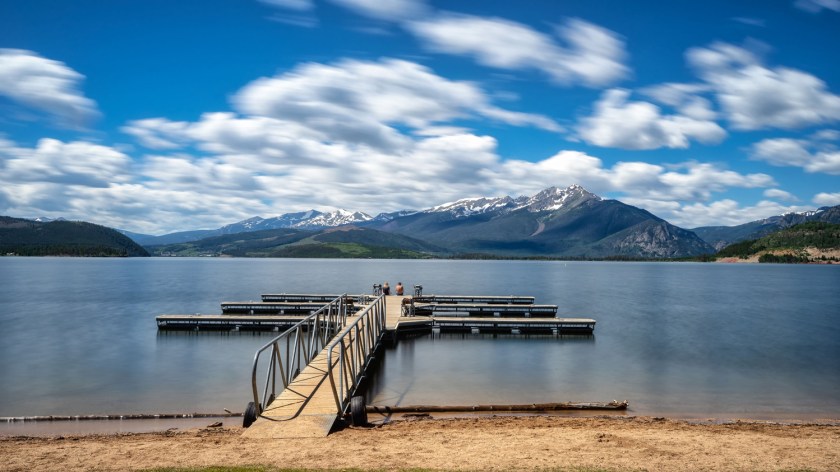
Long exposure view of a dock extending into Dillon Reservoir with mountains and blurred clouds in the background.
A dock extends into Dillon Reservoir near Silverthorne, Colorado, with mountains rising beyond the water.

In this carefully composed study from Dillon Reservoir, the photographer employs extended exposure to transform a commonplace mountain scene into something approaching the transcendent. The image stands as a compelling entry within Chapter 3 of his Top 100 Journey, demonstrating a technical maturity and conceptual clarity that marks his evolving engagement with Colorado’s diverse landscapes.

The composition centers on a weathered dock extending into the reservoir’s calm waters, its wooden walkway and metal railings leading the viewer’s eye toward distant figures positioned at the structure’s terminus. By utilizing a 10-stop neutral density filter with his Sony A7II, the photographer has rendered the water as a glassy, almost ethereal surface—its texture smoothed into gradations of subtle color that suggest movement while paradoxically conveying absolute stillness. This temporal compression transforms fleeting moments into something more permanent, inviting contemplation of how we perceive and record the passage of time.

The technical execution reveals a photographer comfortable with his equipment’s capabilities and limitations. Working with the camera’s kit lens, he has extracted remarkable clarity across the frame, from the sandy foreground through the architectural elements of the dock to the snow-capped peaks beyond. The slight motion blur in the clouds—streaked horizontally across an impeccable blue sky—provides visual rhythm and suggests the duration of the exposure without overwhelming the image’s serene character.

What distinguishes this photograph within the Colorado landscapes chapter is its successful marriage of the state’s iconic mountain scenery with human infrastructure. Rather than presenting wilderness in isolation, the image acknowledges recreational use and accessibility, grounding the sublime natural setting in contemporary experience. The dock becomes a metaphor for our relationship with landscape—a point of interface, an invitation to venture further, a structure that both facilitates and frames our encounter with nature.

Compositionally, the photographer demonstrates sophisticated understanding of visual weight and balance. The curved railing in the immediate foreground creates dynamic entry into the frame, while the horizontal platforms and vertical posts establish geometric order against the organic forms of mountains and clouds. The small human figures at the dock’s end provide crucial scale, reminding viewers of the landscape’s monumentality while suggesting contemplative communion with place.

The color palette rewards close examination. Warm sandy tones in the foreground transition to the cool grays and blues of water and sky, punctuated by the brilliant whites of snow and cloud. This chromatic progression creates depth while maintaining overall tonal harmony. The long exposure has also produced subtle color shifts in the water, where reflected sky and submerged earth combine into something neither purely blue nor brown but somewhere beautifully between.

Within the broader context of his Top 100 Journey, this image represents a photographer increasingly confident in his technical command and artistic vision. The decision to work near Silverthorne—accessible from Interstate 70 rather than requiring backcountry expedition—suggests a mature understanding that compelling photographs need not emerge solely from remote locations. Instead, seeing becomes the essential act, recognizing potential in familiar places and applying technique to reveal what casual observation might miss.

This photograph ultimately asks viewers to pause, to consider how we move through landscape and how landscape moves through time. It is work that respects both craft and subject, offering neither mere technical display nor sentimental postcard but something more considered: a meditation on place, presence, and the strange alchemy of photography itself.