Gnatty Jessica Rabbit: A Study in Theatrical Light and Character Translation

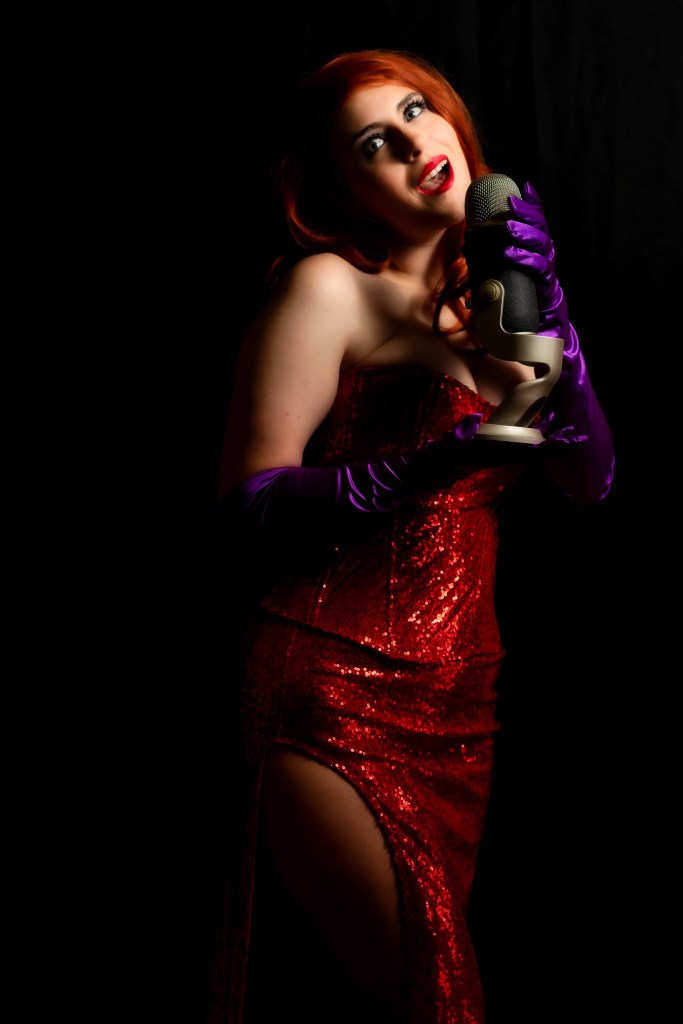
Gnatty Sparkles embodies Jessica Rabbit in a portrait by Greg Urbano, showcasing a blend of pop culture and classical techniques. Set against a dark background, expert lighting highlights the figure and costume details. The image balances theatricality with technical skill, reflecting the photographer’s evolving prowess in creative collaborations.

Woman in a red sequined dress and purple gloves holding a vintage-style microphone against a black background.
Gnatty Sparkles poses as Jessica Rabbit during a studio portrait session in Fort Collins, Colorado.

Within Chapter 4 of Greg Urbano’s Top 100 Journey—dedicated to portrait work spanning studio environments, outdoor sessions, and workshop collaborations—this striking interpretation of Jessica Rabbit through cosplayer Gnatty Sparkles represents a convergence of pop culture iconography and classical portraiture techniques. The photograph demonstrates the photographer’s evolving command of controlled lighting environments and his willingness to embrace theatrical subject matter without sacrificing compositional rigor.

Shot at Old Town Yoga in downtown Fort Collins, the image immediately establishes its vocabulary through the absolute darkness of its background. This void serves not merely as negative space but as a deliberate framing device that forces the viewer’s attention onto the subject with an intensity reminiscent of Baroque portraiture. The photographer employs a Sony A7ii paired with an 85mm f/1.8 lens—a combination favored for its ability to render flattering compression and subtle depth separation in portrait work. The addition of a Godox V1s flash modified through a shoot-through umbrella provides the soft, directional illumination that sculpts the figure from the darkness.

The technical execution reveals a photographer comfortable working within the constraints of artificial lighting. The catch lights in the subject’s eyes confirm the umbrella placement, while the gradual falloff from highlight to shadow demonstrates careful attention to light-to-subject distance. This is not flash photography that announces itself harshly; rather, it mimics the quality of continuous studio lighting while maintaining the power and flexibility of strobe work.

What distinguishes this image within the chapter’s broader context is its negotiation between documentary portraiture and fantasy realization. The subject’s embodiment of Jessica Rabbit—the animated femme fatale from “Who Framed Roger Rabbit”—demands a heightened reality that traditional portrait work might resist. The photographer accommodates this through his lighting choices, creating drama without veering into caricature. The sequined red dress catches and fractures the light into countless micro-reflections, a technical challenge that could easily overwhelm the sensor or create distracting hot spots. Here, the exposure maintains detail within these specular highlights while preserving the richness of the red tones.

The purple opera gloves introduce a complementary color relationship that prevents the image from becoming monotonous in its red-black palette. This attention to color theory—whether conscious or intuitive—suggests a developing sophistication in the photographer’s approach to more theatrical subject matter. The pose itself, with the microphone held close and the subject’s gaze directed past the camera, creates narrative ambiguity. Is this a performance captured mid-song, or a constructed tableau referencing performance?

Post-processing in Luminar 4 indicates a workflow focused on refinement rather than transformation. The skin tones retain a natural quality despite the artificial lighting environment, and the overall tonality suggests selective adjustments rather than heavy-handed filtering. This restraint allows the photograph’s essential qualities—the lighting, the costume, the subject’s expression—to register without distraction.

Within the trajectory of Chapter 4, this image represents the photographer’s engagement with workshop and collaborative environments where subjects arrive with specific creative visions. The success of such work depends on the photographer’s ability to serve that vision while maintaining their own technical and aesthetic standards—a balance this photograph achieves with confident precision.
Mike Groth: Classical Studio Portraiture and the Language of Formality

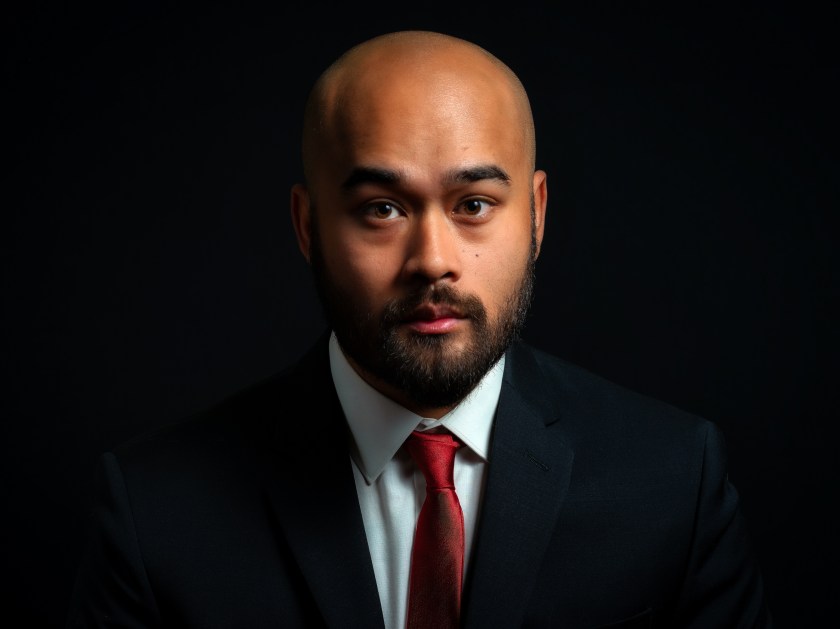
Mike Groth’s studio portrait, featured in Chapter 4 of the Top 100 Journey, exemplifies traditional portraiture through controlled lighting and composition. Shot at Old Town Yoga Studio, the image focuses on character and presence, utilizing a classic backdrop and professional techniques. Its formal simplicity highlights the subject’s confidence, making it versatile across various contexts.

Bald man with a beard wearing a suit and red tie looks directly at the camera against a black background.
Mike Groth is photographed in a studio portrait at Old Town Yoga Studio in Fort Collins, Colorado.

Within Chapter 4 of the photographer’s Top 100 Journey, this portrait of Mike Groth represents a return to the foundational principles of studio portraiture—controlled lighting, deliberate composition, and the timeless formality of traditional headshot aesthetics. Shot at the Old Town Yoga Studio in Fort Collins, Colorado, the image demonstrates the photographer’s facility with classic studio techniques while exploring the psychological dimensions of formal masculine presentation.

The technical execution adheres to established conventions of corporate and editorial portraiture. Utilizing a Sony A7ii with an 85mm f/1.8 lens, the photographer has positioned his subject against a pure black backdrop, eliminating all environmental context to focus entirely on character and presence. A Godox V1s flash paired with a shoot-through umbrella provides the primary illumination—a traditional modifier choice that produces soft, diffused light with gentle shadow gradation across the subject’s features. This approach creates dimensional modeling without the harsh contrast of direct flash, revealing the contours of the face while maintaining a polished, professional quality.

The composition centers the subject in a classical three-quarter view, shoulders angled slightly to create visual interest while the face turns toward the camera. This positioning—neither fully frontal nor profile—has been a cornerstone of portraiture since the Renaissance, offering both dimensionality and direct engagement. The subject’s formal attire—dark suit, white shirt, burgundy tie—reinforces the traditional corporate aesthetic, while his neutral expression and direct gaze suggest confidence tempered with approachability.

What distinguishes this work within the photographer’s broader practice is its embrace of restraint. Where other images in Chapter 4 explore environmental integration and spontaneous moments, this portrait strips away context to examine how lighting, posture, and expression alone can convey character. The black void backdrop functions not merely as a neutral background but as an active element, creating psychological weight and directing all attention to the subtle details: the catch lights in the eyes, the texture of facial hair, the precise fall of shadow along the jawline.

The post-processing in Luminar 4 maintains the studio’s carefully controlled atmosphere. Skin tones are rendered with natural warmth while preserving texture and detail. The lighting reveals itself as directional yet forgiving, highlighting the subject’s facial structure without creating unflattering shadows. This balance between revelation and flattery characterizes effective professional portraiture—honest without being harsh, polished without appearing artificial.

Within the context of Chapter 4’s mission to document studio, outdoor, and workshop methodologies, this image anchors the studio component with particular authority. It demonstrates that contemporary portrait photography need not abandon classical techniques in pursuit of innovation. The photographer’s choice to work within established conventions reflects an understanding that certain approaches endure precisely because they succeed in their essential task: revealing the subject’s presence and character with clarity and dignity.

The formal simplicity of this portrait allows it to function across multiple contexts—editorial, corporate, archival. This versatility speaks to the photographer’s understanding of portraiture not merely as artistic expression but as functional communication. As part of the Top 100 Journey, the image represents a technical benchmark, showcasing the fundamental competencies upon which more experimental work can build. It is portraiture in its most distilled form: light, subject, and the photographer’s ability to orchestrate their interaction with precision and purpose.

Maia del Mazo Urban : A Study in Contemporary Youth Portraiture

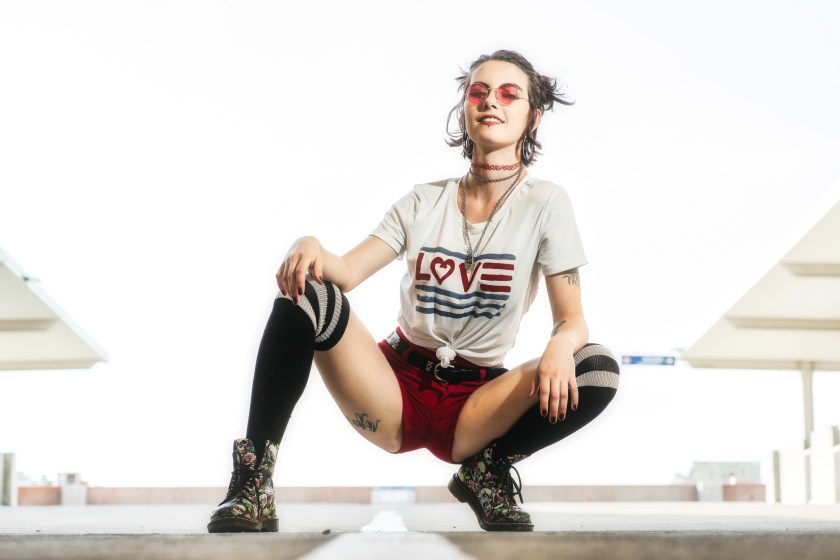
Maia del Mazo’s portrait, captured in Old Town Fort Collins, exemplifies the intersection of contemporary youth culture and environmental portraiture. Utilizing natural light and artificial enhancement, the photographer balances technical precision with spontaneity. The subject’s confident pose and styling reflect a subcultural moment, fostering an authentic connection with the viewer.

Woman wearing red shorts and knee-high socks crouches on a concrete surface in an urban setting with bright sky behind her.
Maia del Mazo poses in an urban location in Old Town Fort Collins, Colorado.

Within Chapter 4 of the photographer’s Top 100 Journey—dedicated to studio, outdoor, and workshop portraiture—this image of Maia del Mazo emerges as a compelling examination of contemporary youth culture and environmental portraiture. Shot in Old Town Fort Collins, Colorado, the photograph demonstrates the artist’s evolving command of natural light augmented by carefully controlled artificial illumination, a technical approach that has become increasingly refined throughout this chapter of his documentary project.

The composition presents the subject in a confident, grounded squat position against a minimalist architectural backdrop. Her styling—vintage band aesthetic meeting modern streetwear, complete with floral combat boots, striped knee socks, and layered chokers—speaks to a specific subcultural moment. The photographer has positioned her centrally within the frame, allowing the clean lines of the urban architecture to recede into soft focus, creating negative space that amplifies the subject’s presence rather than competing with it.

Technically, the image represents a sophisticated balance between available daylight and artificial enhancement. Shot with a Sony A7ii paired with an 85mm f/1.8 lens, the photographer employed a handheld Godox V1s flash without modification—a bold choice that suggests confidence in reading ambient conditions. The direct flash technique produces a subtle fill that lifts shadows without flattening the image’s dimensionality, while the 85mm focal length compresses the background just enough to isolate the figure without creating unnatural bokeh. The slight wind-swept quality of the subject’s hair adds dynamism to what might otherwise read as a static pose.

What distinguishes this work within the chapter’s broader context is its departure from traditional studio control. While maintaining the technical precision associated with formal portraiture, the photographer embraces environmental elements—concrete surfaces, architectural geometry, natural wind movement—that introduce spontaneity into the frame. This hybrid approach reflects an evolution in his practice, moving beyond purely controlled studio environments toward a more flexible methodology that captures authentic personality within structured compositions.

The post-processing in Luminar 4 demonstrates restraint appropriate to the subject matter. Color grading emphasizes warm tones in the subject’s skin and the amber cast of her sunglasses while maintaining the cooler neutrals of the concrete and sky. The processing enhances rather than transforms, supporting the documentary quality inherent in the photographer’s approach to his Top 100 Journey project.

The subject’s body language—relaxed yet assertive, casual yet deliberate—suggests a collaborative relationship between photographer and sitter. This comfort level allows for genuine expression rather than performative posing, a quality that distinguishes effective contemporary portraiture from mere documentation. The direct, knowing gaze above the rose-tinted frames establishes connection with the viewer while maintaining a degree of cool remove characteristic of youth subculture.

As part of the photographer’s long-term Top 100 Journey, this image contributes to an ongoing investigation into portraiture’s capacity to capture both individual personality and broader cultural moments. It represents the workshop and outdoor component of Chapter 4’s mission, demonstrating how environmental factors and technical adaptability can produce work that honors both formal photographic traditions and contemporary visual language. The result is a portrait that feels simultaneously timeless in its compositional confidence and distinctly anchored in its cultural moment.