Entanglement: Portrait as Performance at the Haunt Slam

During the 2025 Portrait Slam in Denver, a striking portrait of a model named Wednesday showcases the photographer’s evolution into theatrical portraiture. The image, emphasizing themes of entrapment and performance, uses sophisticated artificial lighting to create dramatic effects. It reflects a shift towards collaborative photography, merging documentation with creative expression.

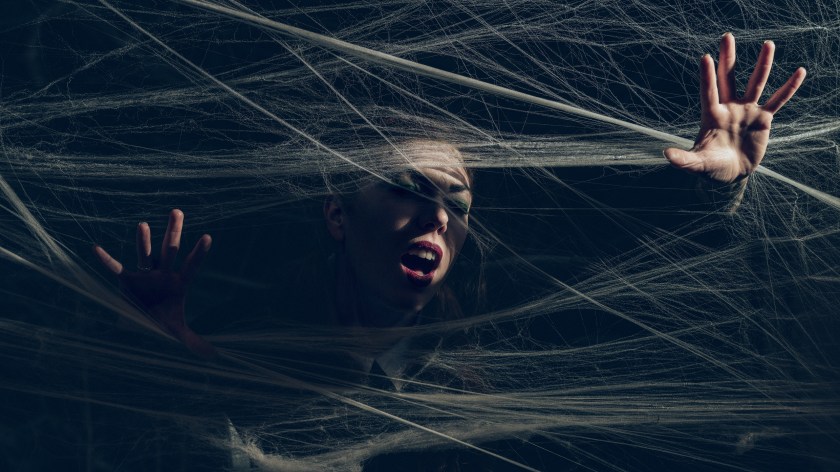
Portrait of a person pressing their hands forward through layers of stretched web-like material, with dramatic low-key lighting against a dark background.
Wednesday photographed during the 2025 Portrait Slam (Haunt Slam) at the DCO space in Denver, Colorado.

This striking portrait, captured during the 2025 Portrait Slam at Denver’s DCO space, represents a significant departure into theatrical portraiture for a photographer whose journey has increasingly embraced collaborative, event-based work. The image—featuring a model known as Wednesday—transcends conventional portraiture to become a study in entrapment, theatrical expression, and the controlled chaos of performance photography.

The composition immediately arrests the viewer with its central tension: a figure ensnared in what appears to be synthetic webbing, hands pressed outward in a gesture simultaneously defensive and reaching. The model’s expression—mouth open in what could be read as exhilaration, distress, or performative intensity—refuses easy interpretation. This ambiguity serves the work well, inviting prolonged examination rather than immediate comprehension.

Technically, the photograph demonstrates sophisticated command of artificial lighting in challenging circumstances. Shot with a Nikon Z7ii and illuminated by a Godox AD100 with grid, the lighting scheme creates dramatic chiaroscuro that sculpts the figure from the deep, nearly black background. The gridded modifier produces focused illumination that highlights the face and hands while allowing the surrounding webbing to catch light selectively, creating a three-dimensional mesh that appears to hover in space. This precision lighting transforms what could be simple event documentation into controlled studio-quality portraiture executed in a dynamic environment.

The web itself functions as both literal and metaphorical element. Its physical presence creates visual texture and geometric complexity, the crossing strands forming a secondary compositional structure that both fragments and frames the subject. Metaphorically, it invites reading as constraint, connection, or cocoon—interpretations that align with the “Haunt Slam” context while transcending mere Halloween theatrics to suggest broader themes of entanglement with technology, society, or creative process itself.

Within Chapter 6—”The Road Ahead: Recent Work & Ongoing Exploration”—this photograph signals the photographer’s continued engagement with collaborative, community-centered photography. The Portrait Slam format, hosted by Denver Models and Mike’s Camera, represents a democratization of studio portraiture, bringing together photographers, models, and creative collaborators in rapid-fire shooting sessions. That he selected this image for his Top 100 Journey suggests recognition that contemporary photographic practice increasingly exists within networks of creative exchange rather than isolated studio work.

The post-processing in Evoto maintains dramatic impact while preserving textural detail in both skin tones and the surrounding webbing. The color palette—dominated by deep teals and shadows punctuated by warm skin tones and crimson lips—creates visual coherence without sacrificing the image’s raw energy. The photographer resists over-polishing, allowing slight imperfections and authentic texture to ground the theatrical presentation in physical reality.

This work demonstrates evolution from earlier documentary and landscape work toward portraiture that embraces performance, collaboration, and conceptual staging. Yet it retains the technical rigor and compositional awareness evident throughout the Top 100 Journey. As the photographer continues exploring “the road ahead,” this image suggests that path leads toward increasingly theatrical, collaborative work that blurs boundaries between documentation and creation, between capturing moments and constructing them.
Scale and Spectacle: Industrial Heritage as Portrait Stage

Savana Steinhoff’s portrait in front of the Rio Grande 5771 locomotive at the Colorado Railroad Museum showcases Greg Urbano’s artistic vision in environmental portraiture. The photo employs effective lighting, wardrobe choice, and spatial awareness to highlight both model and industrial backdrop, reflecting broader themes of coexistence and cultural significance in contemporary photography.

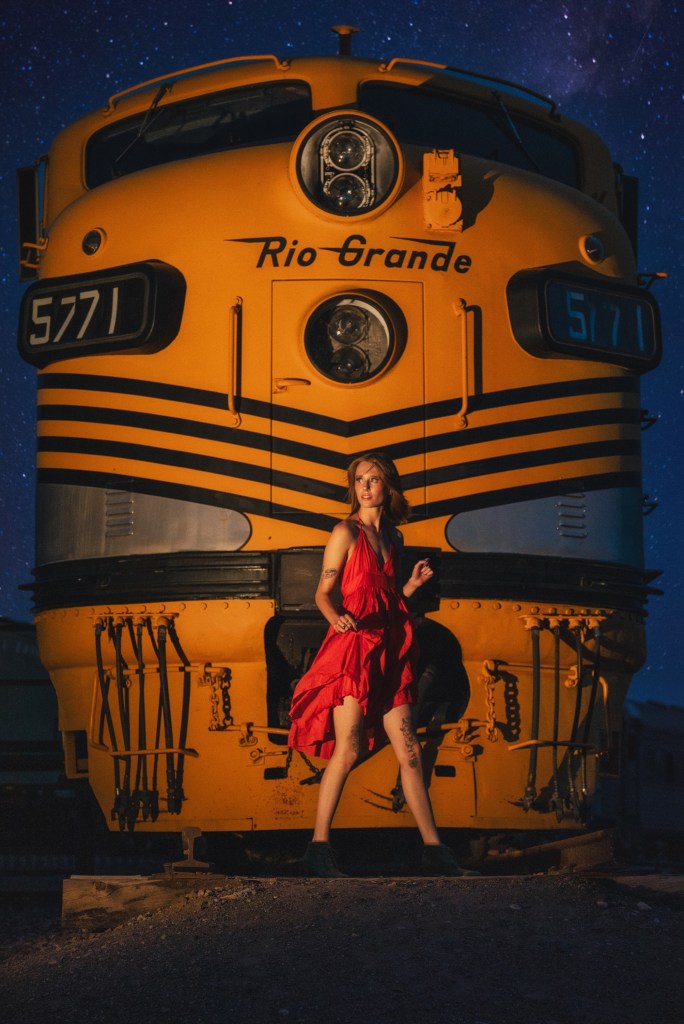
Woman in a red dress stands in front of a yellow Rio Grande locomotive at night, lit against a dark sky.
Savana Steinhoff poses in front of the Rio Grande 5771 locomotive at the Colorado Railroad Museum in Golden, Colorado.

Among the most ambitious entries in Chapter 4 of Greg Urbano’s Top 100 Journey, this photograph from Portrait Slam 2024 represents the photographer’s engagement with large-scale environmental portraiture under challenging technical conditions. Created at the Colorado Railroad Museum in Golden, the image positions model Savana Steinhoff against the imposing facade of Rio Grande locomotive 5771, transforming industrial artifact into dramatic backdrop and exploring the relationship between human scale and mechanical monumentality.

The composition immediately announces its ambitions. The locomotive dominates the frame, its iconic orange and black striping creating bold graphic elements that could easily overwhelm a human subject. Yet Urbano’s placement of the model—centered beneath the Rio Grande nameplate, her crimson dress echoing the warm tones of the engine—establishes a visual hierarchy that honors both subject and setting. The photographer has chosen a low angle that emphasizes the locomotive’s imposing height while maintaining the model’s presence as the compositional anchor. This decision reflects sophisticated spatial awareness, particularly valuable in workshop environments where multiple photographers compete for optimal vantage points.

The lighting strategy reveals careful planning and execution. Shot during the blue hour, the image captures that transitional moment when artificial illumination and residual daylight achieve balance. The locomotive’s exterior lighting creates warm pools of color against the deepening twilight sky, while additional lighting—likely strobes positioned to camera left—illuminates the model without destroying the ambient atmosphere. Stars visible in the darkening sky suggest either long exposure techniques or composite work in post-processing, adding a dreamlike quality to what might otherwise be straightforward location portraiture.

The choice of wardrobe proves integral to the photograph’s success. The flowing red dress provides both color contrast and movement, its flowing fabric creating visual interest against the rigid geometry of the industrial subject. The model’s pose—casual yet purposeful, one leg slightly forward—suggests confidence rather than confrontation with the massive machine behind her. This approach differs markedly from more aggressive “beauty and the beast” tropes often employed in automotive and industrial photography, opting instead for coexistence rather than contrast.

Within the context of Chapter 4’s documentation of workshop and collaborative shooting experiences, this photograph demonstrates the photographer’s ability to execute complex concepts under time constraints typical of group shooting events. Portrait Slam workshops challenge participants to work efficiently in unfamiliar locations with coordinated models and lighting setups, requiring both technical proficiency and decisive artistic vision. The inclusion of this image in the Top 100 Journey suggests Urbano views such collaborative environments not as limitations but as catalysts for ambitious work.

The photograph also reflects broader themes in contemporary portrait photography, where environmental context carries equal weight to subject representation. The locomotive serves as cultural artifact—a symbol of westward expansion, industrial heritage, and American rail history—while simultaneously functioning as pure visual element. This duality enriches the image beyond simple fashion or glamour photography, situating it within traditions of documentary-informed portraiture.

Ultimately, this work from Portrait Slam 2024 exemplifies the photographer’s mature approach to environmental portraiture: technically sophisticated, conceptually layered, and visually arresting without sacrificing authenticity or becoming mere spectacle.