Metallic Army Men Still Life: The Alchemy of Transformation

Greg Urbano’s 2014 still life photograph of metallic army men illustrates a crucial moment in his artistic development. Through intentional composition and lighting, he transforms simple toys into evocative symbols of memory and mythology, balancing childhood nostalgia with adult artistry. The photograph reflects Urbano’s conceptual approach and mastery of his medium.

Metallic silver toy army men photographed in dramatic low light against a black background, creating an ethereal tabletop photography scene.
Metallic Army Men Still Life – Purpose-Driven Tabletop Photography (2014)

In the opening chapter of Greg Urbano’s photographic journey, this 2014 still life stands as a pivotal moment—a declaration of intentionality. The image depicts metallic army men frozen mid-action, their silver surfaces catching and scattering light across a void-like background. What began as dollar store plastic toys has been transmuted through spray paint and careful composition into something far more evocative: a meditation on memory, mythology, and the photographer’s emerging visual voice.

The technical execution reveals an artist learning to control his medium with precision. Shot on a Nikon D5100 with a 35mm f/1.8 lens wide open, Urbano exploits the shallow depth of field to create a dreamlike atmosphere. The foreground figures emerge sharp and detailed, their helmets and rifles rendered in crisp focus, while those behind dissolve into soft bokeh. This selective focus mimics the way memory itself operates—certain moments crystalline and vivid, others fading into impressionistic blur. The 1/20 second shutter speed at ISO 100 suggests a carefully controlled tabletop setup, likely using continuous lighting that allowed him to maintain the drama of highlights dancing across metallic surfaces.

What distinguishes this photograph within the “Beginnings” chapter is its purposefulness. Unlike casual snapshots or experimental exercises, this image demonstrates conceptual thinking from inception through execution. The decision to spray paint the figures silver wasn’t merely aesthetic—it stripped these mass-produced symbols of childhood play from their conventional context. No longer green plastic soldiers evoking backyard battles, they become archetypal warriors, their metallic finish suggesting both classical statuary and science fiction. They exist outside time, suspended between the ancient and the futuristic.

The composition itself rewards extended viewing. Urbano arranges the figures in a dynamic diagonal sweep that guides the eye through the frame. There’s a sense of advancing movement, of forces converging, yet the shallow focus and monochromatic treatment create an ethereal quality that contradicts any literal interpretation. These aren’t soldiers storming a beach—they’re specters, memories of conflict rendered as beautiful objects. The black background becomes an infinite space, allowing the figures to float free from any specific context or narrative.

The lighting deserves particular attention. The way highlights trace the contours of each figure—the curve of a helmet, the angle of a raised arm—reveals an understanding of how light sculpts form in photography. Some figures glow almost luminously, while others recede into shadow, creating a tonal range that prevents the silver-on-black palette from becoming monotonous. This careful modulation of light transforms what could have been a simple craft project into a genuine photographic study.

Positioned within Urbano’s broader body of work, this image represents a crucial developmental moment. It demonstrates his willingness to manipulate reality rather than simply document it, to transform found objects into vehicles for artistic expression. The photograph bridges childhood nostalgia and adult artistry, acknowledging the army men’s playful origins while elevating them through photographic treatment.

As a statement of beginnings, this work reveals an artist already thinking beyond the conventional. He wasn’t content to photograph the world as found; instead, he reimagined it, spray paint and camera serving as tools of transformation. The metallic army men become a fitting metaphor for the photographic process itself—ordinary subjects made extraordinary through vision, technique, and intention.

Stacked Chrome Muscle: The Architecture of American Power

In a 2014 throwback photo, Greg Urbano captures a chrome muscle car engine at a car show, transforming it into a sculptural testament of American automotive culture. The monochrome composition highlights its intricate details and engineering philosophy, transcending typical automotive photography into fine art, reflecting power and craftsmanship.

Black‑and‑white close‑up photograph of a chrome muscle car engine with multiple intake stacks, polished components, and detailed mechanical parts, taken with a Nikon D7100 at 24mm.
A 2014 black‑and‑white close‑up of a stacked chrome muscle car engine captured at a car show.

In this striking image from Greg Urbano’s early photographic explorations, the viewer encounters not merely an engine, but a sculptural monument to American automotive culture. Shot at a car show in 2014, this photograph demonstrates how technical documentation can transcend its utilitarian origins to become a meditation on form, texture, and cultural identity.

The composition centers on a magnificent array of individual throttle bodies—eight polished chrome velocity stacks rising like organ pipes from the engine block below. Urbano’s decision to shoot at f/8.0 provides exceptional depth of field, rendering every fluted trumpet in sharp detail while maintaining visual coherence across the crowded mechanical landscape. The MSD Digital 6AL ignition box in the upper left corner grounds the image in specificity, reminding us this is a real machine, not an abstract study.

What elevates this work beyond conventional automotive photography is the photographer’s masterful use of monochrome. The conversion to black and white strips away distraction and reveals the essential geometry of performance engineering. Chrome becomes a study in gradation—from brilliant highlights on the velocity stack lips to the deep blacks of the engine valley below. The ribbed valve covers create rhythmic patterns that echo throughout the frame, establishing a visual cadence that draws the eye deeper into the mechanical complexity.

The lighting deserves particular attention. Working with the ambient conditions of a car show—notoriously challenging for photographers—Urbano has captured specular highlights that accentuate the three-dimensional quality of each component. The reflections dancing across polished surfaces create a sense of movement and life in what is, paradoxically, a static object. One can almost hear the anticipated roar of this engine, feel the vibration of its operation.

From a curatorial perspective, this image belongs firmly within the “Beginnings” chapter of Urbano’s journey. It reveals a photographer discovering his eye, learning to see beyond the obvious. Car shows present a particular challenge: everything is designed to be spectacular, yet the very abundance of visual stimulus can overwhelm. Here, the photographer has exercised editorial judgment, finding a perspective that isolates and celebrates a single element of automotive excess.

The stacked throttle bodies themselves represent a specific philosophy in performance engineering—individual runners for each cylinder, optimized airflow, uncompromising dedication to power over practicality. This photograph captures that ethos perfectly. There is nothing subtle about this engine, and Urbano wisely chooses not to apologize for its maximalism. Instead, he leans into the drama, using his technical choices to amplify the subject’s inherent theatricality.

The 24mm focal length on his Nikon D7100 provides just enough wide-angle perspective to encompass the scene without introducing distortion that would undermine the precision of these machined components. Shot at 1/30th of a second—relatively slow for handheld work—the image’s sharpness suggests careful technique, perhaps braced against the engine bay or shot with controlled breathing.

This photograph documents more than machinery; it captures a particular strain of American automotive culture that values power, craftsmanship, and conspicuous performance. In rendering it so beautifully, Urbano elevates the vernacular tradition of car photography into something approaching fine art—a promising beginning indeed for a photographer learning to find extraordinary subjects in ordinary places.

Fallen Tree: The Foundation of Seeing

The photograph from Hillsborough River State Park, taken by Greg Urbano in 2013 with a Nikon D7100, captures a pivotal moment in his artistic development. It reflects his early understanding of composition and intentionality, showcasing the dense subtropical landscape through HDR processing. This image symbolizes the importance of beginnings and learning in photography.

HDR photograph of a forest trail in Hillsborough River State Park with a large fallen tree across the path, dense vegetation, and filtered natural light, taken with a Nikon D7100 at 10mm.
A 2013 HDR landscape photograph of a fallen tree along a forest trail in Hillsborough River State Park, Florida.

In the opening chapter of Greg Urbano’s photographic journey, this image from Hillsborough River State Park stands as a testament to the essential nature of beginnings. Shot in 2013 with a Nikon D7100, the photograph captures more than a forest scene—it documents the foundational moment when a photographer learns to truly see the landscape before him.

The composition reveals an intuitive understanding of depth and perspective. Shot at 10mm, the wide-angle lens creates an immersive quality that draws viewers directly onto the trail. The fallen log in the foreground serves as both literal and metaphorical threshold, inviting passage into the deeper woods beyond. This diagonal element cuts across the frame with authority, its weathered texture rendered in sharp detail by the f/8.0 aperture, demonstrating Urbano’s early grasp of how to balance foreground interest with background context.

The HDR processing technique employed here reflects the experimental spirit characteristic of this pre-2015 period. While HDR would later fall somewhat out of favor in fine art photography circles, its application in this image serves a clear purpose: to capture the dynamic range of a Florida forest understory, where dappled sunlight creates extreme contrasts between shadow and highlight. The palmetto fronds and oak canopy are rendered with an almost hyper-real clarity that emphasizes the dense, layered nature of this subtropical ecosystem.

What makes this photograph particularly significant within the “Beginnings” chapter is its honesty about place and limitation. Urbano’s accompanying note—that this Florida park offered his “best opportunity to capture flowing water over river rocks” before relocating to Colorado—reveals something crucial about artistic development. Great photography emerges not from waiting for perfect conditions, but from working intensively with what’s available. This trail became his classroom, this fallen log his teacher.

The technical choices demonstrate a photographer thinking through his craft. The 1/50s shutter speed suggests deliberate handholding technique, while the ISO 200 setting indicates available light conditions and a preference for image quality. These aren’t the settings of someone simply pointing and shooting; they reveal consideration and intentionality, even in these early stages.

The color palette—predominantly greens with earth-toned accents—creates a cohesive, naturalistic feel despite the HDR processing. The slight motion blur in the foliage adds an organic quality, a reminder that this is a living landscape caught in a specific moment. The trail itself winds invitingly into the frame’s depth, disappearing around a bend that promises further discovery—a fitting metaphor for the artistic journey being documented.

In the context of Urbano’s larger body of work, this image represents more than just an early attempt. It embodies the crucial truth that mastery begins with showing up, with making photographs even when the circumstances aren’t ideal, even when the technique hasn’t been perfected. The photograph’s inclusion in his top 100 collection isn’t about technical perfection but about recognizing the importance of foundation.

Every artist’s journey requires a starting point, a place where curiosity meets commitment. This fallen tree, this Florida trail, this moment of learning to see—these are the essential ingredients that would eventually lead to mountain streams in Colorado and a mature photographic vision. The imperfect attempt, it turns out, isn’t just necessary. It’s everything.

The Gulf Pier: A Foundation in Light and Structure

Greg Urbano’s “Landscapes in HDR” captures the Gulf Fishing Pier at Fort de Soto Park, reflecting his artistic development in photography. Utilizing a Nikon D7100, he balances composition with HDR techniques, achieving naturalistic vibrancy without over-processing. The image embodies a pivotal moment in skill mastery, exploring the connection between environment and human creation.

HDR landscape photograph of the Gulf Fishing Pier at Fort De Soto Park in Pinellas County, Florida, extending over calm water under a bright sky, taken with a Nikon D7100 at 14mm.
A 2013 HDR landscape photograph of the Gulf Fishing Pier at Fort De Soto Park in Pinellas County, Florida.

In the early stages of any photographer’s journey, there exists a pivotal moment when technical curiosity converges with artistic vision. Greg Urbano’s “Landscapes in HDR” from 2013 captures precisely this convergence—a photograph that speaks to the fundamentals of seeing while revealing the seeds of a maturing artistic voice.

The Gulf Fishing Pier at Fort de Soto Park presents itself as an exercise in classical composition, yet the image transcends mere documentation. Shot with a Nikon D7100 at 14mm, the photographer embraced the distortion inherent in ultra-wide-angle photography, using it not as a limitation but as a tool for emphasis. The pier’s concrete pathway stretches toward the horizon with geometric insistence, its weathered surface textured with salt stains and age—details that anchor the ethereal quality of the surrounding environment.

What distinguishes this work within the context of Chapter 1—Beginnings is the deliberate exploration of HDR processing, a technique that dominated landscape photography in the early 2010s. Rather than falling into the trap of over-processing that plagued much HDR work of this era, Urbano demonstrates restraint. The luminous gradations in the sky—from deep azure to wispy white—retain a naturalistic quality while revealing detail across an impressive tonal range. The turquoise waters of the Gulf of Mexico maintain their vibrancy without crossing into hypersaturation, suggesting an eye already sensitive to the boundaries between enhancement and artifice.

The technical choices reveal a photographer building his fundamental vocabulary. The aperture of ƒ/8.0 ensures critical sharpness from the foreground concrete to the distant structures, while the fast shutter speed of 1/400s freezes the subtle motion of the scene—likely the flutter of distant flags or the movement of the few figures visible along the pier. At ISO 100, the image maintains clarity in its textures, from the horizontal railings that create rhythmic lines to the architectural shelters that punctuate the composition’s middle ground.

What makes this photograph significant in understanding Urbano’s artistic evolution is not its perfection but its purposefulness. The nearly symmetrical composition, the careful attention to the leading lines, the consideration of how architectural elements frame the natural environment—these are the building blocks upon which more complex visual narratives are constructed. The weekly visits to this location mentioned in his notes speak to something essential in photographic development: the practice of returning, of seeing the same subject under different conditions, of learning through repetition.

The landscape itself offers something eternal—the meeting point of human construction and natural expanse. The pier extends confidently into the Gulf, a gesture of connection between land and water, between the photographer’s position and the infinite horizon. In capturing this scene, Urbano was not merely documenting a favorite location but engaging with fundamental questions about how we frame our relationship to place and space.

Within the broader context of “Beginnings,” this image exemplifies the necessary stage of mastering craft before transcending it. The imperfect attempts referenced in the chapter description are not failures but essential experiments. Here, we witness a photographer learning to see in high dynamic range, to compose with geometric precision, and to capture the luminous quality of coastal light—all foundational skills that would inform the more sophisticated work to come.

This is where journeys begin: in the clarity of intention, the discipline of practice, and the recognition that every master was once a student of light.

Into the Green Cathedral: Highlands Hammock State Park, 2011

Greg Urbano’s 2011 photograph from the Cypress Swamp Trail reflects the intersection of technical skill and artistic vision in photography. Using a Pentax K-x, he captures a weathered boardwalk amidst Florida’s lush swamp, illustrating the relationship between nature and human presence. The image balances light and texture, inviting viewers into a transformative experience.

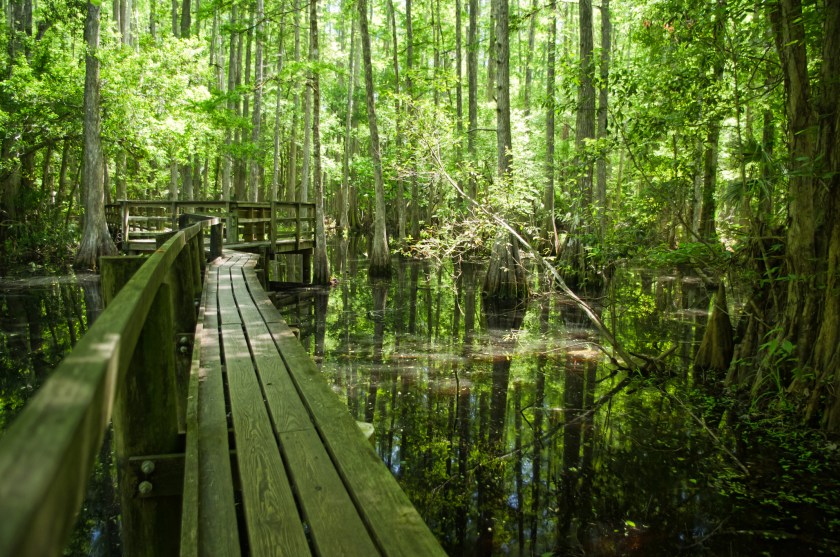
Wooden boardwalk winding through a cypress swamp with tall trees, exposed roots, and reflective dark water, photographed in 2011 with a Pentax K‑x.
A 2011 photograph of the Cypress Swamp Trail boardwalk at Highlands Hammock State Park in Florida.

In the early stages of any photographer’s journey, there exists a pivotal moment when technical capability intersects with artistic vision—when the craft begins to serve something deeper than mere documentation. Greg Urbano’s 2011 photograph from the Cypress Swamp Trail at Highlands Hammock State Park captures precisely this threshold, presenting a meditation on entrance, passage, and the liminal spaces where human intervention meets primordial nature.

The composition anchors itself on a weathered wooden boardwalk that curves through the left third of the frame, its moss-stained surface bearing witness to countless footsteps and Florida’s relentless humidity. Shot at 18mm on a Pentax K-x with the kit lens, Urbano demonstrates an understanding that wide-angle photography isn’t about capturing everything—it’s about creating context and relationship. The boardwalk serves as both literal path and visual guide, drawing the eye from the immediate foreground deep into the swamp’s verdant interior.

What distinguishes this image from typical nature photography is its masterful handling of light in a notoriously challenging environment. Shooting at f/4.0 with a 1/40s shutter speed and ISO 400, Urbano navigated the technical constraints of a modestly equipped camera to capture the dappled luminosity filtering through the canopy. The exposure balances the bright patches of sky visible through the trees with the darker water below, creating a tonal range that feels both accurate and atmospheric. The slightly elevated ISO introduces a subtle grain that, rather than detracting from the image, contributes to its organic texture.

The swamp water itself becomes a secondary canvas, reflecting the surrounding cypress trunks and creating visual echoes that blur the boundary between substance and reflection. Fallen branches break the surface tension, their pale, skeletal forms contrasting with the vibrant greens of new growth. This juxtaposition of decay and vitality speaks to the swamp’s essential nature as a place of transformation, where death continuously feeds life.

The color palette reveals a sophisticated eye for harmony—countless variations of green layer upon one another, from the luminous chartreuse of sunlit leaves to the deep olive shadows beneath the boardwalk. The aged wood introduces warmer earth tones, grounding the composition and providing respite from the overwhelming verdancy. These are the subtle decisions that separate intentional photography from happy accidents.

Within the context of a photographer’s formative work, this image represents more than technical competence. It demonstrates an emerging awareness of how to use man-made structures not as intrusions upon nature, but as framers of experience—the boardwalk doesn’t dominate the swamp; it offers a way to witness it. The slight curve of the path suggests journey and discovery, inviting viewers to imagine themselves walking deeper into this green cathedral.

Shot with entry-level equipment during a period when digital photography was becoming democratized, this photograph affirms that vision matters more than gear. The Pentax K-x and kit lens proved sufficient tools for capturing not just a place, but an atmosphere—the particular quality of light, air, and time that defines Florida’s ancient swamplands. It stands as evidence of a photographer learning to see, to compose, and to recognize moments worth preserving.

See this image on:

500px

Flickr

Under Golden Gate Bridge, 2010: Engineering as Art

In this 2010 photograph, Greg Urbano captures the underside of San Francisco’s Golden Gate Bridge from Fort Point, showcasing its geometric elegance and structural beauty. This early work signifies Urbano’s evolving artistic vision, highlighting unique perspectives and the interplay of architecture and art, while demonstrating the potential of innovative photography tools.

Top 100 Journey – Early Vision

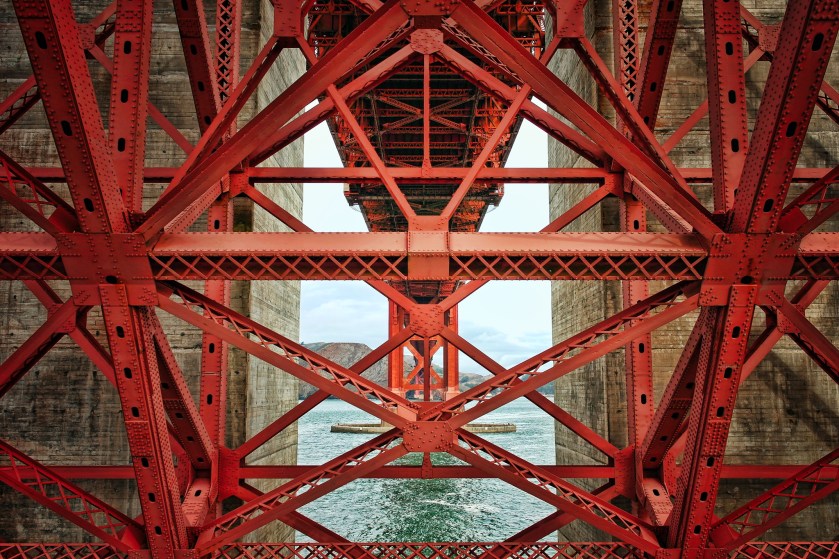
Upward view through the geometric steel framework beneath the Golden Gate Bridge from Fort Point, showing symmetrical orange-red trusses, concrete support pillars, and San Francisco Bay visible through the structure.
Beneath the Golden Gate Bridge from Fort Point, San Francisco – Architectural Photography 2010. Unique upward perspective capturing the intricate steel framework, geometric patterns, and engineering details of San Francisco’s iconic suspension bridge. View of San Francisco Bay through the International Orange structural beams and trusses.

This striking composition from 2010 captures the underside of San Francisco’s Golden Gate Bridge from Fort Point, revealing an intricate world of geometric patterns and structural elegance that most visitors never encounter. The photograph represents a pivotal moment in Greg Urbano’s photographic journey—an early work that demonstrates his emerging ability to transform industrial architecture into compelling visual poetry.

Shot with a Samsung NX100 at 22mm, the image presents a masterclass in symmetry and depth. The famous International Orange paint transforms the steel framework into a chromatic study, its warm coral-red tones contrasting beautifully against the cool concrete of the bridge’s support piers. Through the latticed structure, fragments of turquoise water and distant mountains create a layered composition that draws the eye through multiple planes of depth.

What distinguishes this photograph is its unconventional perspective. Rather than capturing the Golden Gate Bridge from the typical vantage points—across the bay or from the Marin Headlands—Urbano positions himself directly beneath the structure, looking upward through its architectural skeleton. This choice reveals the bridge not as an icon but as an engineering marvel, a cathedral of steel where form and function merge into unexpected beauty.

The technical execution shows thoughtful consideration of exposure and composition. At ƒ/4.5 and 1/250s, the photographer maintains sharpness throughout the frame while preserving detail in both the shadowed steel and the bright sky beyond. The ISO 100 setting ensures clean image quality, allowing the intricate patterns of rivets, crossbeams, and diagonal bracing to remain crisp and legible. The 22mm focal length provides enough width to capture the structure’s overwhelming scale while maintaining proper perspective control.

The geometric complexity invites prolonged viewing. X-patterns and triangular forms repeat throughout the composition, creating a rhythm that feels almost musical. The vertical piers anchor the image, while the diagonal members create dynamic tension. This interplay between stability and movement, between the monumental and the intricate, gives the photograph its visual power.

Within the context of Urbano’s early photographic development, this image reveals an artist learning to see beyond the obvious. The decision to climb Fort Point, to look upward rather than outward, demonstrates curiosity and willingness to explore unconventional viewpoints. These qualities—the search for fresh perspectives, the appreciation of overlooked details, the ability to find abstraction within reality—would become hallmarks of his mature work.

The photograph also captures a specific moment in technological transition. The Samsung NX100, one of the early mirrorless cameras, represented new possibilities in digital photography. This image proves that vision matters more than equipment—that a photographer’s eye can create compelling work with whatever tools are available.

Ultimately, “Under Golden Gate Bridge, 2010” succeeds because it transforms a familiar landmark into something unfamiliar and wondrous. It asks viewers to reconsider what they think they know, to look more carefully at the structures around them, and to appreciate the unexpected beauty hiding in plain sight. For a photographer still finding his voice, it represents an important early statement: architecture can be abstraction, engineering can be art, and poetry can be found in steel.

See this image on:

500px

Flickr

Alioto’s on Fisherman’s Wharf: A Study in Nocturnal Americana

Greg Urbano’s 2010 black and white photograph of Alioto’s restaurant in San Francisco is a significant early work, capturing the intersection of technical skill and artistic vision. It explores familiar scenes through a developing photographic perspective, revealing how ordinary moments can become extraordinary. The image emphasizes light, structure, and context, marking a pivotal discovery in Urbano’s artistic journey.

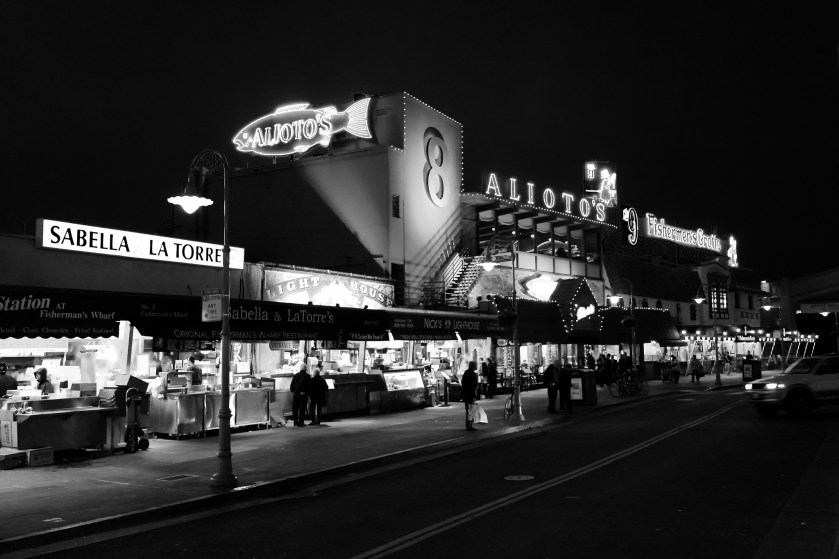
Black and white night photograph of Alioto's #8 restaurant with illuminated neon signs and marquee lights on Fisherman's Wharf in San Francisco. Food vendor stalls including Sabella LaTorre line the boardwalk in the foreground, with pedestrians visible under vintage street lamps.
Alioto’s Restaurant at Fisherman’s Wharf, San Francisco – Night Photography 2010. Iconic neon signs and vintage architecture illuminate this historic seafood destination on San Francisco’s waterfront. Black and white travel photography capturing the timeless charm of Fisherman’s Wharf restaurants and food stalls.

Alioto’s on Fisherman’s Wharf: A Study in Nocturnal Americana

Greg Urbano’s 2010 photograph of Alioto’s restaurant on Fisherman’s Wharf stands as a pivotal work from Chapter One of his Top 100 Journey—a collection dedicated to early beginnings and the formative images that taught him how to see. This photograph represents more than just a vacation snapshot; it captures the moment when technical skill and artistic vision began to converge.

This image works on multiple levels simultaneously. On the surface, it presents a straightforward night photograph of a famous San Francisco landmark. But closer examination reveals a developing understanding of tonal relationships and compositional balance. The black and white treatment isn’t merely aesthetic—it’s revelatory. By stripping away color, the photographer forces viewers to see the architecture of light itself. The neon signs become sculptural elements, the illuminated storefronts transform into glowing boxes of human activity, and the darkness above presses down with an almost palpable weight.

What makes this photograph particularly significant as an early work is its democratic vision. He doesn’t attempt to elevate Alioto’s to fine art by isolating it or abstracting it beyond recognition. Instead, he presents the entire commercial ecosystem: the neighboring Sabella LaTorre sign, the smaller vendor stalls with their utilitarian lighting, the people moving through the frame as gentle blurs. This is tourism and commerce as theater, captured without cynicism or sentimentality—a mature perspective for someone still discovering their photographic voice.

The technical execution demonstrates the learning curve inherent in Chapter One. Shot with a Samsung NX100—not a professional camera by any measure—this image proves that vision was developing faster than equipment acquisition. The exposure is carefully controlled, holding detail in both the bright signage and the darker architectural elements. The vantage point shows deliberate thought: low enough to emphasize the vertical drama of the building, yet far enough back to include context. That giant illuminated fish and the number “8” become almost sculptural forms against the night sky.

As an early capture, this photograph reveals an artist already grasping something fundamental: great photographs often lie not in exotic locations but in how we see the familiar. Fisherman’s Wharf has been photographed millions of times, yet this image feels both specific and universal. It could only be this place, yet it speaks to every similar waterfront tourist district in America. This understanding—that the ordinary can become extraordinary through careful observation—marks a crucial lesson in any photographer’s development.

The inclusion of this work in the Top 100 Journey reflects its role as a foundational piece. It’s not about perfection; it’s about the spark of discovery. The photograph represents a moment when the camera revealed something the artist was only beginning to articulate—an ability to see light as structure, to recognize the poetry in commercial spaces, to trust in straightforward documentation over manipulation.

The photograph has aged beautifully, which speaks to the instincts already present in these early days. In an era of digital saturation and Instagram filters, there’s something refreshing about this honest image. It doesn’t try too hard. It simply observes, with emerging intelligence and care.

When displayed as part of Chapter One: Beginnings, this image invites viewers to consider the photographer’s journey. It rewards examination not just for its formal qualities—the geometry, the light, the tonal range—but for what it represents: a lesson learned, a moment of clarity, a step toward understanding how to translate vision into image. This is where the journey truly began.

See larger sizes of the image on these sites:

Flickr

500px