Shan Light: Choreographing Time and Illumination

Shannon Quinn’s photograph, taken at Void Studios, symbolizes the photographer’s exploration of long-exposure light painting in collaboration with a dancer. The composition highlights a figure in black, illuminated by vibrant light trails, merging technical skill with performance. This work exemplifies an ongoing artistic journey, emphasizing collaboration and the evolution of creative expression.

Studio portrait of go-go dancer Shannon Quinn wearing a blue wig and dark outfit, surrounded by curved orange light trails created through long-exposure light painting.
Shannon Quinn (ShanOSteel) photographed at Void Studios Denver during a collaborative light painting and long-exposure studio session.

In this striking image from Chapter 6 of Greg Urbano’s Top 100 Journey—titled “The Road Ahead: Recent Work & Ongoing Exploration”—the photographer ventures into territory that merges technical experimentation with performative energy. Shot at Void Studios in Denver during a collaborative session with dancer Shannon Quinn, the photograph represents a deliberate pivot toward long-exposure light painting, a technique the photographer had not previously explored in a controlled studio environment.

The composition centers on a figure clad in black with a blue-toned wig, positioned against a muted backdrop while wielding LED wands that trace vivid arcs of orange and yellow light through space. The long exposure—achieved through rear curtain sync flash combined with continuous LED sources—captures both the frozen stillness of the subject and the kinetic energy of movement, creating a visual paradox that challenges our perception of time. The metallic sheen of the vest catches ambient light, adding textural contrast to the otherwise shadow-heavy figure, while knee-high boots ground the composition in the physical realm even as the light trails suggest something ethereal.

What distinguishes this work within the photographer’s evolving practice is its collaborative foundation. Unlike many studio portraits that position the photographer as sole author, this image emerges from a dialogue between creator and performer. Quinn’s background as a go-go dancer informs the dynamic posture and confident spatial awareness visible in the frame. The choreography of light becomes inseparable from the choreography of the body, suggesting that technical mastery alone cannot produce such results—it requires a willing, skilled collaborator who understands how to perform for extended exposures.

The technical apparatus employed here—a Nikon Z7ii paired with Godox TL30 LED wands and an AD100 strobe—speaks to a hybrid approach that balances ambient light sculpting with decisive flash illumination. Rear curtain sync ensures that the sharpest rendering of the subject occurs at the end of the exposure, allowing motion blur and light trails to accumulate before the final moment of clarity. This reversal of typical flash timing creates a sense of forward momentum, as though the figure is moving into her frozen state rather than away from it.

Within the context of Chapter 6, this photograph embodies the spirit of its subtitle: ongoing exploration. The photographer’s willingness to attempt unfamiliar techniques in a new setting demonstrates an artistic practice that refuses stagnation. Rather than retreating to established strengths, the work here shows someone leaning into uncertainty, using collaboration as a catalyst for discovery.

The color palette—dominated by warm oranges against cool blues and deep blacks—creates a retro-futuristic aesthetic that recalls both 1980s cyberpunk imagery and contemporary LED performance art. Yet the image avoids pastiche. Instead, it synthesizes influences into something distinctly contemporary, a visual language appropriate for documenting this moment in the photographer’s trajectory.

As part of a curated selection representing his strongest work, this image signals not arrival but continuation. It captures the photographer mid-journey, experimenting with new tools and partnerships, documenting not just a subject but a process of becoming. The road ahead, as the chapter title suggests, remains open—and this photograph marks one compelling point along that route.

Shannon Quinn Creative Red Mesh 01: Portraiture as Transformation

The portrait of model Shannon Quinn, captured with red mesh fabric, highlights the photographer’s creative departure during a commissioned headshot session in Denver. This image explores themes of identity and concealment, merging fashion and classical techniques. It reflects a sophisticated understanding of light and invites viewers to contemplate the complexities of photographic representation.

Studio portrait of model Shannon Quinn standing against a dark background, partially draped in red mesh fabric with hands raised and visible through the translucent material.
Model Shannon Quinn photographed in a studio portrait using red mesh during a creative headshot session in Denver, Colorado.

Within the context of a commissioned headshot session, the photographer discovered an opportunity for creative departure—a moment when commercial purpose yielded to artistic exploration. This photograph, featuring model Shannon Quinn enveloped in crimson mesh fabric, exemplifies his ability to recognize and pursue unexpected visual possibilities within structured professional environments. The resulting image transcends its utilitarian origins, offering instead a meditation on identity, concealment, and the transformative potential of portraiture.

The composition centers on the subject’s steady, outward gaze, her expression poised between vulnerability and defiance. She holds the translucent red fabric above her head with both hands, creating a canopy that simultaneously reveals and obscures. This gesture—part unveiling, part self-protection—establishes a compelling psychological tension. The mesh filters light across her features while maintaining visual clarity, creating a liminal space where the subject exists between states: seen yet veiled, present yet ethereal, contemporary yet somehow timeless.

The photographer’s handling of light demonstrates technical sophistication and restraint. Working against a dark, neutral background, he allows the ambient illumination to bathe the subject’s face in warm tones that harmonize with the red mesh. The fabric itself becomes an active participant in the lighting scheme, casting subtle patterns and chromatic shifts across her skin and clothing. Her black attire—a textured top with bow detail—provides essential contrast, anchoring the composition while allowing the red fabric to command attention without overwhelming the frame.

What distinguishes this work is its navigation of multiple photographic traditions simultaneously. Elements of fashion photography appear in the subject’s confident pose and styled presentation, while the dramatic use of fabric recalls classical painting techniques where drapery conveys narrative and emotional weight. The dark background and controlled studio lighting situate the image within portraiture’s formal conventions, yet the unconventional use of the mesh material disrupts these expectations, injecting contemporary conceptual sensibility into an otherwise traditional setup.

Positioned within Chapter 6 of his Top 100 Journey—”The Road Ahead: Recent Work & Ongoing Exploration”—this photograph signals the artist’s ongoing investigation into portraiture’s evolving possibilities. The chapter’s emphasis on recent work and exploration finds perfect expression here: a commissioned session becomes a laboratory for creative experimentation, demonstrating that artistic vision need not be confined to personal projects alone. Professional practice and artistic development exist not as separate domains but as mutually enriching pursuits.

The red mesh functions as both literal and metaphorical element—a physical barrier that paradoxically enhances rather than diminishes our connection to the subject. This duality speaks to fundamental questions about photographic representation itself: what do we truly see when we look at a portrait? How do layers of interpretation, context, and visual mediation shape our understanding of another person’s presence?

In Shannon Quinn’s direct gaze, there exists a knowing quality, an awareness of the camera’s scrutiny and the complex transaction occurring between subject, photographer, and eventual viewer. This consciousness elevates the image beyond mere technical accomplishment, transforming it into a collaborative exploration of visibility, identity, and the porous boundaries between commercial and fine art photography. It stands as evidence of his commitment to finding artistic merit wherever circumstances allow, refusing to separate professional obligation from creative possibility.

Natural Elegance: A Portrait in Copper and Light

Abigail Marchetti, known as Copper Muse, poses at a Denver Models open shoot, showcasing the photographer’s evolving studio portraiture techniques. Utilizing natural light, he captures her striking features and authentic expression, emphasizing color harmony and psychological presence. This portrait marks a significant step in his artistic development, blending classical principles with a modern sensibility.

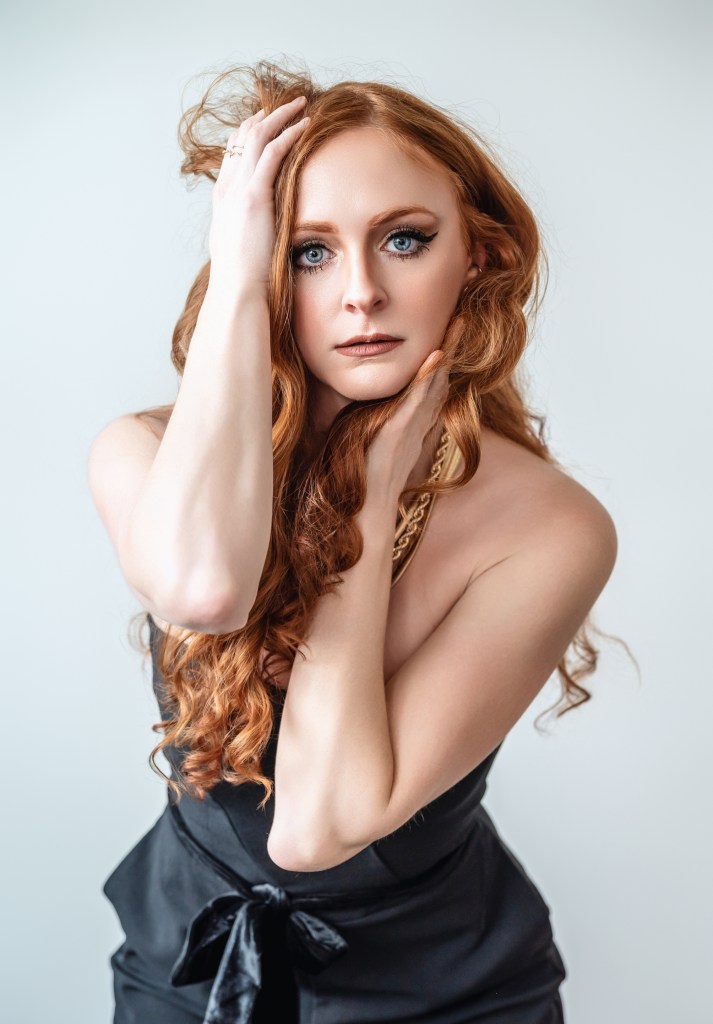
Studio portrait of a red-haired woman in a black dress posing against a light background with her hands framing her face.
Model Abigail Marchetti, known as Copper Muse, poses during a Denver Models open shoot at Realm Studio in Denver.

This compelling portrait of model Abigail Marchetti exemplifies the photographer’s deepening engagement with studio portraiture and his refined approach to natural light as a primary sculptural tool. Captured during a Denver Models open shoot at Realm Studio, the image represents continued exploration of collaborative creative environments while demonstrating increasingly sophisticated control of the portraitist’s essential elements: light, gesture, color harmony, and psychological presence.

The composition centers on the model’s striking features—vibrant copper-red hair cascading in loose waves, piercing blue-green eyes meeting the camera with direct but unguarded confidence, and pale skin that catches and reflects the soft window light with luminous clarity. Her pose, with one hand gracefully raised to her hair and the other touching her neck, creates natural framing that draws attention to her face while suggesting unaffected spontaneity. The black strapless garment provides bold tonal contrast against both her skin and the pale backdrop, creating visual drama without competing for attention.

What distinguishes this work is the photographer’s masterful exploitation of natural window light. Rather than relying on the multiple strobes and reflectors typical of commercial studio work, he has chosen a more classical approach that recalls portrait painting traditions. The directional quality of the illumination—soft yet defined—models the subject’s features with sculptural precision while maintaining delicate gradations across skin tones. Highlights along the hair reveal its rich, multidimensional copper coloring, transforming what could be merely descriptive documentation into chromatic study.

The technical execution demonstrates growing confidence with the Nikon Z5 system and the versatile 24-120mm lens. The focal length selection—likely in the moderate telephoto range—provides flattering perspective without distortion, while the depth of field keeps the subject sharply defined against the subtly gradated background. The exposure balances the challenge of pale skin and light background without sacrificing detail in either the model’s features or the deeper tones of her garment.

Within the framework of Chapter 6—”The Road Ahead: Recent Work & Ongoing Exploration”—this portrait signals important developments in his artistic trajectory. The open shoot environment, like the previous workshop-based work, indicates willingness to engage with structured collaborative opportunities while bringing his distinct sensibility to bear. Yet where some open shoots yield generic beauty documentation, this image transcends its circumstances through careful attention to classical portraiture principles: the quality of light, the authenticity of expression, the harmony of color and form.

The model’s direct gaze introduces a quality often absent from his landscape and architectural work—reciprocal acknowledgment between photographer and subject. This mutual recognition adds psychological dimension, transforming technical exercise into genuine encounter. The slight asymmetry in her expression—contemplative rather than performative—suggests comfort and trust within the photographic exchange.

The photograph also reveals evolving aesthetic priorities. While maintaining the tonal sensitivity and compositional rigor evident throughout his portfolio, he demonstrates here that minimalism need not preclude richness. The interplay of copper hair, pale skin, black fabric, and soft grey background creates visual complexity through chromatic relationships rather than environmental detail. This represents a distillation of his practice—finding depth in apparent simplicity, discovering complexity in restraint—now applied to the human figure with increasing assurance and grace.

Suspension and Illusion: A Study in Controlled Ephemera

Model Everyn Darling is featured in a significant studio portrait taken during a photography workshop in Denver. This image, characterized by its minimalist setting and controlled lighting, explores themes of aspiration and vulnerability through the metaphor of a translucent balloon. The photographer’s evolving style emphasizes collaborative creativity and visual poetry over mere technical perfection.

Studio portrait of a woman in a black dress holding a translucent balloon against a plain backdrop.
Model Everyn Darling poses with a translucent balloon during a studio photography workshop in Denver, Colorado.

This studio portrait represents a significant departure within the photographer’s evolving practice, marking his exploration of collaborative, workshop-based creation and the controlled artifice of studio environments. Captured during a Creative Experimental Photography Meetup at RAW Studios in Denver, the image demonstrates how structured creative exercises can yield work of surprising conceptual depth when approached with technical precision and compositional awareness.

The photograph centers on model Everyn Darling, positioned within a minimalist studio setting characterized by graduated neutral tones that transition from cool blue-grey to warm cream. This chromatic subtlety provides visual breathing room while maintaining atmospheric presence—a backdrop that supports rather than competes. The subject, dressed in a simple black dress with white collar detail, appears barefoot in a pose of upward contemplation, one arm extended to hold a translucent balloon trailing delicate white ribbons or fabric.

What elevates this image beyond documentation of a workshop exercise is the photographer’s attention to the psychology of gesture and the poetry of the ostensibly simple prop. The balloon—that most ephemeral and-associated of objects—becomes a vehicle for exploring themes of lightness, release, and the tenuous connection between desire and drift. The model’s gaze follows the balloon upward, creating a diagonal compositional line that draws the eye through the frame while suggesting aspiration, longing, or perhaps the acceptance of letting go.

The technical execution reveals disciplined studio craft. Working with his Nikon Z5 and the versatile 24-120mm f/4 lens, the photographer has managed studio lighting with restraint, avoiding the harsh drama often favored in workshop settings. The illumination appears softly directional, modeling the subject’s features and dress while maintaining detail in the translucent balloon. Shadow work on the studio floor provides subtle grounding without becoming graphic or distracting. The slightly elevated perspective and negative space allocation give the subject room to breathe within the frame—a compositional generosity that reinforces the image’s contemplative mood.

Within the context of Chapter 6—”The Road Ahead: Recent Work & Ongoing Exploration”—this photograph signals important developments in his practice. The workshop origin indicates openness to collaborative creative structures and willingness to work within parameters set by others. Yet the result bears his aesthetic signature: careful attention to subtle tonal gradations, preference for psychological ambiguity over narrative certainty, and interest in objects as metaphorical carriers rather than mere props.

The image also represents exploration of human subjects with greater intimacy than much of his earlier landscape and architectural work. The model’s upturned face, though not confronting the camera directly, introduces vulnerability and interiority often absent from environmental documentation. This shift suggests expanding comfort with portraiture and the complex dynamics of photographer-subject collaboration.

The balloon’s deliberate artificiality—clearly held rather than actually floating—adds productive tension. The photograph acknowledges its own construction while inviting viewers to suspend disbelief, mirroring how all photography negotiates between document and fiction. In selecting this image as his best from the series, the photographer reveals evolving criteria for success: not technical perfection alone, but the achievement of visual poetry through careful orchestration of simple elements within controlled conditions.

Joy

Joy’s portraiture, captured during a studio session in Denver, exemplifies contemporary photography that harmonizes technical prowess with intimate atmosphere. Using controlled lighting and thoughtful composition, the image showcases Joy’s comfort and presence. It reflects the photographer’s growth in creating authentic portrayals within collaborative workshop settings, emphasizing spontaneity amidst structure.

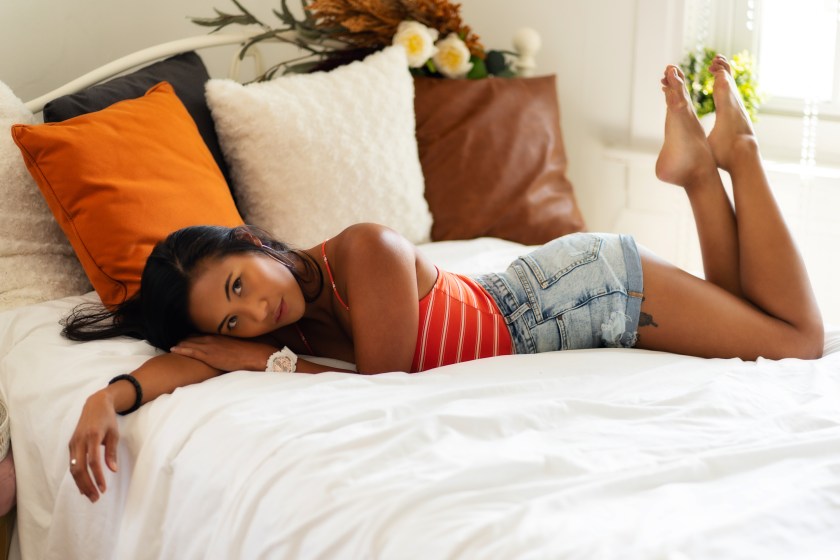
Woman lies on her stomach on a bed with pillows, looking toward the camera in a softly lit indoor space.
Joy reclines on a bed during a studio session at Headquarters in Denver, Colorado.

Within Chapter 4 of Greg Urbano’s Top 100 Journey—a section dedicated to studio, outdoor, and workshop portraiture—this photograph stands as a compelling study in contemporary portraiture that balances technical precision with an atmosphere of relaxed intimacy. Captured during the Sunday Night Meets sessions at the Headquarters in Denver, Colorado, the image demonstrates the photographer’s evolving command of controlled lighting environments and his ability to translate spontaneity into refined compositional structure.

The subject, identified simply as Joy, reclines across a bed adorned with an array of textured pillows in warm earth tones—burnt orange, cream, and cognac leather—that create a sophisticated color palette against crisp white linens. Her pose suggests ease and self-possession, legs bent upward, body stretched diagonally across the frame in a manner that fills the space without appearing contrived. The composition guides the viewer’s eye from her contemplative expression through the length of her form, utilizing the diagonal as a classical device to create visual momentum within an otherwise still domestic scene.

Technically, the photographer employed a Sony A7ii paired with an 85mm f/1.8 lens, supplemented by a Godox V1s flash fired through a shoot-through umbrella. This setup reveals a deliberate approach to managing the challenge of interior lighting. The umbrella modifier produces soft, directional illumination that wraps around the subject’s features and limbs, creating gentle gradations of shadow that model form without harsh contrast. The 85mm focal length, a portrait standard, maintains proper perspective while allowing sufficient working distance in what appears to be a modest interior space. The choice to augment available window light with flash demonstrates an understanding that control, rather than pure naturalism, often serves the portrait best.

The environmental context—a workshop setting where photographers gather to practice and experiment—adds significance to the technical choices evident here. Such collaborative sessions demand efficiency and adaptability, requiring the photographer to balance artistic vision with the practical constraints of shared time and space. That this image emerged from such circumstances speaks to his ability to synthesize technical preparation with responsive observation, recognizing and capturing moments of genuine presence even within structured shooting scenarios.

Post-processing in Skylum’s Luminar 4 has yielded a polished yet authentic aesthetic. The skin tones register warmly against the cooler neutrals of the background, while the overall color grading maintains consistency with the chapter’s broader visual language. The photographer has avoided the temptation toward heavy manipulation, instead allowing the fundamental strength of the capture—lighting, composition, and subject rapport—to carry the image.

Within the trajectory of Chapter 4, this photograph represents the photographer’s progression from purely technical competency toward a more holistic understanding of portraiture as collaborative performance. The subject’s comfort before the camera, the thoughtfully curated environment, and the measured application of artificial light combine to create an image that feels both intentional and uncontrived. It exemplifies the workshop paradigm at its most productive: controlled conditions that paradoxically enable spontaneity, resulting in portraiture that documents not just appearance, but a quality of presence that transcends the specifics of its making.

LilithW 16th Street Mall Denver

The photograph featuring model LilithW on Denver’s 16th Street Mall showcases an innovative blend of urban architecture and contemporary fashion. Through careful lighting, geometric framing, and thoughtful styling, the image transforms a functional stairwell into a dramatic portrait setting, emphasizing the photographer’s skill in capturing emotional depth within architectural spaces.

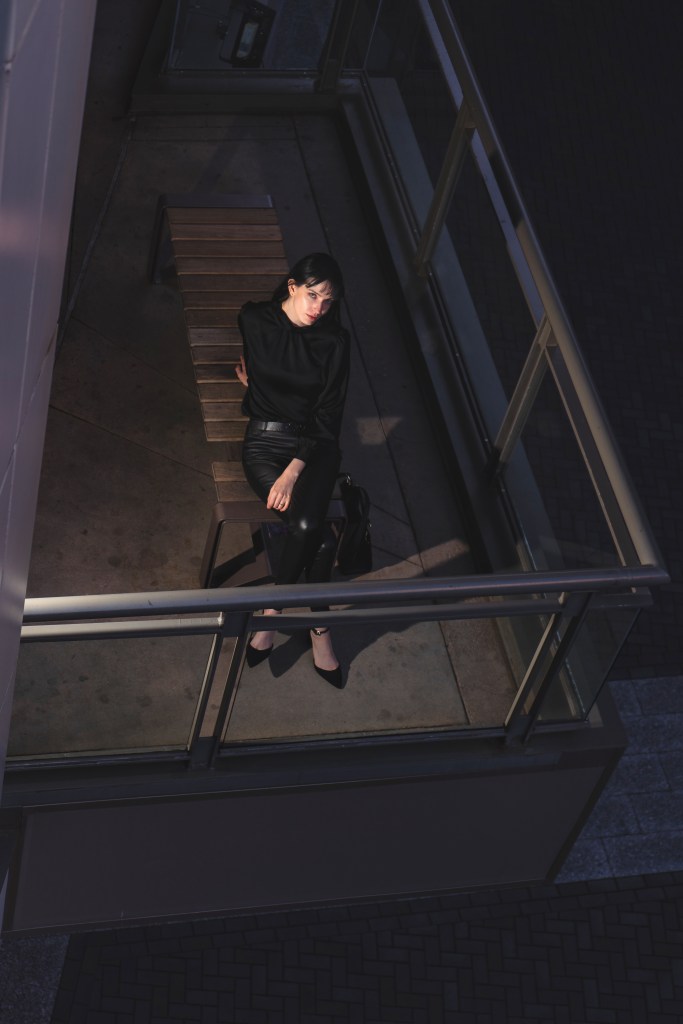
Woman dressed in black sits on a bench on an elevated walkway, viewed from above in an urban setting.
LilithW sits on a balcony along the 16th Street Mall in Denver, Colorado.

The photographer transforms an urban stairwell into a study of geometry, shadow, and contemporary fashion portraiture in this striking image from Denver’s 16th Street Mall. Shot with model LilithW, the photograph demonstrates a sophisticated understanding of architectural space as portraiture framework—a conceptual approach that positions this work as a significant entry within Chapter 4 of his Top 100 Journey project.

The compositional strategy reveals deliberate technical choices. Photographed from below, looking upward through the stairwell’s descending levels, the image creates a vertiginous sense of depth through repeating geometric forms. The metal railings create strong diagonal and horizontal lines that frame the subject, while the stairway’s perspective draws the eye upward toward LilithW’s figure. This bird’s-eye vantage point—or rather, its inverse—transforms a functional architectural space into a dramatic stage, demonstrating how environmental awareness can elevate location portraiture beyond mere documentation.

The lighting execution shows particular sophistication given the equipment employed. Using a single Godox AD100 flash without modifiers, the photographer has created directional illumination that separates the subject from the ambient darkness of the stairwell. The unmodified flash produces harder shadows and more dramatic contrast than diffused light would offer, a choice that complements the industrial setting’s angular architecture. This approach to lighting reveals growing confidence in working with minimal gear to maximum effect—a hallmark of photographers who understand that vision matters more than equipment inventory.

LilithW’s styling—black turtleneck, leather pants, and ankle boots—creates a monochromatic palette that harmonizes with the urban environment while maintaining visual distinction through texture and form. Her pose, caught mid-descent with hand resting on the railing, suggests movement arrested rather than static positioning. The downward gaze and slight forward lean create psychological engagement, as though the subject exists within her own narrative rather than performing for the camera.

Within the context of Chapter 4’s focus on studio, outdoor, and workshop portraiture, this image exemplifies the photographer’s ability to treat urban environments as found studios. The controlled lighting approach mirrors studio methodology, while the architectural setting provides the visual complexity and authentic texture that outdoor locations offer. The technical specifications—Sony A7II with the 28-70mm kit lens—underscore an important curatorial observation: this body of work privileges compositional intelligence and lighting understanding over equipment prestige.

The post-processing workflow, combining Adobe Photoshop Elements and Luminar AI, has enhanced the image’s moody atmosphere without sacrificing naturalism. The color grading emphasizes cool tones that reinforce the urban setting’s industrial character, while careful shadow detail preservation maintains dimensionality throughout the frame’s darker regions.

From a curatorial perspective, this photograph represents the photographer’s evolving facility with architectural portraiture—a subgenre that requires simultaneous attention to human subject, spatial geometry, and lighting choreography. The work’s inclusion in the Top 100 Journey project acknowledges its success in synthesizing these elements into a cohesive visual statement. The stairwell becomes more than backdrop; it functions as collaborator in creating psychological depth and visual drama. This image demonstrates how thoughtful photographers can transform everyday urban infrastructure into compelling portrait environments, finding beauty and narrative possibility in overlooked transitional spaces.