Joy

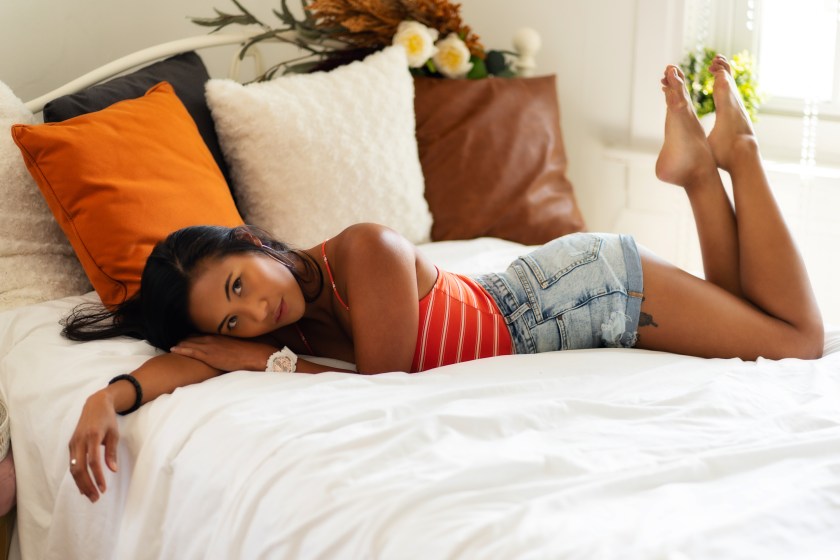
Joy’s portraiture, captured during a studio session in Denver, exemplifies contemporary photography that harmonizes technical prowess with intimate atmosphere. Using controlled lighting and thoughtful composition, the image showcases Joy’s comfort and presence. It reflects the photographer’s growth in creating authentic portrayals within collaborative workshop settings, emphasizing spontaneity amidst structure.

Woman lies on her stomach on a bed with pillows, looking toward the camera in a softly lit indoor space.
Joy reclines on a bed during a studio session at Headquarters in Denver, Colorado.

Within Chapter 4 of Greg Urbano’s Top 100 Journey—a section dedicated to studio, outdoor, and workshop portraiture—this photograph stands as a compelling study in contemporary portraiture that balances technical precision with an atmosphere of relaxed intimacy. Captured during the Sunday Night Meets sessions at the Headquarters in Denver, Colorado, the image demonstrates the photographer’s evolving command of controlled lighting environments and his ability to translate spontaneity into refined compositional structure.

The subject, identified simply as Joy, reclines across a bed adorned with an array of textured pillows in warm earth tones—burnt orange, cream, and cognac leather—that create a sophisticated color palette against crisp white linens. Her pose suggests ease and self-possession, legs bent upward, body stretched diagonally across the frame in a manner that fills the space without appearing contrived. The composition guides the viewer’s eye from her contemplative expression through the length of her form, utilizing the diagonal as a classical device to create visual momentum within an otherwise still domestic scene.

Technically, the photographer employed a Sony A7ii paired with an 85mm f/1.8 lens, supplemented by a Godox V1s flash fired through a shoot-through umbrella. This setup reveals a deliberate approach to managing the challenge of interior lighting. The umbrella modifier produces soft, directional illumination that wraps around the subject’s features and limbs, creating gentle gradations of shadow that model form without harsh contrast. The 85mm focal length, a portrait standard, maintains proper perspective while allowing sufficient working distance in what appears to be a modest interior space. The choice to augment available window light with flash demonstrates an understanding that control, rather than pure naturalism, often serves the portrait best.

The environmental context—a workshop setting where photographers gather to practice and experiment—adds significance to the technical choices evident here. Such collaborative sessions demand efficiency and adaptability, requiring the photographer to balance artistic vision with the practical constraints of shared time and space. That this image emerged from such circumstances speaks to his ability to synthesize technical preparation with responsive observation, recognizing and capturing moments of genuine presence even within structured shooting scenarios.

Post-processing in Skylum’s Luminar 4 has yielded a polished yet authentic aesthetic. The skin tones register warmly against the cooler neutrals of the background, while the overall color grading maintains consistency with the chapter’s broader visual language. The photographer has avoided the temptation toward heavy manipulation, instead allowing the fundamental strength of the capture—lighting, composition, and subject rapport—to carry the image.

Within the trajectory of Chapter 4, this photograph represents the photographer’s progression from purely technical competency toward a more holistic understanding of portraiture as collaborative performance. The subject’s comfort before the camera, the thoughtfully curated environment, and the measured application of artificial light combine to create an image that feels both intentional and uncontrived. It exemplifies the workshop paradigm at its most productive: controlled conditions that paradoxically enable spontaneity, resulting in portraiture that documents not just appearance, but a quality of presence that transcends the specifics of its making.
Silhouette and Subversion: A Study in Controlled Drama

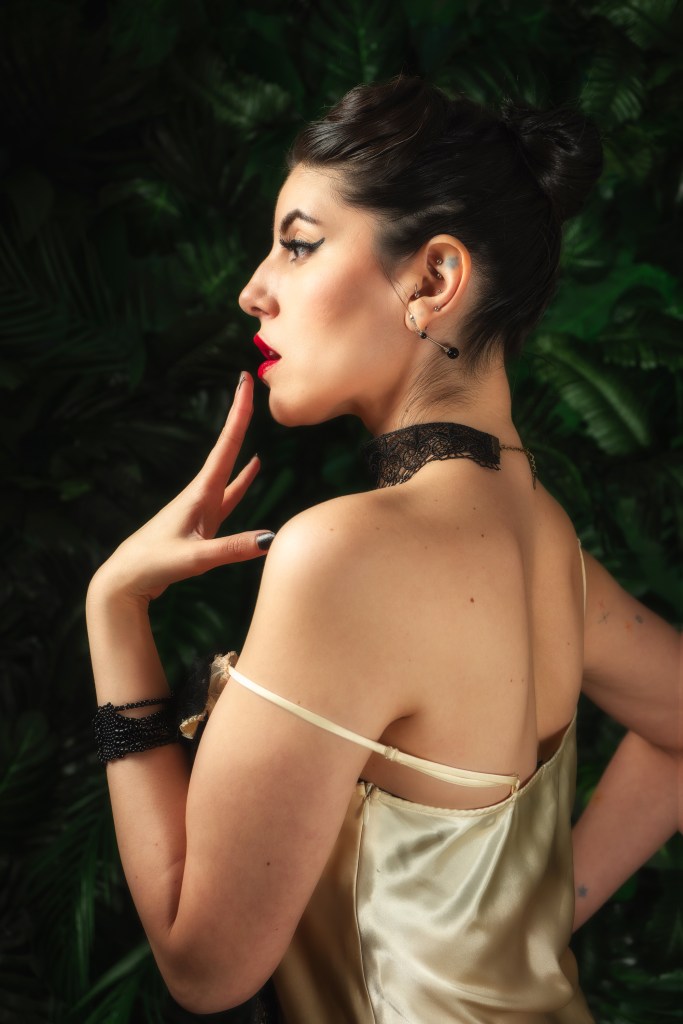
The portrait of Savage Van Sage by Greg Urbano in Chapter 4 of Top 100 Journey exemplifies refined environmental portraiture. It captures a blend of vulnerability and confidence through composition, lighting, and setting. The ivy backdrop, along with the model’s pose, invites viewers to engage with the complex narrative, reflecting Urbano’s artistic evolution and technical mastery.

Woman in a satin dress shown in side profile against a dark leafy background, with hair in an updo and red lipstick.
Savage Van Sage poses in profile in a studio portrait with an ivy-covered wall near Denver, Colorado.

Within Chapter 4 of Greg Urbano’s Top 100 Journey—a section devoted to studio portraiture and collaborative workshop explorations—this photograph of model Savage Van Sage stands as a masterclass in theatrical restraint. Shot against an ivy-laden wall at the Headquarters studio near Denver, the image demonstrates the photographer’s evolving command of environmental portraiture, where setting and subject engage in a carefully choreographed dialogue.

The composition reveals sophisticated technical decision-making. Urbano positions his subject in profile, her face turned away from the camera yet fully engaged with the viewer through gesture and posture. The silhouette technique employed here—enhanced through post-processing in Adobe Camera Raw and Luminar 4—creates a striking interplay between illumination and shadow. Light sculpts the model’s features with precision, catching the curve of her jawline, the delicate architecture of her ear adorned with multiple piercings, and the bold contrast of crimson lips against porcelain skin.

What distinguishes this work within the chapter’s broader exploration of portrait photography is its willingness to embrace ambiguity. The model’s bare shoulder and the gossamer straps of her garment suggest vulnerability, yet her pose—hand raised to chin in a gesture of thoughtful poise—projects confidence and self-possession. The black lace choker and wrist accessory introduce elements of vintage glamour and contemporary subculture, positioning the subject at the intersection of multiple aesthetic traditions. This fusion of pin-up sensibility with darker, more enigmatic styling reflects Urbano’s interest in portraits that resist singular interpretation.

The natural ivy backdrop functions as more than mere decoration. Its organic chaos provides textural depth and creates a liminal space—neither entirely studio nor wholly natural environment. This choice aligns with the chapter’s documentation of the photographer’s studio and workshop methodologies, demonstrating how controlled environments can be manipulated to suggest narrative possibilities beyond their physical constraints. The deep greens recede into darkness, focusing attention on the figure while maintaining atmospheric richness.

Technically, the photograph showcases the photographer’s proficiency with studio lighting configurations. The illumination appears to originate from a single, directional source, creating the dramatic side-lighting characteristic of classic portraiture while maintaining sufficient fill to preserve detail in shadow areas. This approach—refined through workshop collaborations and repeated studio sessions—demonstrates a maturation from documentary impulses toward more deliberately constructed imagery.

The inclusion of this photograph in the Top 100 Journey marks a significant moment in Urbano’s artistic development. Where earlier chapters might emphasize spontaneity or environmental documentation, this studio work reveals an artist increasingly comfortable with artifice and construction. The model becomes collaborator rather than subject, her professional experience evident in the precision of her pose and the deliberate theatricality of her presentation.

Ultimately, this portrait succeeds because it understands the power of suggestion over declaration. The viewer receives fragments—a profile, a gesture, a carefully composed environment—and must construct meaning from these elements. It is portrait photography that honors both the technical traditions of studio work and the contemporary expectation that images should provoke rather than simply document. Within Urbano’s evolving practice, it represents a confident synthesis of technical skill and artistic vision.