Entanglement: Portrait as Performance at the Haunt Slam

During the 2025 Portrait Slam in Denver, a striking portrait of a model named Wednesday showcases the photographer’s evolution into theatrical portraiture. The image, emphasizing themes of entrapment and performance, uses sophisticated artificial lighting to create dramatic effects. It reflects a shift towards collaborative photography, merging documentation with creative expression.

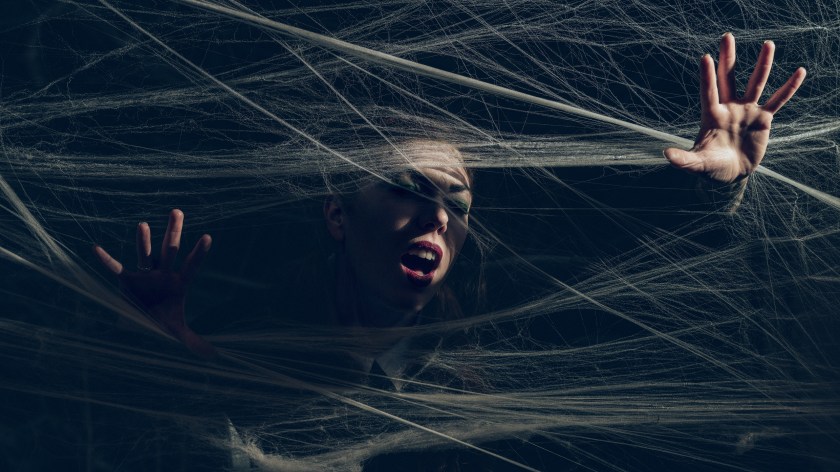
Portrait of a person pressing their hands forward through layers of stretched web-like material, with dramatic low-key lighting against a dark background.
Wednesday photographed during the 2025 Portrait Slam (Haunt Slam) at the DCO space in Denver, Colorado.

This striking portrait, captured during the 2025 Portrait Slam at Denver’s DCO space, represents a significant departure into theatrical portraiture for a photographer whose journey has increasingly embraced collaborative, event-based work. The image—featuring a model known as Wednesday—transcends conventional portraiture to become a study in entrapment, theatrical expression, and the controlled chaos of performance photography.

The composition immediately arrests the viewer with its central tension: a figure ensnared in what appears to be synthetic webbing, hands pressed outward in a gesture simultaneously defensive and reaching. The model’s expression—mouth open in what could be read as exhilaration, distress, or performative intensity—refuses easy interpretation. This ambiguity serves the work well, inviting prolonged examination rather than immediate comprehension.

Technically, the photograph demonstrates sophisticated command of artificial lighting in challenging circumstances. Shot with a Nikon Z7ii and illuminated by a Godox AD100 with grid, the lighting scheme creates dramatic chiaroscuro that sculpts the figure from the deep, nearly black background. The gridded modifier produces focused illumination that highlights the face and hands while allowing the surrounding webbing to catch light selectively, creating a three-dimensional mesh that appears to hover in space. This precision lighting transforms what could be simple event documentation into controlled studio-quality portraiture executed in a dynamic environment.

The web itself functions as both literal and metaphorical element. Its physical presence creates visual texture and geometric complexity, the crossing strands forming a secondary compositional structure that both fragments and frames the subject. Metaphorically, it invites reading as constraint, connection, or cocoon—interpretations that align with the “Haunt Slam” context while transcending mere Halloween theatrics to suggest broader themes of entanglement with technology, society, or creative process itself.

Within Chapter 6—”The Road Ahead: Recent Work & Ongoing Exploration”—this photograph signals the photographer’s continued engagement with collaborative, community-centered photography. The Portrait Slam format, hosted by Denver Models and Mike’s Camera, represents a democratization of studio portraiture, bringing together photographers, models, and creative collaborators in rapid-fire shooting sessions. That he selected this image for his Top 100 Journey suggests recognition that contemporary photographic practice increasingly exists within networks of creative exchange rather than isolated studio work.

The post-processing in Evoto maintains dramatic impact while preserving textural detail in both skin tones and the surrounding webbing. The color palette—dominated by deep teals and shadows punctuated by warm skin tones and crimson lips—creates visual coherence without sacrificing the image’s raw energy. The photographer resists over-polishing, allowing slight imperfections and authentic texture to ground the theatrical presentation in physical reality.

This work demonstrates evolution from earlier documentary and landscape work toward portraiture that embraces performance, collaboration, and conceptual staging. Yet it retains the technical rigor and compositional awareness evident throughout the Top 100 Journey. As the photographer continues exploring “the road ahead,” this image suggests that path leads toward increasingly theatrical, collaborative work that blurs boundaries between documentation and creation, between capturing moments and constructing them.

Shan Light: Choreographing Time and Illumination

Shannon Quinn’s photograph, taken at Void Studios, symbolizes the photographer’s exploration of long-exposure light painting in collaboration with a dancer. The composition highlights a figure in black, illuminated by vibrant light trails, merging technical skill with performance. This work exemplifies an ongoing artistic journey, emphasizing collaboration and the evolution of creative expression.

Studio portrait of go-go dancer Shannon Quinn wearing a blue wig and dark outfit, surrounded by curved orange light trails created through long-exposure light painting.
Shannon Quinn (ShanOSteel) photographed at Void Studios Denver during a collaborative light painting and long-exposure studio session.

In this striking image from Chapter 6 of Greg Urbano’s Top 100 Journey—titled “The Road Ahead: Recent Work & Ongoing Exploration”—the photographer ventures into territory that merges technical experimentation with performative energy. Shot at Void Studios in Denver during a collaborative session with dancer Shannon Quinn, the photograph represents a deliberate pivot toward long-exposure light painting, a technique the photographer had not previously explored in a controlled studio environment.

The composition centers on a figure clad in black with a blue-toned wig, positioned against a muted backdrop while wielding LED wands that trace vivid arcs of orange and yellow light through space. The long exposure—achieved through rear curtain sync flash combined with continuous LED sources—captures both the frozen stillness of the subject and the kinetic energy of movement, creating a visual paradox that challenges our perception of time. The metallic sheen of the vest catches ambient light, adding textural contrast to the otherwise shadow-heavy figure, while knee-high boots ground the composition in the physical realm even as the light trails suggest something ethereal.

What distinguishes this work within the photographer’s evolving practice is its collaborative foundation. Unlike many studio portraits that position the photographer as sole author, this image emerges from a dialogue between creator and performer. Quinn’s background as a go-go dancer informs the dynamic posture and confident spatial awareness visible in the frame. The choreography of light becomes inseparable from the choreography of the body, suggesting that technical mastery alone cannot produce such results—it requires a willing, skilled collaborator who understands how to perform for extended exposures.

The technical apparatus employed here—a Nikon Z7ii paired with Godox TL30 LED wands and an AD100 strobe—speaks to a hybrid approach that balances ambient light sculpting with decisive flash illumination. Rear curtain sync ensures that the sharpest rendering of the subject occurs at the end of the exposure, allowing motion blur and light trails to accumulate before the final moment of clarity. This reversal of typical flash timing creates a sense of forward momentum, as though the figure is moving into her frozen state rather than away from it.

Within the context of Chapter 6, this photograph embodies the spirit of its subtitle: ongoing exploration. The photographer’s willingness to attempt unfamiliar techniques in a new setting demonstrates an artistic practice that refuses stagnation. Rather than retreating to established strengths, the work here shows someone leaning into uncertainty, using collaboration as a catalyst for discovery.

The color palette—dominated by warm oranges against cool blues and deep blacks—creates a retro-futuristic aesthetic that recalls both 1980s cyberpunk imagery and contemporary LED performance art. Yet the image avoids pastiche. Instead, it synthesizes influences into something distinctly contemporary, a visual language appropriate for documenting this moment in the photographer’s trajectory.

As part of a curated selection representing his strongest work, this image signals not arrival but continuation. It captures the photographer mid-journey, experimenting with new tools and partnerships, documenting not just a subject but a process of becoming. The road ahead, as the chapter title suggests, remains open—and this photograph marks one compelling point along that route.

Northern Hotel Lobby: Architecture as Stage in the Contemporary Photographic Journey

The photograph of the Northern Hotel lobby, taken during Scott Kelby’s Worldwide Photowalk, captures the interplay of light, architecture, and human presence. Elevating the viewer’s experience, it harmonizes historical preservation with contemporary exploration, highlighting the importance of collaborative practice in photography and the evolving narrative of space and community.

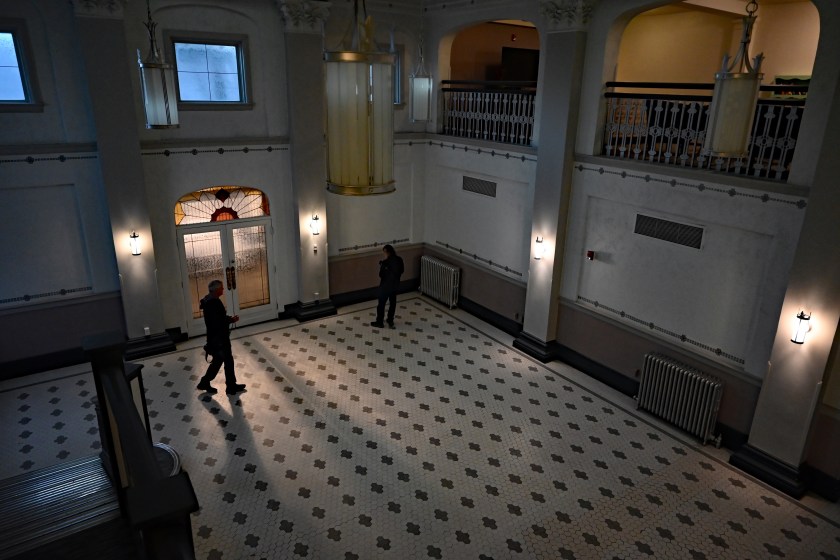
View of the Northern Hotel lobby from an upper staircase, showing patterned tile flooring, hanging lights, and two people walking across the open space below.
The Northern Hotel lobby in Fort Collins, photographed from the top of the staircase during Scott Kelby’s Worldwide Photowalk.

In this commanding architectural study, the photographer positions his lens at the apex of a staircase, transforming the Northern Hotel’s lobby into a theater of light, geometry, and human scale. Captured during Scott Kelby’s Worldwide Photowalk in Fort Collins, the image represents a significant entry in Chapter 6 of his Top 100 Journey—a section devoted to recent work and ongoing exploration. Here, the photographer’s evolving visual language finds purchase in the interplay between preserved historical space and contemporary documentary practice.

The composition demonstrates a mature understanding of spatial dynamics. Shot from an elevated vantage point, the frame encompasses the lobby’s full vertical reach, from the patterned terrazzo floor below to the arched balconies above. Two fellow photographers occupy the lower portion of the frame, their dark silhouettes providing crucial scale against the expanse of white walls and geometric flooring. This human element prevents the space from becoming merely an exercise in architectural documentation; instead, it anchors the viewer’s experience in a moment of shared discovery.

The photographer’s technical execution reveals deliberate choices regarding exposure and white balance. The warm incandescent glow from wall sconces contrasts with cooler ambient light filtering through windows, creating a subtle temperature gradient that enhances the lobby’s dimensionality. Pendant lights suspended from the ceiling echo this interplay, their cylindrical forms acting as vertical punctuation marks in the composition. The decorative tile borders running horizontally along the walls establish rhythm, while the radiators beneath provide industrial counterpoint to the space’s ornamental flourishes.

What distinguishes this work within the context of Chapter 6 is its relationship to process and community. Unlike the more introspective or solitary work that might characterize earlier chapters, this photograph emerges from collaborative exploration—a photowalk that brings practitioners together in shared discovery. The photographer’s decision to include his companions becomes a subtle commentary on the social dimensions of photographic practice, acknowledging that contemporary image-making often unfolds in dialogue with others.

The Northern Hotel itself, with its restored early twentieth-century details, offers fertile ground for examining how historical architecture persists in contemporary life. The stained glass transom above the entrance door, the ornamental ironwork of the balcony railings, and the carefully preserved floor pattern all speak to preservation efforts that transform commercial spaces into cultural touchstones. The photographer approaches this material not with nostalgia but with documentary clarity, allowing the space’s formal qualities to assert themselves.

In the broader trajectory of his Top 100 Journey, this image signals an openness to environmental portraiture and architectural narrative. The “ongoing exploration” referenced in Chapter 6 manifests here as a willingness to work within structured events and communal frameworks while maintaining individual vision. The photograph neither dominates its subject with excessive intervention nor withdraws into passive recording; rather, it strikes a balance between observation and interpretation.

The Northern Hotel lobby becomes, under his lens, both subject and metaphor—a preserved space that hosts contemporary seekers, a historical vessel filled with present-tense activity. This duality resonates throughout the photographer’s recent work, suggesting that the road ahead involves continued negotiation between tradition and innovation, solitude and community, documentation and artistic expression.

Natural Elegance: A Portrait in Copper and Light

Abigail Marchetti, known as Copper Muse, poses at a Denver Models open shoot, showcasing the photographer’s evolving studio portraiture techniques. Utilizing natural light, he captures her striking features and authentic expression, emphasizing color harmony and psychological presence. This portrait marks a significant step in his artistic development, blending classical principles with a modern sensibility.

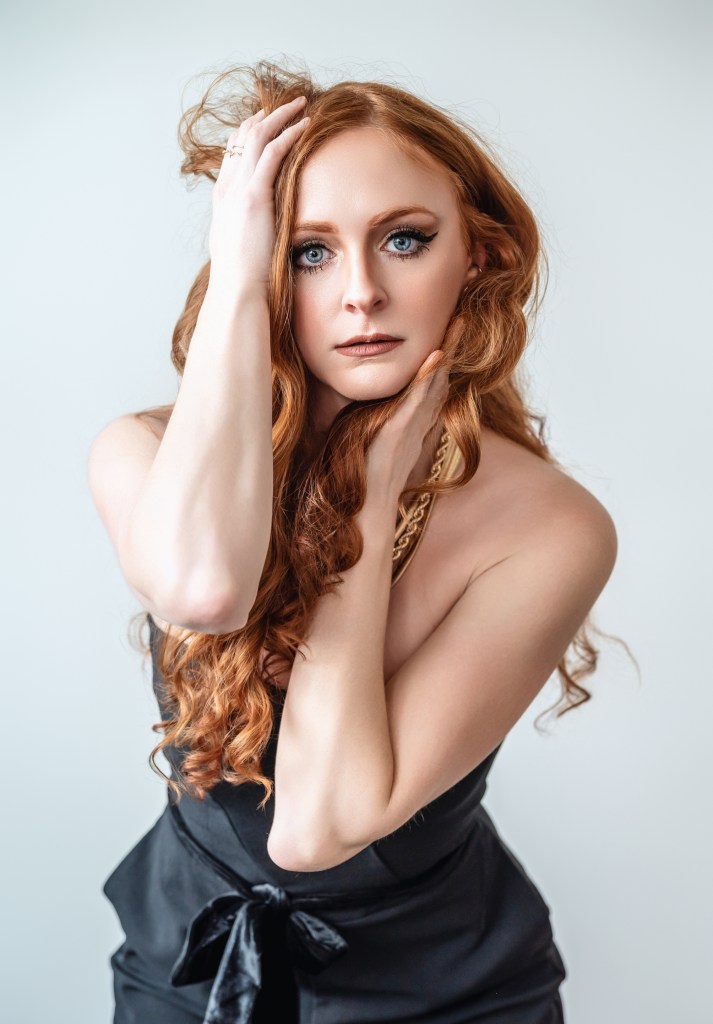
Studio portrait of a red-haired woman in a black dress posing against a light background with her hands framing her face.
Model Abigail Marchetti, known as Copper Muse, poses during a Denver Models open shoot at Realm Studio in Denver.

This compelling portrait of model Abigail Marchetti exemplifies the photographer’s deepening engagement with studio portraiture and his refined approach to natural light as a primary sculptural tool. Captured during a Denver Models open shoot at Realm Studio, the image represents continued exploration of collaborative creative environments while demonstrating increasingly sophisticated control of the portraitist’s essential elements: light, gesture, color harmony, and psychological presence.

The composition centers on the model’s striking features—vibrant copper-red hair cascading in loose waves, piercing blue-green eyes meeting the camera with direct but unguarded confidence, and pale skin that catches and reflects the soft window light with luminous clarity. Her pose, with one hand gracefully raised to her hair and the other touching her neck, creates natural framing that draws attention to her face while suggesting unaffected spontaneity. The black strapless garment provides bold tonal contrast against both her skin and the pale backdrop, creating visual drama without competing for attention.

What distinguishes this work is the photographer’s masterful exploitation of natural window light. Rather than relying on the multiple strobes and reflectors typical of commercial studio work, he has chosen a more classical approach that recalls portrait painting traditions. The directional quality of the illumination—soft yet defined—models the subject’s features with sculptural precision while maintaining delicate gradations across skin tones. Highlights along the hair reveal its rich, multidimensional copper coloring, transforming what could be merely descriptive documentation into chromatic study.

The technical execution demonstrates growing confidence with the Nikon Z5 system and the versatile 24-120mm lens. The focal length selection—likely in the moderate telephoto range—provides flattering perspective without distortion, while the depth of field keeps the subject sharply defined against the subtly gradated background. The exposure balances the challenge of pale skin and light background without sacrificing detail in either the model’s features or the deeper tones of her garment.

Within the framework of Chapter 6—”The Road Ahead: Recent Work & Ongoing Exploration”—this portrait signals important developments in his artistic trajectory. The open shoot environment, like the previous workshop-based work, indicates willingness to engage with structured collaborative opportunities while bringing his distinct sensibility to bear. Yet where some open shoots yield generic beauty documentation, this image transcends its circumstances through careful attention to classical portraiture principles: the quality of light, the authenticity of expression, the harmony of color and form.

The model’s direct gaze introduces a quality often absent from his landscape and architectural work—reciprocal acknowledgment between photographer and subject. This mutual recognition adds psychological dimension, transforming technical exercise into genuine encounter. The slight asymmetry in her expression—contemplative rather than performative—suggests comfort and trust within the photographic exchange.

The photograph also reveals evolving aesthetic priorities. While maintaining the tonal sensitivity and compositional rigor evident throughout his portfolio, he demonstrates here that minimalism need not preclude richness. The interplay of copper hair, pale skin, black fabric, and soft grey background creates visual complexity through chromatic relationships rather than environmental detail. This represents a distillation of his practice—finding depth in apparent simplicity, discovering complexity in restraint—now applied to the human figure with increasing assurance and grace.

Suspension and Illusion: A Study in Controlled Ephemera

Model Everyn Darling is featured in a significant studio portrait taken during a photography workshop in Denver. This image, characterized by its minimalist setting and controlled lighting, explores themes of aspiration and vulnerability through the metaphor of a translucent balloon. The photographer’s evolving style emphasizes collaborative creativity and visual poetry over mere technical perfection.

Studio portrait of a woman in a black dress holding a translucent balloon against a plain backdrop.
Model Everyn Darling poses with a translucent balloon during a studio photography workshop in Denver, Colorado.

This studio portrait represents a significant departure within the photographer’s evolving practice, marking his exploration of collaborative, workshop-based creation and the controlled artifice of studio environments. Captured during a Creative Experimental Photography Meetup at RAW Studios in Denver, the image demonstrates how structured creative exercises can yield work of surprising conceptual depth when approached with technical precision and compositional awareness.

The photograph centers on model Everyn Darling, positioned within a minimalist studio setting characterized by graduated neutral tones that transition from cool blue-grey to warm cream. This chromatic subtlety provides visual breathing room while maintaining atmospheric presence—a backdrop that supports rather than competes. The subject, dressed in a simple black dress with white collar detail, appears barefoot in a pose of upward contemplation, one arm extended to hold a translucent balloon trailing delicate white ribbons or fabric.

What elevates this image beyond documentation of a workshop exercise is the photographer’s attention to the psychology of gesture and the poetry of the ostensibly simple prop. The balloon—that most ephemeral and-associated of objects—becomes a vehicle for exploring themes of lightness, release, and the tenuous connection between desire and drift. The model’s gaze follows the balloon upward, creating a diagonal compositional line that draws the eye through the frame while suggesting aspiration, longing, or perhaps the acceptance of letting go.

The technical execution reveals disciplined studio craft. Working with his Nikon Z5 and the versatile 24-120mm f/4 lens, the photographer has managed studio lighting with restraint, avoiding the harsh drama often favored in workshop settings. The illumination appears softly directional, modeling the subject’s features and dress while maintaining detail in the translucent balloon. Shadow work on the studio floor provides subtle grounding without becoming graphic or distracting. The slightly elevated perspective and negative space allocation give the subject room to breathe within the frame—a compositional generosity that reinforces the image’s contemplative mood.

Within the context of Chapter 6—”The Road Ahead: Recent Work & Ongoing Exploration”—this photograph signals important developments in his practice. The workshop origin indicates openness to collaborative creative structures and willingness to work within parameters set by others. Yet the result bears his aesthetic signature: careful attention to subtle tonal gradations, preference for psychological ambiguity over narrative certainty, and interest in objects as metaphorical carriers rather than mere props.

The image also represents exploration of human subjects with greater intimacy than much of his earlier landscape and architectural work. The model’s upturned face, though not confronting the camera directly, introduces vulnerability and interiority often absent from environmental documentation. This shift suggests expanding comfort with portraiture and the complex dynamics of photographer-subject collaboration.

The balloon’s deliberate artificiality—clearly held rather than actually floating—adds productive tension. The photograph acknowledges its own construction while inviting viewers to suspend disbelief, mirroring how all photography negotiates between document and fiction. In selecting this image as his best from the series, the photographer reveals evolving criteria for success: not technical perfection alone, but the achievement of visual poetry through careful orchestration of simple elements within controlled conditions.