Kelly

PKelly R. Bienfang’s studio portrait captures the essence of minimalist photography, focusing on the subject against a clean white backdrop. Utilizing controlled lighting and strategic posing, the image showcases the photographer’s skill and adaptability. It highlights the evolving rapport between photographer and subject, emphasizing the importance of genuine collaboration in achieving impactful portraits.

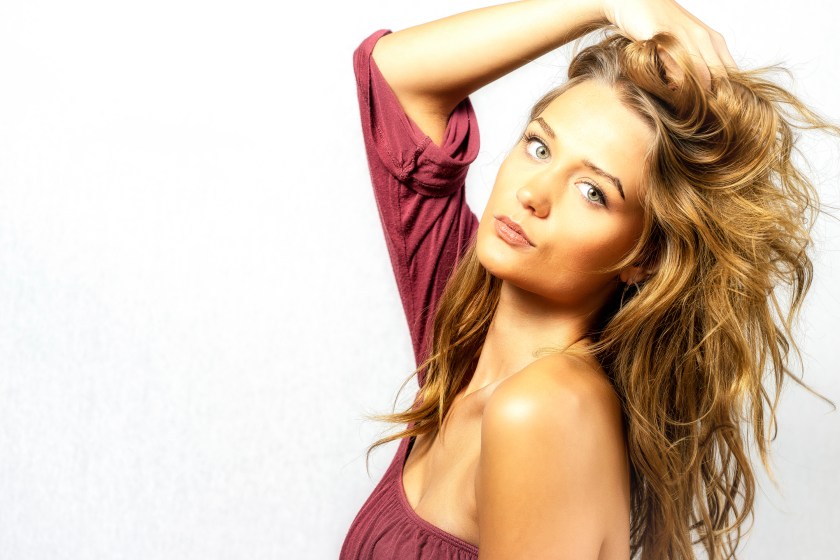
Woman with long light brown hair posing against a white background, one arm raised to her head, wearing a sleeveless top.
PKelly R. Bienfang poses during a studio portrait session in Fort Collins, Colorado.

This portrait from Chapter 4 of Greg Urbano’s Top 100 Journey exemplifies the photographer’s refined approach to studio portraiture, demonstrating how minimalist environments and controlled lighting can distill a subject’s presence to its essential elements. Captured at Old Town Yoga in downtown Fort Collins, Colorado, the image reveals the photographer’s ability to transform functional spaces into effective portrait studios, a skill central to the chapter’s exploration of diverse shooting contexts.

The composition centers on the subject, Kelly, photographed against a pure white backdrop that eliminates all contextual information, focusing attention entirely on her form, expression, and movement. Her pose—arm raised to gather flowing hair, head tilted, gaze directed toward the camera—suggests a moment caught between deliberate positioning and natural gesture. The wind-swept quality of her hair introduces dynamic motion into an otherwise static studio setup, creating visual energy that prevents the portrait from settling into conventional headshot territory.

The photographer’s technical execution demonstrates consistent mastery of the equipment established throughout this chapter. Working with the Sony A7ii and 85mm f/1.8 lens, supplemented by a Godox V1s flash modified through a shoot-through umbrella, he has created illumination that reads as both bright and dimensioned. The lighting wraps evenly across the subject’s features while maintaining sufficient shadow information to model her facial structure and the curves of her shoulders and arms. The high-key approach—white background, luminous skin tones—requires precise exposure control to prevent blown highlights while retaining textural detail in hair and fabric.

Color becomes a critical compositional element in this reduced visual field. The deep burgundy of Kelly’s garment provides the primary chromatic accent against the neutral backdrop and warm skin tones, creating a complementary relationship that anchors the eye. The photographer has allowed the subject’s honey-blonde hair to cascade freely, its varied tones adding subtle complexity to the upper portion of the frame. Post-processing in Luminar 4 has yielded clean, commercial-quality results—polished without appearing artificial, enhanced without sacrificing the authentic quality of skin and texture.

Within the broader context of Chapter 4, this photograph represents the studio portrait in its most distilled form. While other works in this series incorporate environmental elements or natural light scenarios, this image strips away such variables to focus purely on subject, light, and photographer’s vision. The setting at Old Town Yoga—likely chosen for its available space and clean backgrounds rather than thematic connection—underscores the photographer’s adaptability, his capacity to identify and utilize whatever resources a location offers.

The portrait also reflects evolving confidence in direction and collaboration. The pose suggests active guidance rather than passive documentation, indicating the photographer’s growing comfort in shaping rather than merely recording moments. Kelly’s ease before the camera—the natural grace of her gesture, the direct engagement of her gaze—speaks to successful rapport between photographer and subject, that intangible but essential element of portrait work that transcends technical proficiency.

This image stands as evidence of the photographer’s progression toward professional fluency in controlled portrait environments, demonstrating that compelling imagery emerges not from elaborate setups but from clear vision executed with precision.
Silhouette and Subversion: A Study in Controlled Drama

The portrait of Savage Van Sage by Greg Urbano in Chapter 4 of Top 100 Journey exemplifies refined environmental portraiture. It captures a blend of vulnerability and confidence through composition, lighting, and setting. The ivy backdrop, along with the model’s pose, invites viewers to engage with the complex narrative, reflecting Urbano’s artistic evolution and technical mastery.

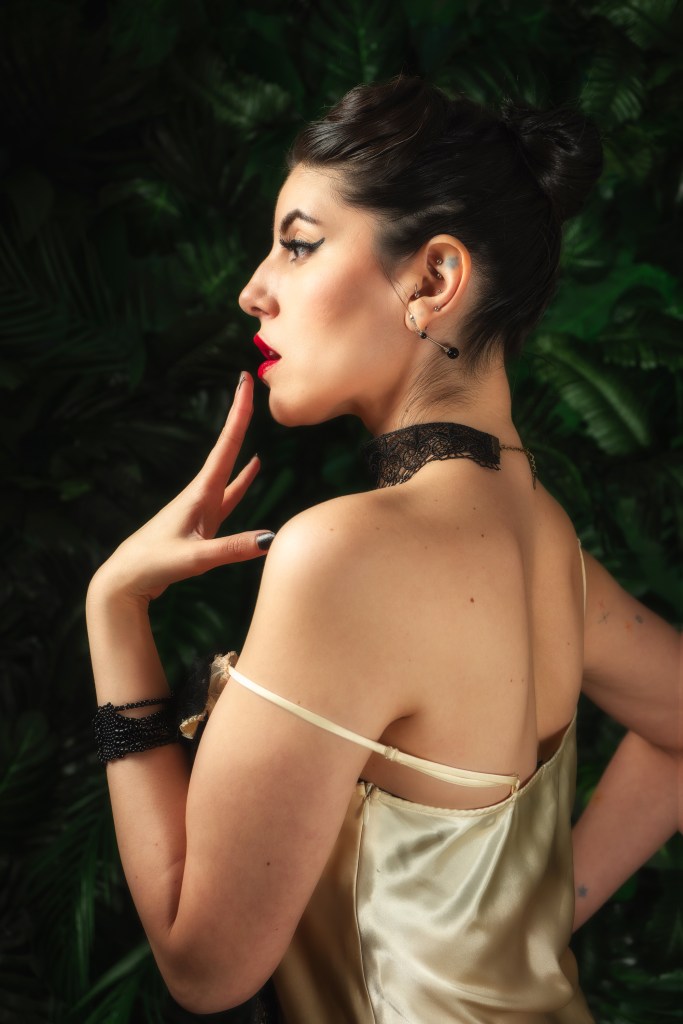
Woman in a satin dress shown in side profile against a dark leafy background, with hair in an updo and red lipstick.
Savage Van Sage poses in profile in a studio portrait with an ivy-covered wall near Denver, Colorado.

Within Chapter 4 of Greg Urbano’s Top 100 Journey—a section devoted to studio portraiture and collaborative workshop explorations—this photograph of model Savage Van Sage stands as a masterclass in theatrical restraint. Shot against an ivy-laden wall at the Headquarters studio near Denver, the image demonstrates the photographer’s evolving command of environmental portraiture, where setting and subject engage in a carefully choreographed dialogue.

The composition reveals sophisticated technical decision-making. Urbano positions his subject in profile, her face turned away from the camera yet fully engaged with the viewer through gesture and posture. The silhouette technique employed here—enhanced through post-processing in Adobe Camera Raw and Luminar 4—creates a striking interplay between illumination and shadow. Light sculpts the model’s features with precision, catching the curve of her jawline, the delicate architecture of her ear adorned with multiple piercings, and the bold contrast of crimson lips against porcelain skin.

What distinguishes this work within the chapter’s broader exploration of portrait photography is its willingness to embrace ambiguity. The model’s bare shoulder and the gossamer straps of her garment suggest vulnerability, yet her pose—hand raised to chin in a gesture of thoughtful poise—projects confidence and self-possession. The black lace choker and wrist accessory introduce elements of vintage glamour and contemporary subculture, positioning the subject at the intersection of multiple aesthetic traditions. This fusion of pin-up sensibility with darker, more enigmatic styling reflects Urbano’s interest in portraits that resist singular interpretation.

The natural ivy backdrop functions as more than mere decoration. Its organic chaos provides textural depth and creates a liminal space—neither entirely studio nor wholly natural environment. This choice aligns with the chapter’s documentation of the photographer’s studio and workshop methodologies, demonstrating how controlled environments can be manipulated to suggest narrative possibilities beyond their physical constraints. The deep greens recede into darkness, focusing attention on the figure while maintaining atmospheric richness.

Technically, the photograph showcases the photographer’s proficiency with studio lighting configurations. The illumination appears to originate from a single, directional source, creating the dramatic side-lighting characteristic of classic portraiture while maintaining sufficient fill to preserve detail in shadow areas. This approach—refined through workshop collaborations and repeated studio sessions—demonstrates a maturation from documentary impulses toward more deliberately constructed imagery.

The inclusion of this photograph in the Top 100 Journey marks a significant moment in Urbano’s artistic development. Where earlier chapters might emphasize spontaneity or environmental documentation, this studio work reveals an artist increasingly comfortable with artifice and construction. The model becomes collaborator rather than subject, her professional experience evident in the precision of her pose and the deliberate theatricality of her presentation.

Ultimately, this portrait succeeds because it understands the power of suggestion over declaration. The viewer receives fragments—a profile, a gesture, a carefully composed environment—and must construct meaning from these elements. It is portrait photography that honors both the technical traditions of studio work and the contemporary expectation that images should provoke rather than simply document. Within Urbano’s evolving practice, it represents a confident synthesis of technical skill and artistic vision.