The Studio as Theater: Classical Portraiture in Contemporary Practice

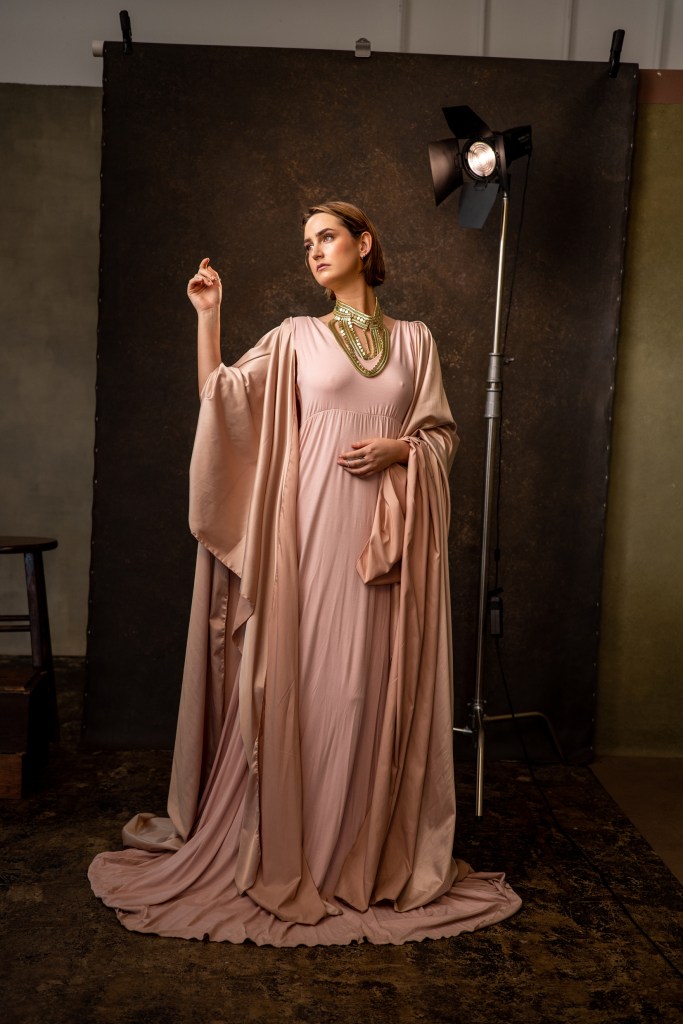
Jessica Lynn’s studio portrait showcases a fusion of classical portraiture and contemporary technique, created during a workshop at Atelier Alchimia. The photograph illustrates the artist’s growth through collaboration, using refined lighting to enhance the subject’s regal appearance. This work embodies artistic evolution, blending tradition with innovation while emphasizing continuous learning.

Studio portrait of Jessica Lynn standing in a flowing blush-colored gown, posed in front of a dark backdrop with a studio light visible behind her.
Jessica Lynn (QueenJess Rising) photographed in a studio setting during a workshop at Atelier Alchimia in Westminster, Colorado.

This studio portrait from Chapter 6 of the photographer’s Top 100 Journey represents a deliberate engagement with the formal traditions of classical portraiture, reimagined through contemporary technical means. Created during a workshop at Atelier Alchimia in Westminster, Colorado, the image demonstrates how collaborative learning environments can yield work of considerable aesthetic merit while advancing the artist’s technical vocabulary.

The subject, Jessica Lynn, is presented in a flowing blush-toned gown with dramatic bell sleeves that cascade to the floor, creating a silhouette reminiscent of Renaissance or Pre-Raphaelite painting. An ornate collar necklace in gold and green adds a regal quality that justifies the image’s title. The photographer has positioned her in a classical contrapposto-inspired stance—weight on one leg, torso gently twisted, one hand raised in a gesture of contemplation or perhaps benediction. This pose, combined with the upward gaze and theatrical lighting, evokes both historical portraiture and contemporary fashion photography’s ongoing dialogue with art history.

The technical execution reveals careful attention to studio craft. A single key light with barn doors, visible in the frame’s right edge, provides directional illumination that sculpts the subject’s features and creates tonal gradation across the fabric’s folds. The mottled canvas backdrop transitions from warm browns to darker tones, providing depth without competing for attention. The lighting setup, developed collaboratively with studio owner Jonny Edwards, demonstrates the photographer’s increasing comfort with controlled environments—a marked evolution from earlier work in the series that frequently engaged with natural light and outdoor settings.

What makes this image particularly relevant to “The Road Ahead: Recent Work & Ongoing Exploration” is its frank acknowledgment of artistic development through structured learning. Shot during a workshop led by Eric Brown, the photograph embodies a philosophy of continuous growth and technical refinement. Rather than presenting only work created in solitary practice, the photographer includes images born from educational contexts, recognizing that mastery often emerges through collaboration and mentorship.

The choice to work with studio lighting represents an expansion of technical range. The careful balance of exposure—maintaining detail in both the luminous fabric and the darker background—suggests growing confidence with artificial light sources. The warm color palette creates cohesion between subject, costume, and environment, while the visible studio elements (backdrop clamps, light stand) provide documentary transparency about the image’s construction.

Within the broader arc of the Top 100 Journey, this portrait signals a willingness to explore different photographic modes. Where earlier chapters emphasized environmental and location work, this studio piece demonstrates versatility and an interest in controlled aesthetic experiences. The theatrical quality—the visible apparatus of image-making—invites viewers into the creative process rather than presenting a seamless illusion.

The photograph succeeds both as a study in classical beauty and as evidence of artistic evolution. It captures a moment of learning translated into accomplished execution, showing that the road ahead need not abandon traditional craft in pursuit of innovation. Instead, it suggests that mastery comes through accumulation—building new skills atop established foundations, always remaining open to guidance, collaboration, and the timeless appeal of light falling gracefully upon fabric and form.
Powerade Sports Drink

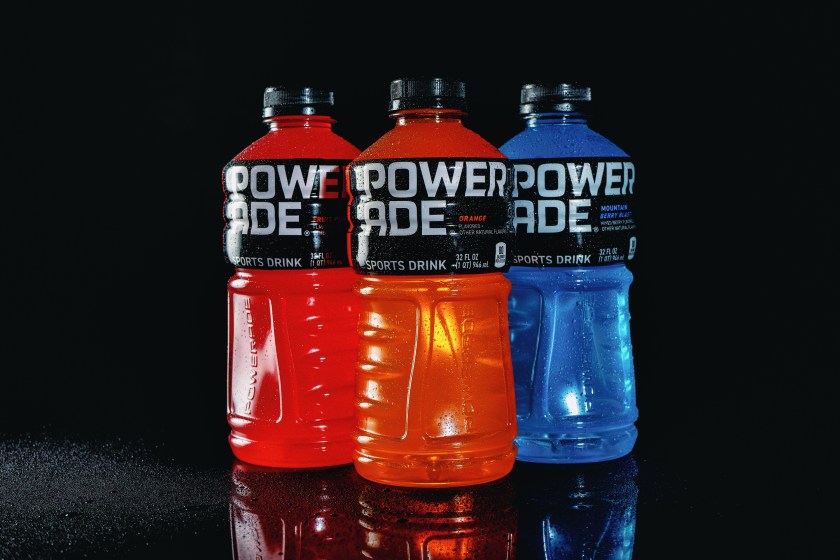
The photographer’s still life study of three Powerade bottles transcends typical commercial product photography through technical mastery and thoughtful lighting. Using a classic triangular arrangement against a dark background, he elevates mundane objects into gallery-worthy art, emphasizing color and light. This work reflects his evolving confidence and duality in art and commerce.

Studio still life of three Powerade sports drink bottles in red, orange, and blue on a reflective black surface.
A studio still life of three Powerade sports drink bottles arranged on a reflective surface against a dark background.

The photographer’s exploration of commercial product photography takes an unexpectedly sophisticated turn in this meticulously composed study of three Powerade bottles. Working within the constraints of a domestic setting—his living room transformed into an improvised studio—he demonstrates how technical mastery and thoughtful lighting can elevate mundane consumer objects into subjects worthy of gallery consideration.

The composition employs a classical triangular arrangement, with the three bottles positioned against a stark black background that eliminates all contextual distraction. This deliberate void forces the viewer’s attention entirely onto the subjects themselves: the vivid red and orange bottles flanking a brilliant blue variant. The color palette recalls the saturated hues of contemporary advertising photography, yet the treatment here transcends mere product documentation. Each bottle catches and refracts light differently, creating internal luminosity that transforms the beverages into glowing, jewel-like objects.

His technical approach reveals significant evolution in his still life practice. Utilizing a Sony A7ii with a kit lens, softbox, and flash, he crafts lighting that achieves both commercial polish and artistic dimensionality. The softbox provides diffused illumination that wraps around the bottles’ curved surfaces, while strategic flash placement creates the distinctive highlights and reflections visible across each container. The condensation beading on the plastic surfaces adds textural authenticity, suggesting these are not pristine studio props but objects intercepted in their natural state—cold, recently removed from refrigeration, existing in that liminal moment between commercial packaging and consumption.

The post-processing workflow—Adobe Camera Raw within Photoshop 2018, enhanced with Nik/DXO Viveza—amplifies the inherent drama of the scene. The blacks deepen to an almost velvety darkness, while the colors intensify without crossing into oversaturation. This balance proves crucial: the image maintains photographic credibility while achieving the heightened reality that characterizes effective still life work.

Within the broader context of Chapter 5’s exploration from classic to experimental tabletop photography, this image occupies an interesting middle ground. It adheres to established commercial photography conventions—the product-forward composition, the dramatic lighting, the emphasis on color and form—yet subverts them through its gallery presentation context. Removed from their intended commercial environment and reframed as objects of aesthetic contemplation, these sports drinks become something more: symbols of contemporary consumer culture, studies in color theory and light behavior, or perhaps meditations on how photography itself mediates our relationship with everyday objects.

The work also demonstrates his growing confidence in minimal staging. Rather than elaborate props or complex narratives, he allows the bottles themselves to carry the visual weight of the image. The slight rotation of each container, the variation in liquid levels, the casual yet deliberate spacing—these subtle decisions reveal an artist increasingly comfortable trusting in restraint.

This photograph ultimately succeeds because it occupies dual territories: it could function effectively as commercial product photography while simultaneously inviting the slower, more contemplative viewing that gallery work demands. This duality, this ability to straddle commercial and fine art sensibilities, marks a significant development in his still life practice and suggests promising directions for future experimentation.

Nocturnal Gateway: Union Station Illuminated

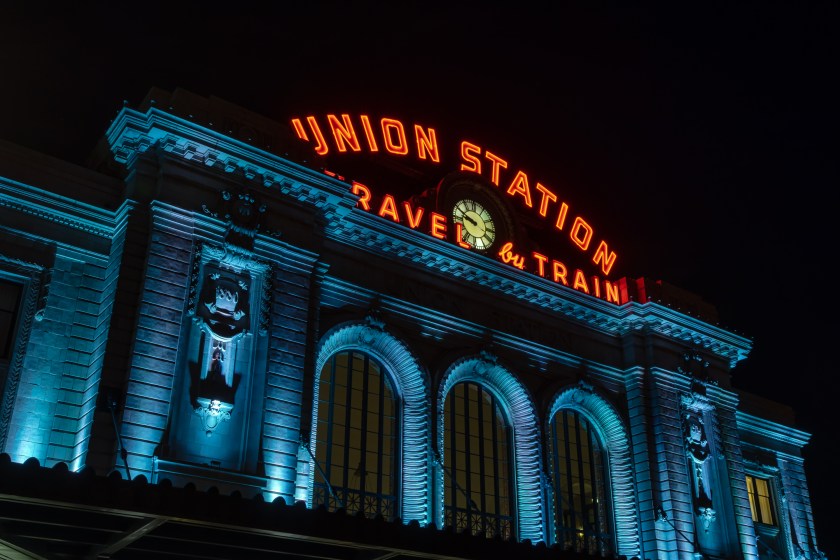
The photograph of Denver’s Union Station at night highlights its Beaux-Arts architecture through dramatic neon and electric blue lighting. Captured at ground level, it displays harmonious contrasts of light and structure, emphasizing the station’s role as a vibrant urban hub. This image underscores both preservation and the ongoing transformation of civic identity.

The illuminated front façade of Denver Union Station at night, with glowing neon signage and a clock above arched windows.
The front façade of Denver Union Station is illuminated at night, highlighted by its neon sign and historic architectural details.

In this nocturnal study of Denver’s Union Station, the photographer captures the transformation that occurs when historic architecture meets contemporary illumination. The image presents the iconic Beaux-Arts facade bathed in electric blue uplighting, while the famous neon signage glows in warm orange against the night sky—a study in complementary contrasts that speaks to both heritage and urban vitality.

The composition demonstrates restraint and classical sensibility. Shot with the Sony A7ii and kit lens, the photographer positions himself at ground level, allowing the building’s ornate cornice and horizontal bands to sweep across the upper portion of the frame. The three arched entrances anchor the lower third, their rhythmic repetition creating visual harmony while the vertical pilasters between them establish structural order. This frontal approach honors the station’s Beaux-Arts symmetry, respecting the intentions of the original 1914 design while documenting its twenty-first-century theatrical presentation.

What distinguishes this photograph is its embrace of artificial light as primary subject matter. The cool cyan wash transforms classical architectural details—the decorative moldings, the sculptural cartouches, the rusticated stonework—into relief elements that appear almost aquatic in their luminosity. This dramatic lighting choice, typically employed during special events or seasonal celebrations, removes the building from everyday documentation and positions it as urban spectacle. The warmth of the neon lettering provides essential counterpoint, its orange glow referencing mid-century Americana and the golden age of rail travel.

The working clock embedded within the signage adds temporal specificity, a reminder that this is a functioning transportation hub rather than mere architectural monument. The small silhouettes of gathered observers at the frame’s base provide crucial human scale, grounding the building’s theatrical presentation within the social realm. Their presence suggests communal gathering, the station serving its historic role as urban meeting point and threshold between destinations.

Within Chapter 3’s exploration of Colorado landscapes and cityscapes, this image represents the photographer’s engagement with Denver’s architectural heritage and its ongoing urban renewal. Union Station, revitalized in recent years as a mixed-use hub, embodies the tension between preservation and progress that defines many American cities. The photographer documents this transformation without editorial comment, allowing the dramatic lighting to speak to both celebration and commodification of historic space.

Technically, the night exposure presents challenges that the photographer navigates successfully. The deep black sky eliminates distracting context, focusing attention entirely on the illuminated facade. The exposure balances the intense neon signage against the softer architectural lighting, maintaining detail in both the brilliant highlights and the deeper blue shadows. The kit lens, often dismissed by photography purists, proves adequate to the task, capturing the scene with sufficient sharpness and minimal distortion.

This photograph pairs effectively with the earlier Denver Public Library study, together presenting divergent approaches to civic architecture. Where the library image emphasized monumental permanence through stark monochrome daylight, Union Station celebrates temporal display through saturated nocturnal color. Both reveal the photographer’s interest in how built environments express civic identity and cultural values.

The image ultimately serves as document, celebration, and subtle meditation on urban transformation—the historic gateway reimagined as luminous beacon in Denver’s evolving downtown landscape.

Convention Center Station: Urban Infrastructure as Light Study

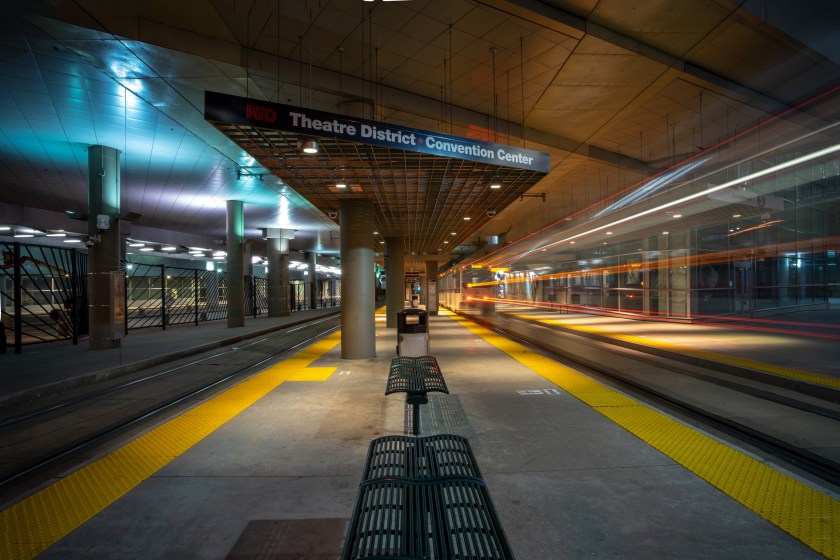
The photograph at Denver’s Convention Center RTD station captures an arriving light rail train through long exposure, emphasizing urban environments over natural landscapes. The technical choices create depth and contrast between warm light trails and cooler architectural tones. This piece illustrates Colorado’s identity, showcasing urban transit as significant as its natural vistas.

Text: Long exposure view of the RTD light rail platform at the Convention Center with blurred train lights in downtown Denver.
A long exposure captures an arriving RTD light rail train at the Convention Center station in downtown Denver, Colorado.

In the urban component of Chapter 3—Colorado Landscapes & Cityscapes—this long exposure photograph of Denver’s Convention Center RTD station marks a deliberate shift from natural subjects to the constructed environments that define contemporary Colorado life. The image captures a light rail train arriving at the platform, its motion rendered as luminous streaks of amber and red that cut through the architectural geometry of the underground station. This is urban photography that privileges process and temporal collapse over the decisive moment, transforming public transit infrastructure into an exercise in controlled abstraction.

The photographer’s technical approach is fundamental to the image’s success. Using a Sony A7ii paired with a Samyang 18mm wide-angle lens, he has embraced the distortions and expansiveness that such focal lengths provide. The wide angle compresses the station’s perspective while simultaneously stretching its architectural lines, creating a sense of depth that pulls the viewer’s eye from the central platform toward both vanishing points. The long exposure—likely several seconds given the degree of light trail elongation—allows the moving train to register as pure energy rather than solid form, a ghost of motion suspended within the static framework of concrete, steel, and tile.

Color plays a crucial structural role. The safety-yellow platform edges create strong horizontal bands that anchor the composition and provide visual weight at the bottom of the frame. These bright strips contrast sharply with the cooler tones dominating the upper portions—cyan-tinted fluorescent lighting that bathes the ceiling panels and creates atmospheric zones of cool illumination. The train’s light trails introduce warm amber tones that bridge these temperature extremes, serving as the compositional focal point despite their ethereal nature. The signage identifying the Theatre District/Convention Center stop glows in the upper third, grounding the image in specific geographic and civic context.

What distinguishes this work within the broader chapter is its commitment to representing Colorado’s urban character with the same attention previously devoted to its natural landscapes. Denver’s RTD system, as critical infrastructure connecting the metropolitan region, deserves documentation as much as any mountain vista or aspen grove. The photographer recognizes this and approaches the subject with seriousness of purpose. The empty platform—devoid of waiting passengers—allows the architecture and light to speak without human interruption, though the absence of people also raises questions about time of day, accessibility, and the photographer’s relationship to urban space during off-peak hours.

The symmetry is notable but not absolute. The central platform creates a strong vertical axis, reinforced by support columns and the overhead ceiling structure. Yet the composition retains enough asymmetry—particularly in the light trails and architectural details—to avoid static formalism. The textured platform surface, captured with clarity despite the low light conditions, provides tactile detail that prevents the image from becoming purely graphic.

Within a collection that spans Colorado’s diverse visual territories, this photograph asserts that the state’s identity includes its cities and their infrastructure. It is work that finds aesthetic potential in transit stations, that sees light trails as valid subjects alongside geological formations, and that expands the definition of landscape to include the spaces humans build for movement and connection.