LilithW 16th Street Mall Denver

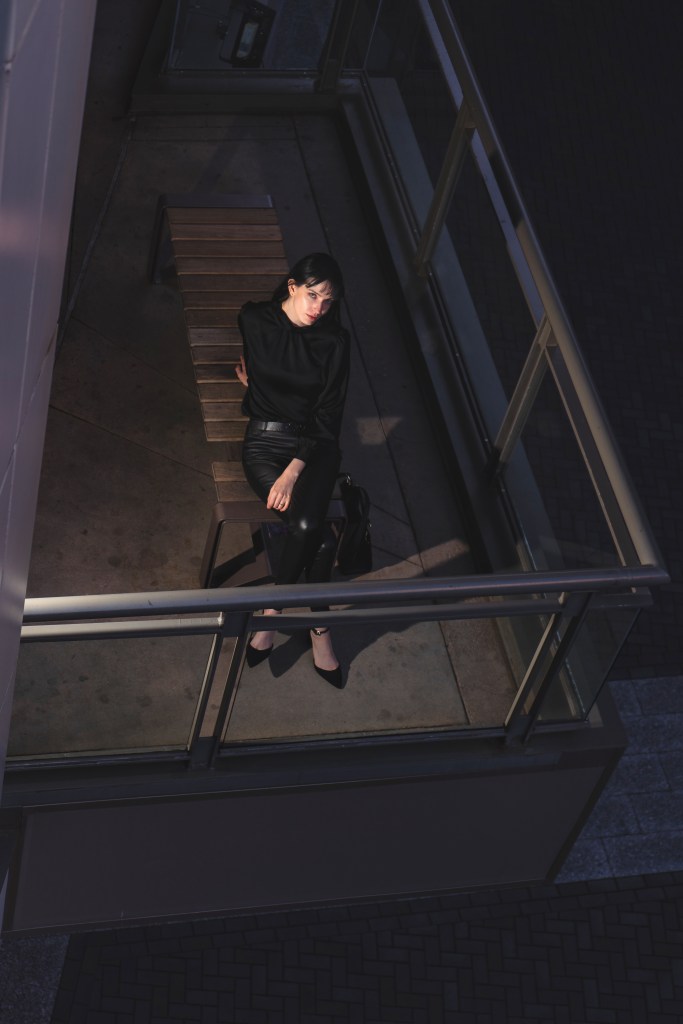
The photograph featuring model LilithW on Denver’s 16th Street Mall showcases an innovative blend of urban architecture and contemporary fashion. Through careful lighting, geometric framing, and thoughtful styling, the image transforms a functional stairwell into a dramatic portrait setting, emphasizing the photographer’s skill in capturing emotional depth within architectural spaces.

Woman dressed in black sits on a bench on an elevated walkway, viewed from above in an urban setting.
LilithW sits on a balcony along the 16th Street Mall in Denver, Colorado.

The photographer transforms an urban stairwell into a study of geometry, shadow, and contemporary fashion portraiture in this striking image from Denver’s 16th Street Mall. Shot with model LilithW, the photograph demonstrates a sophisticated understanding of architectural space as portraiture framework—a conceptual approach that positions this work as a significant entry within Chapter 4 of his Top 100 Journey project.

The compositional strategy reveals deliberate technical choices. Photographed from below, looking upward through the stairwell’s descending levels, the image creates a vertiginous sense of depth through repeating geometric forms. The metal railings create strong diagonal and horizontal lines that frame the subject, while the stairway’s perspective draws the eye upward toward LilithW’s figure. This bird’s-eye vantage point—or rather, its inverse—transforms a functional architectural space into a dramatic stage, demonstrating how environmental awareness can elevate location portraiture beyond mere documentation.

The lighting execution shows particular sophistication given the equipment employed. Using a single Godox AD100 flash without modifiers, the photographer has created directional illumination that separates the subject from the ambient darkness of the stairwell. The unmodified flash produces harder shadows and more dramatic contrast than diffused light would offer, a choice that complements the industrial setting’s angular architecture. This approach to lighting reveals growing confidence in working with minimal gear to maximum effect—a hallmark of photographers who understand that vision matters more than equipment inventory.

LilithW’s styling—black turtleneck, leather pants, and ankle boots—creates a monochromatic palette that harmonizes with the urban environment while maintaining visual distinction through texture and form. Her pose, caught mid-descent with hand resting on the railing, suggests movement arrested rather than static positioning. The downward gaze and slight forward lean create psychological engagement, as though the subject exists within her own narrative rather than performing for the camera.

Within the context of Chapter 4’s focus on studio, outdoor, and workshop portraiture, this image exemplifies the photographer’s ability to treat urban environments as found studios. The controlled lighting approach mirrors studio methodology, while the architectural setting provides the visual complexity and authentic texture that outdoor locations offer. The technical specifications—Sony A7II with the 28-70mm kit lens—underscore an important curatorial observation: this body of work privileges compositional intelligence and lighting understanding over equipment prestige.

The post-processing workflow, combining Adobe Photoshop Elements and Luminar AI, has enhanced the image’s moody atmosphere without sacrificing naturalism. The color grading emphasizes cool tones that reinforce the urban setting’s industrial character, while careful shadow detail preservation maintains dimensionality throughout the frame’s darker regions.

From a curatorial perspective, this photograph represents the photographer’s evolving facility with architectural portraiture—a subgenre that requires simultaneous attention to human subject, spatial geometry, and lighting choreography. The work’s inclusion in the Top 100 Journey project acknowledges its success in synthesizing these elements into a cohesive visual statement. The stairwell becomes more than backdrop; it functions as collaborator in creating psychological depth and visual drama. This image demonstrates how thoughtful photographers can transform everyday urban infrastructure into compelling portrait environments, finding beauty and narrative possibility in overlooked transitional spaces.
Colorado Capital Rotunda: Vertical Aspiration and Ornamental Complexity

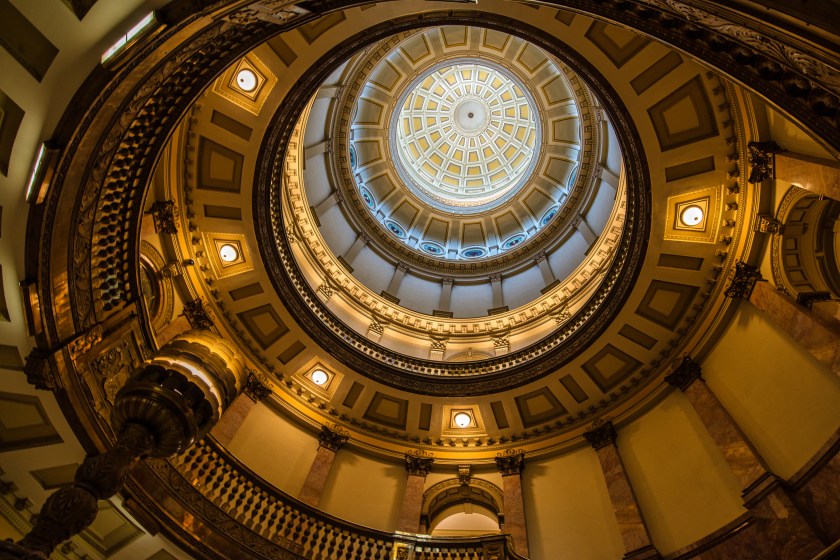
The photograph of the Colorado State Capitol rotunda represents a shift in architectural perspective, focusing on the interior’s ornate details rather than external views. Using a wide-angle lens, the image captures the dome’s grandeur and intricate design, embodying the civic experience and inviting public engagement while highlighting historical and democratic ideals.

Upward view of the ornate rotunda ceiling inside the Colorado State Capitol, showing concentric arches and a central skylight.
An interior view looking up into the rotunda of the Colorado State Capitol in Denver, Colorado.

This interior study of the Colorado State Capitol rotunda marks a significant compositional departure within Chapter 3 of the Top 100 Journey. Where previous images in this collection have examined architecture from external vantage points—emphasizing façade, silhouette, and contextual placement—this photograph inverts the perspective, directing the viewer’s gaze upward through concentric rings of ornamental detail toward a luminous oculus. The shift from exterior monumentality to interior intimacy reveals the photographer’s expanding investigation of how architectural space shapes civic experience and visual perception.

Shot with a Nikon D610 and an 18-35mm f/3.5-4.5 lens at 19mm, the wide-angle focal length proves essential to capturing the rotunda’s full vertical sweep within a single frame. The fisheye-like distortion inherent at this focal length amplifies the dome’s centripetal geometry, creating a vortex effect that draws the eye inexorably toward the coffered ceiling and its central aperture. The exposure settings—f/8.0 at 1/10s, ISO 400—balance the need for depth of field across multiple architectural tiers with the practical constraints of handheld low-light shooting. The resulting image maintains sharpness from the foreground balustrade through to the uppermost decorative elements.

The color palette divides into two distinct thermal zones. Warm golden tones dominate the lower registers, where artificial lighting illuminates gilt detailing, coffered panels, and classical ornamentation. These warm hues gradually transition to cooler whites and pale blues as the eye travels upward, culminating in the natural daylight filtering through the oculus. This chromatic shift reinforces the spiritual and hierarchical symbolism embedded in rotunda architecture—earthly richness below, celestial purity above—while simultaneously demonstrating the photographer’s attentiveness to mixed lighting conditions.

Compositional rigor anchors what could easily become visual chaos. The photographer positions himself at the precise center point beneath the dome, ensuring perfect radial symmetry. This decision transforms architectural documentation into geometric meditation, where repeating patterns of coffering, balustrades, and Corinthian capitals establish rhythmic visual cadence. The inclusion of the ornate balustrade in the lower left introduces human scale and tactile detail, preventing the image from becoming pure abstraction while emphasizing the building’s accessibility—a public space designed for citizen engagement.

Within the broader narrative of Chapter 3, this rotunda photograph functions as conceptual bridge between exterior civic monumentality and the quotidian experience of urban space. It reveals what lies beneath the gilded dome captured in his nocturnal exterior study, exposing the elaborate craftsmanship and symbolic program that nineteenth-century architects employed to manifest democratic ideals through built form. The image documents not merely architectural opulence but the spatial theater of governance—the designed environment through which political power seeks legitimacy through aesthetic grandeur.

The photographer’s note regarding access—”as simple as passing through a metal detector”—introduces subtle contemporary commentary. This threshold between public and civic space, between everyday citizen and architectural spectacle, becomes invisible in the final image yet remains conceptually present. The photograph captures a space designed for transparency and public access, its ornamental complexity serving not to exclude but to dignify the democratic project. In rendering this vertical architecture with technical precision and compositional thoughtfulness, the photographer documents both historical aspiration and ongoing civic function, making visible the constructed environments through which Colorado’s political identity continues to be performed and experienced.