Tampa Panoramic at Night: A Study in Urban Luminescence

The panoramic long exposure photograph of downtown Tampa captures its urban beauty at night from the University of Tampa. This 2014 composition emphasizes artificial light’s role in depicting the cityscape, blending architectural detail and varied illumination. It challenges perceptions of Florida, asserting urban environments as significant alongside natural landscapes, showcasing the photographer’s technical skill and versatility.

Panoramic long exposure composite of downtown Tampa, Florida, photographed at night from across the Hillsborough River, showing illuminated skyscrapers, waterfront reflections, and dramatic clouds.
Panoramic long exposure view of downtown Tampa at night, captured from the UT campus across the Hillsborough River.

In this commanding 2014 panoramic composite, the photographer captures downtown Tampa’s nocturnal identity with technical precision and compositional sophistication. Selected for Chapter 2 of his Top 100 Journey—Florida Landscapes & Cityscapes—the image represents a pivotal moment in his exploration of urban environments, where the built landscape becomes a canvas for light, reflection, and architectural rhythm.

The photograph was executed from the University of Tampa campus, positioned across the Hillsborough River to establish both physical and aesthetic distance from the subject. This vantage point proves strategic: the river functions not merely as foreground but as an active participant in the composition, its surface transforming into a liquid mirror that doubles the visual impact of the skyline. The long exposure technique smooths the water into a reflective plane, allowing the city’s illumination to paint streaks of gold, pink, and violet across the lower third of the frame.

What distinguishes this work within the chapter’s broader narrative is its treatment of artificial light as a defining characteristic of place. While Florida’s natural landscapes—its coastlines, wetlands, and subtropical flora—typically dominate photographic representations of the state, this image asserts the validity of the urban experience as equally worthy of documentation. The photographer approaches Tampa’s skyline not as an intrusion upon nature but as a distinct ecosystem of glass, steel, and light, possessing its own aesthetic logic and visual poetry.

The panoramic format extends the horizontal axis, emphasizing the sprawl and variety of Tampa’s architectural character. Twin residential towers anchor the composition’s center, their construction-phase lighting creating vertical counterpoints to the horizontal sweep of the skyline. To the right, a cylindrical high-rise glows amber, its illuminated facade creating a beacon within the frame. The building adorned with pink-magenta accent lighting introduces chromatic variation, preventing the warm-toned dominance from becoming monotonous. This diversity of illumination—commercial, residential, decorative—reveals the stratified nature of urban nightscapes, where different lighting purposes create unintentional visual harmony.

The technical execution merits attention. Creating a panoramic composite requires not only multiple exposures stitched seamlessly but also consistent exposure values across frames and careful management of the long exposure duration. The photographer balances ambient light with the stronger point sources of building illumination, preventing blown highlights while retaining detail in darker architectural elements. The clouded sky, rendered in motion-blurred copper tones, provides textural contrast to the sharp geometry below.

Within the context of the Top 100 Journey, this image demonstrates the photographer’s versatility in approaching Florida’s varied visual territories. While subsequent work in this chapter may explore the state’s natural drama—storm systems over the Gulf, the crystalline waters of its springs, the atmospheric density of its wetlands—this urban portrait establishes his comfort with diverse subject matter and technical approaches. The photograph argues for Tampa’s inclusion in the visual narrative of Florida, asserting that the state’s identity encompasses both wilderness and metropolitan sophistication.

The image remains a testament to the possibilities inherent in patient observation and technical mastery, transforming a familiar skyline into a study of light, color, and urban form.

Metallic Army Men Still Life: The Alchemy of Transformation

Greg Urbano’s 2014 still life photograph of metallic army men illustrates a crucial moment in his artistic development. Through intentional composition and lighting, he transforms simple toys into evocative symbols of memory and mythology, balancing childhood nostalgia with adult artistry. The photograph reflects Urbano’s conceptual approach and mastery of his medium.

Metallic silver toy army men photographed in dramatic low light against a black background, creating an ethereal tabletop photography scene.
Metallic Army Men Still Life – Purpose-Driven Tabletop Photography (2014)

In the opening chapter of Greg Urbano’s photographic journey, this 2014 still life stands as a pivotal moment—a declaration of intentionality. The image depicts metallic army men frozen mid-action, their silver surfaces catching and scattering light across a void-like background. What began as dollar store plastic toys has been transmuted through spray paint and careful composition into something far more evocative: a meditation on memory, mythology, and the photographer’s emerging visual voice.

The technical execution reveals an artist learning to control his medium with precision. Shot on a Nikon D5100 with a 35mm f/1.8 lens wide open, Urbano exploits the shallow depth of field to create a dreamlike atmosphere. The foreground figures emerge sharp and detailed, their helmets and rifles rendered in crisp focus, while those behind dissolve into soft bokeh. This selective focus mimics the way memory itself operates—certain moments crystalline and vivid, others fading into impressionistic blur. The 1/20 second shutter speed at ISO 100 suggests a carefully controlled tabletop setup, likely using continuous lighting that allowed him to maintain the drama of highlights dancing across metallic surfaces.

What distinguishes this photograph within the “Beginnings” chapter is its purposefulness. Unlike casual snapshots or experimental exercises, this image demonstrates conceptual thinking from inception through execution. The decision to spray paint the figures silver wasn’t merely aesthetic—it stripped these mass-produced symbols of childhood play from their conventional context. No longer green plastic soldiers evoking backyard battles, they become archetypal warriors, their metallic finish suggesting both classical statuary and science fiction. They exist outside time, suspended between the ancient and the futuristic.

The composition itself rewards extended viewing. Urbano arranges the figures in a dynamic diagonal sweep that guides the eye through the frame. There’s a sense of advancing movement, of forces converging, yet the shallow focus and monochromatic treatment create an ethereal quality that contradicts any literal interpretation. These aren’t soldiers storming a beach—they’re specters, memories of conflict rendered as beautiful objects. The black background becomes an infinite space, allowing the figures to float free from any specific context or narrative.

The lighting deserves particular attention. The way highlights trace the contours of each figure—the curve of a helmet, the angle of a raised arm—reveals an understanding of how light sculpts form in photography. Some figures glow almost luminously, while others recede into shadow, creating a tonal range that prevents the silver-on-black palette from becoming monotonous. This careful modulation of light transforms what could have been a simple craft project into a genuine photographic study.

Positioned within Urbano’s broader body of work, this image represents a crucial developmental moment. It demonstrates his willingness to manipulate reality rather than simply document it, to transform found objects into vehicles for artistic expression. The photograph bridges childhood nostalgia and adult artistry, acknowledging the army men’s playful origins while elevating them through photographic treatment.

As a statement of beginnings, this work reveals an artist already thinking beyond the conventional. He wasn’t content to photograph the world as found; instead, he reimagined it, spray paint and camera serving as tools of transformation. The metallic army men become a fitting metaphor for the photographic process itself—ordinary subjects made extraordinary through vision, technique, and intention.

Burning Sands: A Meditation on Ephemeral Beginnings

The 2014 photograph from Greg Urbano’s “Burning Sands” captures a sand sculpture at Treasure Island, Florida, portraying the transient nature of creation. It juxtaposes themes of existence and decay through an overcast atmosphere, intricate details, and a solitary figure, emphasizing the cycle of beginnings and endings inherent in art and life.

Detailed sand sculpture on a beach under an overcast sky at the Sanding Ovations event in Treasure Island, Florida, photographed with a Nikon D7100 at 11.5mm.
A 2014 photograph of a sand sculpture at the Sanding Ovations event on Treasure Island Beach, Florida.

In the opening chapter of Greg Urbano’s photographic journey, “Burning Sands” stands as a profound meditation on the transient nature of creation itself. Captured in 2014 at the Sanding Ovations event in Treasure Island, Florida, this image transcends its origins as documentary photography to become something altogether more contemplative—a visual poem about the delicate threshold between existence and dissolution.

The photograph presents an intricate sand sculpture rendered in monochromatic tones, its draped forms suggesting both shelter and sorrow. A solitary figure crouches within an arched doorway, while skeletal remains sprawl at the sculpture’s base, creating a narrative that feels simultaneously ancient and immediate. What elevates this work beyond mere documentation is the atmospheric haze that envelops the scene—that distinctive quality the photographer describes as having a “Burning Man vibe.” The overcast morning has transformed the beach into an otherworldly playa, where the sun becomes a pale disk suspended in a beige firmament.

Urbano’s technical approach demonstrates a sophisticated understanding of environmental photography. Shot with a Nikon D7100 at 11.5mm, the ultra-wide angle encompasses not only the foreground sculpture but also the secondary forms receding into the atmospheric distance, creating layers of depth that pull the viewer’s eye through the composition. The aperture of f/6.3 maintains critical sharpness across the sculptural details while allowing the background to soften naturally into the haze. At 1/1600s, the shutter freezes what is essentially a meditation on impermanence—an irony not lost on the careful observer.

The positioning of this work within Chapter 1—Beginnings feels particularly apt. Sand sculptures exist in perhaps the most precarious state of any art form: they are born from the beach and inevitably return to it, whether through wind, tide, or the simple passage of time. There is something profoundly instructive about beginning a photographic journey with such ephemeral subject matter. It suggests an artist already attuned to photography’s essential purpose: to preserve the fleeting, to honor what cannot last.

The sculpture’s symbolic vocabulary—the draped archway, the protective figure, the bones suggesting mortality—reads as universal rather than specific. These are archetypal forms that resonate across cultures and epochs. Yet the photographer’s framing transforms these symbols into something fresh. The ropes cordoning the installation, visible in the foreground, serve as a subtle reminder of the boundary between art and observer, between preservation and inevitable decay.

What makes “Burning Sands” particularly compelling within Urbano’s broader body of work is its early demonstration of his eye for the liminal—those in-between spaces where conditions create unexpected beauty. The hazy atmosphere wasn’t planned or controlled; it was observed, recognized, and captured. This sensitivity to environmental gift-giving would become a hallmark of his photographic practice.

In the context of beginnings, this image offers a paradox: it documents creation while simultaneously evoking dissolution. The pale sun, the encompassing haze, the skeletal remains—all suggest endings as much as beginnings. Perhaps that’s the deeper wisdom captured here: that every beginning contains within it the seed of its own conclusion, and the artist’s task is simply to bear witness to both with equal reverence.

Fubbles: The Ephemeral Made Eternal

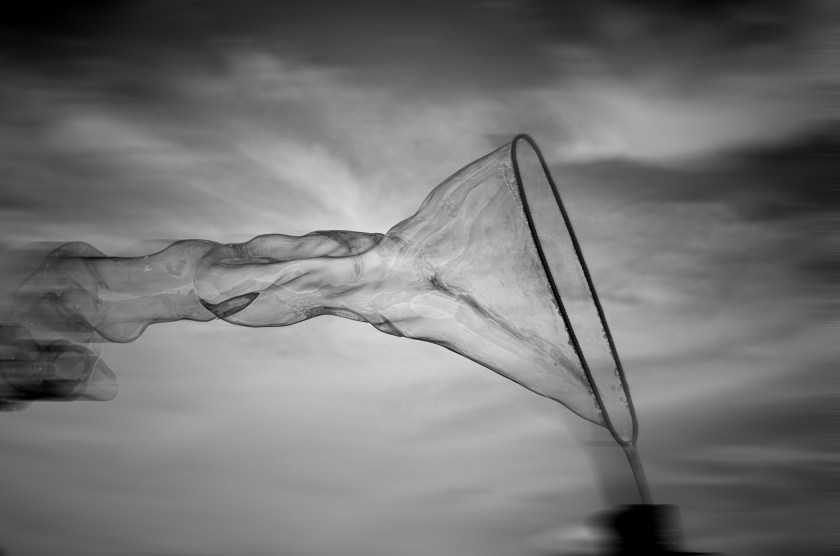
The photograph “Fubbles,” taken in 2014 by Greg Urbano at Fort de Soto Park, captures a soap bubble mid-flight, showcasing early artistic vision. Enhanced by motion blur, it elevates the bubble into fine art, revealing themes of transformation and impermanence. Urbano’s technical choices demonstrate a sophisticated understanding of photography and artistry.

Large elongated soap bubble stretching through the air against a cloudy sky, photographed with a Nikon D5100 and 35mm lens at high shutter speed.
This photograph captures a long, tube‑shaped soap bubble drifting through the air against a cloudy sky at Fort De Soto Park in Florida. The bubble’s reflective surface and fluid form create an abstract, fine‑art appearance, with motion blur added during post‑processing to enhance the sense of movement. The image was taken on July 27, 2014 using a Nikon D5100 with a 35mm lens at ƒ/6.3, 1/1250s, ISO 100. It is part of the Top 100 Journey project and represents early experimental work exploring motion, shape, and atmospheric minimalism.

In the opening chapter of Greg Urbano’s photographic journey, “Fubbles” stands as a remarkable testament to the artist’s early instinct for transforming the mundane into the sublime. Created in 2014 during an afternoon at Fort de Soto Park, this image captures far more than a simple bubble in flight—it reveals an emerging photographer’s understanding of light, form, and the delicate boundary between documentation and fine art.

The composition presents a soap bubble mid-flight, its translucent membrane caught in a state of graceful distortion. What immediately strikes the viewer is the dreamlike quality of the motion blur, which Urbano candidly notes was enhanced in post-processing. This creative decision speaks to an important aspect of his early development: the willingness to move beyond strict documentary realism toward a more interpretive visual language. The blur transforms the bubble from a fleeting childhood toy into something altogether more ethereal—a meditation on impermanence itself.

Shot with a Nikon D5100 at 35mm, the technical execution demonstrates a sophisticated understanding of exposure for such translucent subjects. The aperture of f/6.3 provides sufficient depth while maintaining the isolation of the bubble against the softly rendered background. Most significantly, the shutter speed of 1/1250s at ISO 100 captures crystalline detail in the bubble’s surface, preserving the swirling patterns and subtle gradations that give the sphere its otherworldly quality. These technical choices reveal an artist already thinking beyond the moment of capture to the final image.

The monochromatic palette proves essential to the photograph’s success. By stripping away color, Urbano directs our attention to form, texture, and tonal relationships. The bubble’s translucent skin becomes a study in graduated grays, while the blurred background creates a tonal symphony that could easily hang beside the work of mid-century modernist photographers. This treatment elevates a whimsical subject matter into the realm of fine art abstraction.

Within the context of “Chapter 1 — Beginnings,” this photograph occupies a fascinating position. It demonstrates that even in his earliest work, Urbano possessed the vision to see artistic potential in unexpected places. The playful title “Fubbles” maintains a connection to the image’s origins—fun with bubbles—while the execution reveals serious artistic ambitions. This duality between playfulness and sophistication would become a hallmark of his developing style.

The photograph also speaks to broader themes of transformation and transience. A soap bubble exists for mere seconds before bursting, yet through photography, Urbano arrests that moment, preserving what cannot be preserved. The enhanced motion blur serves not as deception but as emphasis, amplifying the sense of temporal fluidity that defines the bubble’s brief existence. In this way, the image becomes metaphorical—a meditation on photography itself as the art of stopping time.

For viewers encountering Urbano’s work through his Top 100 Journey project, “Fubbles” offers essential insight into his artistic foundations. Here is a photographer unafraid to experiment, willing to blend capture with creation, and possessed of an eye that finds beauty in the transient and overlooked. The bubble, forever frozen in its graceful dissolution, invites us to reconsider our own relationship with impermanence and the extraordinary potential hidden within ordinary moments.

The Patient Observer: Greg Urbano’s “Showy Egret” and the Art of Coastal Intimacy

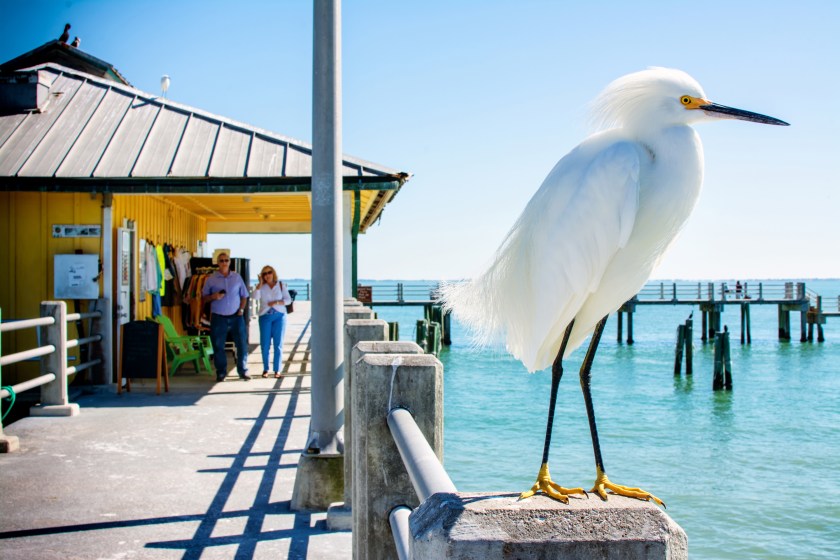
In Greg Urbano’s 2014 photo “Showy Egret” at Fort de Soto, the Snowy Egret’s elegance contrasts with human presence, highlighting a balance between wildlife and recreation. Urbano’s precise composition and technical skill enhance environmental storytelling, showcasing his early understanding that nature photography can embrace humor and human contexts without losing integrity.

Snowy Egret standing on a concrete pier post with a yellow building, clothing racks, and tourists in the background, photographed with a Nikon D7100 and 35mm lens.
A 2014 photograph of a Snowy Egret perched on the Bay Pier at Fort De Soto Park in Florida.

In the opening chapter of Greg Urbano’s photographic journey, “Showy Egret” stands as a masterclass in compositional awareness and environmental storytelling. Captured in 2014 at Fort De Soto’s Bay Pier in Florida, this image reveals an artist already attuned to the delicate balance between wildlife photography and human context—a sensibility that would define his evolving practice.

The photograph’s immediate strength lies in its spatial intelligence. Urbano positions the Snowy Egret in the right third of the frame, allowing the bird’s pristine plumage to command attention while the weathered pier extends into the turquoise waters beyond. This compositional choice creates a natural visual flow from foreground subject to background environment, inviting viewers to experience both the bird’s individual presence and its coastal habitat simultaneously.

Technical precision underscores the image’s effectiveness. Shot with a Nikon D7100 at f/11.0, Urbano achieves crisp depth of field that renders the egret’s delicate feathers in remarkable detail—each plume distinct against the clear Florida sky. The choice of 1/200 second shutter speed at ISO 100 captures the bird in perfect stillness, transforming a fleeting moment into something approaching portraiture. The 35mm focal length, often considered a “normal” perspective, here proves ideal for environmental wildlife work, offering intimacy without the compression or distance of telephoto lenses.

What elevates this photograph beyond straightforward nature documentation is Urbano’s willingness to embrace the human element. Two tourists emerge from a yellow-trimmed pier building in the middle distance, their presence neither accidental nor intrusive. Rather than seeking the pristine wilderness imagery common in traditional wildlife photography, Urbano acknowledges the reality of modern conservation spaces—these are shared environments where human recreation and natural habitats coexist. The egret’s confident stance on the pier post, unfazed by nearby activity, speaks to this acclimatization, suggesting a more complex narrative about wildlife adapting to anthropogenic landscapes.

The photograph’s playful title—”Showy Egret” as wordplay on “Snowy Egret”—hints at Urbano’s understanding that wildlife photography need not adopt a purely reverential tone. The egret does indeed appear showy, posed almost theatrically on its concrete perch, its breeding plumage fully displayed, yellow feet gripping the weathered surface. This anthropomorphic reading, encouraged by the title, creates accessibility without diminishing the bird’s natural beauty.

Light plays a crucial supporting role. The high, clear Florida sun creates distinct shadows across the pier’s concrete surface while illuminating the egret’s white plumage to near-luminescence. The bird’s yellow lores and feet provide punctuation points of color that echo the building’s trim, creating subtle visual rhymes within the frame.

As a foundational piece in Urbano’s “Beginnings” chapter, “Showy Egret” demonstrates technical competence married to narrative intuition. The photographer shows early understanding that compelling wildlife imagery can exist within human-modified spaces, that environmental context enriches rather than dilutes subject focus, and that humor and play have legitimate places in nature photography. These insights would prove essential as his practice developed, but here, at Fort De Soto in 2014, they exist in nascent, confident form—a young artist finding his voice through patient observation and compositional thoughtfulness.

Stacked Chrome Muscle: The Architecture of American Power

In a 2014 throwback photo, Greg Urbano captures a chrome muscle car engine at a car show, transforming it into a sculptural testament of American automotive culture. The monochrome composition highlights its intricate details and engineering philosophy, transcending typical automotive photography into fine art, reflecting power and craftsmanship.

Black‑and‑white close‑up photograph of a chrome muscle car engine with multiple intake stacks, polished components, and detailed mechanical parts, taken with a Nikon D7100 at 24mm.
A 2014 black‑and‑white close‑up of a stacked chrome muscle car engine captured at a car show.

In this striking image from Greg Urbano’s early photographic explorations, the viewer encounters not merely an engine, but a sculptural monument to American automotive culture. Shot at a car show in 2014, this photograph demonstrates how technical documentation can transcend its utilitarian origins to become a meditation on form, texture, and cultural identity.

The composition centers on a magnificent array of individual throttle bodies—eight polished chrome velocity stacks rising like organ pipes from the engine block below. Urbano’s decision to shoot at f/8.0 provides exceptional depth of field, rendering every fluted trumpet in sharp detail while maintaining visual coherence across the crowded mechanical landscape. The MSD Digital 6AL ignition box in the upper left corner grounds the image in specificity, reminding us this is a real machine, not an abstract study.

What elevates this work beyond conventional automotive photography is the photographer’s masterful use of monochrome. The conversion to black and white strips away distraction and reveals the essential geometry of performance engineering. Chrome becomes a study in gradation—from brilliant highlights on the velocity stack lips to the deep blacks of the engine valley below. The ribbed valve covers create rhythmic patterns that echo throughout the frame, establishing a visual cadence that draws the eye deeper into the mechanical complexity.

The lighting deserves particular attention. Working with the ambient conditions of a car show—notoriously challenging for photographers—Urbano has captured specular highlights that accentuate the three-dimensional quality of each component. The reflections dancing across polished surfaces create a sense of movement and life in what is, paradoxically, a static object. One can almost hear the anticipated roar of this engine, feel the vibration of its operation.

From a curatorial perspective, this image belongs firmly within the “Beginnings” chapter of Urbano’s journey. It reveals a photographer discovering his eye, learning to see beyond the obvious. Car shows present a particular challenge: everything is designed to be spectacular, yet the very abundance of visual stimulus can overwhelm. Here, the photographer has exercised editorial judgment, finding a perspective that isolates and celebrates a single element of automotive excess.

The stacked throttle bodies themselves represent a specific philosophy in performance engineering—individual runners for each cylinder, optimized airflow, uncompromising dedication to power over practicality. This photograph captures that ethos perfectly. There is nothing subtle about this engine, and Urbano wisely chooses not to apologize for its maximalism. Instead, he leans into the drama, using his technical choices to amplify the subject’s inherent theatricality.

The 24mm focal length on his Nikon D7100 provides just enough wide-angle perspective to encompass the scene without introducing distortion that would undermine the precision of these machined components. Shot at 1/30th of a second—relatively slow for handheld work—the image’s sharpness suggests careful technique, perhaps braced against the engine bay or shot with controlled breathing.

This photograph documents more than machinery; it captures a particular strain of American automotive culture that values power, craftsmanship, and conspicuous performance. In rendering it so beautifully, Urbano elevates the vernacular tradition of car photography into something approaching fine art—a promising beginning indeed for a photographer learning to find extraordinary subjects in ordinary places.