Pears: A Chromatic Triptych in Measured Light

A still life photograph features three pears, highlighting the photographer’s evolving technique in transforming everyday produce into subjects for aesthetic contemplation. Using controlled lighting and a focused composition, the work emphasizes color variation and organic authenticity. This piece bridges classic and contemporary styles, encouraging viewers to appreciate the beauty in simplicity.

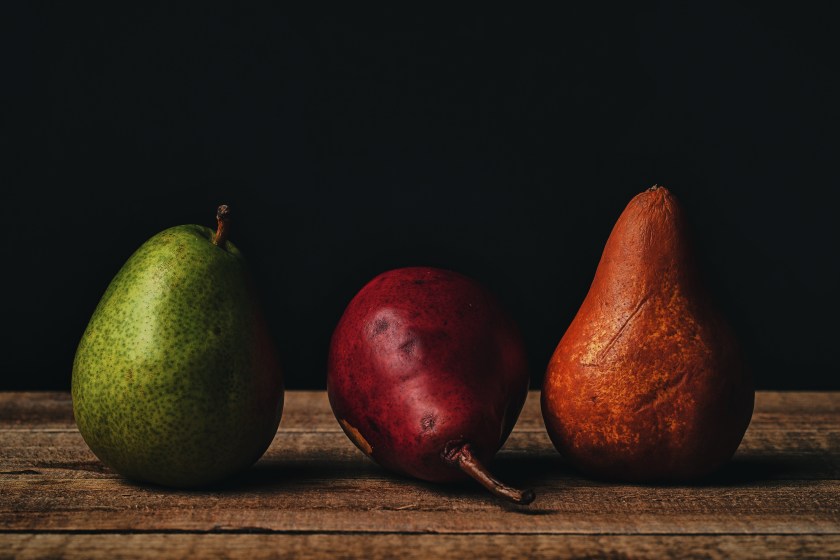
Tabletop still life of three pears arranged side by side on a wooden surface against a dark background.
A tabletop still life of three pears arranged on a wooden surface and lit against a dark background.

This composition of three pears exemplifies the photographer’s evolving approach to still life, transforming quotidian supermarket produce into subjects worthy of sustained aesthetic contemplation. Arranged in strict linear progression across weathered wood, the trio presents a study in chromatic variation and volumetric form that speaks to both classical still life traditions and contemporary minimalist sensibilities.

The technical framework mirrors the controlled approach evident throughout this body of work: a single Godox V1s strobe modified by softbox and grid, captured with a Sony A7ii paired with an 85mm f/1.8 lens. This choice of focal length proves particularly significant. Unlike the wider perspectives often employed in tabletop work, the 85mm compression subtly flattens spatial relationships while maintaining separation between subjects, creating a stage-like presentation where each pear occupies its designated position with theatrical clarity.

What distinguishes this image within the chapter’s trajectory is its bold embrace of color as primary subject matter. Where the earlier onion and garlic study operated within a narrow tonal range of earth and amber, here the photographer orchestrates a chromatic progression—verdant green, deep crimson, oxidized copper—that reads almost as a color theory exercise. Yet the natural imperfections of each fruit prevent the composition from becoming merely schematic. Surface blemishes, stem variations, and subtle textural differences assert the subjects’ organic authenticity.

The lighting strategy reveals sophisticated control over shadow placement and tonal gradation. The grid attachment concentrates illumination on the subjects while allowing the background to fall into near-absolute blackness, a technique borrowed from Old Master painting that isolates forms in dramatic relief. Light wraps around each pear’s curved surface with mathematical precision, creating highlight-to-shadow transitions that define volume without resorting to harsh contrast. The wooden platform receives just enough illumination to establish spatial grounding, its grain and weathering providing textural counterpoint to the fruits’ smooth skins.

Compositional decisions demonstrate a rigorous formal intelligence. The three pears, though similar in scale, exhibit distinct silhouettes—the green pear’s upright verticality, the red pear’s compressed roundness, the copper pear’s elongated diagonal lean. This variation within repetition creates visual rhythm while avoiding monotony. The spacing between subjects appears carefully calibrated, neither crowding nor isolating, allowing each fruit to maintain individual presence while contributing to the unified whole.

Post-processing through color grading has intensified chromatic saturation while preserving naturalistic tonality. The resulting palette suggests both heightened reality and painterly intention—colors feel amplified yet believable, enhanced rather than fabricated. This balance between documentation and interpretation positions the work at a productive intersection of photographic traditions.

Within the chapter’s arc from classic to experimental approaches, this image occupies transitional territory. Its formal rigor and single-light methodology align with classical practice, yet the chromatic boldness and almost Pop Art sensibility of three isolated, colored forms hint at more conceptual concerns. The photograph demonstrates that experimentation can emerge from treating simple subjects with exacting attention rather than through technical complexity alone.

The work ultimately asks viewers to reconsider the aesthetic potential residing in everyday objects, a question central to still life practice across centuries. By isolating these supermarket pears in dramatic light and formal precision, the photographer transforms the ordinary into an opportunity for visual meditation on color, form, and the enduring power of careful observation.

Onions and Garlic: A Study in Chiaroscuro and Culinary Stillness

The photograph captures a still life of onions and garlic on a wooden surface, showcasing classical principles through contemporary techniques. The controlled lighting and asymmetrical balance create depth, while post-processing enhances tonal richness. This artwork engages with historical traditions, revealing how ordinary subjects can convey significant meaning through careful observation and technical precision.

Tabletop still life of whole onions and garlic bulbs arranged on a wooden surface against a dark background.
A tabletop still life of onions and garlic arranged on a wooden surface and lit against a dark background.

In this deliberate composition, the photographer demonstrates a mastery of classical still life principles while working within the constraints of contemporary digital tools. The image presents three bronze-skinned onions accompanied by two heads of garlic, arranged on weathered wood against an impenetrable black void—a setup that immediately recalls the Dutch and Spanish still life traditions of the 17th century, where humble kitchen subjects were elevated to objects of contemplation.

The technical execution reveals a sophisticated understanding of light modulation. Working with a single modified light source—a Godox V1s paired with a softbox and grid—the photographer has created a tightly controlled illumination that wraps around the subjects’ curved surfaces while maintaining crisp shadow definition. The grid attachment proves essential here, preventing light spill into the background and preserving the dramatic contrast that gives the image its gravitas. This economy of means, using just one light to achieve such dimensional modeling, speaks to both practical skill and aesthetic intentionality.

What distinguishes this work within Chapter 5’s progression from classic to experimental tabletop photography is its conscious dialogue with art historical precedent. The photographer acknowledges drawing inspiration from a tutorial source, yet the resulting image transcends mere technical exercise. The onions’ papery skins catch light with a luminosity that suggests both fragility and age, their dried stalks creating gestural elements that break the otherwise spherical regularity. The garlic bulbs, positioned in the lower quadrant, provide tonal counterpoint—their pearl-white surfaces reflecting light with greater intensity than the warmer onions above.

The compositional arrangement follows classical principles of asymmetrical balance. The three onions occupy distinct spatial planes, their positioning creating depth through overlapping forms and subtle scale variation. The leftmost onion’s dramatic upward-reaching stem introduces vertical energy, while the garlic anchors the composition’s base. This triangular organization guides the viewer’s eye through the frame in a measured, contemplative rhythm appropriate to the subject matter.

Post-processing choices, implemented through color grading in Luminar 4, enhance the image’s tonal richness without sacrificing naturalism. The warm amber-to-sienna palette suggests candlelight or late afternoon sun, though the lighting setup confirms neither. This ambiguity of light source contributes to the image’s timeless quality—it could as easily have been captured in a 17th-century Dutch kitchen as in a contemporary studio.

The weathered wooden surface provides crucial textural contrast to the subjects’ organic forms. Its rough grain and worn patina introduce narrative suggestions of use and time, transforming a simple backdrop into an active compositional element. The wood’s horizontal planking creates subtle linear structure beneath the curved biological forms above.

Within the broader context of this chapter’s exploration, this photograph occupies the “classic” end of the spectrum—demonstrating that traditional approaches retain their power when executed with technical precision and compositional intelligence. The work proves that experimentation need not always mean formal rupture; sometimes it involves mining established vocabularies with fresh attention. Here, the photographer engages in a centuries-old conversation about how light reveals form, how arrangement creates meaning, and how the ordinary, when carefully observed, achieves a quiet monumentality that rewards sustained viewing.

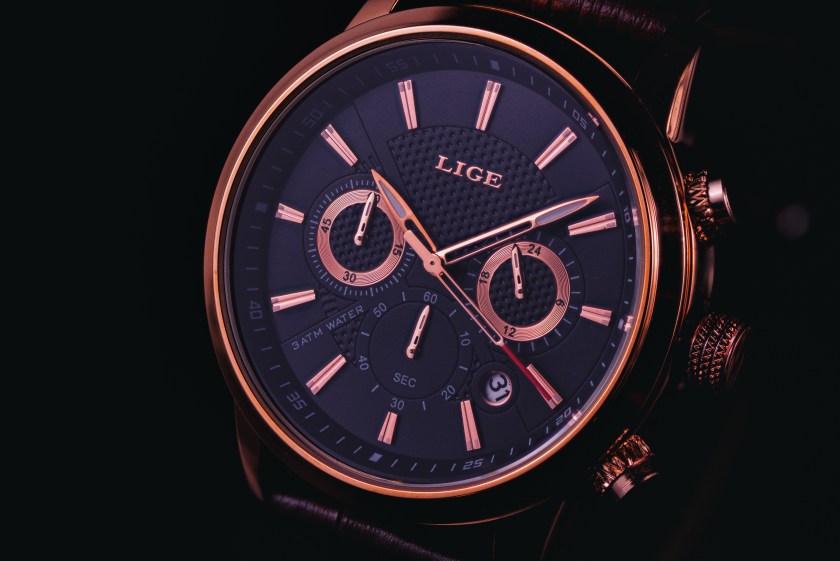
Chronograph Study: Precision Through Layered Focus

The macro photograph of a Lige men’s chronograph watch showcases a blend of technical and aesthetic mastery. Utilizing focus stacking techniques, the image reveals intricate horological details against a minimalist backdrop. This work reflects a modern interpretation of still life, merging commercial photography with fine art, while democratizing the perception of craftsmanship and beauty.

Close-up photograph of a Lige men’s chronograph wristwatch with rose gold accents on a black dial against a dark background.
A macro studio photograph of a Lige men’s chronograph wristwatch on black acrylic against a black backdrop.

This macro examination of a Lige chronograph watch represents a sophisticated merger of technical methodology and aesthetic consideration within Chapter 5’s still life continuum. The photograph transcends conventional product documentation, employing focus stacking techniques to achieve a level of dimensional clarity impossible through single-exposure photography. In doing so, the work engages directly with experimental tabletop practices while maintaining dialogue with classical still life traditions of celebrating craftsmanship and material culture.

The composition presents the watch face at a dramatic angle, filling the frame with horological detail. Rose gold casing catches and redirects light across curved surfaces, creating warm highlights that contrast elegantly against the deep navy dial. The textured carbon fiber pattern at the dial’s center adds tactile interest, while the subdials—marking seconds, minutes, and 24-hour time—create geometric counterpoints within the circular form. Every element, from the applied hour markers to the knurled chronograph pushers, exists in sharp focus through the photographer’s meticulous focus stacking process.

The technical approach merits careful consideration. Shot with a Meike 85mm macro lens on the Sony A7II, the photographer captured multiple exposures at varying focal planes, later combining them in Affinity Photo to create a composite image with extended depth of field. This method addresses the fundamental challenge of macro photography: at high magnification, depth of field collapses to millimeters. By stacking focused slices, he constructs an image where mechanical complexity remains readable across the watch’s curved topography—a technical solution serving aesthetic purpose.

Lighting design reveals sophisticated restraint. The Godox SL60W continuous LED, diffused through a panel, provides even illumination that honors the watch’s metallurgy without creating harsh specular highlights. Set against black acrylic with a black backdrop, the watch floats in negative space, the glossy surface beneath creating a subtle reflection that grounds the object while maintaining the composition’s minimalist severity. This approach recalls commercial photography’s controlled environments while pushing toward fine art’s conceptual concerns.

Post-processing extends beyond technical correction into creative territory. Following the initial focus stack assembly, the photographer employed spot removal for sensor dust and surface imperfections, then adjusted contrast and levels in Adobe Photoshop Elements. Final refinements in Skylum Luminar 4 suggest attention to tonal relationships and color fidelity—ensuring the rose gold reads authentically while the navy dial maintains its saturated depth against the void.

Within Chapter 5’s exploration of still life evolution, this work demonstrates how contemporary digital techniques enable new forms of observation. The focus stacking methodology itself represents an experimental departure from traditional single-capture photography, yet the subject matter and presentation remain rooted in still life’s historical mission: to examine objects with sustained attention, revealing qualities invisible to casual observation.

The photograph also participates in broader conversations about value and craftsmanship. By applying fine art techniques to an accessible timepiece, the photographer democratizes the visual language typically reserved for luxury watch advertising, suggesting that beauty and mechanical interest exist across market segments. The image becomes simultaneously catalog and contemplation, utility and art—a productive tension that characterizes much of his tabletop work.

Deadpool Lucha Libre: Chromatic Drama in Miniature

The photograph of a Marvel Lucha Libre Funko Pop Deadpool figure exemplifies a blend of commercial and fine art photography. Utilizing dramatic lighting and technical precision, it transforms a mass-produced collectible into a subject of contemplation. The piece reflects the cultural hybridity of its character, bridging traditional still life with contemporary themes.

Studio photograph of a Marvel Lucha Libre Deadpool Funko Pop figure standing on a reflective black surface against a dark background.
A studio still life of a Marvel Lucha Libre Funko Pop Deadpool figure posed on black acrylic.

Within Chapter 5’s exploration of tabletop still life—from classical arrangements to experimental departures—this photograph of the Marvel Lucha Libre Funko Pop! figure demonstrates the photographer’s command of dramatic lighting and his willingness to elevate commercial objects into subjects worthy of sustained contemplation. The piece functions as both technical exercise and cultural commentary, bridging the gap between traditional product photography and fine art still life.

The composition centers on El Chimichanga De La Muerte, the Deadpool variant rendered in the distinctive aesthetic of Mexican lucha libre wrestling. Against an uncompromising black void, the figure emerges through carefully controlled illumination that recalls the chiaroscuro techniques of Dutch Golden Age painting. The photographer has employed a Godox AD100 with gridded softbox to create a focused pool of light that caresses the figure’s surfaces while allowing the background to recede entirely. This technical choice—stark, theatrical, unforgiving—transforms what might have been simple documentation into something approaching portraiture.

The red and gold color palette dominates with painterly intensity. The matte finish of the vinyl catches light selectively, creating subtle gradations across the mask’s sculptural forms. Each stitch line in the figure’s costume becomes a shadow-casting element, adding textural complexity to what is, in reality, molded plastic. The photographer’s choice of the Tamron 35mm f/2.8 lens on his Sony A7II suggests a deliberate approach to depth and perspective—close enough to capture minute details, yet distant enough to maintain the figure’s proportional integrity and comic heroism.

What elevates this work within the chapter’s trajectory is its dialogue between high and low culture. Funko Pop! figures exist as mass-produced collectibles, yet the photographer treats this specimen with the reverence typically reserved for precious antiquities or fine crafts. The shirtless, muscular torso—absurdly rendered in the Funko aesthetic with its characteristic oversized head and simplified body—becomes an exercise in form and volume under his lighting scheme. The reflection on the glossy black surface beneath adds a layer of sophistication, grounding the floating figure in space while doubling its visual presence.

The image represents a contemporary evolution in still life photography where the distinction between commercial and fine art intentionally blurs. By applying gallery-level lighting techniques to a pop culture artifact, the photographer participates in a broader artistic conversation about value, nostalgia, and the objects we choose to collect and immortalize. The lucha libre variant itself carries layers of cultural hybridity—an American comic character filtered through Mexican wrestling tradition, then reimagined as a Japanese-influenced vinyl toy.

The technical execution is nearly flawless. Exposure is carefully balanced to preserve detail in both the deepest reds and the highlighted edges of the mask. The black background shows no distracting gradients or light spill, evidence of precise modifier control and post-processing restraint. This discipline allows the figure to exist in a realm of pure focus, removed from context yet somehow more present because of that isolation.

Within the broader context of Chapter 5’s examination of still life evolution, this photograph demonstrates how experimental approaches need not abandon classical principles. The work honors centuries of still life tradition while embracing decidedly modern subject matter, creating a bridge between photographic eras.

Morgan Silver Dollars: Texture, Time, and Monochromatic Study

The photographed still life of overlapping late nineteenth-century Morgan silver dollars showcases a detailed exploration of numismatic design through macro photography. The monochromatic treatment emphasizes surface textures and historical nuances while controlled lighting enhances the sculptural qualities. This work merges traditional still life methodologies with contemporary techniques, documenting valuable artifacts within a modern context.

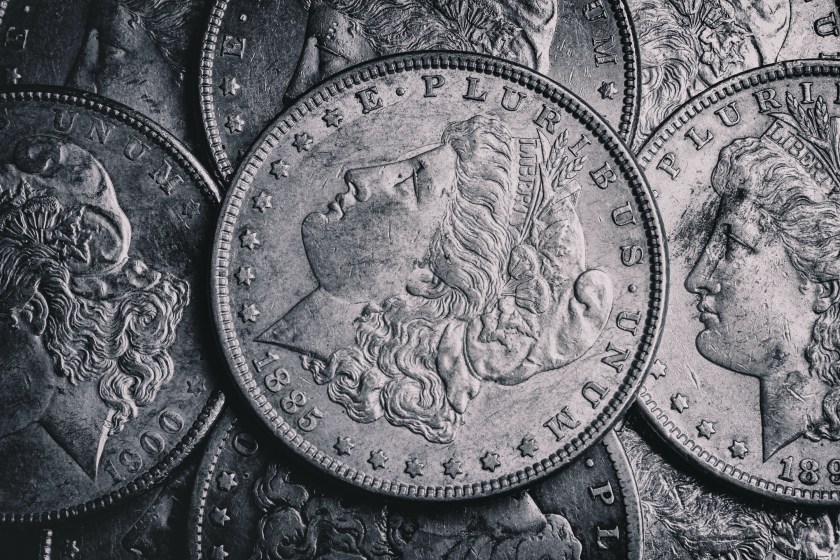
Close-up photograph of overlapping Morgan silver dollar coins showing worn engraved profiles and inscriptions.
A close-up still life of overlapping Morgan silver dollar coins from the late nineteenth century.

This monochromatic study of late nineteenth-century Morgan Silver Dollars represents the photographer’s deliberate expansion into controlled still life work, demonstrating how historical objects can serve as compelling subjects for formal exploration. The composition arranges multiple coins in overlapping layers, creating a topographical landscape of circular forms that invites close examination of surface detail, wear patterns, and the inherent sculptural qualities of numismatic design.

The technical approach centers on macro photography, executed with a Meike 85mm f/2.8 lens paired with his Sony A7ii system. This focal length and aperture combination allows for selective focus that emphasizes the central Morgan Dollar while surrounding coins recede into varying degrees of sharpness. The viewer’s eye naturally gravitates to the prominently featured coin displaying Liberty’s profile, her flowing hair rendered in remarkable relief detail. The inscription “E PLURIBUS UNUM” curves along the upper edge, each letter capturing light differently based on the coin’s worn topography—evidence of decades in circulation.

His conversion to black and white through Nik Silver Efex Pro proves particularly astute for this subject matter. The monochromatic treatment unifies the silver surfaces while accentuating tonal variations that reveal the coins’ individual histories. Scratches, patina, and areas of polish loss become visual information rather than mere damage. The grayscale palette also reinforces the historical nature of these artifacts, creating an aesthetic continuity between the coins’ era of origin and the contemporary photograph documenting them.

The lighting strategy deserves attention for its subtlety. Diffuse illumination reveals the bas-relief portraits and decorative elements without creating harsh specular highlights that might obscure detail or introduce unwanted contrast. Shadows between stacked coins provide dimensional information, suggesting weight and materiality. The photographer has avoided the common pitfall of overworking metallic surfaces, instead allowing the silver to speak through its natural reflective properties and acquired character.

Within Chapter 5’s framework examining still life photography from classic to experimental approaches, this work anchors itself firmly in traditional methodology. The arrangement recalls centuries of vanitas imagery where objects of commerce and temporal value serve as subjects for formal study. Yet the execution benefits from modern digital capture capabilities—the macro lens resolving minute surface textures that would challenge film-based systems, and post-processing software offering precise tonal control.

The choice to work with borrowed objects introduces an interesting collaborative element to his expanding still life practice. These coins carry not only their original historical context but also the contemporary narrative of a colleague’s collection—objects held, preserved, and valued by someone within his immediate circle. This transforms the exercise from pure technical study into a form of visual preservation, documenting specific artifacts at a particular moment in their continuing existence.

As an entry point into product and still life photography practiced within the domestic studio environment, this image succeeds in demonstrating foundational skills: controlled lighting, thoughtful composition, appropriate lens selection, and sensitive post-processing. The Morgan Dollars provide subject matter rich enough to reward close attention while remaining accessible—a practical choice for developing technical proficiency that yields aesthetically resolved results worthy of inclusion in his curated collection.

Big Daddy: Layered Depth in Contemporary Tabletop Composition

A focus-stacked image of a Funko Pop BioShock Big Daddy figure highlights the photographer’s skill in elevating a mass-market collectible to art. By mastering focus stacking and lighting techniques, he achieves hyperreal detail and visual analysis, suggesting aesthetic value exists beyond an object’s origins. This work bridges traditional and modern photography, emphasizing form and texture.

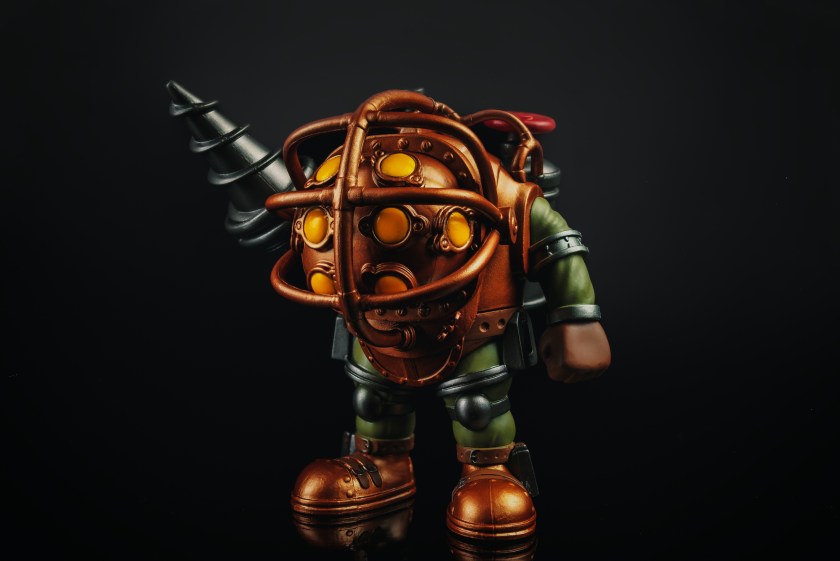
Studio photograph of a Funko Pop Big Daddy figure from BioShock, lit against a black background.
A focus-stacked studio image of a Funko Pop Games BioShock Big Daddy figure on black acrylic against a black backdrop.

In this striking tabletop study, the photographer transforms a mass-market collectible into a subject worthy of contemplated observation. The Funko Pop! Games Bioshock 65 figure—depicting the iconic Big Daddy character—emerges from absolute darkness with a presence that transcends its commercial origins. This work exemplifies the photographer’s evolving command of still life technique, demonstrating how contemporary imaging technology can elevate genre photography into something more architecturally precise and visually arresting.

The technical execution reveals a sophisticated understanding of focus stacking methodology. By compositing multiple exposures captured at incrementally adjusted focal planes, he has achieved a depth of field impossible through traditional single-exposure photography. Every riveted seam of the copper-toned diving helmet, each glowing porthole window, and the textured surfaces of the green atmospheric diving suit maintain perfect clarity throughout the frame. This exhaustive sharpness creates an almost hyperreal quality, allowing viewers to examine the figure with a scrutiny typically reserved for museum artifacts rather than vinyl toys.

His lighting strategy demonstrates restraint and intentionality. The stripbox and softbox configuration creates dimensional modeling that accentuates the sculptural qualities of the form. The warm metallic tones of the helmet and boots catch highlights that suggest weight and substance, while the darker green suit recedes appropriately into shadow. The signature yellow portholes glow with an internal luminosity, creating focal points that guide the eye through the composition. Against the black acrylic surface and backdrop, the figure exists in a void that emphasizes form over context—a classic gallery presentation strategy that isolates the subject for pure visual analysis.

Within the framework of Chapter 5’s exploration of tabletop photography from classic to experimental, this image occupies an interesting transitional space. The setup itself—studio lighting, controlled environment, careful composition—adheres to traditional still life conventions established over centuries of studio practice. Yet the technical execution, particularly the focus stacking process completed in Affinity Photo, represents distinctly contemporary capabilities. The photographer bridges historical methodology with digital innovation, creating work that honors tradition while exploiting modern tools.

The choice of subject matter also merits consideration. By photographing a figure from video game culture with the same technical rigor one might apply to antique objects or fine art pieces, he democratizes the still life genre. This approach suggests that aesthetic value exists independent of an object’s pedigree or market position. The Big Daddy, rendered with such meticulous attention, becomes a study in form, light, and texture—qualities inherent to all successful still life work regardless of subject provenance.

The reflection visible on the glossy black surface beneath the figure adds a subtle but important element of depth. This mirroring effect grounds the subject in space while maintaining the minimalist aesthetic. The overall composition reads as both technically accomplished and conceptually considered—a balance not always achieved in enthusiast tabletop work.

As part of his Top 100 Journey, this photograph represents his technical proficiency in a controlled environment, showcasing abilities that extend beyond spontaneous capture into the realm of constructed, considered image-making where patience and precision yield images of remarkable clarity and presence.

Elkins Apple Spiced Liqueur: Vernacular Object as Subject

The photograph of Elkins Apple Spiced Liqueur exemplifies a blend of commercial product photography and fine art still life, using classical composition techniques. The arrangement of the bottle with apples and cinnamon sticks highlights flavor context while demonstrating technical skill in lighting and focus. The image showcases an accessible beauty in everyday items, merging artistic intent with commercial appeal.

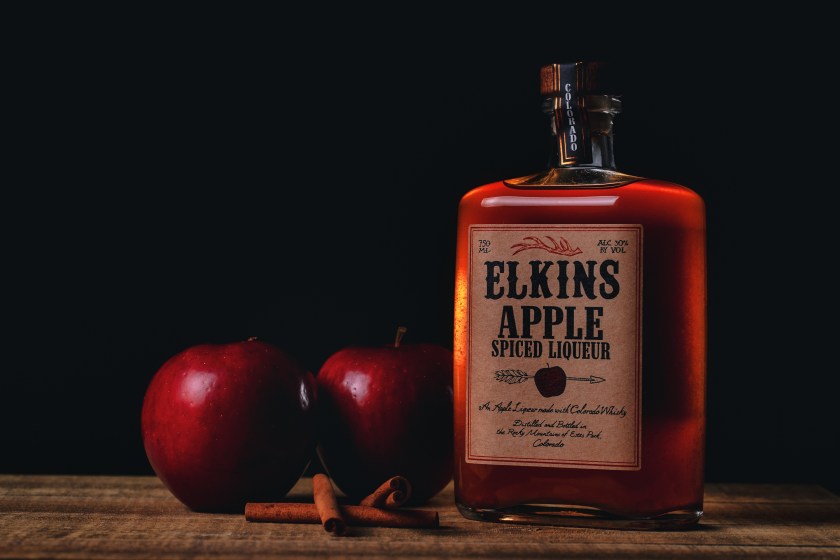
Bottle of Elkins Apple Spiced Liqueur on a wooden surface with red apples and cinnamon sticks against a dark background.
Elkins Apple Spiced Liqueur is photographed with apples and cinnamon sticks in a studio still life.

This photograph demonstrates the photographer’s engagement with commercial product photography conventions while maintaining artistic intentionality characteristic of fine art still life practice. The composition centers on a bottle of Elkins Apple Spiced Liqueur from Estes Park, Colorado, flanked by red apples and cinnamon sticks—elements that function both as contextual reinforcement of the product’s flavor profile and as formal echoes of color and shape within the frame.

The arrangement follows classical still life principles: objects positioned on a weathered wooden surface against a dark, graduated background that moves from deep black to subtle illumination. This chiaroscuro approach recalls Dutch Golden Age painting traditions, where selective lighting carves form from darkness and imbues everyday objects with weight and presence. The bottle’s amber-red liquid becomes luminous against the void, while the apples emerge from shadow with enough detail to register their texture and mass without competing for primary focus.

Technically, the image reveals deliberate choices in equipment and lighting strategy. Shot with a Sony A7ii and 85mm f/1.8 lens, the photographer employs a focal length typically reserved for portraiture, which compresses space slightly and allows selective focus while maintaining natural perspective. The use of a Godox softbox combined with a secondary flash creates dimensional lighting—the main light source appears positioned to camera right, creating highlights on the bottle’s curved surface and label while the fill light softens shadows without eliminating them entirely. This two-light setup produces the polished yet natural quality that distinguishes professional product photography from amateur attempts.

The label itself becomes a compositional element worth examining. Its vintage-inspired design, complete with wheat motif and hand-drawn typography, speaks to contemporary craft distillery aesthetics that reference historical authenticity. The photographer allows this graphic element full legibility, understanding that typography and branding function as visual information within the frame. The cork cap with its branded sleeve adds vertical interest and completes the bottle’s narrative as an artisanal product.

Within Chapter 5’s spectrum from classic to experimental still life, this work occupies the classical end—a straightforward, beautifully executed product study that prioritizes clarity, atmosphere, and material fidelity over conceptual disruption. Yet the photographer’s decision to include this image in his top 100 suggests recognition that mastery of foundational approaches remains essential even as one pushes toward experimental territories. The work demonstrates technical competence: precise focus, appropriate depth of field, balanced exposure across a challenging tonal range, and color palette that feels both rich and naturalistic.

The supporting elements—grocery store apples and cinnamon sticks—ground the image in accessible reality rather than aspirational luxury. This democratic approach to sourcing props reflects contemporary still life practice that finds beauty in the everyday rather than the exotic. The wooden surface, likely the photographer’s own workspace, bears authentic wear that reads as character rather than distress.

Post-processing in Luminar 4 appears restrained, enhancing rather than transforming the captured scene. The final image possesses the polish of commercial work while retaining the considered composition and atmospheric quality that elevates it to fine art documentation of material culture and regional craft production.