Light Paint Egg: Precision and Wonder in Contemporary Still Life

The photograph “Light Paint Egg” showcases a white egg balanced on crossed forks, illuminated through light painting techniques. This work exemplifies the artist’s blend of traditional and contemporary methods, capturing a balance between stasis and motion. It represents an innovative departure in still life, emphasizing creativity and technical mastery despite simple materials.

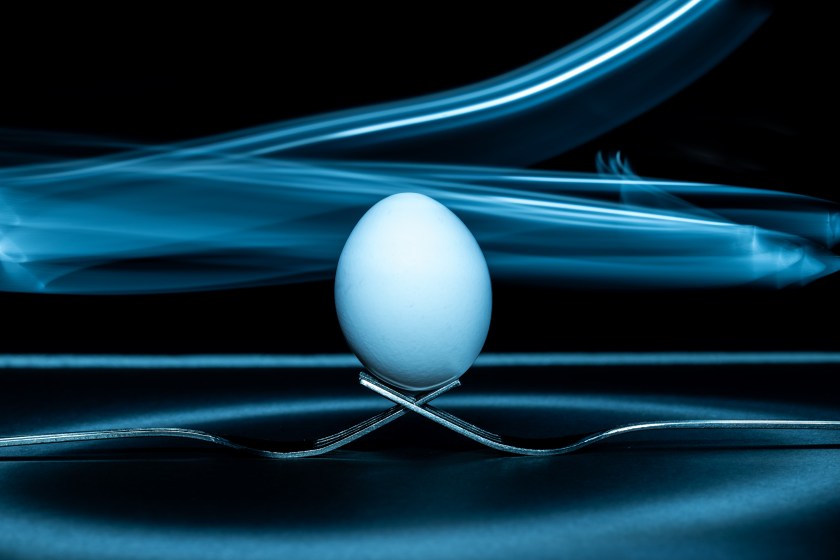
White egg balanced upright on crossed metal forks, photographed against a dark background with blue light trails created through light painting.
A white egg balanced on crossed forks, photographed using light painting techniques for the 52 Frames Week 11 “Egg” challenge.

In this meticulously crafted photograph, the artist demonstrates a masterful command of light painting technique, transforming an ordinary subject into an object of contemplation. The egg, positioned at the composition’s center, becomes a luminous focal point—its pale, almost ethereal surface contrasting dramatically against the deep black void that surrounds it. This is not merely documentation of an object, but rather an exploration of form, light, and the delicate balance between the tangible and the abstract.

The technical execution reveals a photographer working at the intersection of traditional still life aesthetics and contemporary experimental methods. Inspired by demonstrations from the lighting equipment company Adaptalux, he pursued this vision independently, relying on his own resourcefulness and understanding of photographic principles rather than specialized gear. This approach speaks to a fundamental confidence in craft—the knowledge that compelling imagery emerges not from equipment alone, but from vision and technical literacy working in concert.

The light trails that sweep through the frame possess an almost calligraphic quality, their cool blue tones suggesting both movement and stillness simultaneously. These luminous threads create a complex spatial environment, establishing depth and dimensionality around the egg while reinforcing its solidity and sculptural presence. The waves beneath appear to cradle the subject, while the diagonal streaks above suggest trajectory, momentum, perhaps even flight. There exists here a visual tension between stasis and motion, weight and weightlessness—themes that resonate throughout his broader body of work.

Positioned within Chapter 6 of his Top 100 Journey—”The Road Ahead: Recent Work & Ongoing Exploration”—this photograph exemplifies the artist’s willingness to embrace technical challenges and aesthetic risks. The chapter’s title suggests forward movement, continued evolution, and the photographer’s commitment to expanding his visual vocabulary. Indeed, this image represents a departure from more conventional approaches to still life, demonstrating how constraints—in this case, a weekly theme challenge—can catalyze creative innovation.

The composition adheres to classical principles while subverting expectations. The egg, that most ancient and universal of symbols, is elevated beyond its associations with fragility and potential. Here it becomes something simultaneously organic and otherworldly, as though suspended in a dimension where the laws of physics bend to artistic intention. The photographer’s choice to work with long exposure and moving light sources transforms the medium itself into a drawing tool, blurring the boundaries between photography, painting, and performance.

What distinguishes this work within his oeuvre is its synthesis of technical precision and poetic sensibility. The execution required careful planning—controlling exposure duration, choreographing light movement, managing ambient contamination—yet the final image transcends its methodology. It invites meditation on form, on the nature of photographic representation, and on how familiar objects can be estranged and renewed through careful observation and technical intervention.

As part of his ongoing exploration documented in the Top 100 Journey project, “Light Paint Egg” signals a photographer unafraid to experiment, to respond to creative prompts with rigor and imagination, and to push the boundaries of his practice. It stands as evidence that profound imagery can emerge from simple materials when vision, patience, and technical mastery converge.
The Studio as Theater: Classical Portraiture in Contemporary Practice

Jessica Lynn’s studio portrait showcases a fusion of classical portraiture and contemporary technique, created during a workshop at Atelier Alchimia. The photograph illustrates the artist’s growth through collaboration, using refined lighting to enhance the subject’s regal appearance. This work embodies artistic evolution, blending tradition with innovation while emphasizing continuous learning.

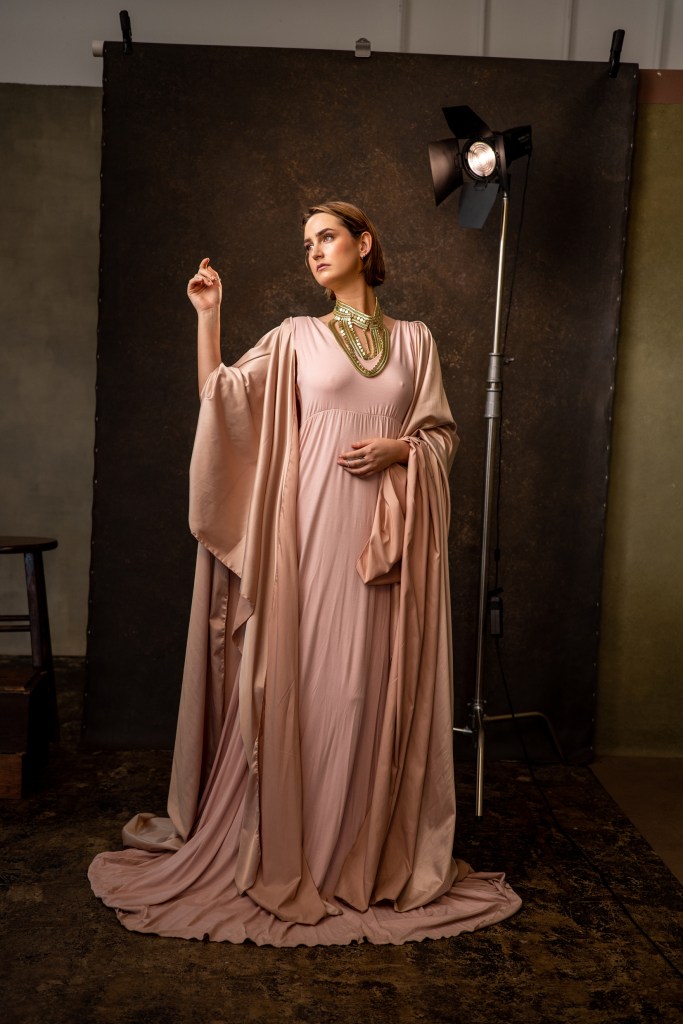
Studio portrait of Jessica Lynn standing in a flowing blush-colored gown, posed in front of a dark backdrop with a studio light visible behind her.
Jessica Lynn (QueenJess Rising) photographed in a studio setting during a workshop at Atelier Alchimia in Westminster, Colorado.

This studio portrait from Chapter 6 of the photographer’s Top 100 Journey represents a deliberate engagement with the formal traditions of classical portraiture, reimagined through contemporary technical means. Created during a workshop at Atelier Alchimia in Westminster, Colorado, the image demonstrates how collaborative learning environments can yield work of considerable aesthetic merit while advancing the artist’s technical vocabulary.

The subject, Jessica Lynn, is presented in a flowing blush-toned gown with dramatic bell sleeves that cascade to the floor, creating a silhouette reminiscent of Renaissance or Pre-Raphaelite painting. An ornate collar necklace in gold and green adds a regal quality that justifies the image’s title. The photographer has positioned her in a classical contrapposto-inspired stance—weight on one leg, torso gently twisted, one hand raised in a gesture of contemplation or perhaps benediction. This pose, combined with the upward gaze and theatrical lighting, evokes both historical portraiture and contemporary fashion photography’s ongoing dialogue with art history.

The technical execution reveals careful attention to studio craft. A single key light with barn doors, visible in the frame’s right edge, provides directional illumination that sculpts the subject’s features and creates tonal gradation across the fabric’s folds. The mottled canvas backdrop transitions from warm browns to darker tones, providing depth without competing for attention. The lighting setup, developed collaboratively with studio owner Jonny Edwards, demonstrates the photographer’s increasing comfort with controlled environments—a marked evolution from earlier work in the series that frequently engaged with natural light and outdoor settings.

What makes this image particularly relevant to “The Road Ahead: Recent Work & Ongoing Exploration” is its frank acknowledgment of artistic development through structured learning. Shot during a workshop led by Eric Brown, the photograph embodies a philosophy of continuous growth and technical refinement. Rather than presenting only work created in solitary practice, the photographer includes images born from educational contexts, recognizing that mastery often emerges through collaboration and mentorship.

The choice to work with studio lighting represents an expansion of technical range. The careful balance of exposure—maintaining detail in both the luminous fabric and the darker background—suggests growing confidence with artificial light sources. The warm color palette creates cohesion between subject, costume, and environment, while the visible studio elements (backdrop clamps, light stand) provide documentary transparency about the image’s construction.

Within the broader arc of the Top 100 Journey, this portrait signals a willingness to explore different photographic modes. Where earlier chapters emphasized environmental and location work, this studio piece demonstrates versatility and an interest in controlled aesthetic experiences. The theatrical quality—the visible apparatus of image-making—invites viewers into the creative process rather than presenting a seamless illusion.

The photograph succeeds both as a study in classical beauty and as evidence of artistic evolution. It captures a moment of learning translated into accomplished execution, showing that the road ahead need not abandon traditional craft in pursuit of innovation. Instead, it suggests that mastery comes through accumulation—building new skills atop established foundations, always remaining open to guidance, collaboration, and the timeless appeal of light falling gracefully upon fabric and form.

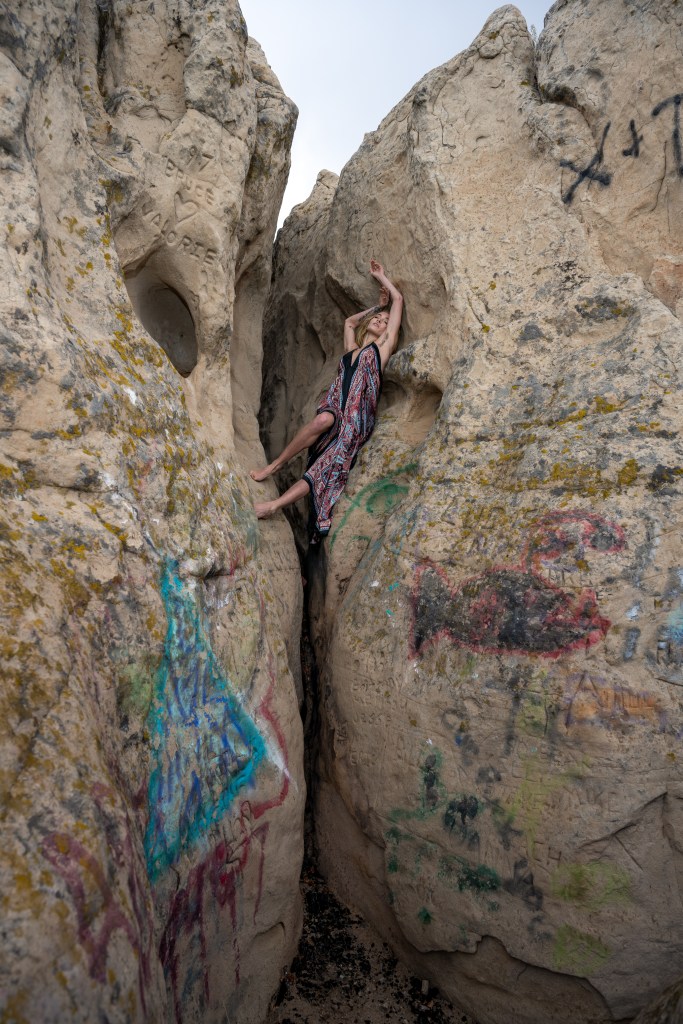
Suspended Between Earth and Sky: A Study in Geometric Embrace

The photograph of Jennie Parks in a sandstone crevice at the Colorado-Wyoming border conveys a powerful interplay between human form and rugged landscape. The composition showcases Parks as both an integral part of the environment and a symbol of human vulnerability, enriched by graffiti that connects ancient rock with contemporary existence.

Model Jennie Parks posed barefoot within a narrow sandstone rock crevice, surrounded by weathered stone walls with graffiti and lichen.
Jennie Parks positioned inside a sandstone crevice at the Natural Fort rock formation on the Colorado–Wyoming border.

In this striking composition from Chapter 6 of the photographer’s Top 100 Journey, the human figure becomes a graceful counterpoint to the harsh geometry of desert stone. Shot at the natural fort rock formation straddling the Colorado-Wyoming border, the image captures model Jennie Parks wedged within a narrow crevasse, her body forming a living bridge between two massive limestone walls that tower overhead.

The photographer demonstrates a sophisticated understanding of environmental portraiture here, positioning his subject not merely within the landscape but as an integral element of its architecture. Parks’s extended pose—one arm reaching upward, legs braced against opposing walls—transforms the human form into a line of tension that mirrors the vertical thrust of the surrounding stone. The patterned fabric of her dress introduces rhythmic visual complexity against the textured, graffiti-marked surfaces of the rock, creating a dialogue between organic movement and geological permanence.

Technically, the composition exploits the natural framing device of the rock formation with considerable skill. The converging walls create strong diagonal lines that draw the eye upward toward the narrow strip of overcast sky, while the low vantage point emphasizes the vertiginous scale of the formation. The photographer has worked with available light to maintain detail in both the shadowed crevasse and the brighter upper reaches, a challenging exposure balance that preserves the dimensional quality of the weathered stone surfaces.

What distinguishes this work within the context of “The Road Ahead: Recent Work & Ongoing Exploration” is its synthesis of earlier themes with new formal rigor. The image continues the photographer’s established interest in the relationship between human vulnerability and natural grandeur, yet demonstrates an evolving sophistication in how that relationship is articulated. Rather than placing the figure as a small element overwhelmed by landscape—a common approach in environmental portraiture—he positions Parks as an active participant in the space’s geometry, neither dominated by nor dominating the scene.

The inclusion of graffiti on the rock faces introduces an unexpected documentary element. These colorful marks of human passage—blue and turquoise abstractions, faded pink tags—situate the timeless geological formation within contemporary reality. Rather than diminishing the image’s aesthetic power, this urban palimpsest enriches the reading: the rock has witnessed countless human gestures, from ancient weathering to modern spray paint to this moment of choreographed grace.

As representative of ongoing exploration, the photograph reveals an artist continuing to refine his visual vocabulary while remaining open to chance encounters and improvisation. The natural fort formation itself suggests the kind of site-responsive work that characterizes mature landscape photography—locations discovered rather than constructed, where the photographer’s role becomes one of recognition and revelation rather than wholesale invention.

In the broader trajectory of the Top 100 Journey, this image marks a moment of confident synthesis. The technical command is assured, the conceptual framework clear, yet there remains an element of spontaneity in how Parks inhabits the narrow space. It is work that looks both backward to established concerns and forward to possibilities yet unrealized—precisely the balance one expects from a chapter titled “The Road Ahead.”

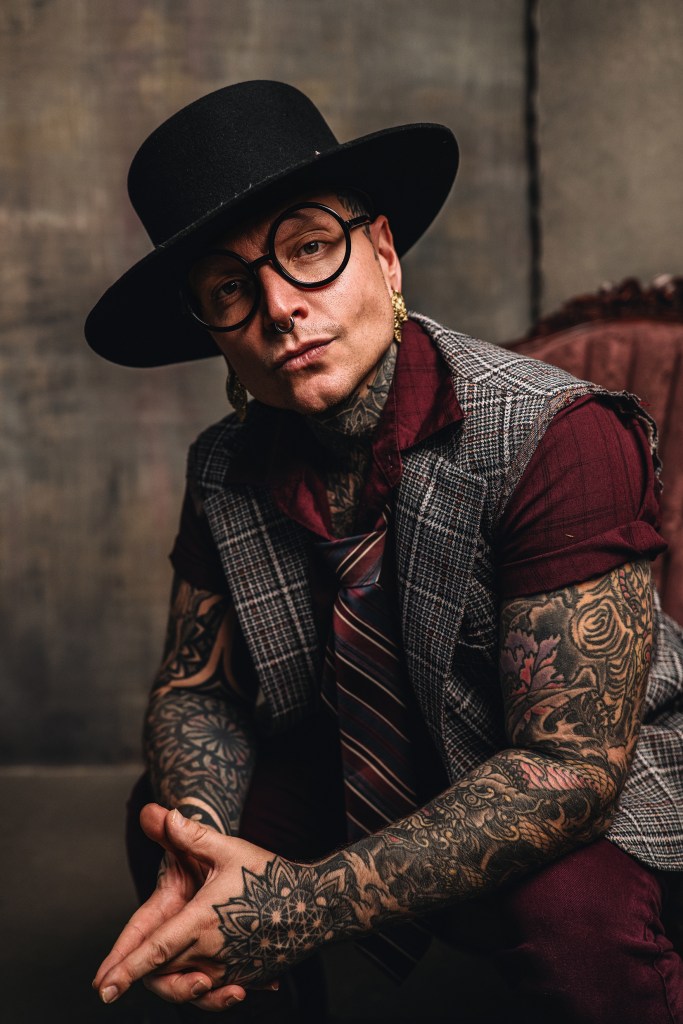
Jonny Edward — Portrait

In this sixth chapter of the visual odyssey, Jonny Edward’s portrait embodies the blend of environment and identity, created in his studio, Atelier Alchimia. The image emphasizes texture and iconography, showcasing a stylistic marriage between traditional garments and modern tattoos. It marks a pivot to evocative, symbolic portraiture, exploring the philosophy of aesthetic existence.

Portrait of a person wearing a black hat and round glasses, seated indoors with tattooed arms, dressed in a vest, shirt, and tie against a textured studio backdrop.
Portrait of Jonny Edward photographed seated in his studio, wearing a hat, glasses, and layered clothing, with tattoos visible on both arms.

In the sixth chapter of this ongoing visual odyssey, the photographer explores the intersection of environment and identity, moving beyond the mere capture of a likeness to conduct a sophisticated study of texture and personal iconography. This portrait of Jonny Edward, captured within the subject’s own creative sanctuary, Atelier Alchimia, serves as a cornerstone of the “Recent Work & Ongoing Exploration” phase. It represents a pivot toward a more layered, atmospheric approach to portraiture, where the subject and the space they inhabit become indistinguishable components of a singular narrative.

The composition is a masterclass in the management of complex visual information. The subject is positioned with a calculated stillness, his gaze direct and piercing through circular frames that provide a geometric anchor for the viewer. There is a profound intentionality in the styling: the marriage of classic haberdashery—a wide-brimmed felt hat, a patterned cravat, and a structured waistcoat—against the modern, intricate cartography of extensive tattoo work. The photographer skillfully navigates these disparate elements, ensuring that the elaborate patterns of the skin and the plaid of the vest complement rather than compete with one another.

Technically, the image excels in its tonal range and tactile quality. The lighting is deliberate, casting a soft yet directional glow that carves out the contours of the subject’s face and highlights the physical relief of the ink on his forearms. There is a tangible weight to the textures presented: the coarseness of the waistcoat’s weave, the smoothness of the felt hat, and the weathered patina of the background wall. This background, reminiscent of a Renaissance fresco in its muted, distressed tones, provides a timeless quality that lifts the portrait out of a specific era and into a more permanent, artistic realm.

As a significant entry in the “Top 100 Journey,” this work illustrates the photographer’s evolving mastery of the “creative workshop” environment. By collaborating within a space designed for artistic alchemy, he has successfully distilled the essence of a fellow creator. The image functions as a dialogue between two artists—one in front of the lens and one behind it—resulting in a portrait that feels less like an observation and more like an excavation.

In the context of Chapter 6: The Road Ahead, this photograph signals a refined direction. It moves away from traditional, literal portraiture toward a more symbolic and evocative methodology. The hands, clasped in a gesture of quiet strength, draw the eye to the lower third of the frame, grounding the composition and reinforcing the sense of grounded presence. It is an exploration of the “modern alchemist,” capturing a figure who is both a product of and a contributor to the creative landscape of Colorado. This portrait does not merely record a face; it documents a philosophy of aesthetic existence, marking a high point in the photographer’s continued pursuit of visual excellence.

Refraction and Illumination: A Study in Controlled Light

In Greg Urbano’s entry from “The Road Ahead: Recent Work & Ongoing Exploration,” a single green LED illuminates a glass sphere, creating intricate light patterns. This photograph showcases the artist’s mastery of optical effects and light manipulation. It reflects an ongoing exploration of visual ideas, balancing technical skill with artistic homage.

A glass sphere sits on black acrylic, bending bright green LED lines that cross diagonally, with a clear reflection below against a dark background.
A single green LED light creates intersecting line patterns that refract through a glass sphere and reflect off black acrylic.

In this striking entry from Chapter 6 of Greg Urbano’s Top 100 Journey—titled “The Road Ahead: Recent Work & Ongoing Exploration”—the photographer demonstrates a sophisticated understanding of light manipulation and optical phenomena. Created as part of the 52 Frames community’s Week 38 challenge, which called for images using a single light source, this photograph represents both technical mastery and artistic homage.

The composition centers on a glass sphere resting atop a reflective black acrylic base, positioned against a background of projected linear light patterns. What immediately captivates the viewer is the optical complexity achieved through such seemingly simple elements. The sphere acts as a lens, refracting and inverting the striped pattern behind it, while simultaneously creating a mirror image in the glossy surface below. This doubling effect—one sphere above, one reflected beneath—establishes a visual dialogue between reality and reflection that speaks to photography’s fundamental nature as a medium of light capture.

The photographer’s choice of a Godox TL30 LED wand as his single light source proves particularly astute. Rather than relying on ambient or diffused lighting, he creates a precise, linear pattern that reads as both graphic element and scientific demonstration. The vibrant green illumination pulses across the frame in parallel lines, their luminosity gradating from deep emerald to electric cyan. Where the light passes through the sphere, it bends and concentrates, revealing the optical principles at work while creating areas of intense brilliance that punctuate the geometric order.

This image explicitly acknowledges its lineage. The photographer credits Elizabeth Klepper’s 2023 work from the same community as inspiration—a refreshingly transparent gesture that positions this photograph within a continuum of artistic exchange rather than claiming isolated innovation. Yet this is no mere reproduction. Where Klepper’s original vision provided the conceptual framework, this interpretation carries distinct choices in color temperature, scale, and tonal contrast that mark it as an independent exploration.

The technical execution reveals careful consideration of multiple variables. The exposure balances the intense luminosity of the LED source with the deep blacks of the background and base, maintaining detail across a challenging dynamic range. The focus renders the sphere’s surface with crystalline clarity, allowing viewers to perceive both its transparency and its physical substance simultaneously. The alignment of the linear patterns—maintaining their parallel consistency both in direct view and through the sphere’s distortion—suggests meticulous positioning and multiple test exposures.

Within the context of Chapter 6, this photograph signals a willingness to engage with established visual ideas while pushing toward new territory. The chapter’s subtitle, “Recent Work & Ongoing Exploration,” positions the photographer at a transitional moment, actively investigating techniques and concepts that may inform future directions. This image embodies that investigative spirit—it is simultaneously a study, an exercise, and a finished work worthy of exhibition.

The minimalist aesthetic here contrasts with the more documentary or narrative approaches found in earlier chapters of the Journey. The photographer strips away contextual information, environmental cues, and representational content, focusing instead on pure optical phenomena. Light becomes subject rather than tool. The glass sphere transforms from decorative object to scientific instrument to sculptural form.

What elevates this beyond technical demonstration is its inherent beauty—the mesmerizing quality of those radiating green lines, the perfect symmetry of sphere and reflection, the luminous energy that seems to emanate from the glass itself. It exemplifies how constraint, whether self-imposed or community-mandated, can generate creative solutions that transcend their origins.

Natural Elegance: A Portrait in Copper and Light

Abigail Marchetti, known as Copper Muse, poses at a Denver Models open shoot, showcasing the photographer’s evolving studio portraiture techniques. Utilizing natural light, he captures her striking features and authentic expression, emphasizing color harmony and psychological presence. This portrait marks a significant step in his artistic development, blending classical principles with a modern sensibility.

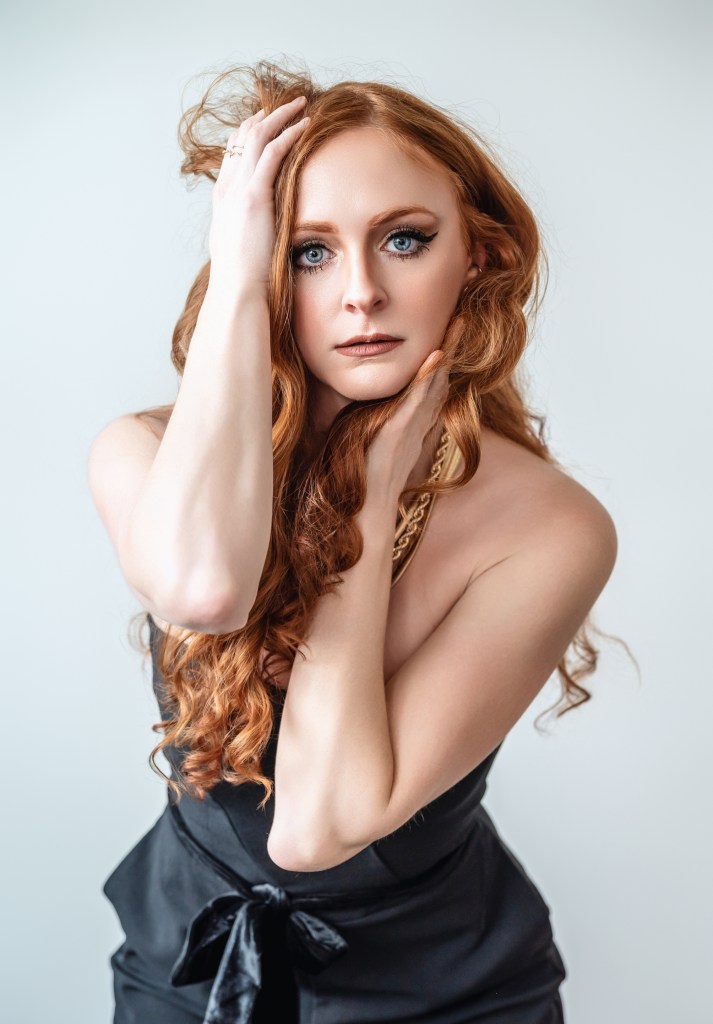
Studio portrait of a red-haired woman in a black dress posing against a light background with her hands framing her face.
Model Abigail Marchetti, known as Copper Muse, poses during a Denver Models open shoot at Realm Studio in Denver.

This compelling portrait of model Abigail Marchetti exemplifies the photographer’s deepening engagement with studio portraiture and his refined approach to natural light as a primary sculptural tool. Captured during a Denver Models open shoot at Realm Studio, the image represents continued exploration of collaborative creative environments while demonstrating increasingly sophisticated control of the portraitist’s essential elements: light, gesture, color harmony, and psychological presence.

The composition centers on the model’s striking features—vibrant copper-red hair cascading in loose waves, piercing blue-green eyes meeting the camera with direct but unguarded confidence, and pale skin that catches and reflects the soft window light with luminous clarity. Her pose, with one hand gracefully raised to her hair and the other touching her neck, creates natural framing that draws attention to her face while suggesting unaffected spontaneity. The black strapless garment provides bold tonal contrast against both her skin and the pale backdrop, creating visual drama without competing for attention.

What distinguishes this work is the photographer’s masterful exploitation of natural window light. Rather than relying on the multiple strobes and reflectors typical of commercial studio work, he has chosen a more classical approach that recalls portrait painting traditions. The directional quality of the illumination—soft yet defined—models the subject’s features with sculptural precision while maintaining delicate gradations across skin tones. Highlights along the hair reveal its rich, multidimensional copper coloring, transforming what could be merely descriptive documentation into chromatic study.

The technical execution demonstrates growing confidence with the Nikon Z5 system and the versatile 24-120mm lens. The focal length selection—likely in the moderate telephoto range—provides flattering perspective without distortion, while the depth of field keeps the subject sharply defined against the subtly gradated background. The exposure balances the challenge of pale skin and light background without sacrificing detail in either the model’s features or the deeper tones of her garment.

Within the framework of Chapter 6—”The Road Ahead: Recent Work & Ongoing Exploration”—this portrait signals important developments in his artistic trajectory. The open shoot environment, like the previous workshop-based work, indicates willingness to engage with structured collaborative opportunities while bringing his distinct sensibility to bear. Yet where some open shoots yield generic beauty documentation, this image transcends its circumstances through careful attention to classical portraiture principles: the quality of light, the authenticity of expression, the harmony of color and form.

The model’s direct gaze introduces a quality often absent from his landscape and architectural work—reciprocal acknowledgment between photographer and subject. This mutual recognition adds psychological dimension, transforming technical exercise into genuine encounter. The slight asymmetry in her expression—contemplative rather than performative—suggests comfort and trust within the photographic exchange.

The photograph also reveals evolving aesthetic priorities. While maintaining the tonal sensitivity and compositional rigor evident throughout his portfolio, he demonstrates here that minimalism need not preclude richness. The interplay of copper hair, pale skin, black fabric, and soft grey background creates visual complexity through chromatic relationships rather than environmental detail. This represents a distillation of his practice—finding depth in apparent simplicity, discovering complexity in restraint—now applied to the human figure with increasing assurance and grace.

Suspension and Illusion: A Study in Controlled Ephemera

Model Everyn Darling is featured in a significant studio portrait taken during a photography workshop in Denver. This image, characterized by its minimalist setting and controlled lighting, explores themes of aspiration and vulnerability through the metaphor of a translucent balloon. The photographer’s evolving style emphasizes collaborative creativity and visual poetry over mere technical perfection.

Studio portrait of a woman in a black dress holding a translucent balloon against a plain backdrop.
Model Everyn Darling poses with a translucent balloon during a studio photography workshop in Denver, Colorado.

This studio portrait represents a significant departure within the photographer’s evolving practice, marking his exploration of collaborative, workshop-based creation and the controlled artifice of studio environments. Captured during a Creative Experimental Photography Meetup at RAW Studios in Denver, the image demonstrates how structured creative exercises can yield work of surprising conceptual depth when approached with technical precision and compositional awareness.

The photograph centers on model Everyn Darling, positioned within a minimalist studio setting characterized by graduated neutral tones that transition from cool blue-grey to warm cream. This chromatic subtlety provides visual breathing room while maintaining atmospheric presence—a backdrop that supports rather than competes. The subject, dressed in a simple black dress with white collar detail, appears barefoot in a pose of upward contemplation, one arm extended to hold a translucent balloon trailing delicate white ribbons or fabric.

What elevates this image beyond documentation of a workshop exercise is the photographer’s attention to the psychology of gesture and the poetry of the ostensibly simple prop. The balloon—that most ephemeral and-associated of objects—becomes a vehicle for exploring themes of lightness, release, and the tenuous connection between desire and drift. The model’s gaze follows the balloon upward, creating a diagonal compositional line that draws the eye through the frame while suggesting aspiration, longing, or perhaps the acceptance of letting go.

The technical execution reveals disciplined studio craft. Working with his Nikon Z5 and the versatile 24-120mm f/4 lens, the photographer has managed studio lighting with restraint, avoiding the harsh drama often favored in workshop settings. The illumination appears softly directional, modeling the subject’s features and dress while maintaining detail in the translucent balloon. Shadow work on the studio floor provides subtle grounding without becoming graphic or distracting. The slightly elevated perspective and negative space allocation give the subject room to breathe within the frame—a compositional generosity that reinforces the image’s contemplative mood.

Within the context of Chapter 6—”The Road Ahead: Recent Work & Ongoing Exploration”—this photograph signals important developments in his practice. The workshop origin indicates openness to collaborative creative structures and willingness to work within parameters set by others. Yet the result bears his aesthetic signature: careful attention to subtle tonal gradations, preference for psychological ambiguity over narrative certainty, and interest in objects as metaphorical carriers rather than mere props.

The image also represents exploration of human subjects with greater intimacy than much of his earlier landscape and architectural work. The model’s upturned face, though not confronting the camera directly, introduces vulnerability and interiority often absent from environmental documentation. This shift suggests expanding comfort with portraiture and the complex dynamics of photographer-subject collaboration.

The balloon’s deliberate artificiality—clearly held rather than actually floating—adds productive tension. The photograph acknowledges its own construction while inviting viewers to suspend disbelief, mirroring how all photography negotiates between document and fiction. In selecting this image as his best from the series, the photographer reveals evolving criteria for success: not technical perfection alone, but the achievement of visual poetry through careful orchestration of simple elements within controlled conditions.