The Studio as Theater: Classical Portraiture in Contemporary Practice

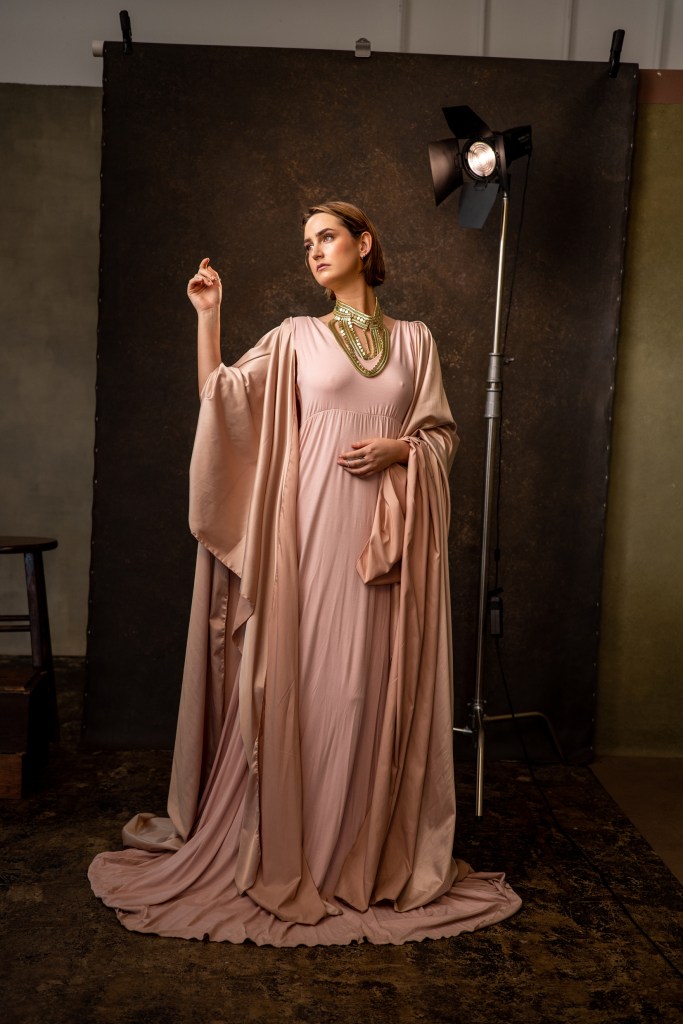
Jessica Lynn’s studio portrait showcases a fusion of classical portraiture and contemporary technique, created during a workshop at Atelier Alchimia. The photograph illustrates the artist’s growth through collaboration, using refined lighting to enhance the subject’s regal appearance. This work embodies artistic evolution, blending tradition with innovation while emphasizing continuous learning.

Studio portrait of Jessica Lynn standing in a flowing blush-colored gown, posed in front of a dark backdrop with a studio light visible behind her.
Jessica Lynn (QueenJess Rising) photographed in a studio setting during a workshop at Atelier Alchimia in Westminster, Colorado.

This studio portrait from Chapter 6 of the photographer’s Top 100 Journey represents a deliberate engagement with the formal traditions of classical portraiture, reimagined through contemporary technical means. Created during a workshop at Atelier Alchimia in Westminster, Colorado, the image demonstrates how collaborative learning environments can yield work of considerable aesthetic merit while advancing the artist’s technical vocabulary.

The subject, Jessica Lynn, is presented in a flowing blush-toned gown with dramatic bell sleeves that cascade to the floor, creating a silhouette reminiscent of Renaissance or Pre-Raphaelite painting. An ornate collar necklace in gold and green adds a regal quality that justifies the image’s title. The photographer has positioned her in a classical contrapposto-inspired stance—weight on one leg, torso gently twisted, one hand raised in a gesture of contemplation or perhaps benediction. This pose, combined with the upward gaze and theatrical lighting, evokes both historical portraiture and contemporary fashion photography’s ongoing dialogue with art history.

The technical execution reveals careful attention to studio craft. A single key light with barn doors, visible in the frame’s right edge, provides directional illumination that sculpts the subject’s features and creates tonal gradation across the fabric’s folds. The mottled canvas backdrop transitions from warm browns to darker tones, providing depth without competing for attention. The lighting setup, developed collaboratively with studio owner Jonny Edwards, demonstrates the photographer’s increasing comfort with controlled environments—a marked evolution from earlier work in the series that frequently engaged with natural light and outdoor settings.

What makes this image particularly relevant to “The Road Ahead: Recent Work & Ongoing Exploration” is its frank acknowledgment of artistic development through structured learning. Shot during a workshop led by Eric Brown, the photograph embodies a philosophy of continuous growth and technical refinement. Rather than presenting only work created in solitary practice, the photographer includes images born from educational contexts, recognizing that mastery often emerges through collaboration and mentorship.

The choice to work with studio lighting represents an expansion of technical range. The careful balance of exposure—maintaining detail in both the luminous fabric and the darker background—suggests growing confidence with artificial light sources. The warm color palette creates cohesion between subject, costume, and environment, while the visible studio elements (backdrop clamps, light stand) provide documentary transparency about the image’s construction.

Within the broader arc of the Top 100 Journey, this portrait signals a willingness to explore different photographic modes. Where earlier chapters emphasized environmental and location work, this studio piece demonstrates versatility and an interest in controlled aesthetic experiences. The theatrical quality—the visible apparatus of image-making—invites viewers into the creative process rather than presenting a seamless illusion.

The photograph succeeds both as a study in classical beauty and as evidence of artistic evolution. It captures a moment of learning translated into accomplished execution, showing that the road ahead need not abandon traditional craft in pursuit of innovation. Instead, it suggests that mastery comes through accumulation—building new skills atop established foundations, always remaining open to guidance, collaboration, and the timeless appeal of light falling gracefully upon fabric and form.
Venice Fishing Pier Sunset: Mastering the Fundamentals of Light

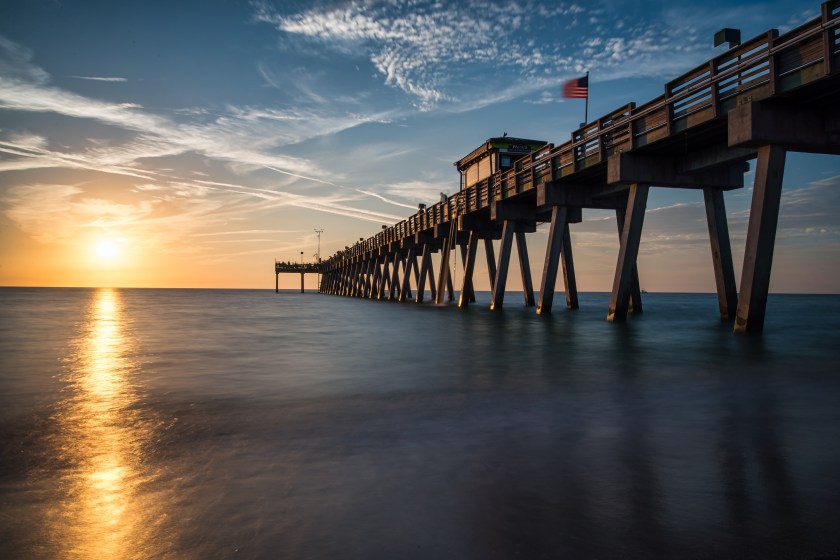
Greg Urbano’s sunset photograph of the Venice Fishing Pier exemplifies the intersection of technical skill and artistic sensibility in landscape photography. Through meticulous use of exposure and composition, Urbano captures a moment where structured permanence meets the fluidity of nature, showcasing balanced tones and dynamic movement in a serene coastal scene.

Sunset photograph of the Venice Fishing Pier in Florida, showing the pier extending into the Gulf of Mexico with golden reflections on calm water.
Sunset over the Gulf of Mexico with the Venice Fishing Pier in the background, captured in a long exposure.

Within Greg Urbano’s “Beginnings” chapter, this sunset photograph of the Venice Fishing Pier represents a photographer coming to terms with landscape photography’s essential discipline: the patient orchestration of light, water, and architecture. Shot along Florida’s Gulf Coast, the image demonstrates technical competence married to an emerging aesthetic sensibility—a combination that marks the transition from enthusiast to serious practitioner.

The technical execution reveals deliberate choices that elevate this beyond a simple sunset snapshot. Using a Nikon D610 with an 18-35mm lens set to 28mm, Urbano selected an aperture of f/18 to maximize depth of field, ensuring sharpness from the foreground water to the distant pier structure. The 13-second exposure at ISO 100 transforms the Gulf of Mexico into a silken plane, smoothing the texture of incoming waves into an ethereal blue gradient. This long exposure technique—fundamental to seascape photography—requires both technical knowledge and patience, waiting for the precise moment when light, tide, and atmospheric conditions align.

The composition demonstrates sophisticated spatial awareness. The pier’s diagonal thrust from lower right to upper left creates dynamic movement through the frame, leading the viewer’s eye from the silky foreground water toward the structure’s vanishing point. The rhythmic repetition of pier supports establishes a visual cadence, their angular geometry contrasting beautifully with the organic flow of water and clouds. An American flag atop the pier adds a vertical accent and a touch of patriotic iconography without overwhelming the scene’s natural beauty.

What distinguishes this photograph is Urbano’s treatment of light. The setting sun hovers just above the horizon line, its golden warmth reflected in a shimmering path across the water’s surface. The exposure balances multiple tonal zones expertly: the brilliant sun doesn’t blow out to featureless white, the shadowed pier structure retains detail, and the water holds both luminous highlights and cool, deep blues. This tonal control suggests a photographer who understands exposure compensation and potentially uses graduated neutral density filters or careful post-processing to manage the scene’s extreme dynamic range.

The sky deserves particular attention. Wispy cirrus clouds stretch across the frame in delicate streaks, their feathered patterns creating texture and visual interest in what might otherwise be empty blue space. The interplay between warm sunset tones near the horizon and cooler blues above establishes atmospheric depth, giving the image a sense of vast space and coastal openness.

As a “Beginnings” chapter work, this photograph represents mastery of landscape photography fundamentals. The long exposure technique, the careful attention to composition and leading lines, the patient waiting for optimal light—these are the building blocks upon which more experimental work can later be constructed. There’s confidence here, a photographer who has moved beyond technical uncertainty into intentional image-making.

The Venice Pier becomes more than a documentary subject; it transforms into a meditation on structure and impermanence. The solid, engineered permanence of the pier contrasts with the fluid, ever-changing water—a tension made visible through photographic technique. Urbano captures not just a place, but a moment of perfect equilibrium between human construction and natural forces, all bathed in the transient golden light that photographers chase endlessly along coastlines worldwide.